









Kay Industries Rotary Phase Converters: Engineer’s Guide

Estimated reading time: 11 minutes
Introduction: Unlocking 3-phase Power for Your Workshop
For many workshops, manufacturing facilities, and agricultural operations, accessing three-phase power for heavy-duty equipment is a significant hurdle. While single-phase power is standard, industrial machinery like CNC machines, large motors, and welders demand the robust, balanced power that only a three-phase system can provide. This is where kay industries rotary phase converters offer a critical solution, effectively transforming your existing single-phase service into a reliable three-phase output. In essence, a rotary phase converter is a specialized motor-generator set that creates a third line of AC power, allowing you to operate your essential equipment without costly utility upgrades. According to Design Specifications, this technology is a proven method for generating three-phase power from a single-phase source.
Solving 3-phase Power Challenges with Kay Industries Converters
The alternative, upgrading to a utility-provided three-phase service, is often prohibitively expensive and logistically complex, particularly in rural or remote areas. In fact, 3-Phase Rotary Phase Converters notes that running three-phase equipment in such locations can be a major challenge. The process can involve setting new poles, running new lines for miles, and extensive installation fees from the power company. Consequently, this makes a heavy duty phase converter an indispensable asset for businesses seeking to expand their operational capabilities without incurring massive infrastructure costs. These 3-phase power solutions provide an immediate and effective pathway to powering your most demanding machinery, ensuring you can meet production goals.
Since 1972, Kay Industries has established itself as a leader in the field with its Phasemaster® brand, engineering some of the most durable and efficient converters on the market. These systems are not merely a workaround; they are a robust, long-term power solution. For instance, Phasemaster converters operate at over 95% efficiency, ensuring minimal energy loss and no added utility demand charges, as highlighted by Phasemaster documentation. Furthermore, their design delivers clean, balanced voltage suitable for sensitive electronic equipment, including CNC machines and VFDs. This article will delve into the technical specifications, sizing considerations, and operational benefits of using Kay Industries converters to power your critical applications.
What Sets Kay Industries Rotary Phase Converters Apart?
When selecting a heavy duty phase converter, discerning engineers and facility managers often turn to Kay Industries rotary phase converters for their proven reliability and superior engineering. Since 1972, the company has specialized in manufacturing robust 3-phase power solutions that deliver clean, stable, and balanced power for demanding applications. For instance, their Phasemaster® converters operate at over 95% efficiency, which minimizes energy waste and reduces long-term operational costs, a significant advantage over less-efficient static converters. According to Phasemaster Product Line Brochure documentation, this efficiency ensures that the generated three-phase output is nearly identical to utility-provided power, making it ideal for sensitive equipment like CNC machines and VFDs.
The exceptional durability of a Kay Industries 3-phase converter is a direct result of its meticulous construction and adherence to stringent quality standards. These units are built with oversized components and cast-iron frames, ensuring they withstand harsh industrial environments and provide years of trouble-free service. Furthermore, the design focuses on delivering a precise voltage balance across all three phases, a critical factor for protecting motor windings and sensitive electronics from damage. This commitment to quality is underscored by certifications and adherence to NEMA, NEC, and UL standards, which, as noted by MA Product Line Brochure, assures fast and compliant installation. Consequently, these converters provide a reliable power backbone that prevents costly downtime and equipment failure. As a result of this robust engineering, Kay Industries has become a trusted name in 3-phase power solutions, as highlighted by their long history mentioned by Kay Industries Phase Converters.
A Practical Guide to Rotary Phase Converter Sizing
Kay Industries rotary phase converters are the essential solution for workshops needing to power heavy-duty 3-phase equipment from a single-phase power source.
Correct rotary phase converter sizing is the most critical factor in achieving reliable, long-term performance from your three-phase equipment. When selecting from Kay Industries rotary phase converters, it is insufficient to simply match the horsepower (HP) rating of your largest machine. Instead, a thorough evaluation of load types, starting current (amperage) demands, and the potential for simultaneous machine operation is essential for system integrity. This initial analysis is fundamental to preventing common operational faults, including voltage sag under load and premature failure of both the converter and connected machinery.
Different types of equipment place highly variable demands on a power source, which directly impacts sizing calculations. For instance, resistive loads such as heating elements present a steady, predictable demand, whereas inductive motor loads require a substantial inrush current to overcome inertia and start rotation. Hard-starting equipment—including air compressors, flywheel-driven machines, and hydraulic pumps—demands the greatest starting capacity from a heavy duty phase converter. As detailed in technical documentation, the converter must be able to service the full load without overheating, according to Design Specifications.
Sizing Kay Industries Rotary Phase Converters
As a guiding principle, the converter’s continuous-duty HP rating should be sized larger than the nameplate HP of the single largest motor it needs to power. For applications involving multiple motors, you must first sum the total HP of all machines that will run concurrently. According to MA Product Line Brochure specifications, the converter rating is determined by the largest motor load. Subsequently, it is best practice to select a converter model that is at least 1.5 times the HP rating of that largest motor to ensure adequate starting torque and voltage stability.
Consequently, undersizing a converter is a frequent cause of severe voltage drops, which can inflict serious damage on motor windings and sensitive electronic controls. On the other hand, significant oversizing leads to higher idling currents, resulting in unnecessary energy consumption and increased operational costs. For voltage-sensitive equipment like CNC machines, precise sizing is absolutely critical, a point emphasized in literature from both MA Product Line Brochure and PhaseMaster 3-Phase Rotary Converters. Therefore, always consult the manufacturer’s technical support team for guidance on complex or mixed-load applications.
Step-by-step Installation of Your Kay Industries 3-phase Converter
Properly installing your Kay Industries 3-phase converter is critical for both safety and optimal performance. Crucially, this process should always be completed by a qualified and licensed electrician to ensure compliance with all local regulations and the National Electric Code (NEC). According to PhaseMaster 3-Phase Rotary Converters, professional installation is a key requirement. First, select a suitable location that is clean, dry, and provides adequate ventilation to prevent overheating. The area must also have a solid, level foundation to support the unit’s weight and minimize vibration during operation. For instance, a concrete floor in a workshop or utility room is an ideal setting for your heavy duty phase converter.
Installing Your Kay Industries Rotary Phase Converter
Once you have chosen the location, the next step is physical placement. While Phasemaster converters are balanced to be stable without being secured, mounting feet are provided if you need to bolt the unit down, as noted by Phasemaster documentation. Following placement, you will connect the single-phase input power. This requires running properly gauged wires from a dedicated circuit breaker in your main panel to the input terminals, typically labeled L1 and L2, inside the converter’s connection box. Consequently, this ensures the single phase to 3 phase converter receives adequate and protected power. Adhering to these guidelines helps Phasemaster ensure a fast and correct setup.
Finally, you will connect the 3-phase output to your equipment. The converter generates a third leg of power, which is connected to the output terminal T3. Your equipment will then be wired to the T1, T2, and T3 terminals to receive balanced three-phase power. Before powering on your machinery, it is essential to use a multimeter to verify the voltage across all three phases (T1-T2, T2-T3, T1-T3) to confirm they are balanced within acceptable tolerances, as this is a key performance feature of MA Product Line Brochure converters. In other words, this final check prevents potential damage to sensitive equipment like CNC machines or VFDs and completes the installation process safely.
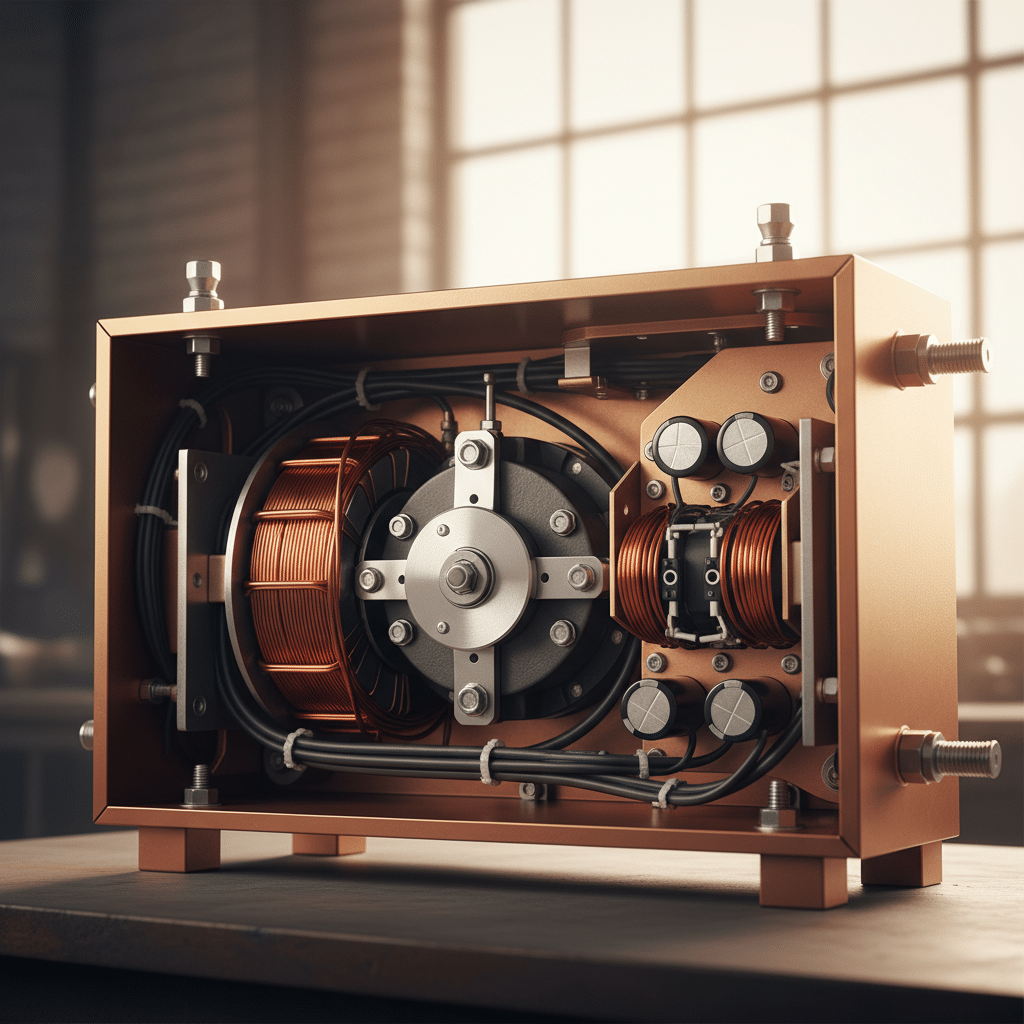
The meticulous engineering and heavy-duty components are what set Kay Industries rotary phase converters apart, providing reliable and robust performance for demanding applications.
Optimizing and Balancing Voltage on Your Heavy Duty Phase Converter
Achieving optimal performance from Kay Industries rotary phase converters requires periodic verification of the output voltage balance. In fact, imbalanced voltage is a primary cause of premature failure in 3-phase motors and sensitive electronic components like VFDs and CNC controls. While Phasemaster converters are engineered to maintain exceptionally stable voltage across a wide load range, external factors like input power fluctuations can affect the output. According to MA Product Line Brochure documentation, their design is specifically tailored for voltage-sensitive applications, making balance checks a critical maintenance step.
To assess the health of your heavy duty phase converter, you must measure the phase-to-phase voltages under a typical operational load. After following all OSHA and NFPA 70E lockout/tagout procedures, use a calibrated digital multimeter to carefully measure the voltage between L1-L2, L2-L3, and L1-L3. Ideally, these readings should be within 2-3% of each other to prevent current imbalance and motor overheating. For instance, the technical specifications for these units promise regulation of at least 2-5% or greater at full load, as noted by MA Product Line Brochure. Any significant deviation points to a need for adjustment.
If an imbalance is detected, adjustments are typically made by adding or removing balancing capacitors within the converter’s control panel. This process fine-tunes the manufactured third leg of power to match the utility-provided legs, resulting in a clean, symmetrical 3-wire delta output. Ultimately, this proactive tuning ensures the Phasemaster unit delivers balanced voltages on all three phases. Consequently, this simple maintenance step is vital for leveraging the full benefits of these 3-phase power solutions. This ensures you realize the significant cost savings and improved equipment performance that Kay Industries converters provide.
Troubleshooting Common Issues with Kay Industries Rotary Phase Converters
Although Kay Industries rotary phase converters are engineered for durability and reliable performance, operational issues can occasionally arise. Before attempting any diagnostics on a heavy duty phase converter, it is absolutely critical to follow all established safety protocols, specifically OSHA-compliant lockout/tagout procedures, to ensure the equipment is completely de-energized. This initial step is non-negotiable for preventing electrical hazards and ensuring personnel safety. Proper troubleshooting begins with a secure and de-energized environment, which consequently provides a safe foundation for identifying the root cause of any problem.
If a converter fails to start, the first step is to verify the incoming single-phase power with a multimeter to confirm it matches the unit’s specifications. Following that, carefully inspect all fuses and circuit breakers in the line, as a simple blown fuse is a common culprit. It is also essential to check that all electrical connections are secure, because vibrations can cause terminals to loosen over time. According to PhaseMaster Product Line Brochure documentation, all installations must fully comply with the National Electric Code (NEC) to ensure proper and safe operation.
Unusual noises or excessive vibration can also signal a problem. For instance, a loud humming or grinding sound may indicate failing bearings within the idler generator, requiring immediate attention to prevent further damage. Many users report that Phasemaster converters often run quieter than the equipment they power, as noted by MA Product Line Brochure, so any new noise is worth investigating. To address this, refer to official maintenance schedules, like those detailed by Precision Electric, for lubrication and inspection procedures. Ultimately, consistent preventive maintenance, as outlined by PhaseMaster 3-Phase Rotary Converters, is the most effective way to ensure the long-term health of your 3-phase power solution.

Correct rotary phase converter sizing is critical for equipment safety and performance. This guide helps match your motor’s needs to the right model.
Preventive Maintenance for Your 3-phase Power Solution
To ensure the long-term reliability of your 3-phase power solutions, establishing a preventive maintenance schedule is essential. Kay Industries converters are engineered to MA Product Line Brochure provide years of trouble-free service, but periodic inspections can prevent unexpected downtime and extend the unit’s operational life significantly. For instance, a simple visual check performed quarterly can reveal potential issues before they escalate. Consequently, this proactive approach not only safeguards your investment but also maintains the integrity of the power supplied to your critical three-phase equipment, ensuring consistent performance and adherence to operational standards.
A key aspect of maintenance involves keeping the unit clean and free from environmental contaminants. Over time, dust and debris can accumulate on and inside the enclosure, which may obstruct ventilation openings and lead to overheating. Therefore, it’s crucial to periodically wipe down the exterior and, after de-energizing the unit, clean any buildup from ventilation screens. According to Precision Electric, clearing excess debris is a required procedure. Also, listen for any abnormal sounds, such as humming or bearing noise, which could indicate a need for further inspection.
In addition to physical cleaning, regular electrical checks are paramount for safety and performance. Before performing any internal inspections, always follow proper lockout/tagout procedures compliant with OSHA and NFPA 70E standards. Once the Kay Industries 3-phase converter is safely de-energized, open the connection box to verify that all terminal connections remain tight and secure, as vibrations can cause them to loosen over time. Furthermore, inspect for any signs of discoloration or overheating around terminals and conductors. Upholding these installation standards, as outlined by the MA Product Line Brochure documentation, is fundamental to a reliable system. These straightforward steps will ensure your converter operates efficiently for its entire service life.
Conclusion: Your Reliable Solution for 3-phase Power
Ultimately, Kay Industries rotary phase converters stand out as a premier choice for generating reliable three-phase power from a single-phase source. Throughout this guide, we have explored everything from correct rotary phase converter sizing and installation to maintenance and troubleshooting, demonstrating the robust engineering behind every Phasemaster unit. These systems provide a cost-effective alternative to expensive utility upgrades, empowering workshops, farms, and industrial facilities with the clean, stable power required for demanding equipment. Consequently, opting for a Kay Industries converter is an investment in operational efficiency and long-term performance, a point underscored by their decades of industry leadership.
The journey from single-phase limitations to versatile 3-phase power solutions is straightforward with the right equipment. As detailed, the Phasemaster line is engineered for high efficiency and durability, capable of powering everything from heavy-duty motors to sensitive CNC machinery. According to PhaseMaster 3-Phase Rotary Converters, users benefit significantly from these cost savings and improved equipment performance. In other words, these converters are not just a component but a foundational element of a productive and resilient operation, providing clean and balanced voltage as noted by MA Product Line Brochure.
In conclusion, when your operations demand a dependable heavy duty phase converter, Kay Industries delivers an unparalleled solution. By following the guidelines for selection, installation, and maintenance, you ensure your equipment receives consistent, high-quality power for years of trouble-free service. The superior design ensures that a Phasemaster Product Line Brochure converter will deliver reliable performance under the most demanding conditions. Therefore, you can confidently power your critical machinery, enhance productivity, and avoid the prohibitive costs associated with new utility service installation.