









Guide to American Rotary AD Rotary Phase Converters

Estimated reading time: 10 minutes
Introduction: Powering Your Operations with the Right Phase Converter
For workshops and industrial facilities lacking three-phase utility, a reliable rotary phase converter is essential. Powering heavy-duty equipment from a single-phase source is a common engineering problem demanding a precise solution. American Rotary AD rotary phase converters provide a robust method for generating clean, balanced three-phase power. This ensures that voltage-sensitive equipment, such as CNC machines, operates to specification. Consequently, selecting the correct single to three phase converter is a critical decision that impacts equipment longevity and operational uptime.
Unlike basic static converters, American Rotary converters are engineered for demanding applications, delivering utility-grade power. At the heart of their AD and ADX lines is the MicroSmart™ controller, which actively monitors and balances voltage to protect sophisticated machinery. As detailed by Americanrotary, this digital controller is crucial for voltage-sensitive equipment. Moreover, these systems are designed for soft starting, which reduces the inrush current on the single-phase line. This gentle start mechanism is a significant advantage over traditional designs, as noted by industry resources like Device. This level of control is particularly vital for CNC phase converter applications where precise power is non-negotiable.
Ultimately, the goal is to create a seamless power environment that mirrors a direct utility connection. This guide serves as a technical deep-dive into the specifications, sizing, and maintenance of American Rotary’s systems. Proper phase converter sizing is especially important to ensure machinery operates efficiently without overload. In other words, understanding these critical elements allows technicians to confidently deploy a heavy duty phase converter. American Rotary’s commitment to quality is backed by a lifetime warranty, providing peace of mind for critical operations as noted on their website American Rotary Lifetime Warranty. Furthermore, their products are suitable for a vast range of equipment, from CNC machines to food service applications, as detailed in their resource guides American Rotary Resource Guide.
What Sets American Rotary Ad Rotary Phase Converters Apart?
When specifying a single to three phase converter, the American Rotary AD rotary phase converters distinguish themselves primarily through intelligent control and robust engineering. At the heart of the AD series is the MicroSmart™ Digital Controller, a sophisticated system that actively monitors and balances voltage. According to Customer Spotlight: Precision Power Air, this controller is key to providing precise, balanced three-phase power suitable for even the most sensitive loads, such as CNC machinery and VFDs. Consequently, this technology ensures equipment runs efficiently and is protected from damaging voltage imbalances.
In addition to voltage regulation, American Rotary converters incorporate a soft-start feature that significantly reduces inrush current upon startup. This is achieved through a partnership with Baldor, utilizing custom-built, low-starting-current idler generator motors. As a result, the AD phase converter starts quietly and gently, placing minimal strain on the single-phase supply line, a critical benefit detailed by Wolf Automation Rotary Phase Converter. This gentle start-up prolongs the life of both the converter and the connected machinery, preventing voltage sags that can affect other equipment on the same circuit.
American Rotary AD rotary phase converters are a critical solution for workshops and industrial facilities that need to run three-phase equipment on single-phase utility power.
Furthermore, reliability and safety are cornerstones of the AD series design, which can be ordered with a UL listing for control panels, a crucial factor for passing electrical inspections as noted by AD Series MicroSmart Controller. This commitment to quality is backed by a comprehensive lifetime warranty on parts and labor. This industry-leading warranty, highlighted by American Rotary Warranty, provides long-term peace of mind and underscores the manufacturer’s confidence in the durability of their heavy duty phase converter systems.
Sizing Your 3 Phase Power Converter: a Step-by-step Guide
Properly sizing a rotary phase converter is a critical first step for reliable three-phase power. To begin, you must inventory all equipment that will connect to the converter, documenting the horsepower (HP), full-load amperage (FLA), and voltage for every motor. Crucially, you should also identify the load type, as resistive loads differ significantly from hard-starting inductive motors. According to American Rotary, balanced input power is essential for equipment longevity and optimal performance.
Next, you must determine the total required capacity based on your operational needs. If multiple machines will run concurrently, you can sum their total loads to find the minimum required size. However, if motors start sequentially, the calculation should focus on the largest motor’s significant startup demand. A good practice is to size the converter to handle the largest load plus the sum of all other simultaneously running equipment. This is particularly important for shops that plan to run multiple machines with one phase converter.
Finally, always build a safety margin into your phase converter sizing. For general use, a converter rated 25-50% larger than the calculated load is sufficient. For heavy duty phase converter applications or equipment with high inrush current, you should double the size of the largest motor. This is especially true for voltage-sensitive equipment, as CNC phase converters rely on clean, stable power. For further assistance, use the American Rotary sizing tool to confirm your selection.
Key Features to Look for in American Rotary Ad Models
When selecting from the various American Rotary AD rotary phase converters for sale, it is crucial to examine the core technologies that set them apart. At the heart of these units is the proprietary MicroSmart™ Digital Controller, which actively monitors and balances voltage output. According to AD Digital Smart Series, this controller ensures precise power delivery, making it ideal for sensitive equipment. In short, this intelligent management provides stable and reliable three-phase power from a single-phase source.
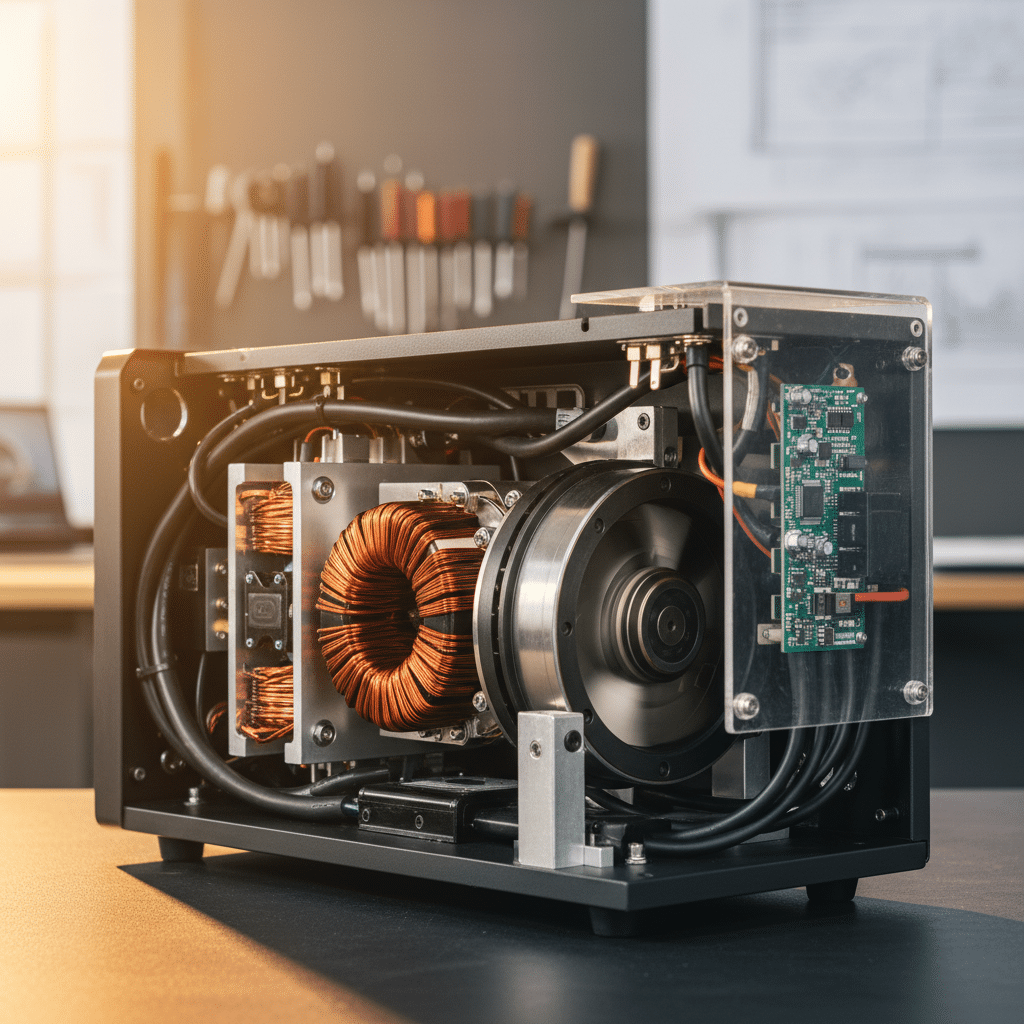
The superior engineering of American Rotary AD rotary phase converters sets them apart, providing reliable and clean 3-phase power for any application.
Beyond the smart controls, the physical construction of these converters is designed for longevity and performance. For instance, American Rotary partners with Baldor for their custom-designed idler generator motors, which are recognized for their durability. As noted by Wolf Automation Rotary Phase Converter, this partnership results in a quieter, soft-starting unit that reduces inrush current on the line. Furthermore, the availability of a UL Listed panel ensures compliance with stringent safety standards often required in commercial and industrial settings. This robust build quality translates to a heavy duty phase converter capable of handling demanding loads.
The performance output is arguably the most critical feature, especially for high-value machinery. The AD series excels at producing well-balanced, clean power, making them a top choice as a CNC phase converter. Consequently, this precise voltage regulation protects sensitive electronics in modern equipment from potentially damaging power fluctuations. The system’s ability to handle any type of load, from resistive to inductive, provides significant operational flexibility. To illustrate their confidence in the product, American Rotary Warranty backs the AD series with a lifetime warranty, offering long-term peace of mind for your investment.
Installation and Safety Protocols for American Rotary Converters
Proper installation is fundamental to the performance and longevity of American Rotary converters. First and foremost, the rotary phase converter should be installed in a clean, dry, and well-ventilated area to prevent overheating and contamination. It is crucial to consult the manufacturer’s documentation for specific clearance requirements around the unit, which can be found in detailed drawings provided by American Rotary Drawings. In addition, securing the converter to a solid, level foundation minimizes vibration and operational noise, ensuring stable and efficient power conversion from the moment it is commissioned. Adhering to these physical placement guidelines is the first step toward a successful and reliable setup.
Wiring a 3 phase power converter must be performed by a qualified electrician in strict accordance with the National Electrical Code (NEC) and local regulations. According to Wolf Automation Digital Rotary Phase Converter, all wiring should be handled by an experienced professional to ensure safety and proper functionality. American Rotary simplifies this process by including features like clearly marked terminal blocks for straightforward connections. Consequently, using the correct wire gauge for both the single-phase input and three-phase output is critical to handle the electrical load without risking thermal damage or voltage drop, which could impair the performance of connected machinery.
Safety is paramount when working with any electrical system, and this single to three phase converter is no exception. Always implement lockout/tagout procedures as defined by NFPA 70E before performing any maintenance or inspection. Furthermore, ensuring the system is properly grounded is a non-negotiable step to protect personnel and equipment from electrical faults. Many American Rotary models are UL Certified, a detail highlighted by Device, which provides third-party validation of its safety and construction standards. This certification is often a requirement for compliance in industrial and commercial environments.
Comparing Ad, Adx, and Adp: Which Heavy Duty Phase Converter Is for You?

American Rotary offers several heavy duty phase converter lines to meet diverse operational demands: the AD, ADX, and ADP series. While all models provide reliable three-phase power from a single-phase source, selecting the correct series is consequently critical for equipment longevity. Essentially, the choice hinges on your machinery’s load characteristics, from general-purpose motors to sensitive CNC equipment. These converters are distinguished by their capacity to handle different load types, as noted by American Rotary AD Digital Smart Series.
The standard AD (Digital Smart Series) is the versatile workhorse, ideal for general to heavy-duty loads. It features the intelligent MicroSmart™ controller to monitor and stabilize voltage, making it suitable for most motor-driven equipment in settings like fabrication shops or farms. For more demanding applications, especially voltage-sensitive equipment requiring a CNC phase converter, the ADX (Extreme Duty) series offers superior performance. The ADX provides an even tighter voltage balance, typically within 2-3%, to protect sophisticated electronics and ensure precise operation.
Finally, the ADP series is designed for the most extreme or specialized applications. This line often features custom-built configurations with specialized components to handle very hard-starting equipment or unique environmental conditions. According to American Rotary 50 HP Phase Converter, this series is their most versatile and is considered the best choice for consumers with unique needs. Therefore, if your machinery’s demands exceed the capabilities of the ADX, the ADP series provides a tailored, high-performance solution.
Troubleshooting Common Issues with Your Rotary Phase Converter
Even the most robust heavy duty phase converter can encounter operational issues over time. While American Rotary converters are renowned for their reliability, a systematic approach to troubleshooting is essential for minimizing downtime. First and foremost, before beginning any diagnostic work, it is critical to de-energize the system and follow strict lockout/tagout procedures compliant with NFPA 70E standards to ensure personal safety. This initial step is non-negotiable when working with high-voltage equipment.
One of the most frequent issues is a rotary phase converter that fails to start. Initially, you should verify that the correct single-phase input voltage is present at the converter’s input terminals. Subsequently, inspect all fuses and circuit breakers in the line feeding the unit. It is also wise to check for secure wiring at the terminal blocks, as loose connections can prevent a proper startup, a point emphasized by sources like Wolfautomation. Fortunately, the integrated MicroSmart™ controller in american rotary ad rotary phase converters monitors voltage and can help diagnose startup problems, as detailed by Americanrotary.
Another common concern involves unbalanced output voltage or excessive noise during operation. Unbalanced power can damage sensitive CNC phase converter loads; therefore, you should use a multimeter to measure the voltage between all three output legs (T1-T2, T2-T3, T1-T3) to ensure they are within the specified tolerance. For instance, unusual humming or rattling noises often point to loose mounting hardware or, in older units, potential wear on the idler motor’s bearings. According to Device Report, addressing these mechanical and electrical issues promptly prevents further damage. If problems persist after these basic checks, it may be time to contact technical support, especially given the comprehensive lifetime warranty offered by American Rotary Warranty.
Conclusion: Making the Right Choice for Reliable 3-phase Power
Selecting the right 3 phase power converter is a foundational decision for ensuring operational efficiency and equipment longevity. Throughout this guide, we have explored the distinct advantages of American Rotary AD rotary phase converters, from precise sizing and installation to the intelligent voltage balancing of the MicroSmart™ controller. These systems provide the clean, stable power essential for sensitive machinery like CNC equipment, as unbalanced voltage can lead to overheating, premature component failure, and costly repairs. By prioritizing correct phase converter sizing and adhering to NEC and NFPA 70E safety standards, you establish a reliable power backbone for your entire operation, which minimizes downtime, protects valuable assets, and prevents the operational bottlenecks that arise from an improperly supported electrical infrastructure.
Ultimately, investing in a high-quality rotary phase converter from a reputable manufacturer like American Rotary delivers significant long-term value, which manifests in equipment protection and greater energy efficiency. Their commitment to industrial-grade components and build quality is affirmed by their status as a Rotary UL Certification, and the confidence they place in their products is evident in their extensive American Rotary Warranty. For any facility, from a small workshop to a large agricultural or fabrication plant, making the informed choice to use a well-built, correctly sized American Rotary Resource Guide converter is a direct investment in productivity and peace of mind, ensuring your focus remains on growth rather than on solving avoidable power-related problems.