









Precision Electric Boost-Phase Rotary Phase Converters Guide
Estimated reading time: 12 minutes
Introduction to Precision Electric Boost-phase Rotary Phase Converters
Access to Three-Phase Power is essential for operating heavy-duty industrial machinery, but it is not always available directly from the utility grid. This is where precision electric boost-phase rotary phase converters provide a critical solution, efficiently transforming standard Single-Phase Power into the balanced, three-phase electricity required by demanding equipment. For instance, these converters offer a cost-effective and flexible way to power heavy equipment in workshops, farms, or manufacturing plants where installing a new three-phase service would be prohibitively expensive, as noted by experts at kayind.com. Consequently, they empower facilities to expand their operational capabilities without major infrastructure overhauls.
Unlike basic static converters that can only start motors, a Rotary Phase Converter is a far more advanced solution engineered to supply continuous and well-regulated power. According to Phoenix Phase Converters, these are sophisticated devices designed to supply balanced three-phase power, which is crucial for the longevity and performance of connected machinery. The “boost-phase” technology, in particular, enhances this process by generating true three-phase power with excellent speed-torque characteristics, a feature highlighted by yaskawa.com. This ensures that motors receive consistent power for full torque and continuous duty cycles.
The reliability of these systems makes them indispensable for a wide range of applications, especially those involving sensitive electronic equipment. For example, precision machinery such as CNC machines relies on the stable power that rotary converters provide, a point discussed by Three Phase Converter Types. By ensuring proper Voltage Balancing, these converters mitigate the risk of unbalanced single-phasing, which can significantly shorten the lifespan of motors and other components. In other words, investing in a high-quality boost-phase converter is not just about enabling equipment to run; it is fundamentally about protecting valuable assets and ensuring operational stability for years to come.
Core Principles of Boost-phase Rotary Phase Converter Operation
The core function of precision electric boost-phase rotary phase converters is to transform standard Single-Phase Power into balanced Three-Phase Power, making them essential where utility three-phase is unavailable or cost-prohibitive. At its heart, the converter system consists of two primary components: a three-phase idler/generator motor and a control panel containing capacitors. According to ABCs 3-Phase Rotary Phase Converters, this combination of an induction generator and a capacitor bank is fundamental to the conversion process. Consequently, this setup allows workshops and industrial facilities to operate heavy-duty machinery that demands a three-phase supply.
The operational sequence begins when single-phase voltage is applied to the idler generator, starting it with the help of start capacitors. Once the idler motor reaches its operational speed, it effectively functions as a rotating generator. As a result, it generates a third leg of AC voltage, which Bible Gateway degrees out of phase with the two incoming single-phase lines. This newly generated voltage, combined with the original two lines, creates a true three-phase output. As explained by Digital Rotary Phase Converter Operation, this process enables the delivery of stable three-phase power suitable for applications requiring full torque and continuous duty.
The “boost-phase” aspect is what elevates these devices beyond simple converters; they are sophisticated systems designed to supply precisely balanced power, as highlighted by sources like Phoenix Phase Converters Blog. Specifically, run capacitors in the control panel fine-tune the voltage of the generated leg to match the other two phases. This Voltage Balancing is critical for protecting sensitive loads like CNC machinery. In fact, this meticulous voltage management ensures equipment receives reliable power, which mitigates the risk of damage from the unbalanced conditions that can shorten motor lifespan, a key benefit noted by North American Smart Boost Rotary Phase Converter.
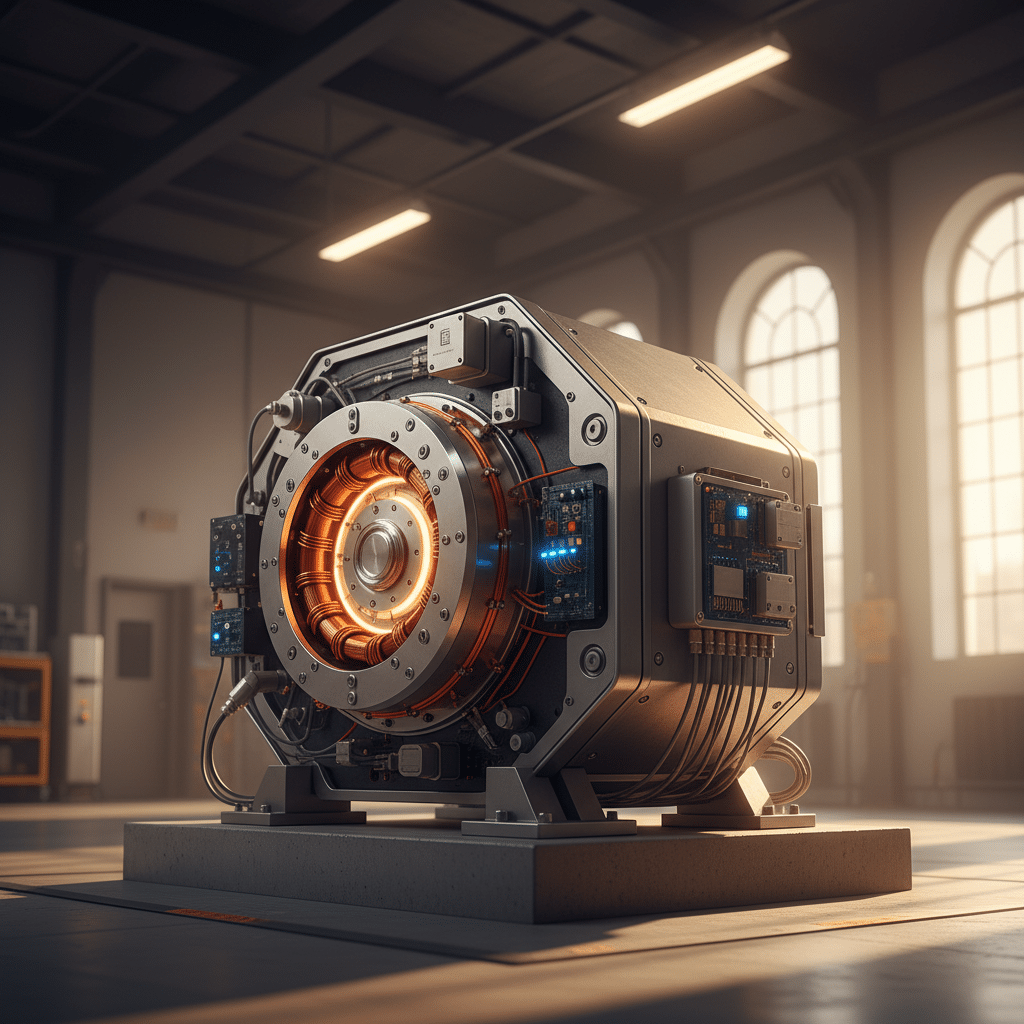
Precision Electric’s boost-phase rotary phase converters provide reliable three-phase power from a single-phase source, essential for operating heavy-duty industrial machinery.
How to Size and Select Precision Electric Boost-phase Rotary Phase Converters
Correctly sizing and selecting precision electric boost-phase rotary phase converters is a critical step that extends beyond simply matching equipment horsepower (HP). In fact, the nature of the motor load—whether it is light, medium, or hard-starting—plays the most significant role in determining the appropriate converter size. According to Phoenix Phase Converters, these are sophisticated devices designed for balanced power. Consequently, failing to account for load characteristics can lead to performance issues and potential equipment damage.
A primary rule is to oversize the converter. You should size the idler generator to be at least twice the HP of your largest motor, which is crucial for hard-starting equipment like air compressors that create high inrush current. For instance, documentation shows that for heavy/hard motor loads, you must double the converter size. In contrast, guidance for light/easy motor loads may only require a 1.5x multiplier. Therefore, always identify and size for your most demanding machine.
Beyond horsepower, selection involves the specific application. For example, equipment with sensitive electronics like CNC machinery demands stable power, as noted by phoenixphaseconverters.com. Some converters are specifically designed for delicate electronics, as described by phasetechnologies.com. In addition, soft-start capabilities are crucial for managing high-torque startups without causing voltage sags. Finally, verify the converter’s input voltage against your service to ensure National Electrical Code (NEC) compliance.
Step-by-step Installation, Wiring, and Safety Protocols
Properly installing precision electric boost-phase rotary phase converters is fundamental to achieving both optimal performance and operational safety. The process begins with selecting a suitable location that is clean, dry, and well-ventilated to prevent overheating. Consequently, you must ensure the mounting surface is level and can support the converter’s weight to minimize vibration. As detailed by Phoenix Phase Converters, these sophisticated devices require careful installation to supply balanced Three-Phase Power. It’s also wise to place the converter close to the Single-Phase Power supply to minimize voltage drop.
Once the unit is secured, the next step is wiring the electrical connections per the manufacturer’s schematic and all National Electrical Code (NEC) guidelines. This involves connecting the Single-Phase Power input and the generated Three-Phase Power output to your equipment. For instance, technical sheets from sources like Rspsupply specify minimum input wire gauges to handle the electrical load safely. Using undersized wiring can lead to poor performance and significant hazards. Always verify the input voltage matches your supply, as noted by northamericaphaseconverters.com for certain models.
Safety must be the highest priority. Before any wiring, strictly implement Lockout/Tagout (LOTO) procedures to ensure the circuit is completely de-energized. Furthermore, proper grounding of the Rotary Phase Converter chassis is a non-negotiable NEC requirement to protect against electrical faults. Verifying the unit’s NEMA Rating is also essential to confirm its suitability for the installation environment. As North American Smart Boost highlights, these systems are designed to protect sensitive equipment, and correct installation is the first step in ensuring that protection is effective.
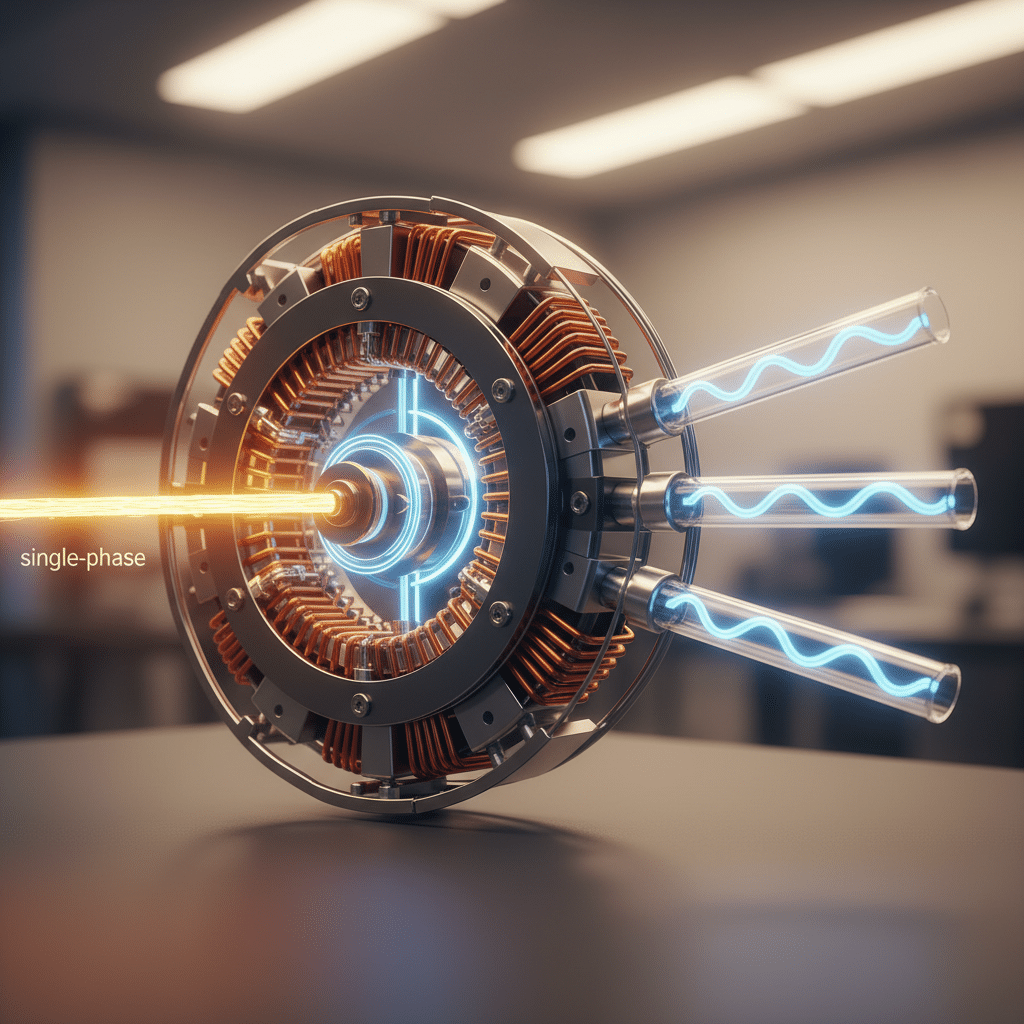
This diagram illustrates how precision electric boost-phase rotary phase converters efficiently transform single-phase power into balanced three-phase power for demanding applications.
Commissioning and Voltage Balancing for Your Rotary Phase Converter
Properly commissioning your new precision electric boost-phase rotary phase converters is a critical final step that ensures both safety and optimal performance. After the physical installation and wiring are complete, the initial power-up and voltage balancing must be performed meticulously. This process is especially vital for protecting sensitive equipment, such as CNC machinery, which relies on stable and balanced Three-Phase Power to function correctly. As explained by Phoenix Phase Converters, rotary converters are particularly well-suited for these sensitive loads. Consequently, verifying the output is the key to unlocking their full potential and longevity.
Voltage balancing involves measuring the voltage across the three output legs (T1 to T2, T2 to T3, and T1 to T3) under a no-load condition. First and foremost, ensure all Lockout/Tagout (LOTO) procedures are cleared before energizing the system. Using a calibrated digital multimeter, record the readings and compare them; the goal of these sophisticated devices is to supply balanced power, as noted by industry experts at Phase Converter Types. The objective is to achieve voltages that are within 2-5% of each other. If adjustments are needed, power down the system, adhere to LOTO protocols, and then adjust capacitor connections as per the manufacturer’s manual.
Failing to properly balance the voltages can lead to severe consequences for your three-phase equipment. For instance, significant voltage imbalance can cause motors to run hotter, vibrate excessively, and draw uneven current, which drastically shortens their operational lifespan as it counteracts their protective design. On the other hand, a well-balanced system ensures that motors deliver full torque and operate at peak efficiency, a primary benefit detailed by Digital Rotary Phase Converter Operation. Therefore, this final commissioning step is a mandatory procedure for ensuring the reliability of your entire setup.
A Practical Troubleshooting Guide for Precision Electric Rotary Phase Converters
Even highly reliable precision electric boost-phase rotary phase converters can occasionally encounter operational issues. Before beginning any diagnostic work, it is absolutely critical to implement proper Lockout/Tagout (LOTO) procedures to de-energize the equipment safely. Common problems typically manifest as a failure to start, incorrect output voltage, or unusual noises. These converters are sophisticated devices, as noted by Phoenix Phase Converters Blog, so a systematic approach is essential. Therefore, your first step should always be a visual inspection for any obvious signs of damage or loose connections after ensuring the unit is powered down.
If the unit will not start, first verify the incoming Single-Phase Power supply by checking for tripped circuit breakers or blown fuses. Next, use a calibrated multimeter to confirm the input voltage matches the NEMA rating plate, as unstable input is a frequent cause of problems. The primary goal is creating stable Three-Phase Power, which Digital Rotary Phase Converter explains is impossible with a poor source. Similarly, if output voltages are significantly unbalanced between the three legs, it may point to an internal component failure, such as in the capacitor bank detailed by 3-Phase Rotary Converters Explained.
Abnormal sounds can also pinpoint the issue. For example, a mechanical grinding noise often suggests idler generator bearing failure, while an electrical buzz could mean a faulty capacitor or contactor. Some converters use a soft-start feature for heavy equipment, which North American Smart Boost Rotary Phase Converter describes as essential for a smooth power-up. If such a load fails to start, this circuit may need inspection. Ultimately, for sensitive equipment like CNC machinery, as mentioned by Phoenix Phase Converters, unresolved problems warrant consulting the manufacturer’s documentation.

Properly sizing and selecting the right unit is crucial for optimal performance. Always consult manufacturer specifications when choosing between precision electric boost-phase rotary phase converters.
Preventive Maintenance for Your Precision Electric Boost-phase Rotary Phase Converters
To ensure the long-term operational integrity of your equipment, establishing a routine preventive maintenance schedule for your precision electric boost-phase rotary phase converters is essential. Consistent upkeep not only extends the service life of the converter but also guarantees the continued delivery of stable Three-Phase Power, which is crucial for protecting sensitive downstream machinery. According to Rotary Phase Converters, the inherent reliability of these systems is one of their key advantages, and a proper maintenance plan reinforces this benefit. Consequently, regular checks can prevent unexpected downtime and costly repairs, preserving the efficiency of your entire operation.
A thorough visual inspection should be the first step in any maintenance routine, always performed after following strict Lockout/Tagout (LOTO) procedures to de-energize the unit completely. Carefully examine all electrical connections for signs of tightness and look for any discoloration on terminals or wiring, which could indicate overheating. In addition, you should inspect the idler generator’s bearings for any unusual noise or vibration during operation, as this could signal impending mechanical failure. It is also critical to verify that all cooling fans are operational and that ventilation paths are clear to prevent thermal damage, ensuring the unit operates within its designated NEMA Rating environment.
Beyond mechanical checks, maintaining electrical performance is paramount. Periodically verify that the voltage balance between the three output legs remains within the manufacturer’s specified tolerance, typically ±5%. As noted by Phoenix Phase Converters News, these sophisticated devices are engineered to supply balanced power, a feature essential for sensitive loads. Furthermore, regularly inspect the start and run capacitors for any bulging, leaking, or other signs of degradation, as failing capacitors can significantly impact performance and motor starting. This attention to detail is vital for protecting sensitive loads like CNC machinery, a point emphasized by North American Smart Boost Rotary Phase Converter.
Comparing Top Brands and Models of Rotary Phase Converters
When selecting from the many available precision electric boost-phase rotary phase converters, the ideal choice ultimately depends on the specific application’s demands. For instance, different models are engineered for powering sensitive CNC machinery versus starting high-inertia, hard-starting motors. Leading brands such as North American Phase Converters, American Rotary, and Phase Technologies each offer distinct advantages. Consequently, understanding your load requirements is the first step in navigating the market. According to Phoenix Phase Converters, rotary converters are particularly well-suited for sensitive loads, which is a key factor in the decision-making process.
Drilling down into specific models reveals key differentiators. For example, the North American SB-3 Smart Boost excels at protecting motors from unbalanced power, as noted by North American Smart Boost Rotary Phase Converter. In contrast, brands like American Rotary emphasize extremely robust, ‘made in the USA’ generator construction for maximum reliability, a point highlighted by Integrated Soft Start. For applications with delicate embedded electronics, a digital model like the Phase Perfect provides exceptionally clean and stable Three-Phase Power, a feature detailed by Phase Perfect Converters. Therefore, the feature sets vary significantly from one manufacturer to another.
Ultimately, the best brand and model hinge on a careful evaluation of your machinery’s power quality requirements and starting characteristics. While many sophisticated rotary phase converters supply well-balanced power, digital models generally offer the highest precision for voltage-sensitive equipment. On the other hand, for heavy-duty, general-purpose motor loads, a well-built converter with a focus on durable components and a strong generator design may provide a more cost-effective and reliable long-term solution. Always consult the manufacturer’s technical specifications to ensure a proper match with your equipment and achieve optimal performance and longevity.
Conclusion: Ensuring Long-term Reliability and Performance
Investing in precision electric boost-phase rotary phase converters is a significant step toward achieving reliable and efficient Three-Phase Power from a Single-Phase Power source. Throughout this article, we have explored everything from core operational principles and selection criteria to detailed installation and maintenance protocols. Ultimately, the long-term performance of your equipment hinges on a comprehensive understanding of these systems. Proper sizing, meticulous installation, and consistent preventive maintenance are not merely recommendations; they are, in fact, essential practices for maximizing the lifespan of both the converter and the machinery it powers.
As highlighted by industry experts, one of the key advantages of these systems is their inherent reliability, which is crucial for supporting the consistent operation of sensitive equipment, as noted by Rotary Phase Converters. These are sophisticated devices engineered to supply balanced three-phase power, a feature that distinguishes them from simpler conversion methods described by Phoenix Phase Converters. By following the guidelines for commissioning, voltage balancing, and proactive troubleshooting, you ensure your operations benefit from stable, high-quality power. This not only protects sensitive electronics but also extends motor lifespan by preventing issues like unbalanced single-phasing, a key benefit mentioned by North American Smart Boost Rotary Phase Converter. Consequently, your investment translates into dependable performance and operational peace of mind for years to come.