








Single Phase to 3 Phase Converter: Types, Sizing and Limits
A single phase to 3 phase converter lets three-phase motors and machines run where the utility supplies only single-phase power. If you own a lathe, mill or pump with a three-phase motor, you need to pick the right type of converter. This article explains what the device is, how the main types work, how to size one, and when to call for help.
On this page
- What a single phase to 3 phase converter is
- How a single-phase supply becomes three-phase
- The four types of single-to-three-phase conversion
- Static phase converters
- Rotary phase converters
- Digital (solid-state) phase converters
- A VFD used as a converter
- Where single to three phase converters are used
- How to choose the right converter for your equipment
- Sizing and service-panel considerations
- What it costs
- Installation, startup checks and common mistakes
- When to repair, replace or call for help
- Frequently asked questions
What a single phase to 3 phase converter is
What is a single phase to 3 phase converter?
A single phase to 3 phase converter is a device that changes single-phase power into three-phase power. As a result, three-phase motors and equipment can run where no three-phase utility service exists. The main kinds are static, rotary and digital phase converters. A variable frequency drive (VFD) can also do the job for a single motor.
Is a 1 phase 3 phase converter the same as a phase converter?
Yes. People use many names for the same thing: phase converter, 1 phase 3 phase converter, one phase to 3 phase converter, and the spelling “convertor.” A converter from single phase to three phase is simply the longer way to say it. The names do not point to different products, so read the type and the rating instead.
Why do three-phase machines need a converter on single-phase service?
Three-phase AC motors are generally simpler, more reliable and more efficient than single-phase motors. Because of that, shops want to keep them. However, a three-phase motor needs three supply legs to build a rotating magnetic field, and single-phase service gives you only two.
What are the alternatives?
You could swap the machine to a single-phase motor. You could also ask the utility to run three-phase service to your site. Still, many owners choose a converter because it keeps the machine they already have. One vendor, Phoenix Phase Converters, quotes a cost range of $1,500 to $15,000 depending on size and type. Treat that as one vendor’s range, not a rule.
How a single-phase supply becomes three-phase
How does a single phase to 3 phase converter work?
Single-phase service has two supply lines, called L1 and L2. A converter has to make a third leg, called L3, that is shifted in time. Then the motor sees a rotating field and turns. How well the converter makes that third leg decides how the motor behaves.
Key terms in plain words
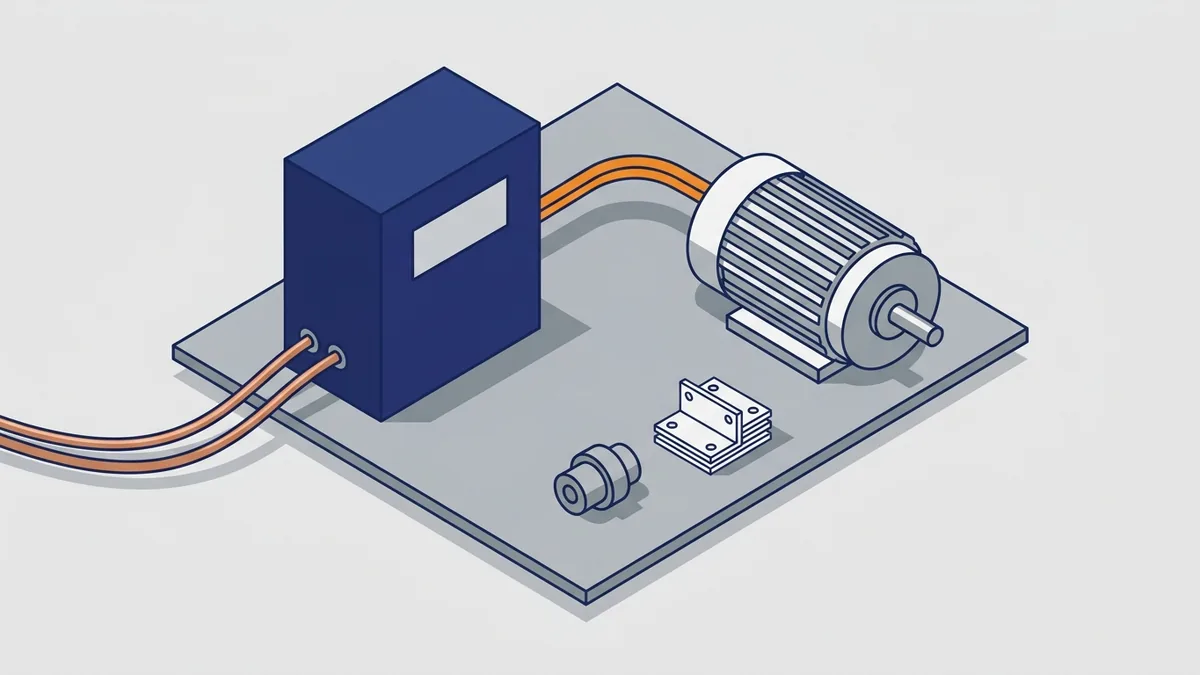
- Generated leg: the third leg the converter makes, since the utility does not supply it.
- Idler: a three-phase motor that spins without a mechanical load inside a rotary converter and helps make the generated leg.
- Start capacitor: a capacitor that shifts the phase so the motor can start.
- Voltage balance: how close the three voltages are to each other. Good balance means smooth, cool motor running.
- Locked-rotor current: the large current a motor draws in the first instant of starting, before it turns.
- Derating: using a device below its normal rating because of its operating conditions.
The four types of single-to-three-phase conversion
What are the types of single phase to 3 phase convertor?
Converter makers typically list three main types: static, rotary and digital. A VFD is a fourth route. The table compares them at a glance.
| Type | How it makes the third leg | Power to the motor | Best fit |
|---|---|---|---|
| Static | Capacitors shift the phase to start the motor, then drop out | Roughly two-thirds of rated horsepower | One light-duty, fixed-speed motor |
| Rotary | An idler motor makes a continuous third leg | Full rated power when sized correctly | Several motors and mixed loads |
| Digital | Electronics with a digital signal processor build the output | Full rated power when sized correctly | CNC and voltage-sensitive machines |
| VFD | Rectifies to DC, then builds three-phase output | Depends on the drive and its derating | One motor that needs speed control |
Static phase converters
How does a static phase converter work, and what are its limits?
A static converter uses capacitors and a start relay to make a phase shift in one single-phase line. That shift starts the motor. Then the converter drops out, and the motor runs on single-phase power.
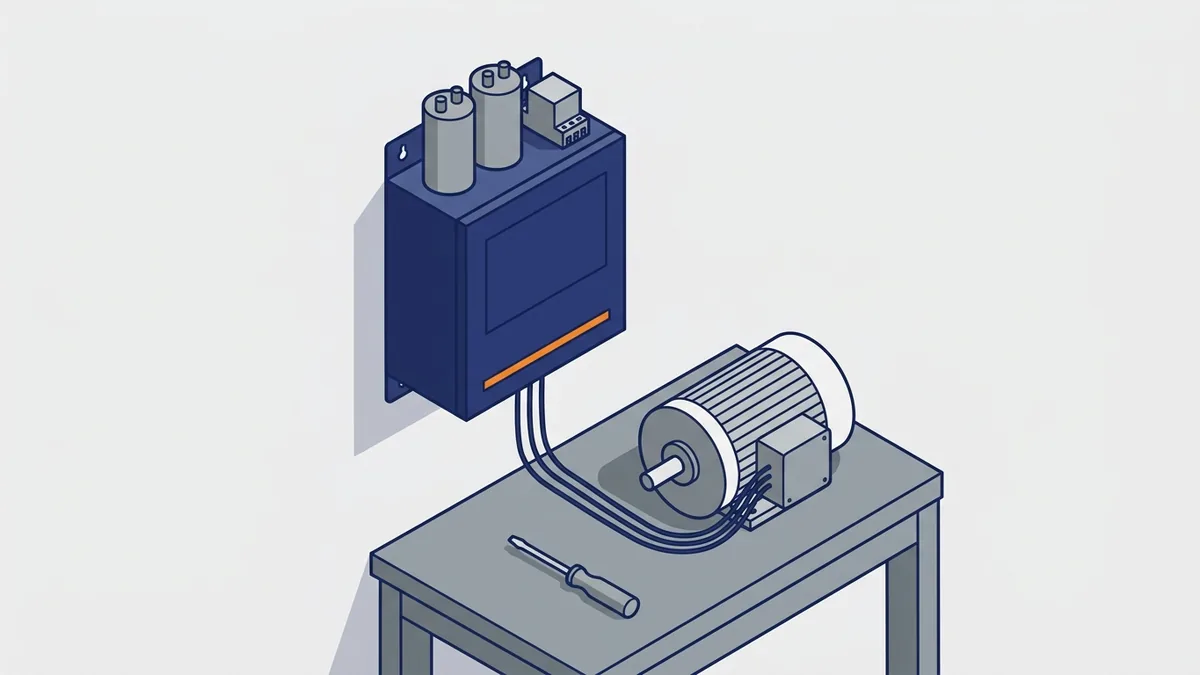
Because of this, a static converter suits motor loads only, and it is built to start and run one motor at a time. It cannot run CNC machines, sensitive electronics or several machines at once. It also will not run resistive or inductive loads.
Will a motor on a static converter run at full horsepower?
No. After startup, the generated leg disengages, so only two of the three motor windings are fully energized. NAPCco and American Rotary put the loss at about one-third, which leaves roughly two-thirds of rated power. Phoenix gives a wider range of one-third to one-half.
That does not make a static converter a bad choice. It fits one light-duty, fixed-speed motor that does not need full power. Also, do not oversize it. An oversized static unit can excite the motor and keep it from starting.
Do soft starters work with a static converter?
Not well. A soft starter sees single-phase power at startup, so it cannot work normally. Mechanical contactor starters are generally used instead.
Rotary phase converters
How does a rotary phase converter work and what size idler do I need?
A rotary converter uses an idler motor with capacitors to make the third leg all the time. The result is balanced three-phase power. According to NAPCco, it runs motor, resistive and inductive loads at full rated power.
For sizing, many guides give a rule of thumb: the idler should be at least 1.5 times the horsepower of your largest motor. Hard-starting loads may need 2 to 3 times. These are third-party rules of thumb, not standards, and figures vary between sources. Follow the converter maker’s sizing table.
Does a rotary converter use power when idling?
Yes. The idler keeps spinning with no load, and one guide says it draws about 30 to 50 percent of its nameplate full-load current. Estimates of idle power vary.
One guide lists about 750 W for a 15 HP idler and puts the annual cost at about $234 under its stated usage (8 h/day, 5 days/week, $0.15/kWh). Another lists about 400, 550 and 850 W for 7.5, 10 and 15 HP idlers. Use these only as a rough guide.
What maintenance and noise should you expect from a rotary converter?
The idler is a running motor, so it hums and makes some noise all day. Place it away from where people work, and give it room to breathe. Also, because it has bearings and capacitors, they wear like any motor part. Check the idler now and then for new noise, extra heat and swollen or leaking capacitors, and replace worn parts.
No reliable figure exists for lifespan, because it depends on the brand, the duty and the care. Ask the converter maker about service life and warranty before you buy.
Digital (solid-state) phase converters
When do I need a digital phase converter?
A digital converter uses a digital signal processor to produce near-perfect three-phase power. No spinning idler is involved. As a result, it suits CNC machines, voltage-sensitive controls and demanding loads that need tight voltage regulation.
The trade-off is cost and effort. Digital units can cost more and be more complex to install. In comparison, rotary and static converters can add phase imbalance and harmonic distortion. If your machine has delicate electronics, that extra cost may pay off.
How much voltage imbalance can a CNC control or servo drive take?
The limit comes from the machine builder, not from a general rule. Look in the CNC or drive manual for the allowed supply voltage range and phase balance. If you cannot find it, ask the builder before you choose a converter.
You can also check the supply yourself. First, run the converter with the machine’s normal load. Next, measure all three line-to-line voltages at the machine’s input with a true-RMS meter. Then find the average of the three readings. Imbalance in percent is the biggest difference from that average, divided by the average, times 100. Compare the result with the builder’s limit.
A VFD used as a converter
Can a VFD convert single phase to three phase, and how much must it be derated?
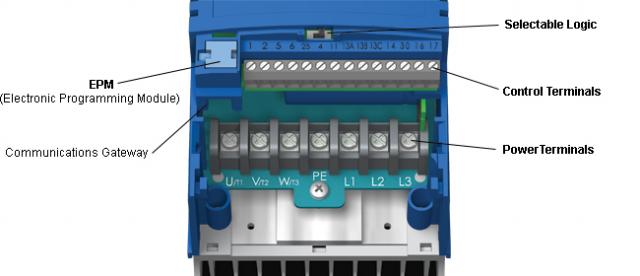
Yes, for one motor. A VFD rectifies the input to DC and then builds three-phase output. It also gives you speed control. However, it serves one motor and cannot be shared across machines.
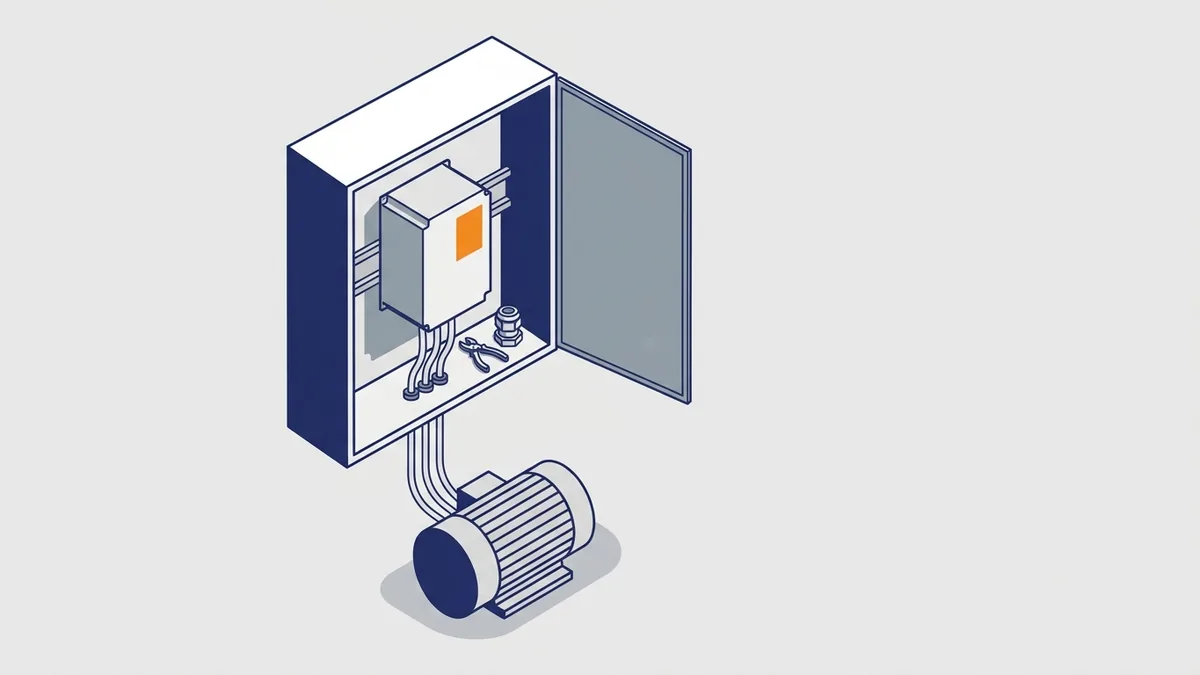
A drive rated for three-phase input must usually be derated on single-phase input. For example, Rockwell lists 35 percent of rating for single-phase input on three-phase PowerFlex 520-series drives. Third-party guides give other figures, and some drive models do not allow single-phase input at all. So do not rely on one universal number. Use the manual for your exact drive.
How do I size a VFD for single-phase input?
Start with the motor’s full-load amps, then pick a drive whose output current covers them after any derating. Next, look up the drive’s single-phase input current in its manual. That current is higher than the three-phase input current, so size the wire and breaker from the manual’s single-phase figures.
Also match voltage and motor. A drive cannot raise the voltage above its input, so a 240 V single-phase supply suits a 230 V motor, not a 460 V one. Check the motor’s lead-length limits and insulation rating in the drive manual too.
Which drives are built for single-phase input?
Many makers list drives that take single-phase input and give three-phase output. They are usually in the 240 V class and in smaller horsepower sizes. Look for single-phase input on the nameplate and in the catalog. Drives with single-phase input on the nameplate need no extra derating, according to one guide.
What else should I check on a drive?
- A drive may fault at start because of input phase-loss protection. Check the manual for a single-phase setting.
- Get the manual from the maker, such as the Rockwell Automation Literature Library.
Where single to three phase converters are used
Where are phase converters used?
Phase converters appear wherever three-phase machines sit on single-phase service. Common places include machine shops and woodshops with mills, lathes and shapers. Farms and small manufacturers use them too. CNC machines are another common use, usually with a digital converter.
The match depends on the load. A single fixed-speed motor can use a simple unit. Several motors point to a rotary or digital converter. Voltage-sensitive controls point to digital.
How to choose the right converter for your equipment
Which converter should I choose for my equipment?
- List every three-phase load. Write down nameplate HP, voltage and full-load amps. Note which loads can start at once.
- Decide on speed. If the motor needs variable speed, look at a VFD. If fixed speed is fine, consider static, rotary or digital.
- Check for electronics. CNC controls and similar parts need tight voltage balance, so lean toward digital.
- Size to the starting load. Use the largest motor and its starting demand, not only the running HP.
- Check the service. Compare your single-phase panel and feeder with the converter’s input current.
Can one converter run more than one machine?
It depends on the type. Rotary and digital converters can power multiple motor loads when properly sized. A static converter is built for one motor at a time. A VFD serves one motor.
How do I size a converter for several motors?
Size the converter from the largest motor first, then check the total load. For example, say you run a 10 HP, a 5 HP and a 3 HP motor. Using the 1.5 times rule, the 10 HP motor calls for an idler of at least 15 HP.
Next, add the HP of the motors that run at the same time. Here that is 18 HP if all three run together. Motors that never run together do not add up, but the largest motor’s start still counts. Then compare your total with the maker’s maximum connected load for that converter size.
Also plan the start order. A common practice is to start the largest motor first, while the others are off, and then add the smaller ones. Ask the converter maker for its start-up advice.
How do I match the voltage of my machine and my service?
The converter’s output voltage must match the motor’s nameplate voltage. This matters most when the two differ. If the machine is 460 V and your service is 240 V single-phase, you need either a step-up transformer or a converter made with a 460 V output. Without one of those, the motor cannot get the right voltage.
Many motors are dual-voltage, such as 230/460 V. If yours is, you can often wire it for 230 V and avoid the transformer. Check the motor’s nameplate and wiring diagram.
Sizing and service-panel considerations
How much single-phase service or breaker capacity do I need?
Your single-phase panel must carry the converter’s input current. That current is higher than the three-phase full-load amps of the load. For example, Phoenix says a 20 HP rotary converter draws about 80 to 90 amps on 240 V single-phase.
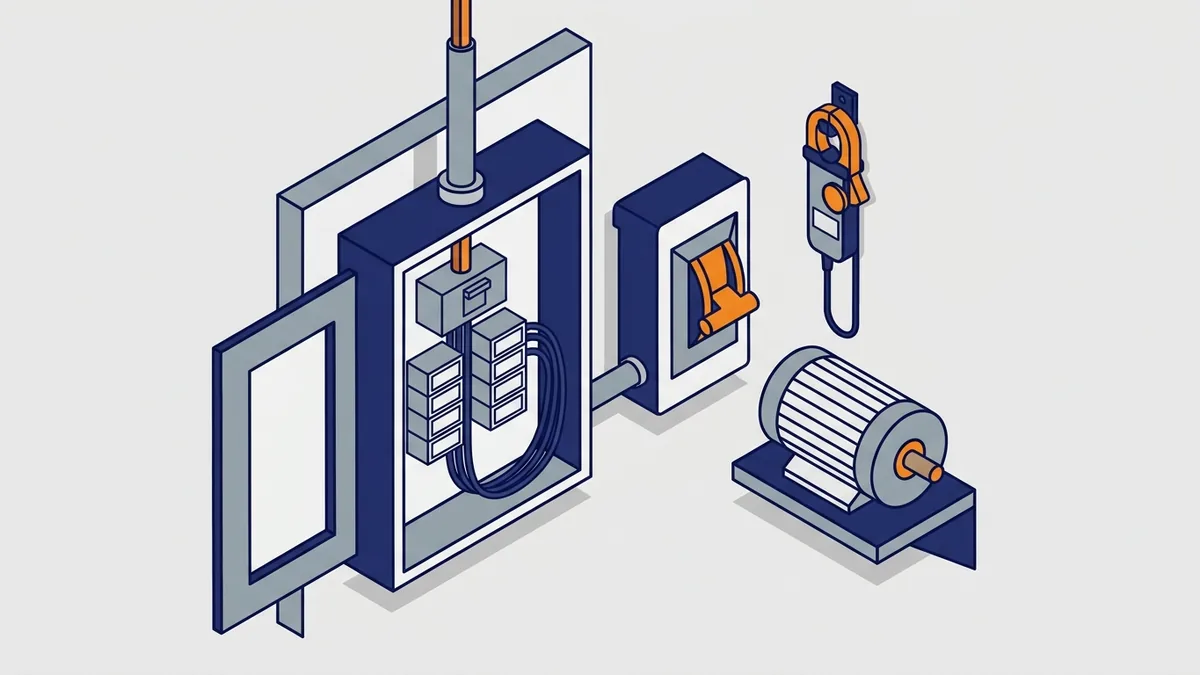
With a rotary unit, feeder capacity must also cover the idler current plus the connected loads. Motors draw about six times their full-load amps at start on common NEMA Design B motors, by one third-party guide. That is why starting load matters.
What is the input current and breaker size for each converter size?
No single chart fits every brand, because input current changes with the maker, the design and the voltage. Use the single-phase input amps printed on the converter’s nameplate or in its manual. As a rule of physics, a unit fed at twice the voltage draws about half the current. Few sites have 460 V single-phase service, though, so most small shops work from 230 or 240 V.
What do the NEC and UL rules require for phase converters?
The National Electrical Code (NEC), published by NFPA, covers phase converters in Article 455. It ties the supply conductor size and the overcurrent protection to the converter’s nameplate single-phase input current. A common rule is to size the conductors at 125 percent of that current and to set the overcurrent device at no more than 125 percent. The exact rules depend on the NEC edition and your load type, so check the current text.
For product safety, look for a listing mark from a recognized testing lab, such as UL, on the converter. Your local inspector has the final say. Have a qualified electrician confirm wire size, breaker rating and disconnects against the converter manual, the nameplate and local code.
What it costs
What does a single phase to 3 phase converter cost?
Phoenix quotes $1,500 to $15,000 depending on size and type. That is one vendor’s range, so get your own quotes. Even so, it shows how wide the spread is.
Several things drive the price:
- The type, since digital usually costs more than rotary or static.
- The horsepower you need to support.
- A possible panel or service upgrade.
- The running cost of idle losses on a rotary unit.
What is the installed cost with electrician labor?
No dependable typical figure exists. Labor depends on your area, the wire run, the panel work and the code requirements. Ask an electrician for a written quote that covers the converter, wire, breaker, disconnect and any transformer.
Installation, startup checks and common mistakes
How do I check that a rotary converter is balanced and the rotation is right?
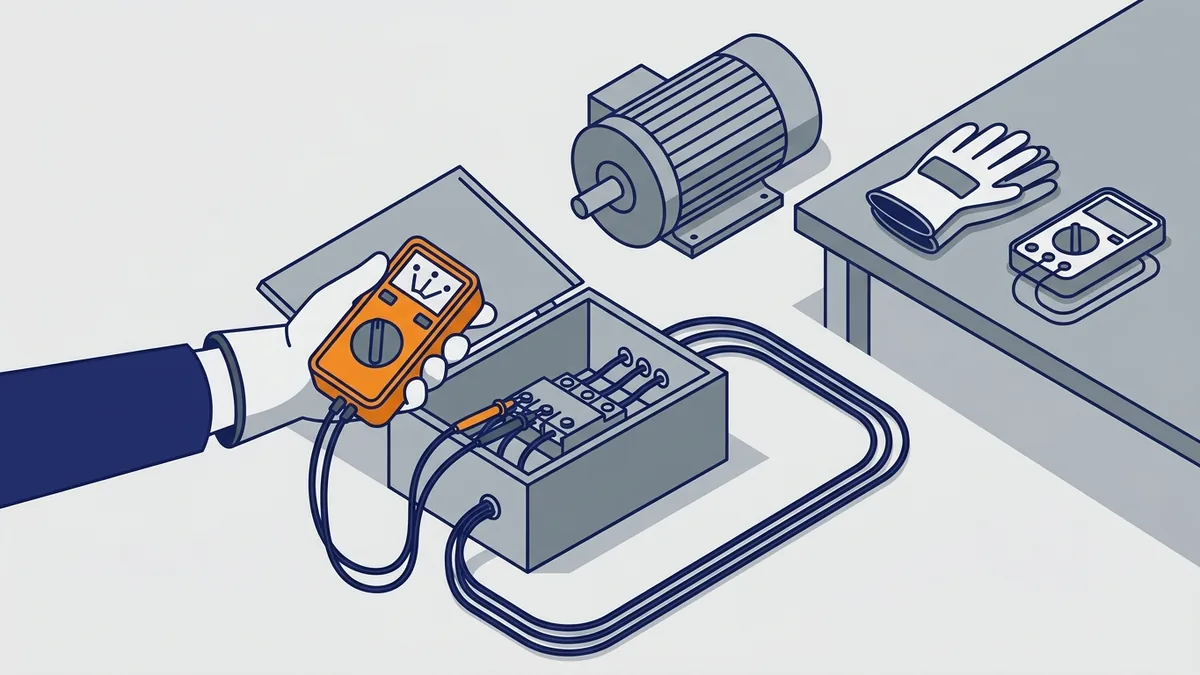
One third-party guide gives a simple check. With the idler running and no load, the two voltages that involve the generated leg should be within about 5 percent of the L1-L2 voltage. Next, confirm phase sequence with a phase-rotation tester. Wrong rotation runs the machine backward, so check it before you start any motor.
What do I do if the rotation is wrong?
Turn off and lock out the power first. Then swap any two of the three motor leads at the motor or its starter. That reverses the rotation. Do not swap the converter’s input leads, and do not change the converter’s own wiring unless the manual says so. Then test again.
What are common mistakes when installing a phase converter?
- Using an undersized idler.
- Putting a static converter on a machine that needs full power.
- Oversizing a static converter so the motor will not start.
- Connecting a soft starter to a static converter.
- Forgetting to check phase-loss protection on a VFD.
- Skipping the service panel capacity check.
Also keep safety in mind. This work involves live line voltage and large capacitors. Do not wire line-voltage converters or capacitor banks yourself. Use a qualified electrician.
When to repair, replace or call for help
When should I call for repair or help?
Call for help when you see any of these signs:
- The motor will not start.
- The motor runs hot or buzzes.
- Currents are unbalanced across the three legs.
- Breakers trip.
- A VFD shows phase-loss faults.
These signs can point to the motor, the drive, the controls or the converter. Testing each part tells you which one is at fault. For example, a balanced supply with a bad motor means the motor needs work, not the converter. Precision Electric can look at drives, motors and controls, and help you sort out the cause.
Frequently asked questions
What is a single phase to 3 phase converter?
It is a device that lets three-phase motors and equipment run from a single-phase supply. The main kinds are static, rotary and digital phase converters. A variable frequency drive can also do the job for a single motor.
Can a single phase to 3 phase converter run a motor at full power?
It depends on the type. A rotary converter, or a digital one, can run a motor at full rated power when sized correctly. A static converter drops out after starting, and the motor then runs at roughly two-thirds of its rated horsepower.
What is the difference between static, rotary and digital phase converters?
A static converter uses capacitors to start the motor and then drops out. A rotary converter uses an idler motor to make a continuous third leg. A digital converter uses electronics to produce regulated three-phase power and suits CNC and voltage-sensitive machines.
Can I use a VFD as a single phase to 3 phase converter?
Yes, for one motor. Check the drive manual first, because three-phase-input drives must be derated on single-phase input. Rockwell lists 35% of rating for single-phase input on three-phase PowerFlex 520-series drives. Some models do not allow single-phase input.
How big a rotary phase converter do I need?
A common rule of thumb is an idler of at least 1.5 times the HP of the largest motor, and more for hard-starting loads. Follow the converter maker’s sizing table. Also check that your single-phase service can carry the input current.
A phase converter lets you keep your three-phase machines running on single-phase service. The right choice depends on whether you run one motor or several, need variable speed, and need full power or clean voltage. If you want help sorting out a motor, drive or control problem, or have questions about your equipment, contact Precision Electric for a quote or repair, or browse our products.