Single Phase vs Three Phase: How to Choose for Supply and Motors
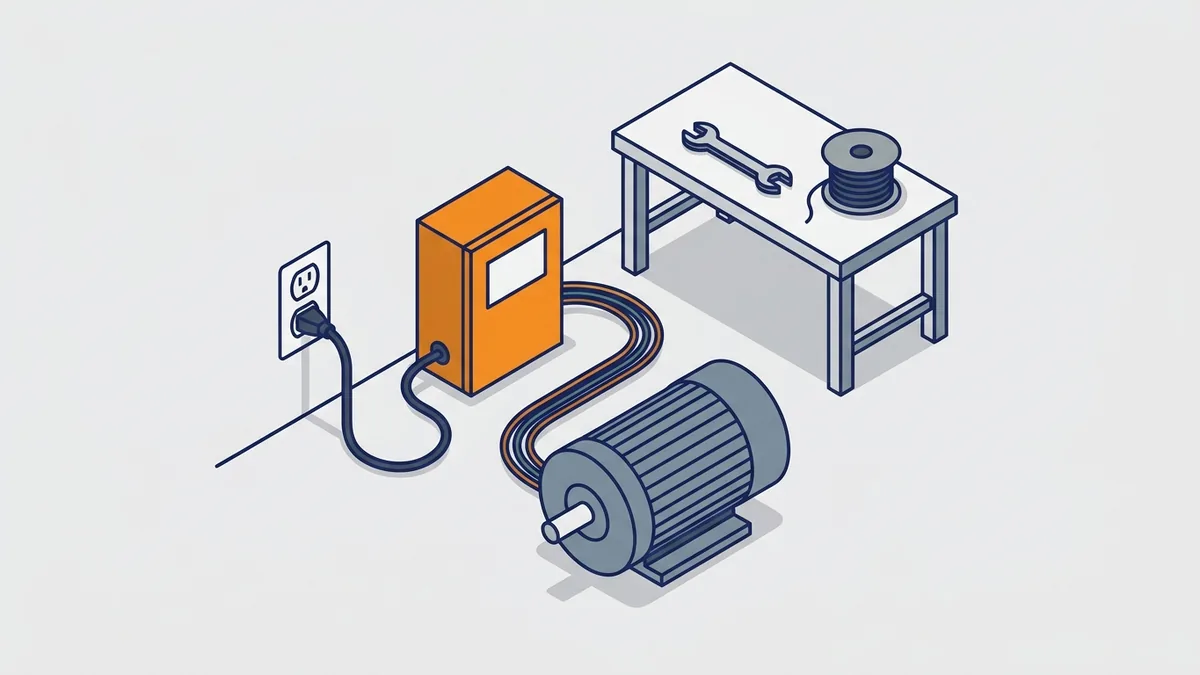
Choosing between single phase vs three phase decides how you size a supply, a motor and a drive. If your equipment and your service do not match, you need to know your options before you buy or wire anything. This guide covers both supply and motors, then gives a clear pick by situation and answers the mismatch questions.
On this page
- Single phase vs three phase at a glance
- What is single phase power?
- What is three phase power?
- Difference between single phase and three phase supply: comparison table
- Single phase vs three phase motor
- Where single phase wins
- Where three phase wins
- Which should you choose? Recommendation by situation
- Can you convert single phase to three phase power?
- How much does it cost to convert single phase to three phase?
- What does utility three-phase service involve?
- How does a VFD convert single phase to three phase?
- How much do I derate a VFD for single-phase input?
- How do you size input current, breaker and wire for a single-phase-input VFD?
- Which VFD faults show single-phase input or phase loss?
- Rotary and static phase converters
- Can a three phase motor be converted to single phase?
- Can a single phase generator be converted to three phase?
- Which code and safety rules apply?
- Common mistakes and when to call for help
- Frequently asked questions
Single phase vs three phase at a glance
Here is the short answer to the question “what’s the difference between single phase and three phase?” First, single phase has one alternating voltage waveform. Meanwhile, three phase has three waveforms offset from each other by 120 degrees.
Because of that offset, three phase delivers steadier power and more power per conductor. As a result, single phase suits homes and light loads, while three phase suits motors and heavier industrial loads.
Next, this article covers each system, a comparison table, motors, where each one wins and how to choose. After that, it explains what to do when the supply and the equipment do not match. That includes drives, phase converters, motors run on the wrong supply and generators.
What is single phase power?
Single phase power uses one alternating waveform. In the basic description, it needs a hot conductor and a neutral conductor. Also, the power level rises and falls through each cycle and repeatedly drops to zero.
You will find it in lighting, heating, homes, small offices and fractional-horsepower motors. In addition, wiring is simpler, and the equipment is cheaper when the load is small.
However, it has one weak point. If that single phase is lost, everything on it is lost.
What is three phase power?
Three phase power uses three hot conductors. Their waveforms sit 120 degrees apart, so one phase rises while another falls. Total delivered power stays steadier than in a one phase supply.
The same load needs smaller conductors and less copper, because current splits across three wires. Generac says three phase needs only about 1.5 times the wires of single phase to deliver much more power. For this reason, it is the normal choice for motors, industrial plants and heavy commercial equipment.
Also, you can take a single-phase feed from a three-phase system with transformers. That is how many single-phase loads are served.
Difference between single phase and three phase supply: comparison table
This table sums up the difference between single phase and three phase supply. It also answers the question of three phase vs single phase power in capacity and conductors.
| Feature | Single phase | Three phase |
|---|---|---|
| Waveform | One alternating waveform | Three waveforms, 120 degrees apart |
| Conductors | Fewer; simpler wiring | More; confirm the count on site |
| Power capacity | Lower | About 1.73 times single phase at the same line voltage, line current and power factor |
| Power smoothness | Drops to zero each cycle | Steadier, because phases overlap |
| Conductor size for the same load | Larger | Smaller, with less copper |
| Motor starting and running | Lower starting torque; often needs a capacitor | Easier starting; smooth, constant torque |
| Typical uses | Homes, lighting, small offices, small motors | Industrial plants, motors, heavy equipment |
| Equipment and installation cost | Lower for small loads | Often higher to install, especially if the utility must extend service |
| Effect of losing a phase | Whole supply is interrupted | Other phases may keep working, but wording differs by source |
| Motor build | Needs starting aids | No capacitor needed |
Voltage and wire counts vary by region
First, do not treat any one voltage pair as universal. Some sources quote single-phase supplies up to 230 V and three-phase up to 415 V. However, those figures describe a 230/415 V region only.
Sources also disagree on wire counts, with some saying two versus four. So describe a supply by its system type, and check your own service voltage and conductors on site.
What are the common service voltages?
In North America, these are the services you will meet most often:
- 120/240 V single phase (split phase): two hot legs and a neutral. Each leg reads 120 V to neutral, and the two legs read 240 V together.
- 208Y/120 V three phase: common in commercial buildings. Each phase reads 120 V to neutral and 208 V to another phase.
- 480Y/277 V three phase: common in industrial plants. Each phase reads 277 V to neutral and 480 V to another phase.
- 240 V delta three phase: three hot legs at 240 V between phases, with no neutral in the basic form.
Be careful with 208 V. A motor rated only for 230 V gets about 10% less voltage on a 208 V system, so read its nameplate first.
How do you tell wye from delta or high-leg delta?
A qualified person should measure the supply with a properly rated meter. First, read each phase to neutral and each phase to phase. In a wye system, phase to phase is about 1.73 times phase to neutral, and all three phase-to-neutral readings match.
A delta system has no balanced neutral. In a high-leg (or “wild leg”) delta, one winding has a center tap that gives 120 V to neutral on two legs. The third leg reads about 208 V to neutral. Do not connect single-phase 120 V loads to that high leg. Many installations mark it with orange.
Single phase vs three phase motor
The difference between a single phase and a three phase motor starts with how each one gets turning. A single-phase motor usually needs a starting aid, such as a capacitor. It also has lower starting torque and lower efficiency than a three-phase motor of similar size.
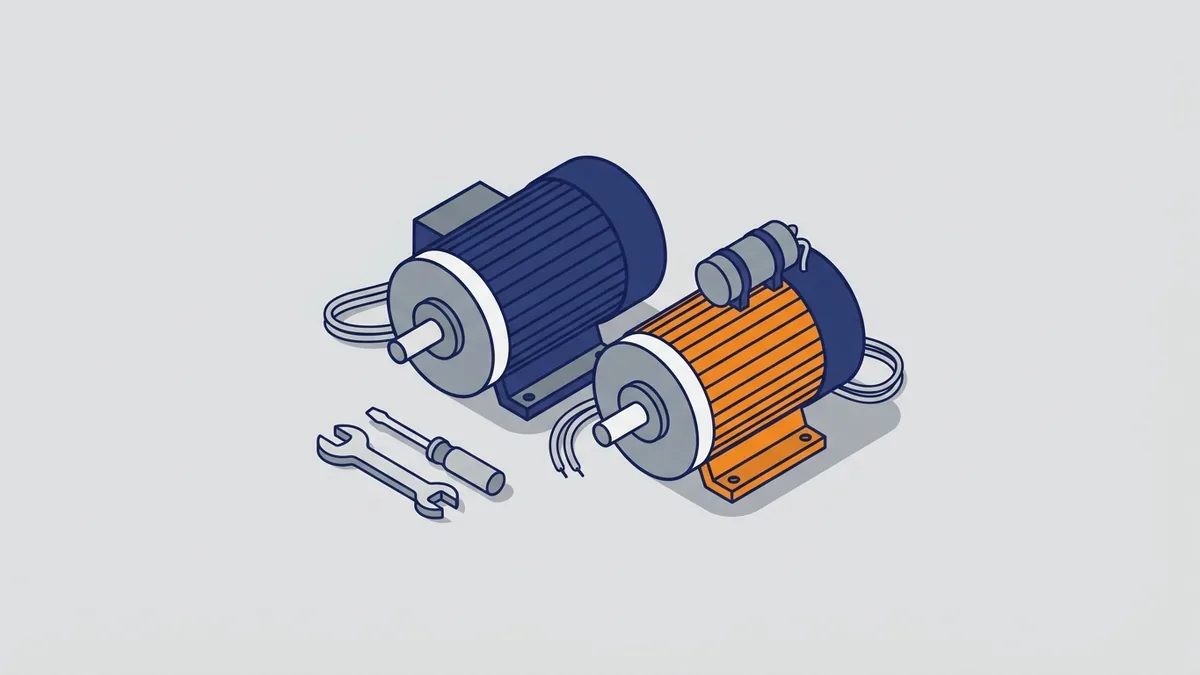
In contrast, a three-phase motor needs no capacitor. It starts more easily and delivers smooth torque with less vibration. Single-phase motors are common in fractional-horsepower sizes, while three-phase motors become the standard industrial choice as sizes grow.
Why do three-phase motors start and run better than single-phase motors?
The three offset waveforms create a rotating magnetic field right away. A single-phase supply alone cannot do that, so the motor needs a capacitor or another starting aid. Once running, a three-phase system gives constant torque, while single phase does not.
Likewise, the same holds for compressors. A three-phase unit does not need a capacitor and usually starts more easily.
How do you read a motor nameplate and match it to your supply?
The nameplate tells you what supply the motor needs. Check these items first:
- Voltage: a dual-voltage motor, such as 230/460 V, has windings that you connect one of two ways. Low voltage uses a parallel connection, and high voltage uses a series connection. The wiring diagram on the nameplate or inside the terminal box shows which leads to join.
- Full-load amps: the nameplate lists amps for each voltage. The current at 460 V is about half the current at 230 V.
- Frequency: match the motor’s rated frequency, usually 60 Hz in North America, to your supply or drive output.
- Service factor: a service factor of 1.15 means the motor can carry up to 115% of rated horsepower for a time under normal conditions. A service factor of 1.0 means no extra margin.
So pick the connection that matches your supply voltage, and never wire a motor for a voltage the nameplate does not list. If you are unsure, ask a qualified electrician or a repair shop before you power it up.
Can I run a single-phase motor on a VFD?
In general, no. A VFD (variable frequency drive) controls motor speed by changing the frequency it sends out. Single-phase motors generally cannot run on one, and capacitor-start designs have a centrifugal switch that prevents it.
Do not mix up two ideas here. A drive with single-phase input and three-phase output can run a three-phase motor. It is not a way to give a single-phase motor variable speed. KEB America explains this well in its blog on VFDs for single-phase applications.
Where single phase wins
Single phase is the better choice for homes, small offices and light commercial loads. It also fits low-power or portable equipment. In addition, it is the only option at sites that have single-phase service alone.
- Lower cost for small loads: service and receptacles cost less when the load is small.
- Simplicity: fewer conductors, and no phase-sequence or phase-loss concerns.
- Small motors: fractional-horsepower motors are common on single phase.
So if your loads are lights, heaters and small tools, single phase does the job. In that case, you gain little by paying for three phase.
Where three phase wins
Three phase is the better choice for motors and heavy equipment. You get smoother torque, easier starting and more power from a given machine size. Higher loads also save copper, because the conductors can be smaller.
It suits continuous loads, data centers and industrial plants too. Finally, it leaves room to grow, since three-phase service gives you capacity to add machines later.
When you compare 1 phase vs 3 phase for a motor-heavy site, three phase almost always comes out ahead. The exception is a site where the utility cannot supply it at a reasonable cost.
Which should you choose? Recommendation by situation
Use this list to choose between single phase vs three phase for your case.
- Home or office: single phase.
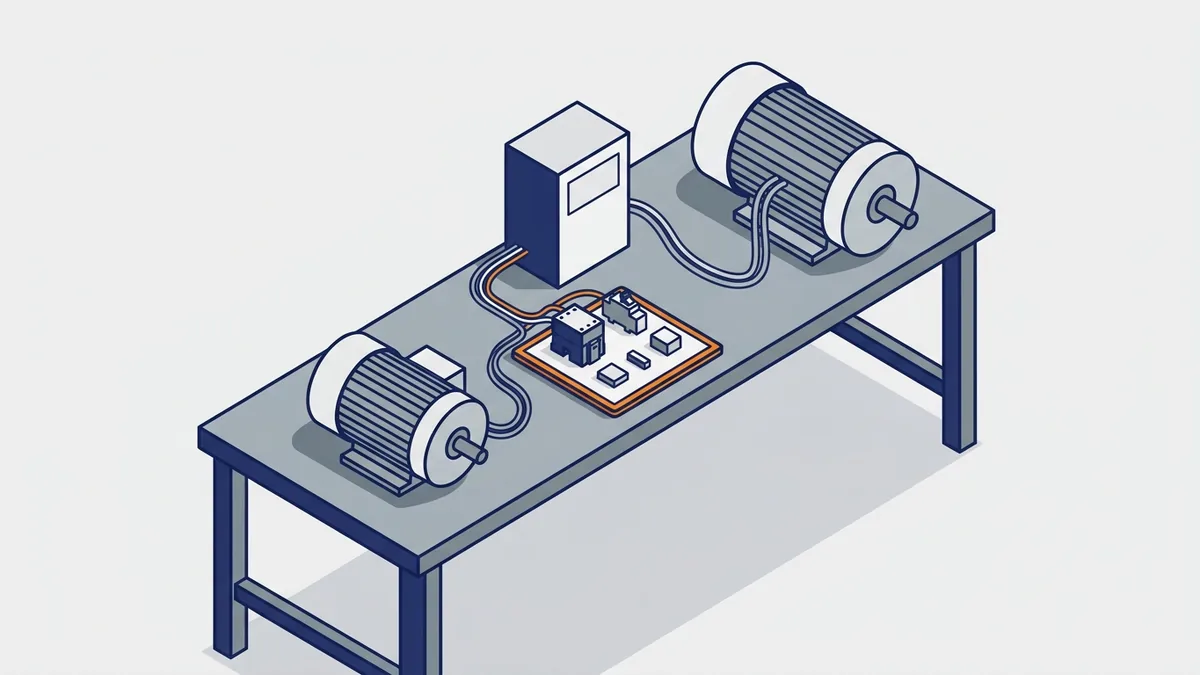
- Small shop with one motor on single-phase service: if the motor is three phase, use a single-phase-input VFD.
- Multi-machine shop on single-phase service: use a rotary phase converter for fixed-speed machines.
- New motor purchase: match the service you have. Choose three phase where the service allows it.
- Generator purchase: match the generator to your loads. See the generator section below.
- Plant adding a machine: choose three phase, and ask the utility about service if the load is large or growing.
The core rule is simple. If the motor is already three phase and only single-phase service exists, pick a VFD for one motor and a rotary converter for several machines.
For wiring and derating steps, follow the existing step-by-step posts on our site. Also, ask a qualified electrician about any change to utility service.
Can you convert single phase to three phase power?
Yes, within limits. This answers the question of how to convert single phase to three phase power. The practical methods are:
- A VFD, for one motor, with variable speed.
- A rotary phase converter, for several fixed-speed machines.
- A static phase converter, for light, occasional loads.
- A utility three-phase service.
A passive transformer alone cannot do it. It cannot create the 120-degree phase shift. You need a rotary converter, a VFD or a digital phase converter. Note that “digital phase converter” means different things on the market, and sometimes it means a digitally controlled rotary converter.
How much does it cost to convert single phase to three phase?
EcoFlow’s generator blog says equipment-level phase converters run from about $300 to over $5,000, depending on horsepower. That is a wide spread, so get a quote for your motor size.
Utility three-phase installation can also be expensive and slow. That is why many people choose on-site converters.
What does utility three-phase service involve?
The cost depends mostly on how far your site sits from existing three-phase lines. It also depends on the transformer and service size you need. Some utilities ask you to pay part or all of the line extension.
To start, contact your utility and ask for a new or upgraded service application. Expect to give your address, your load size and the voltage you want. The utility then studies the site and sends you a cost estimate and a schedule. Because both vary widely by utility and location, only that written estimate tells you the real cost and wait time.
How does a VFD convert single phase to three phase?
A VFD’s input stage uses a rectifier and DC bus capacitors to change incoming AC to DC. Then its inverter builds three-phase output at a variable frequency. The output is synthesized three phase, so a drive with three-phase output can run a three-phase motor from single-phase input.
This works, but the input matters. Follow the steps below.
- Check the drive nameplate and manual for single-phase input ratings.
- Pick a drive built for single-phase input if you can. These are often sized 1:1 with motor horsepower and may carry a model suffix for single phase.
- Pair the drive with an inverter-duty motor.
- Check the phase-loss settings in the manual.
How much do I derate a VFD for single-phase input?
A drive rated for three-phase input must be derated on single-phase supply. The rectifier carries the same real power through two conductors instead of three. Without derating, the DC bus capacitors can overheat and the rectifier diodes can fail.
Published rules of thumb differ. Some sources give a 30% reduction, and others give 33 to 50%. One cites about 50% for a specific Danfoss drive, and one suggests using about 58% of the rating (1 divided by the square root of 3). If the nameplate does not state single-phase input, some sources suggest oversizing the drive by 1.5 to 2 times.
Because the spread is wide, follow the derating curve in your drive manual. Some drives made for single-phase input need no derating at all.
How do you size input current, breaker and wire for a single-phase-input VFD?
Start with the drive’s rated input current for single-phase supply, which the manual or nameplate lists. Do not use the motor’s amps. Input current on a single-phase diode rectifier is much higher than motor current, because the power factor is low. As a rough check, input amps equal output watts divided by supply volts, drive efficiency and power factor.
Then size the parts from that number:
- Conductors: NEC 430.122 calls for conductors rated at no less than 125% of the drive’s rated input current.
- Breaker or fuse: use the type and maximum size the drive manual gives. Drives often need a specific fuse class.
- Line reactor: single-phase input creates high ripple current, so many manuals recommend or require a line reactor or DC choke. Follow the manual for your model.
Which VFD faults show single-phase input or phase loss?
Fault names and codes differ by maker. Look in your manual’s fault list for wording such as “input phase loss” or “mains phase loss.” You may also see a DC bus ripple or low DC bus fault, because a single-phase supply puts extra ripple on the bus.
Many drives let you change or turn off phase-loss detection with a parameter. Find it in the manual’s parameter list. However, do not turn it off to run a three-phase-only drive on single phase unless the maker allows that and you have derated the drive. Otherwise you hide the warning and risk the damage described above.
Rotary and static phase converters
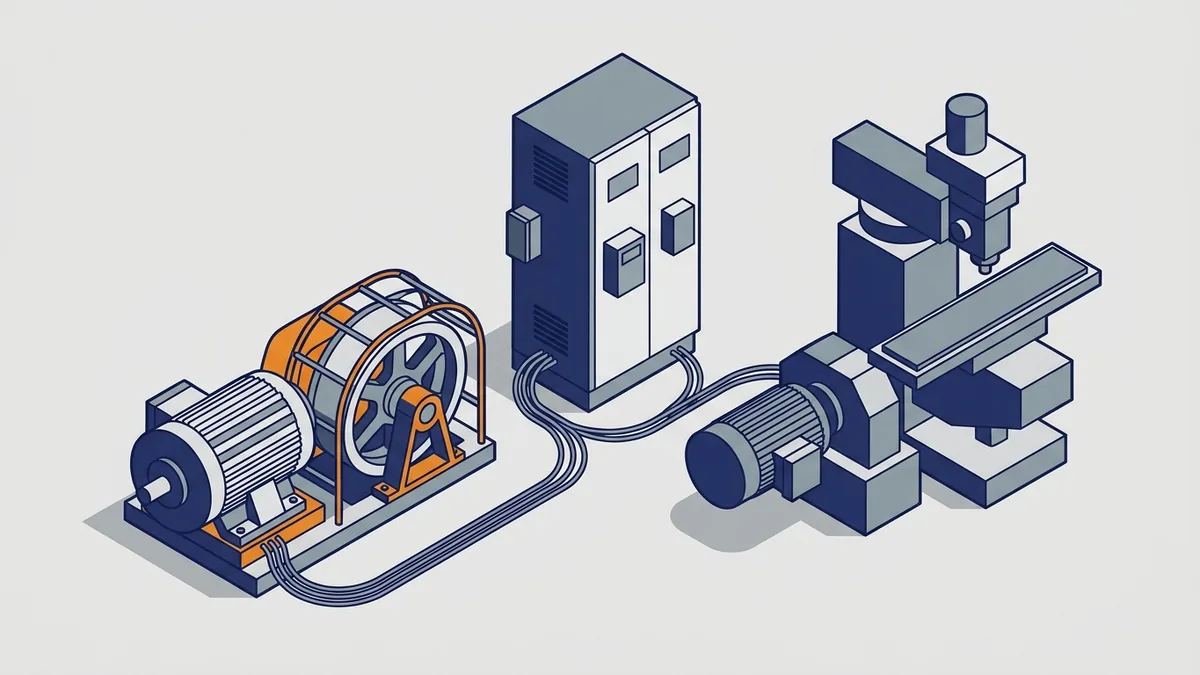
A phase converter lets you run three-phase machines from a single-phase service. The two main types work very differently.
What is the difference between a rotary and a static phase converter?
A rotary converter uses a spinning idler motor to create a third phase continuously. It gives well-balanced three-phase power and can feed several machines, even a whole sub-panel of three-phase loads.
A static converter uses capacitors to start the motor, and then the motor runs on single phase. It limits the load to a fraction of rated power. Sources differ: some say about 2/3, others about 1/3 of nameplate, or 50 to 70% of rated power. One source says a static converter typically leaves only 50 to 65% of locked-rotor torque.
So static suits light, occasional loads with low starting torque. It is a poor fit for production machines, frequent starts under load or reversing duty.
How do you size a rotary converter idler?
Many makers suggest an idler rated at about 1.5 to 2 times the horsepower of your largest motor. Then add up the other loads and check the total against the maker’s chart, since limits vary by brand. Also make sure your single-phase service can carry the converter’s input current.
Start the largest motor first, then the smaller ones. Hard-starting loads, such as compressors, need more margin. Choose a larger idler, or ask the maker about added start capacitors. If the load is still too hard to start, a VFD may be the better fit for that machine.
Is a VFD or a phase converter better for my machine?
It depends on how many machines you run and whether you need speed control. A VFD powers one motor. It gives speed control, soft start and motor protection, but it costs more per machine.
A rotary converter runs several fixed-speed machines. Once you add a second three-phase machine, its per-machine cost drops below that of VFDs. One source sizes the choices by motor: static for fractional to 3 HP, rotary for 3 to 7.5 HP or several machines, and a VFD where you need speed control.
Can a three phase motor be converted to single phase?
You can run a three-phase motor on single phase with a run capacitor, but it is a compromise, not a true conversion. In practice, expect a big loss of horsepower and starting torque. One source cites 40 to 60% continuous derating with a run capacitor only, and 30 to 45% with start and run capacitors.
One example shows the risk. A 7.5 kW motor on 230 V single phase with a capacitor showed about 50% torque loss, large starting current and overheating under continuous load. A three-phase motor on a capacitor setup may also run with 15 to 50% current imbalance. Plant Engineering notes that no motor should operate that way.
That does not mean the motor will always burn out. It does mean you must not assume nameplate horsepower still applies. Do not copy a capacitor formula from a forum either. An unverified sizing rule can damage the motor.
Better options, in order:
- A single-phase-input VFD.
- A rotary phase converter.
- For low power, replace the motor with a single-phase motor.
Can a single phase generator be converted to three phase?
Yes, by feeding a rotary phase converter or a VFD from the generator. However, this usually costs more than buying a three-phase generator. Single-phase generators are typically limited to about 25 kVA. Above that, it is cheaper to draw single-phase power from a three-phase generator.
Size the generator for the starting load, and balance your loads. Load balance matters when you step up a single-phase generator to three phase.
Can a three-phase generator power single-phase loads?
Yes. A three-phase generator can power a single-phase house. However, an electrician must wire the transfer switch using two of the three hot legs. This cuts usable output by roughly one-third and leaves one phase unloaded.
Which code and safety rules apply?
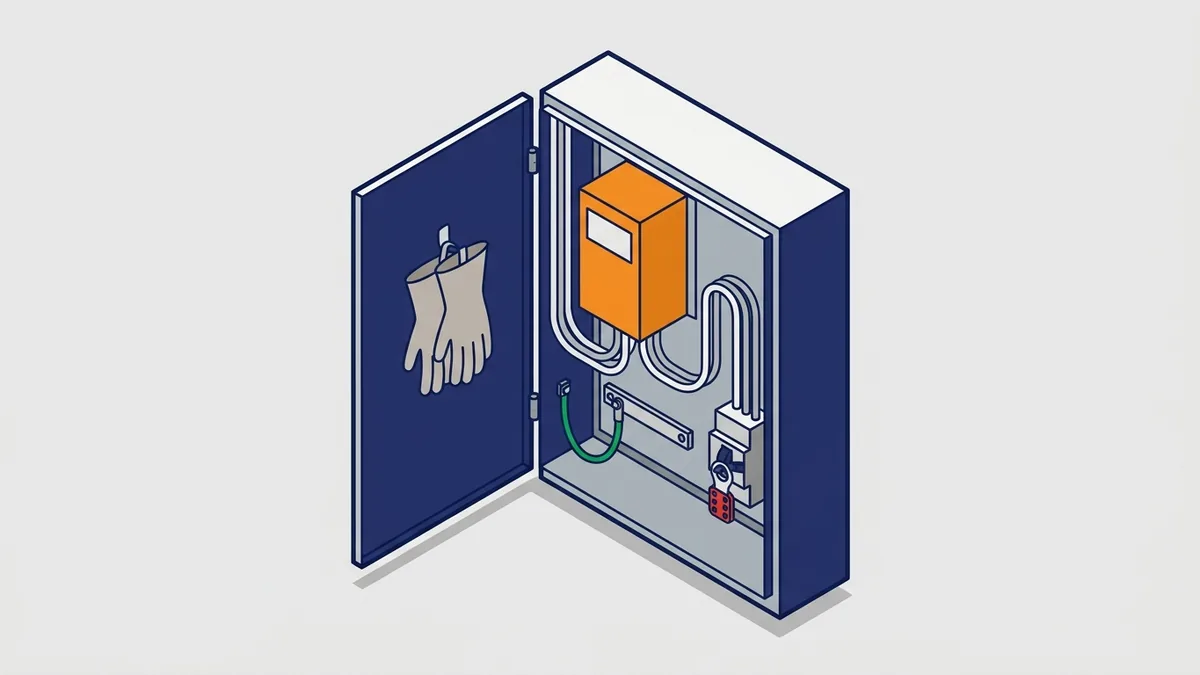
When you add a drive or converter, the National Electrical Code (NEC) Article 430 covers the motor circuit. Local rules may add to it, so confirm with your inspector. Key points include:
- Overload protection: each motor needs it, sized from the motor nameplate.
- Short-circuit and ground-fault protection: the branch circuit needs it. For drives, Part X of Article 430 covers adjustable speed drive systems.
- Disconnects: a disconnecting means must be in sight of the controller and rated for the load.
- Phase-loss protection: the NEC does not require a phase-loss relay in every case, but one is a smart add for three-phase motors.
Also follow lockout/tagout rules before any work. OSHA 29 CFR 1910.147 covers lockout/tagout, and NFPA 70E covers electrical safety in the workplace. In addition, wait for a drive’s DC bus capacitors to discharge, then verify zero voltage before you touch anything.
Common mistakes and when to call for help
These mistakes damage motors and drives on a converted supply:
- Running a three-phase VFD on single-phase input without derating. This risks overheated DC bus capacitors and rectifier failure.
- Using a static converter on a heavily loaded or frequently started motor.
- Treating a single-phase motor as if it could run on a standard VFD.
- Single phasing a three-phase motor. This is 100% imbalance, and continuous operation causes winding failure. A Class 20 overload may take 20 to 40 seconds to trip at full load.
- Assuming nameplate horsepower still applies after conversion.
When should I call an electrician or a repair shop?
Call a qualified electrician for any service change and for any work beyond the drive and motor. For safety, do not work on live supply yourself.
Also call when the supply type is unclear, the motor is large, or a motor or drive has already failed. A failed unit may point to a supply or sizing problem that will repeat.
Frequently asked questions
What is the difference between single phase and three phase?
Single phase has one alternating voltage waveform. Three phase has three waveforms offset by 120 degrees, which gives steadier power delivery, more power per conductor and smoother motor torque. Single phase is typical for homes and light loads. Three phase is typical for industrial equipment and motors.
Can a three phase motor be converted to single phase?
It can run on single phase with a run capacitor, but that is a compromise. Expect a large loss of horsepower and starting torque, with one source citing 40 to 60% derating, plus a risk of overheating. A single-phase-input VFD or a rotary phase converter is the better route.
Can a single phase generator be converted to three phase?
Yes, with a rotary phase converter or a VFD. However, this often costs more than buying a three-phase generator. Single-phase generators are typically limited to about 25 kVA.
How to convert single phase to three phase power?
The practical methods are a VFD for one motor with variable speed, and a rotary phase converter for several fixed-speed machines. A static converter suits light, occasional loads, and a utility three-phase service is another route. A passive transformer alone cannot do it.
How does a VFD convert single phase to three phase?
The VFD rectifies the AC input to DC, then its inverter produces three-phase output at a variable frequency. A drive rated for three-phase input must be derated on single-phase supply, because the rectifier carries the load through two conductors. Check the manual for the exact derating.
Single phase vs three phase comes down to your loads, your service and your motors. Match the supply to the equipment where you can, and use a VFD or converter where you cannot. If you need help with a motor, a drive or a quote for a repair, contact Precision Electric.