Eaton Products Guide: Drive Lines, Ratings and Buying Checks
Searching for Eaton products can leave you with thousands of catalog pages and no clear starting point. This guide shows what Eaton products an industrial buyer usually needs, with a focus on drives. By the end, you will learn where each drive series fits, how to read the ratings, and what to check before you order.
On this page
- What Eaton products does an industrial buyer usually mean?
- Eaton variable frequency drive families at a glance
- PowerXL DG1: the general purpose drive
- DG1 models we stock
- H-Max: Eaton’s HVAC drive
- SPX9000: high-horsepower and high-performance drives
- How to choose the right Eaton drive
- Installing Eaton drives: limits and safety
- Eaton motor control, protection and circuit protection products
- How Eaton compares with other drive brands
- What buyers ask before ordering an Eaton drive
- Common mistakes when specifying Eaton drives
- Manuals, software and where to get documents
- When to repair instead of replace, and when to call for help
- Frequently asked questions
What Eaton products does an industrial buyer usually mean?
What are Eaton products, and which lines matter?
Eaton makes a very wide range of electrical gear. For a maintenance shop or plant buyer, however, the lines that matter most are Eaton drives, motor control, motor protection and circuit protection. This guide covers three drive lines in depth: PowerXL, H-Max and SPX9000. It gives only a short map of the rest.
We left out Eaton lines for other markets, because they fall outside what we sell and repair.
Which Eaton catalog volume covers the product I need?
Eaton splits its industrial catalog into numbered volumes. First, use the Eaton catalog volumes page to find the right one. Here is how they break down:
- Power distribution and control assemblies: Volume 3
- Circuit protection: Volume 4
- Motor control and protection: Volume 5
- Solid-state motor control and drives: Volume 6
- Logic control and HMI: Volume 7
- Sensing: Volume 8
- OEM, enclosed control, and vehicle and commercial controls: Volumes 9, 10 and 11
If you need a drive, start with Volume 6. However, if you need an overload relay or a motor protection breaker, start with Volume 5.
Eaton variable frequency drive families at a glance
What variable frequency drive families does Eaton make?
A variable frequency drive (VFD) controls motor speed by changing the power frequency it sends to the motor. Eaton VFDs come in several families. For example, the PowerXL range is the core, while H-Max and SPX9000 are separate lines that appear on Eaton’s SKU pages. The table below sums up what Eaton states for each.
| Series | What it is for | Key point from Eaton |
|---|---|---|
| PowerXL DE1 | Variable speed starter | Bridges a standard starter and a VFD; 14 basic parameters, no keypad, DIN-rail mount, RS-485/Modbus standard |
| PowerXL DC1 | Compact drive for standard fans, pumps and conveyors | 150% overload for 60 s; IP20 or IP66 |
| PowerXL DM1 / DM1 Pro | Microdrives | Up to 22 kW; the Pro adds safe torque off (SIL2, PLd, Cat.3) |
| PowerXL DA1 | Advanced drive | 0.75 to 160 kW; 150% for 60 s and 200% for 4 s; IP66 option |
| PowerXL DG1 | General purpose drive | 0.75 to 630 kW; dual overload rating |
| PowerXL DX1 | High-performance drive | Onboard PLC, touchscreen, fieldbus options, built-in cybersecurity |
| PowerXL EGS / EGP | Enclosed drives | EGP is an 18-pulse drive on the DG1 platform |
| PowerXL DH1 / EH | HVAC/R drives | Described in Eaton’s overview brochure |
| H-Max | HVAC fans and pumps | Graphical keypad, EMC C2 input, varnished boards |
| SPX9000 | High-horsepower, high-performance | Frames FR10 to FR14 in Eaton’s 9000X manual and catalog; the FR14 is built from two FR13 modules |
We cover the SVX9000 and SPX9000 platform differences, and DG1 catalog code decoding, in separate posts. For now, this guide stays at the decision level.
Where do I find ratings for the DE1, DC1, DM1 and DX1?
The table above gives the points Eaton states for each series. For the full hp or kW and amp ranges, voltage classes and catalog number layout, use two sources. First, open the Eaton Variable Frequency Drives overview brochure, which maps the whole PowerXL range. Then download the manual for your exact series from eaton.com.
Each series uses its own catalog number layout, so do not apply the DG1 decoder to them. Instead, read the decoder in that series’ manual. Then match motor FLA and voltage the same way you would for a DG1.
PowerXL DG1: the general purpose drive
What is the Eaton DG1 and what is it used for?
The DG1 is the Eaton drive we see most. Eaton describes it as versatile, especially for pumps, fans and conveyor belts. It also has two extra slots, so you can add I/O later.
Setup is simple. In fact, Eaton says you need only 18 parameters for the basic functions: motor data, frequency range, date, time and language. As a result, the DG1 is the usual starting point for general work among Eaton drives.
What voltage and power range does the DG1 cover?
Eaton’s DG1 page lists mains voltages of 230 V, 400–500 V and 525–600 V. Also, the power range runs from 0.75 kW to 630 kW. In addition, the design guide gives input voltage classes of 208–240 V, 380–500 V and 525–600 V, with a tolerance of −15% to +10%. Input frequency is 45–66 Hz.
The DG1 also carries a 100 kAIC fault current rating, which matters when you size the supply side.
What do 150% and 110% overload ratings mean for choosing a DG1?
The DG1 has a dual rating. It gives 150% overload for machine applications and 110% for pumps and fans. Overload is how much extra current the drive can deliver for a short time.
For example, machines such as conveyors and mixers often need a big push to start, so they use the 150% rating. Pumps and fans, however, need less push, so the 110% rating applies. Because of this, one drive can list a different HP at each rating.
What built-in features come with the DG1?
Eaton’s catalog lists these standard features:
- 5% DC choke, which reduces harmonics
- Built-in EMI/RFI filter (EMC Category C2)
- Input surge protection
- Startup wizard and PC Tool software
- Four built-in applications
- Removable keypad with copy and paste
In addition, Eaton lists optional passive harmonic filters that can bring THDi below 5%.
DG1 models we stock
10 HP and 100 HP, NEMA 1 and NEMA 12
We carry the DG1 in 10 HP and 100 HP sizes. Each size comes in a NEMA 1 and a NEMA 12 version. Next, the table shows the details from our product listings.
| Catalog number | HP as listed | Input | Amps | Enclosure as listed |
|---|---|---|---|---|
| DG1-32031FB-C21C | 10 | 208–240 V | 31 | NEMA 1 |
| DG1-32031FB-C54C | 10 | 208–240 V | 31 | NEMA 12 |
| DG1-34016FB-C21C | 10 | 400–480 V | 16 | NEMA 1 |
| DG1-34016FB-C54C | 10 | 400–480 V | 16 | NEMA 12 |
| DG1-34140FN-C21C | 100 | 400–480 V | 140 | NEMA 1 |
| DG1-34140FN-C54C | 100 | 400–480 V | 140 | NEMA 12 |
What is the difference between the DG1 -C21C and -C54C versions?
The two suffixes mark the same drive in different enclosures. The -C21C is the NEMA 1 version for clean, dry indoor spaces. The -C54C, in contrast, is the more protected version, which our listings call NEMA 12.
However, confirm the enclosure rating on the Eaton specification sheet before you order for a dusty or wet area.
Why you should not buy by HP alone
HP for a drive is not one fixed number. In fact, Eaton’s DG1 application manual shows that HP changes with voltage and overload class. For example, the row for DG1-34140FB-C21C lists 100 and 125 HP at 440–500 V and 60 Hz, with 124 A and 156 A. By comparison, our 100 HP listings show 140 A.
As a result, always check the motor nameplate full load amps (FLA) against the manual row for your exact catalog number. Also note that the manual lists FB variants, while our 100 HP SKUs end in FN.
How do I read an Eaton DG1 catalog number?
First comes the voltage digit. Eaton’s design guide says 2 means 230 V, 4 means 400 V and 5 means 600 V class. Then a current code follows, and after that comes the suffix, such as -C21C or -C54C.
So DG1-34016FB-C21C is a 400 V class drive with a 016 current code. For the full decoder, see our DG1 codes post.
How do I match a motor’s FLA to the DG1 rating tables?
This guide does not reproduce the full DG1 rating tables, because they run by frame size and change with voltage and overload class. Eaton prints them in the DG1 application manual and the design guide, both on eaton.com. Each row lists the drive’s rated current and the matching kW and HP for the constant torque (150%) and variable torque (110%) classes.
Use this method:
- Find your supply voltage class in the manual’s tables.
- Pick the overload class that fits the load.
- Find the first row whose rated current is at or above the motor nameplate FLA.
- Read the catalog number from that row.
As a guide, the three-digit current code in our listings matches the listed amps. For example, 016 is 16 A, 031 is 31 A and 140 is 140 A. Even so, confirm the code in the manual for your frame.
H-Max: Eaton’s HVAC drive
What is the Eaton H-Max drive and where does it fit?
H-Max is an Eaton drive line that we stock for HVAC work, such as fans and pumps. Eaton’s SKU pages show the standard features. Our guide draws only on those pages, because we found no H-Max manual or brochure.
Take HMX34AG02321-N as an example. It is a 15 hp, 23 A drive for 380–480 V. It has a graphical panel keypad, EMC C2 input and no brake chopper. In addition, all boards are varnished and corrosion resistant, and the drive carries UL 508C, cUL and IEC/EN 61800-5-1 certifications.
How does the H-Max catalog number read?
Eaton’s catalog decoder reads HMX34AG02321-N in this order: HMX, then 3 for three-phase, then 4 for 380–480 V. Next comes A for the software series, G for the graphical keypad and 023 for the current. Then 2 is the input option (EMC C2), 1 is the enclosure, and -N means no brake chopper. Only the final digit of “21” is the enclosure.
Eaton’s SKU pages show frame sizes FR5 to FR8. Next, here are examples at 380–480 V:
- 40 hp, 61 A, FR6
- 50 hp, 72 A, FR7
- 60 hp, 87 A, FR7
- 150 hp, 205 A, FR8
In addition, at 200–240 V, Eaton shows 5 hp at 18 A (FR5), 15 hp at 48 A (FR6) and 25 hp at 75 A (FR7).
What do the -21 and -22 suffixes mean?
In these suffixes, the 2 is the EMC C2 input option and the last digit is the enclosure. Eaton’s Volume 6 catalog defines enclosure digit 1 as open NEMA Type 1 / IP21 and digit 2 as open NEMA Type 12 / IP54. The H-Max installation manual also refers to NEMA Type 1/IP21 or NEMA Type 12/IP54. So calling the -22 drives NEMA 12 matches Eaton’s catalog.
However, the Eaton SKU page words the -22 as “Open NEMA Type 2 IP54,” so that page is the outlier. Because of this gap, ask us to confirm the enclosure before you order for a wet or dusty location.
Why are there two 100 HP H-Max drives with different amps?
The difference is the voltage class. For example, we stock a 100 HP H-Max at 208–240 V that draws 261 A, and another at 400–480 V that draws 140 A. Both serve a 100 HP motor.
The same power at lower voltage needs more current. As a result, if you order the wrong voltage class, the drive will not match your supply or your motor.
SPX9000: high-horsepower and high-performance drives
Where does the SPX9000 fit compared with the DG1?
The SPX9000 covers larger sizes and more demanding work than the DG1. For example, Eaton’s SKU page for SPX900A0-4A2N1 shows a 900 HP, 480 V, FR13 drive that weighs 833 lb. It has an alphanumeric keypad.
Smaller SPX9000 frames, in contrast, come in NEMA 1/IP21 and NEMA 12/IP54 versions, with UL 508C and IEC 61800-2 certifications. One example is a 15 HP, 575 V, FR6 drive in NEMA 12/IP54.
Our 1000 HP open chassis drives
We stock two 1000 HP SPX9000 drives. One is the SPXH10A0-4A2N1 at 480 V and 1300 A. The other is the SPXH10A0-5A2N1 at 600 V and 1030 A.
Both are open chassis, so they have no enclosure of their own. As a result, you must plan a separate enclosure, cooling and protection. Also, we did not retrieve Eaton’s pages for these two SKUs, so check the specification sheet with us before you plan the install.
What does an open-chassis SPX9000 need for enclosure and cooling?
You supply the enclosure, so it must keep out dust and water for your site and hold the drive’s weight. It must also carry away the heat the drive gives off. Eaton’s 9000X manual lists the cooling air flow, the heat loss and the clearances for each frame. Size the enclosure fans or ducts from those figures, not from a guess.
Because the chassis is open, live parts are exposed. Therefore, only trained people should open the enclosure, and you should keep the door locked.
How to choose the right Eaton drive
How do I choose the right Eaton drive for my motor and application?
Work through these steps in order:
- First, read the motor nameplate for voltage, FLA and HP. Note whether the load is constant torque or variable torque.
- Next, match your line voltage to the drive’s voltage class.
- Then pick the series by application: H-Max for HVAC, DG1 for general work, SPX9000 or DX1 for high performance, DC1 or DM1 for compact jobs.
- After that, choose the enclosure for the environment: open, NEMA 1 or a higher-protection type.
- Also check harmonics, communications and options, such as DC chokes, filters and fieldbus cards.
- Finally, confirm the exact catalog number in the manual.
Step 1 matters most, because a drive sized to the motor FLA, not just HP, avoids most ordering errors.
Which communications protocols and option cards does each drive accept?
Standard protocols and option cards differ by series, so check before you buy. Two points are certain. The DE1 has RS-485/Modbus as standard, and the DX1 offers fieldbus options. The DG1 also has two extra slots for I/O and option cards.
For other series, open the manual and read the option card list for your exact drive. Look for your network, such as Modbus, BACnet, EtherNet/IP or PROFINET. Then confirm that the card fits your series and software version. Do not assume a card from one series fits another.
How do I pick fuses, breakers, line reactors and output filters?
Do not pick a fuse or breaker by motor size alone. Eaton’s manual lists the recommended fuse or breaker type and size for each catalog number, and the drive’s short-circuit rating assumes you use them. For the DG1, that rating is 100 kAIC.
The DG1 already has a 5% DC choke built in, so it often needs no extra line reactor for harmonics. Check the manual before you add one. Output filters matter on long motor cables, because long leads can raise voltage spikes at the motor. The manual gives the maximum motor cable length for each frame. If your run is longer, or the motor is old, add an output filter or reactor of the type Eaton lists.
Installing Eaton drives: limits and safety
What are the ambient temperature, altitude and clearance limits?
Every drive has an ambient temperature limit, an altitude limit and required clearances. Above those limits, the drive must run at lower current. This is called derating. The exact numbers differ by series and frame, so we do not give one figure for all. Find them in the installation or application manual for your drive.
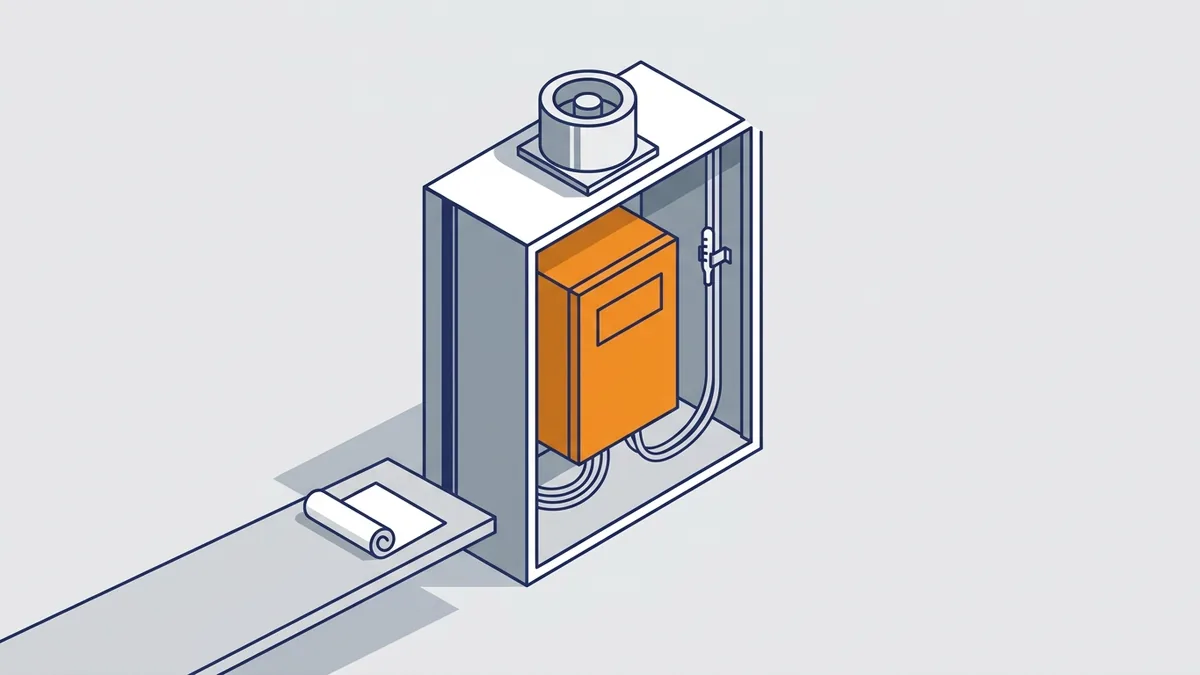
Also follow the manual’s mounting rules for the space above, below and beside the drive. Some drives allow side-by-side mounting and some need a gap. Keep air paths clear, and do not block the fan or heat sink.
How long should I wait after power off before opening a drive?
The DC bus keeps a charge after you remove power. The wait time differs by drive and frame, so read the warning label and the manual. Then confirm with a meter that the DC bus reads zero volts before you touch anything.
Use lockout/tagout every time. First, shut off and lock out the supply. Next, tag it. Then wait the stated time, test for no voltage, and only then open the drive.
How do I wire safe torque off (STO)?
STO is a safety input that stops torque to the motor. Eaton lists it on the DM1 Pro (SIL2, PLd, Cat.3). Wire it exactly as the manual shows, with both channels if the drive has two. Use the safety relay or circuit the manual calls for, and test the function after you wire it.
Do not jumper the STO inputs to bypass the safety function. Jumpers are only for use when the manual says you do not need STO.
What cautions apply to IT or corner-grounded supplies?
The built-in EMI/RFI filter, such as the DG1’s C2 filter, ties the drive to ground. On an ungrounded (IT) or corner-grounded supply, that tie can cause damage or unsafe conditions. Check the manual for the steps to disconnect the filter or ground screws for these supplies. If you are unsure how your supply is grounded, ask your electrician first.
Eaton motor control, protection and circuit protection products
What other Eaton products go with a drive?
A drive rarely works alone. In fact, several other Eaton motor control products often sit beside it in a panel. Here is a short map:
- Starters: XT IEC motor starters and Freedom NEMA motor starters, plus enclosed IEC and NEMA versions.
- Overload relays: the C440, the C441 Motor Insight and the Power Xpert C445 motor management relay.
- Monitoring relays: for example, the D65 phase monitoring relay.
- Breakers: motor protection circuit breakers, plus molded case, air power and vacuum types.
Eaton applies breakers in panelboards, switchboards, motor control centers, control panels and combination starters. For catalog details, Volume 5 covers motor control and protection, and Volume 4 covers circuit protection. In addition, Volume 6 covers solid-state motor control.
How Eaton compares with other drive brands
How does Eaton compare with other drive brands?
We do not claim that Eaton drives beat any other brand. We did not review competitor documents for this guide. Instead, compare on equal terms using published specs.
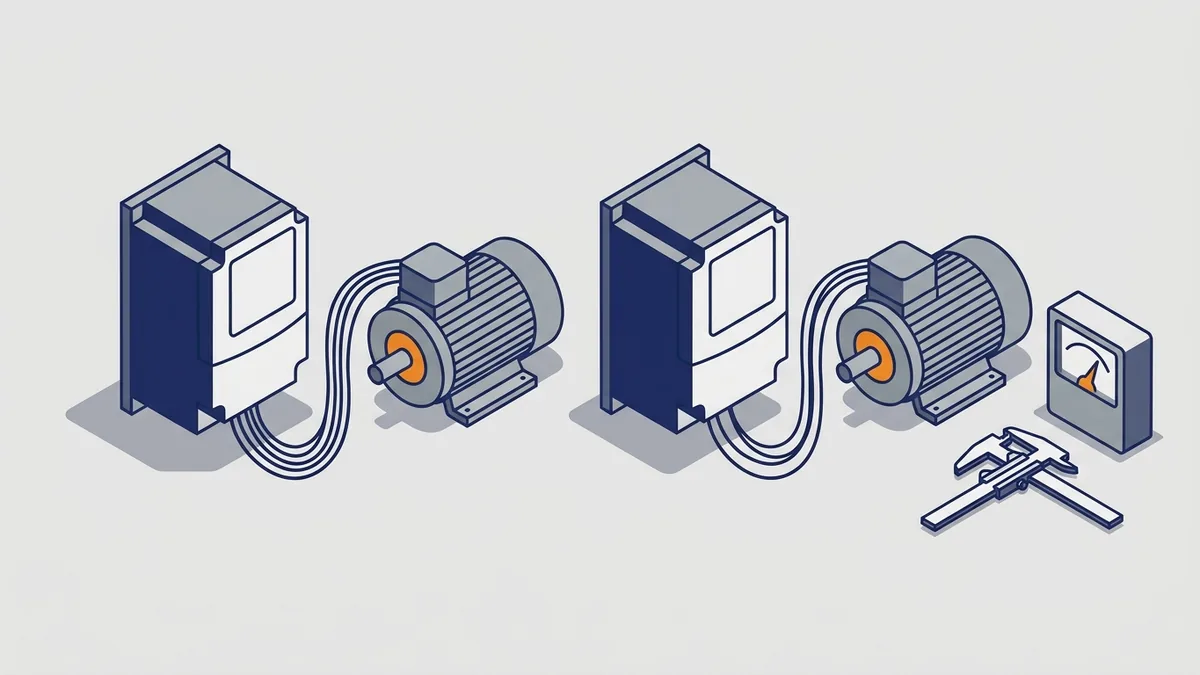
Check these points for every brand you consider:
- Overload rating and the class it applies to
- Short-circuit rating
- Harmonic features, such as DC chokes and filters
- Enclosure options
- Input voltage range
In Eaton’s case, those numbers are in the manuals. For example, the DG1 lists 150% and 110% overload, 100 kAIC and a 5% DC choke. Then pull the same figures from the other brand’s manual and compare.
What buyers ask before ordering an Eaton drive
What should I check before ordering an Eaton drive or a replacement?
First, compare the catalog number, voltage, amps, enclosure and options with what is already installed. Then check the specification sheet on the Eaton SKU page. It shows the full ratings and any detail our listing does not repeat.
Also ask what condition the drive is in. Is it new, surplus or repaired? Because warranty terms can differ by condition, ask us for ours in writing.
What is the warranty on Eaton drives?
Eaton states its own terms on its pages. For the discontinued H-Max HMX02531NA, Eaton cites Selling Policy 25-000: one year from installation or 18 months from shipment, whichever comes first. On an SPX9000 SKU page, Eaton states a standard 24 months from shipment, or 36 months with Eaton certified start-up.
These are Eaton’s terms, not ours. However, terms can vary by product, so read the SKU page for your model.
What happens if my Eaton drive model is discontinued?
Eaton marks some H-Max and SPX9000 SKUs as discontinued on its pages. However, you can often find a close match. To do so, match the voltage, amps, frame size, enclosure, software type and keypad.
If any of these differ, check the wiring, the mounting and the settings before you swap.
Is there a direct replacement for a discontinued H-Max or SPX9000?
We do not publish a one-to-one cross-reference, because a wrong match can cause wiring, size or parameter problems. First, open the Eaton SKU page for your model, since it may name a current model. Next, compare the new drive’s manual with your old one for control terminals, frame size, option cards and parameter lists.
Also expect to re-enter settings by hand, because parameter files from one series may not load into another. Send us the catalog number and nameplate, and we will help you check a match or quote a repair.
Common mistakes when specifying Eaton drives
What mistakes do buyers make when specifying Eaton drives?
These four errors show up most often:
- Choosing by HP alone. Overload class and motor FLA matter just as much.
- Mixing up enclosures. For example, NEMA 1 and NEMA 12 versions look alike in a catalog.
- Ordering the wrong voltage class. For example, a 208–240 V H-Max at 261 A and a 400–480 V one at 140 A are both 100 HP.
- Missing harmonics and install work. Filters, enclosures and cooling for open-chassis drives, however, add real effort.
Fortunately, a short check against the manual avoids all four.
Manuals, software and where to get documents
Where can I download Eaton manuals, catalogs and software?
Start with the Eaton catalog volumes page. Volume 6 covers solid-state motor control and drives, and Volume 5 covers motor control and protection. The Volume 5 catalog is a PDF on eaton.com.
For the DG1, download the design guide and the application manual from eaton.com. The Eaton Variable Frequency Drives overview brochure maps the whole PowerXL range. Also, each Eaton SKU page links its specification sheet. In addition, for DG1 setup, Eaton offers the startup wizard on the drive and the PC Tool software.
When to repair instead of replace, and when to call for help
When should I repair an Eaton drive instead of replacing it?
Repair often makes sense when the model is discontinued. It also helps when a replacement would take a long time to arrive. Another reason is that a new drive would force a change to your controls or panel layout.
On the other hand, replace when the drive is old and a current model fits the same footprint and settings. For a fuller decision framework, see our post on compressor speed control repair or replace.
What should I do when an Eaton drive shows a fault code?
The meaning of each fault or alarm code differs by series, so we do not list them here. Eaton prints the full list, with causes and fixes, in the fault tracing section of the manual for your drive. Follow these steps first:
- Write down the fault code and the keypad message, and note what the drive was doing.
- Look the code up in the manual for your exact series.
- Check the basics: supply voltage, loose wiring, motor nameplate data in the drive and clear cooling air.
- Reset the fault only after you fix the cause.
If the same fault comes back, stop and call for help. Repeated resets can damage the drive or the motor.
When should I call a technician?
Call for faults on large drives, such as an SPX9000 open chassis. Also call when the nameplate and the manual do not match your order. Because these drives carry high current, a wrong guess costs more than a short call.
Eaton products cover a lot of ground, but the drive choice comes down to a few checks: motor FLA, voltage class, overload rating and enclosure. Confirm each one in Eaton’s manual for your exact catalog number. If you need help matching a drive, want a quote or need a repair, contact Precision Electric or browse our Eaton drives.
Frequently asked questions
What are Eaton’s main variable frequency drive lines?
Eaton’s PowerXL range includes the DE1 variable speed starter, DC1 compact drive, DM1 and DM1 Pro microdrives, DA1 advanced drive, DG1 general purpose drive and DX1 high-performance drive. In addition, Eaton’s overview brochure lists the EGS/EGP enclosed drives and the DH1/EH HVAC drives. H-Max and SPX9000, however, are separate lines on Eaton’s SKU pages.
What is the Eaton DG1 used for?
Eaton positions the PowerXL DG1 as a general purpose drive, especially for pumps, fans and conveyor belts. For example, it has a dual rating of 150% overload for machines and 110% for pumps and fans.
What voltage and power range does the DG1 cover?
Eaton’s DG1 page lists mains voltages of 230 V, 400–500 V and 525–600 V. Also, the power range runs from 0.75 kW to 630 kW.
What is the difference between the H-Max -21 and -22 versions?
Eaton’s catalog defines the last digit as the enclosure: 1 is open NEMA Type 1 / IP21 and 2 is open NEMA Type 12 / IP54. The Eaton SKU page words the -22 as NEMA Type 2, so check the enclosure rating with us before ordering for a wet or dusty location.
Where do I find Eaton drive manuals and catalogs?
The Eaton catalog volumes page lists them all. For drives, Volume 6 covers solid-state motor control and drives, and Volume 5 covers motor control and protection. Also, the DG1 design guide and application manual are on eaton.com, and each SKU page links its specification sheet.