








ABB Inverter Solar: PV Inverters vs ACQ80 Solar Pump Drive
If you search for an abb inverter solar product, you may find two very different answers. ABB no longer sells solar grid-tie inverters, but its drives still run pump motors from solar panels. This guide sorts out the names, explains the ACQ80 solar pump drive, compares the ABB options, and shows what to check before you order.
On this page
- What “ABB inverter solar” means today
- What happened to ABB’s solar inverters
- ABB ACQ80 solar pump drive: what it is and how it works
- ACQ80 models, ratings and type code
- Where each ABB drive fits with solar, and how they compare
- Solar pump drive vs diesel or grid pumping
- What buyers ask before ordering
- Installing, commissioning and troubleshooting the ACQ80
- Our ABB ACS255 and ACS180 drives, and when they are the right choice
- Common mistakes and when to call for help
- Manuals, software and where to get them
- Frequently asked questions
What “ABB inverter solar” means today
What does “ABB inverter solar” mean?
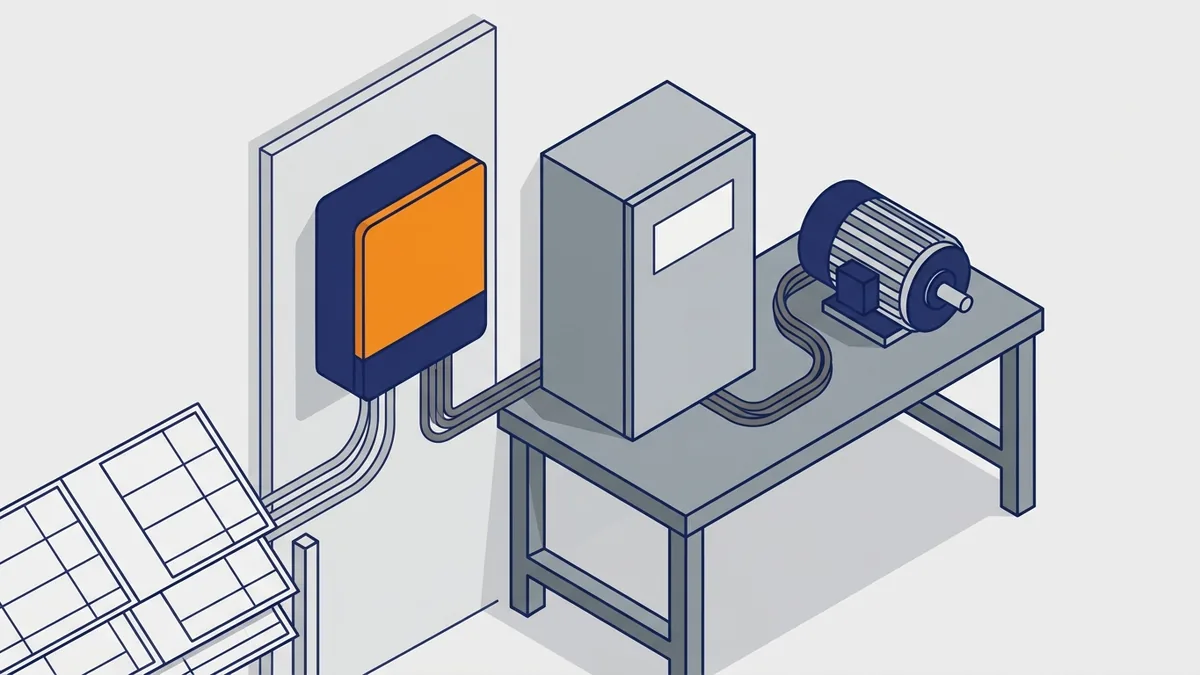
The phrase covers two products. A PV inverter (also called a grid-tie or string inverter) turns panel DC power into AC power for a building or the grid. A variable frequency drive, or VFD, changes the speed of an AC motor. Because both are called “inverters” in daily talk, the search term is easy to misread.
Is an ABB inverter the same as an ABB drive?
Not always. In the drive trade, “inverter” often means a VFD. In the solar trade, it means a PV inverter. So when someone says “ABB inverter” for a solar job, ask which one they mean before you order anything.
A quick decision rule
- If you need to feed a building or the grid, look at FIMER or another PV inverter maker.
- If you need to run a pump from panels, look at the ABB ACQ80 solar pump drive.
What happened to ABB’s solar inverters
Does ABB still make solar PV inverters?
No. ABB sold its solar inverter business to FIMER SpA, and the sale closed in early 2020. ABB’s press release is dated 2 March 2020, while its annual report says February 2020, so “early 2020” is the safe date. The sale agreement came in July 2019.
At the time, the business had about 800 employees in more than 30 countries. It had sites in Italy, India and Finland. In addition, it included Power-One, which ABB bought in 2013.
Who owns the business now, and what about warranty?
FIMER owns it. The sale agreement says FIMER will honor all existing warranties. ABB said it would keep working on solar in smart buildings, energy storage and EV charging. However, that is not the same as selling PV inverters.
Where do I get support for an older ABB or Power-One PV inverter?
Contact FIMER for manuals, firmware, parts and service. Precision Electric is not the source for PV inverter support, so please confirm details with FIMER directly. However, if your ABB inverter is a drive that runs a motor, we can help.
ABB ACQ80 solar pump drive: what it is and how it works
What is the ABB ACQ80 solar pump drive?
The ACQ80 is an ABB solar drive for speed control of 3-phase AC pump motors. ABB Motion announced it in April 2024. Panel DC goes in, and variable-speed AC goes out to the motor. It supports several pump motor types, including induction and permanent magnet motors.
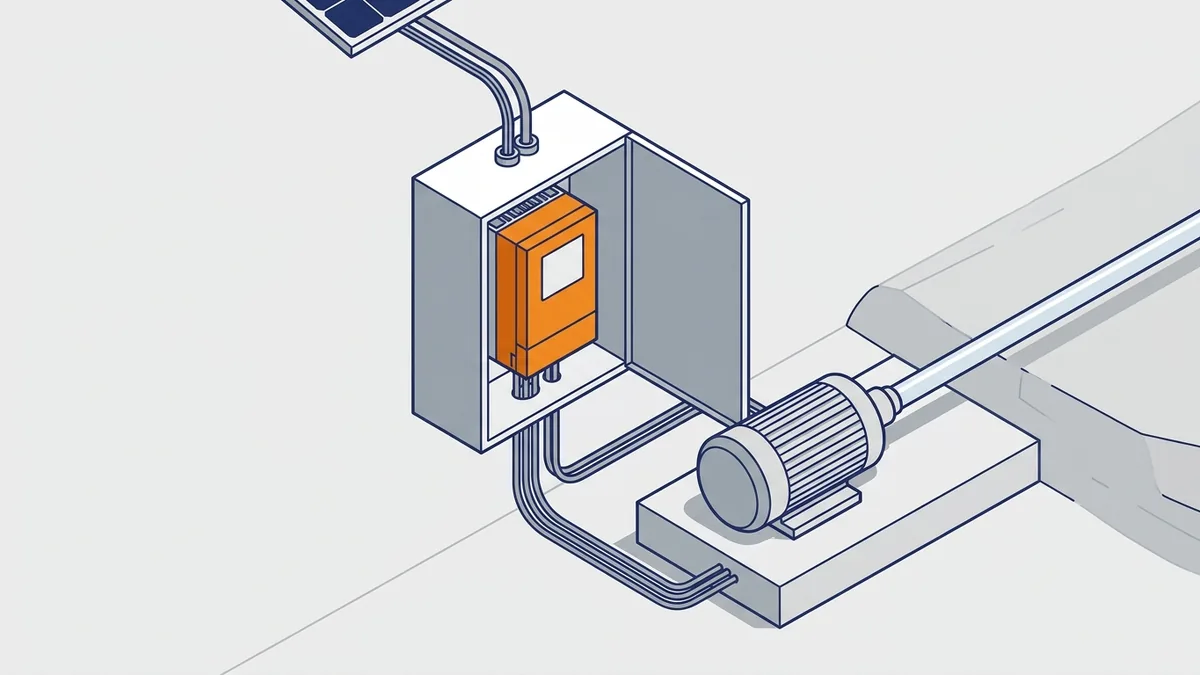
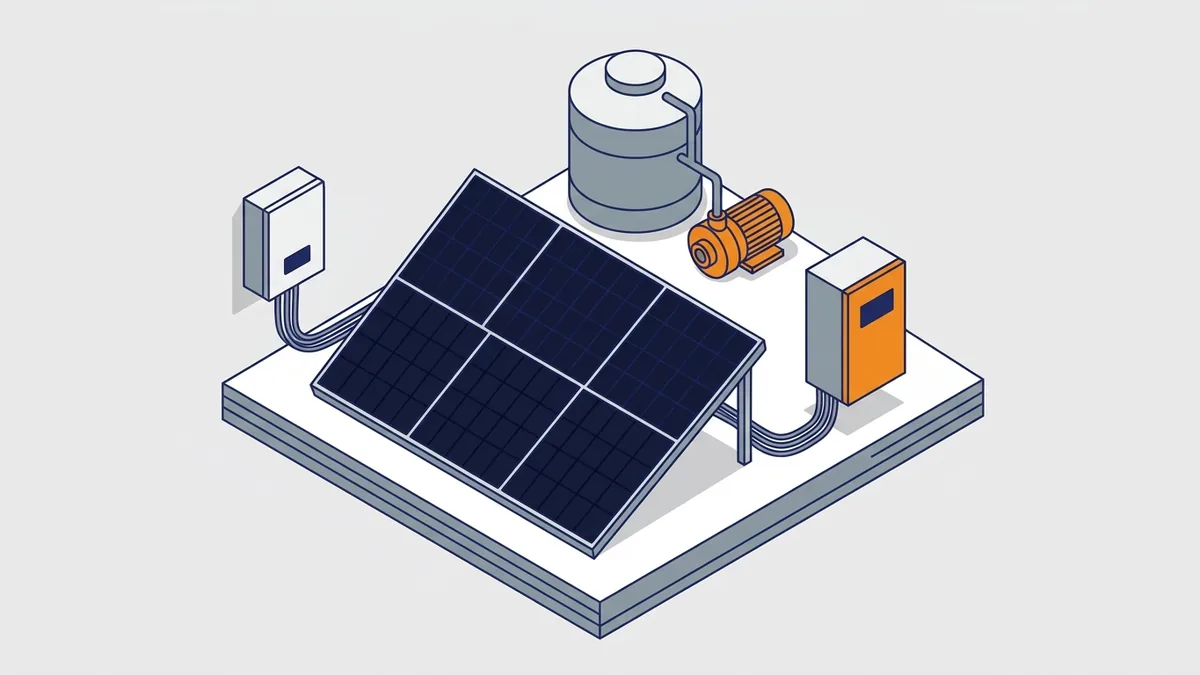
A solar pumping system has four parts: PV panels, the drive, the motor and the pump. The drive starts on its own when the sun is strong enough. For example, typical uses include irrigation, community water supply, fish farming and agriculture.
How does ACQ80 MPPT work with solar panels?
MPPT stands for maximum power point tracking. It means the drive adjusts its load to pull the most power the panels can give at that moment. The ACQ80 has MPPT built in, with a wide DC input range of 225 to 800 V DC. As a result, the pump motor keeps running when panel output falls in low sunlight. ABB’s brochure also describes cloud detection.
Can the ACQ80 run from the grid or a generator as well as solar?
Yes. It is designed mainly for off-grid use, but it also accepts 3-phase AC from 380 to 480 V, with +10% and -15% tolerance. You can connect both sources. As a result, the pump can run at night or on cloudy days, and the drive can cut grid use during the day.
Pump functions built into the drive
- Flow calculation
- Dry-run protection
- Pump cleaning
- Operating modes based on solar radiation, time of day or tank level
- A night-time grid mode
- Fieldbus connection
ACQ80 models, ratings and type code
What power sizes and enclosures does the ACQ80 come in?
The ACQ80 covers 0.75 to 200 kW, according to ABB’s catalog. The table shows how the families split.
| Model | Construction | Enclosure | Power |
|---|---|---|---|
| ACQ80-04 | Drive module | IP20 | 0.75 to 22 kW (1 to 30 HP) |
| ACQ80-01 | Wall mounted | IP21 and IP55 | 30 to 200 kW (40 to 268 HP) |
| ACQ80-07 | Cabinet built | Larger sizes | EMC Class C2 as standard for 75 to 200 kW |
How do I read an ACQ80 type code?
The first digit after “ACQ80-” gives the construction: 1 is wall mounted, 4 is drive module, and 7 is cabinet built. Next, the middle part gives the power in kW. Finally, the last digit gives voltage, and 4 means 3-phase 400 V class (380 to 480 V).
What DC and AC voltage range does the ACQ80 accept?
AC input is 3-phase 380 to 480 V. DC input for the ACQ80-04 is 225 to 800 V DC. Because the sources I found show only the 380 to 480 V class, do not assume 208/230 V or 575/600 V versions exist.
Example ACQ80-04 ratings
| Power | Frame | Nominal output |
|---|---|---|
| 0.75 kW (1 HP) | R0 | 2.6 A (3.2 A max, about 3.18 A DC input) |
| 1.1 kW | R0 | 3.3 A |
| 7.5 kW | R2 | 17 A |
| 15 kW | R3 | 32 A |
This table shows only four sizes. For the other ratings and frame sizes, including the 18.5 to 22 kW drives and the ACQ80-01 and ACQ80-07 ranges, check the ABB catalog table for your exact model before you order. Also note that ABB made an earlier solar pump drive that covered 0.37 to 45 kW. As a result, you should confirm which generation a legacy unit is before you match parts or manuals.
How many solar panels do I wire in series or parallel?
Series wiring adds panel voltages. Parallel wiring adds currents and keeps the voltage the same. So you size the series count by voltage, then add parallel strings only if the drive’s DC input current allows it.
Here is a worked example with made-up panel numbers. Use your own panel datasheet.
- Find the cold-weather voltage. Say a panel has a Voc (open-circuit voltage) of 49 V at 25 °C and a temperature coefficient of -0.28% per °C. At -10 °C, that is 35 °C colder. So Voc rises by about 9.8%, to roughly 53.8 V.
- Set the maximum series count. Divide the 800 V DC limit by 53.8 V. The result is 14.9, so round down to 14 panels. The cold string reads about 753 V.
- Check the minimum. Hot panels give less voltage. If a panel’s working voltage on a hot day is about 38 V, then you need at least 6 panels to stay above 225 V. Aim well above that so the pump runs in weak light.
- Check current. Two parallel strings double the current. Keep the total below the DC input current in the ACQ80 catalog for your frame.
Where each ABB drive fits with solar, and how they compare
Which ABB drive should I pick for solar?
| Drive | Range and input | Best fit |
|---|---|---|
| ACQ80 | 0.75 to 200 kW; DC 225 to 800 V plus AC 380 to 480 V | Pumping straight from PV panels |
| ACS580 / ACQ580 pump-prepared | AC input | Grid-fed pump control with built-in choke, EMC C2 filter, PID and PFC |
| ACS480 | 0.37 to 22 kW, AC input | Compact general use; PFC macro controls up to six pumps or blowers without a PLC |
| ACS255 (US market) | 0.25 to 30 hp (0.37 to 22 kW); the 600 V line is 1 to 20 hp; IP20 and IP66 | Harsh, dusty or washdown spots on AC supply |
Keep the ACS255 ratings separate from the ACQ80 ratings. They are different product lines.
Can a general-purpose ABB drive run from solar panels?
Not directly, as far as the sources show. The ACQ80 is ABB’s current drive with a DC and MPPT input for panels. ABB’s earlier solar pump drives, based on the ACS355 and ACSM1, also have built-in MPPT, but they are legacy products. Standard general-purpose drives take AC. To power one from solar, you need an AC source in front of it, such as a separate solar inverter or a generator. Then have the manufacturer confirm the design.
For more on those drives, see our posts on the ACS180, the ACS880 and the general ABB VFD guide.
Solar pump drive vs diesel or grid pumping
How does a solar pump drive compare with diesel or grid pumping?
ABB compares its solar pump drive with diesel generator pumps. Solar needs no fuel, makes no noise or exhaust, lasts a long time and costs little to maintain. Also, the ACQ80 can run on panels alone (off-grid). It can also blend grid and panel power to lower grid use.
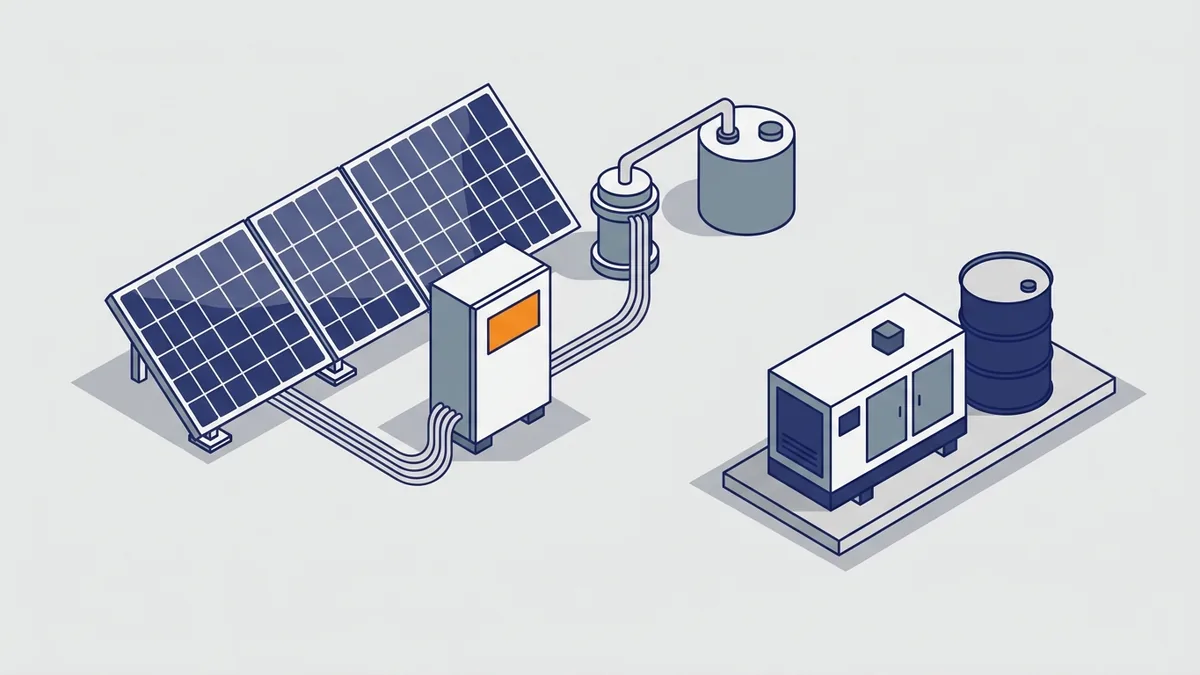
ABB’s documents give no prices, payback periods or savings figures, so this guide gives none. Instead, ask for a quote based on your pump and site.
What buyers ask before ordering
What should I check before ordering a solar pump drive?
- Motor current: match the drive output current to the motor.
- Array voltage: keep the PV array DC voltage inside the 225 to 800 V DC window, and check the catalog for DC input current.
- Supply voltage: the ACQ80 is a 380 to 480 V class drive. North American 208/230 V systems need a different solution, so ask the shop.
- Enclosure: IP20 modules go inside a cabinet. Larger wall-mounted units are IP21 or IP55.
- Fuses and disconnects: follow the hardware manual and local code.
In addition, ABB’s control panel works across its all-compatible drives. The ACS480, for example, uses a panel that also fits the ACS380, ACS580 and ACS880. For wiring, use the ABB manual and your local code, not a blog post.
Which fuses, DC disconnects and cables does the ACQ80 need?
Use parts rated for DC, not AC. DC arcs do not die out the way AC arcs do, so an AC-only fuse or switch can fail on a DC circuit. Choose fuses and disconnects with a DC voltage rating above your array’s cold-weather Voc, such as the 753 V in the example above.
The exact fuse ratings and cable sizes depend on the drive frame and the array current. Take them from the tables in the ACQ80 hardware manual, then check them against local code. We do not list ratings here because a wrong number on a DC circuit is a safety risk.
What should a 208/230 V or 575/600 V site do?
The sources I found show the ACQ80 only in the 380 to 480 V class. I could not confirm any 208/230 V or 575/600 V version. So ask ABB or our shop whether one exists before you plan around it.
In the meantime, a site with a different grid voltage has two practical paths. First, a transformer can match the grid to the 380 to 480 V input if you want the grid backup feature. Second, a pump that runs only on panels depends on the DC array rather than the grid, but have the design confirmed first. For AC-only pumping on 575/600 V, the ACS255 has a 600 V line, as the table above shows.
How much does an ABB solar pump drive cost?
ABB’s pages give no prices, and neither do we here. Price depends on power size, enclosure and options. Contact the shop for a quote, and ask whether we can source the ACQ80 for your job.
Installing, commissioning and troubleshooting the ACQ80
How do I commission an ACQ80 for solar pumping?
Work in this order. Parameter names and numbers change between firmware versions, so take them from the ACQ80 firmware manual and quick-start guide.

- Check the wiring and panel polarity with the array disconnected.
- Measure each string’s open-circuit voltage in daylight. Confirm it sits inside the 225 to 800 V DC window.
- Connect the array and power the drive.
- Enter the motor nameplate data in the start-up assistant.
- Select the solar pumping setup, which covers MPPT.
- Set the minimum motor frequency so the pump keeps enough flow and cooling.
- Set dry-run protection, and set the sleep and wake behavior for low sunlight.
- If you use grid backup, set up the night-time grid mode and the switch-over rules.
- Run a test and watch the pump in weak and strong light.
What do ACQ80 faults and warnings mean?
The firmware manual lists every fault and warning code with its cause and fix. Look the code up there first. Meanwhile, these checks cover the most common complaints.
- No start on panel power: measure DC voltage at the drive in full sun. Check polarity, blown DC fuses, an open disconnect and shaded panels.
- Under-voltage or DC bus faults: look for too few panels in series, loose or corroded connectors, and voltage drop in long cables. Also check that cold-morning Voc is not above 800 V DC.
- Dry-run trip: check the well or tank level, a closed valve, a broken coupling and the dry-run settings.
If the fault comes back after these checks, call for repair.
What derating, cooling and filters does the ACQ80 need?
Like most drives, the ACQ80 loses output current at high altitude, high ambient temperature or high switching frequency. The limits depend on the frame, so take the exact figures from the hardware manual. Solar pump sites are often hot and high, so check this before you pick a size.
IP20 modules need a cabinet with enough airflow, because the drive’s heat has to leave the cabinet. A sealed box in the sun can run hot. For long cables to a submersible pump, ask about output filters such as du/dt or sine filters, which protect the motor insulation from fast voltage spikes. The hardware manual gives the maximum motor cable lengths and says when input chokes are needed.
Our ABB ACS255 and ACS180 drives, and when they are the right choice
Which ACS255 and ACS180 drives does Precision Electric stock?
We list 0.5 HP versions of both. These are general-purpose AC drives, and no source I found rates them for direct PV (DC) input. Here is how the ACS255 codes read:
- Supply: the number at the end of the base code shows the supply class. We list 100 to 120 V single-phase, 208 to 240 V single- or 3-phase, and 400 to 480 V 3-phase.
- B063 or B068: B063 is the indoor version, and B068 is the outdoor version. Both are NEMA 4X/IP66.
- +F278: adds an input disconnect, a speed pot and a FWD/REV switch.
For example, ACS255-03U-01A2-4+B063 is a 480 V, 0.5 HP indoor unit with 1.2 A output. The ACS180-04S-02A4-2 is a 0.5 HP drive for 200 to 240 V 3-phase input with 2.4 A output.
When are they the right choice?
Use them for AC-powered pumps, fans and conveyors. That includes a pump fed by a separate inverter or generator. However, do not use them as PV-direct solar drives unless ABB documentation says so. Also, one listing, ACS255-01U-02A3-2+B063, shows “240 VAC 3 phase Input” in its title. Check the nameplate wording before you order.
Common mistakes and when to call for help
What mistakes do people make with solar and ABB drives?
- Some buyers assume “ABB inverter” means a PV inverter and look for ABB service, when that business moved to FIMER.
- Others connect panel DC to a drive with no DC or MPPT input.
- In cold weather, open-circuit panel voltage can pass the drive’s DC limit. On the ACQ80, the limit is 800 V DC.
- Finally, some users ignore dry-run protection settings on submersible pumps.
When should I call for repair or help?
Call us for a tripped or failed drive, a DC bus fault, or a drive that will not start on panel power. We can also help with an unknown legacy solar pump drive. In that case, send the nameplate details and a parameter backup if you have one.
Manuals, software and where to get them
Where do I download ACQ80 manuals and catalogs?
Use ABB’s online library. Look for the ACQ80 solar pump drives catalog and the ACQ80-04 hardware manual. The library also holds firmware and quick-start documents. ABB’s news page covers the ACQ80 launch. If you need the ACS255, use ABB’s ACS255 product page. The ACS480 has its own ABB general purpose drives catalog.

For the earlier solar pump drive, ABB’s solar pump drive brochure and infographic are in the same library. For an older ABB PV inverter, contact FIMER.
Frequently asked questions
Does ABB still make solar inverters?
No. ABB completed the sale of its solar inverter business to FIMER SpA in early 2020. Contact FIMER for PV inverter products and support.
What ABB drive works directly from solar panels?
The ACQ80 solar pump drive is ABB’s current choice. It has built-in MPPT and a DC input of 225 to 800 V DC. It can also run from a 380 to 480 V AC grid or generator. ABB’s earlier solar pump drives, based on the ACS355 and ACSM1, also have built-in MPPT, but they are legacy products.
What power range does the ACQ80 cover?
It covers 0.75 to 200 kW, according to ABB’s catalog. The ACQ80-04 (IP20) is 0.75 to 22 kW. The ACQ80-01 (IP21 and IP55) is 30 to 200 kW.
Can I use an ACS255 or ACS180 with solar panels?
Not directly, as far as the sources show. They are AC-input general-purpose drives, and the ABB documents I found give them no DC or MPPT input. For direct PV pumping, use the ACQ80, or ask ABB or the shop for the design.
Who supports older ABB or Power-One solar inverters?
FIMER took over the business, including existing warranties. It is the place for manuals, firmware and service.
The short version: ABB no longer sells PV inverters, but the ACQ80 is its drive for running pumps straight from panels. Match the drive to your motor, your array voltage and your supply before you order. If you need help choosing a drive, a quote or a repair, contact Precision Electric or browse our ABB drives.