ABB Low Voltage Range: Families, Power Ratings and Type Codes
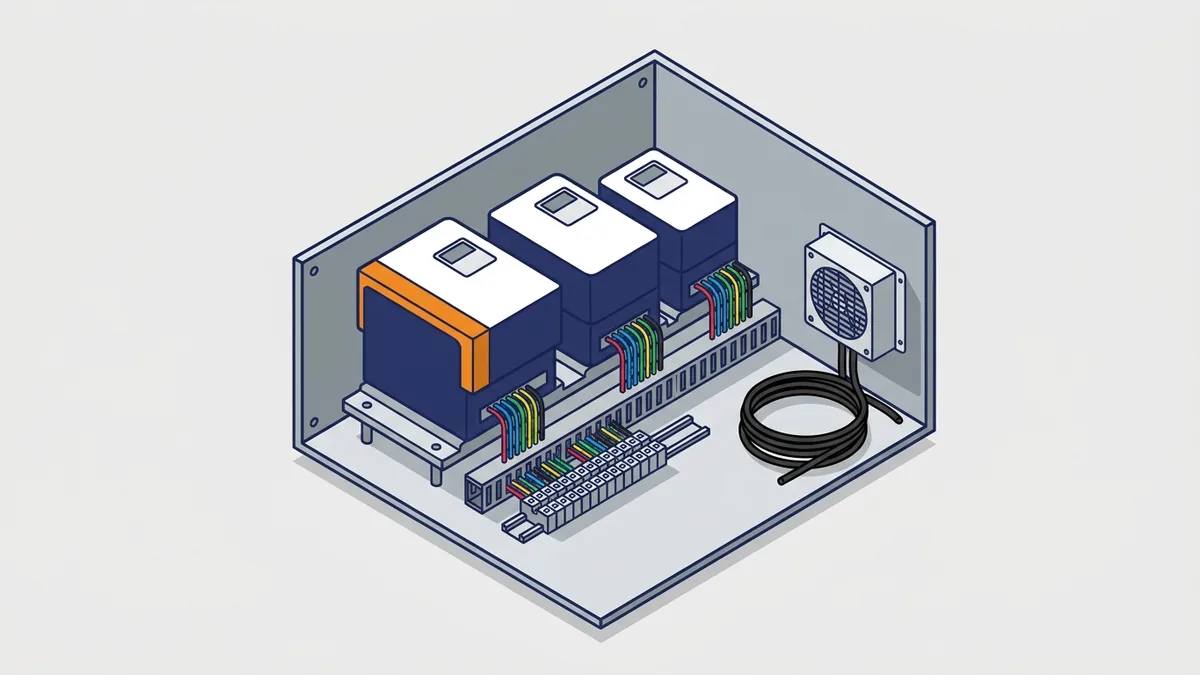
ABB low voltage ABB drives run from small machine controllers to multi-megawatt industrial lines, and the model names can be hard to sort out. This guide maps the whole range, family by family, so you can see which series fits your motor and your job. You will also learn how to read the type codes and what to check before you order.
On this page
- What ABB low voltage drives are
- ABB low voltage AC drive families at a glance
- ACS255 micro drives (IP20 and IP66/NEMA 4X)
- ACS180 machinery drives
- ACS380 machinery drives
- ACS580 general purpose drives
- ACS880 industrial drives
- Industry specific drives (HVAC and water)
- Which ABB low voltage drive fits which job
- Installation data: fuses, filters, cables and derating
- How ABB drives compare with the alternatives
- Reading ABB type codes and options
- Our stocked 0.5 HP examples
- Documents, software and support
- Buying checklist and common mistakes
- When to repair, replace or call for help
- Frequently asked questions
What ABB low voltage drives are
What are ABB low voltage drives?
ABB low voltage drives are electronic speed controllers for AC motors. They are also called variable frequency drives (VFDs) or inverters. They change the frequency and voltage sent to a motor, so you control its speed and torque. In short, ABB low voltage AC drives fall into three groups: micro and machinery drives, industrial drives, and industry specific drives.
What is the power range of ABB low voltage AC drives?
First, ABB states that its low voltage AC drive range runs from 0.18 to 5600 kW. Its portfolio brochure lists the ACS180, ACS255, ACS380, ACS580, ACS880 and DCS880. However, the DCS880 is a DC drive, so it sits outside this guide.
The “all-compatible” idea
ABB calls its families “all-compatible.” For example, they share a similar architecture and user interface. As a result, training and spare knowledge carry over when you move from one family to another.
What this guide covers
This guide covers ABB LV drives only. However, ABB medium voltage drives, DC drives and soft starters are separate product lines. So for soft starters, see our soft start post.
ABB low voltage AC drive families at a glance
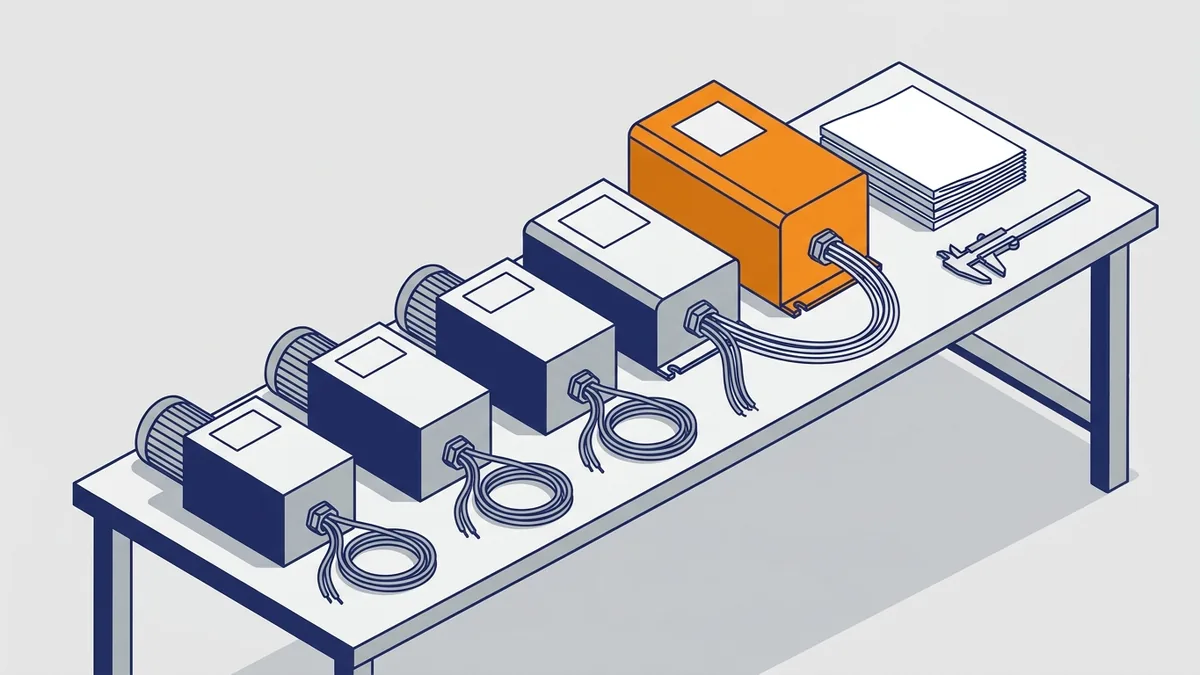
The table below answers the question “what ABB low voltage AC drive families are there?” Ranges come from ABB catalogs and web pages. However, catalog revisions differ, so confirm the exact model before you order.
| Family | ABB class | Power range | Voltage classes | Typical use |
|---|---|---|---|---|
| ACS255 | Micro | 0.5 hp up to 20 hp in newer catalog titles (older revision: 30 hp) | 110-120 V, 200-240 V, 380-480 V, 500-600 V codes; IP20 or IP66/NEMA 4X | OEM machines, washdown |
| ACS180 | Machinery | 0.25 to 22 kW (1/3 to 30 hp) | 1-phase and 3-phase 200-240 V; 3-phase 380-480 V | Compact machines in a panel |
| ACS380 | Machinery | 0.25 to 22 kW (verify in the ABB Library) | 1-phase and 3-phase 200-240 V; 3-phase 380-480 V (verify) | Machinery next to ACS180 |
| ACS580 | General purpose | 0.75 to 500 kW (1 to 700 hp) | 3-phase 200-240 V and 380-480 V in the catalog | Pumps, fans, conveyors |
| ACS880 | Industrial | 0.55 kW up to 6000 kW for single drives; multidrives up to 9200 kW | Up to 690 V | Demanding and high-power duty |
| ACH580 | HVAC | 0.75 to 250 kW (wall-mounted) | 200 to 480 V | Buildings, HVAC |
In addition, ABB sells older families too, such as the ACS150, ACS355, ACS550, ACH550 and ACS310. For those, our other posts help, including the ACS150 guide and the ACH550/ACH580 posts.
ACS255 micro drives (IP20 and IP66/NEMA 4X)
What are the ratings of the ABB ACS255 micro drive?
The ACS255 is an ABB micro drive for OEMs and panel builders. For example, the US catalog lists 1-phase and 3-phase input, with IP20 and IP66/NEMA 4X versions. Next, overload capacity is 150% for one minute and 175% for 2 seconds. In addition, embedded Modbus-RTU is standard.
The IP66 brochure lists these ranges:
- 1-phase 110-120 V: 0.5 to 1.5 hp
- 1-phase 200-240 V: 0.5 to 5 hp
- 3-phase 380-480 V: 0.5 to 10 hp
In addition, operating temperature is -10 to 50 °C. Also, the IP66 drive has a coated heat sink and no external cooling fans to replace. It also has a built-in brake chopper, except in frame E1.
Catalog differences to verify
First, the maximum size changes by revision. Newer ABB catalog titles say 0.5 to 20 hp, while an older revision says 0.25 to 30 hp. So check the current catalog for your exact model.
Also, the control mode is described differently in ABB documents. One sheet cites V/Hz control. Another cites sensorless vector control for induction and PM motors. Because of this, read the user manual for the model you order.
Is the ABB ACS255 IP66 drive suitable for outdoor use?
However, be careful here. The ABB catalog describes the NEMA 4X IP66 enclosure as for indoor use. However, some shop product titles for +B068 units say “Outdoor.” So confirm outdoor suitability in ABB documentation, or ask us, before you mount one outside.
Also, remember what the ratings measure. IP66 and NEMA 4X describe protection against dust and water jets. They do not promise that the drive handles direct sun, UV or temperature swings outside its listed range of -10 to 50 °C. So treat a washdown rating and an outdoor rating as two separate questions.
ACS180 machinery drives
What are the ratings of the ABB ACS180?
The ACS180 is a compact, all-compatible machinery drive. ABB aims it at constant-torque work in food and beverage, material handling and compact machines. In the catalog, three supply classes appear:
- 1-phase 200-240 V: 1/3 to 3 hp (0.25 to 3 kW)
- 3-phase 200-240 V: 1/3 to 15 hp (0.25 to 11 kW)
- 3-phase 380-480 V: 1/2 to 30 hp (0.37 to 22 kW)
Next, frame sizes run from R0 to R4. In addition, ABB’s overview gives breaker guidance of up to 1.1 kW for R0, 4 kW for R1, 7.5 kW for R2, 15 kW for R3 and 22 kW for R4. As a rule, a bigger frame means more panel space.
What are the light-duty and heavy-duty ratings of the ACS180-04S-02A4-2?
For example, this drive is a 3-phase 200-240 V unit in frame R0. At light duty it is rated 0.5 hp, 0.37 kW and 2.3 A. At heavy duty, however, it is rated 0.33 hp, 0.25 kW and 1.8 A. Also, maximum output current is 3.2 A.
So size the drive to the motor current and your load duty. Do not size it by hp alone.
How do I size between light duty and heavy duty?
First, light duty (called normal duty on some families) suits loads that rarely need a big overload, such as fans and centrifugal pumps. Heavy duty suits loads that need more torque or often hit overloads, such as conveyors, mixers and crushers. As a trade-off, the heavy-duty current rating is lower, because the drive keeps more margin for overloads. On the ACS580, for example, ABB allows 110% overload in normal use and 150% in heavy duty.
Here is a worked example with the ACS180-04S-02A4-2:
- Read the motor nameplate. Say it shows 2.0 A at 230 V, 3-phase.
- Pick the duty. For a fan, use light duty: the drive gives 2.3 A, which is above 2.0 A, so it fits.
- For a loaded conveyor, use heavy duty: the drive gives only 1.8 A, which is below 2.0 A, so it does not fit.
- For that conveyor, move up to the next larger drive and repeat the check.
As a result, the same motor can need two different drive sizes. Always match the drive current rating for your duty to the motor’s full-load amps.
ACS180 or ACS255?
First, both suit small machines. However, the ACS180 is a panel-mount drive. Instead, pick the ACS255 IP66 when the drive must mount on the machine and face washdown.
ACS380 machinery drives
What are the ACS380 ratings, features and enclosures?
First, the ABB ACS380 sits in the machinery tier, next to the ACS180. ABB lists it from 0.25 to 22 kW. Its supply classes match the ACS180: 1-phase and 3-phase 200-240 V, and 3-phase 380-480 V. Because catalogs change, verify these numbers for your exact type code.
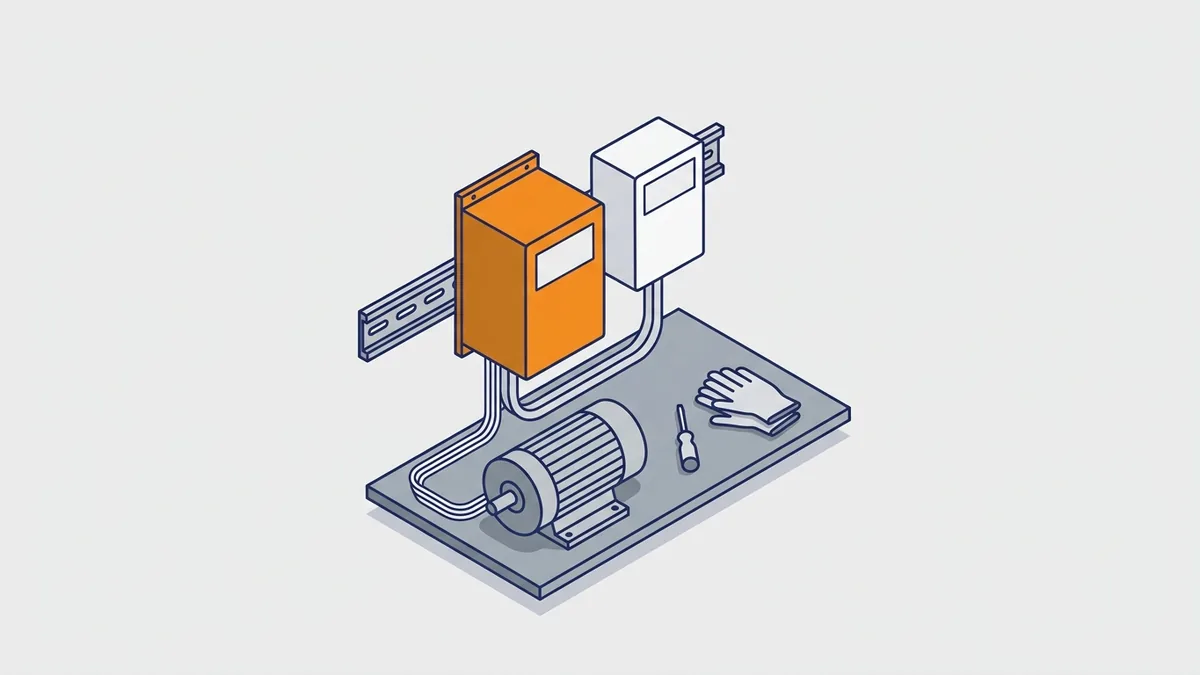
Next, it is a panel-mount drive in IP20 frames, like the ACS180. In addition, it has built-in safe torque off (STO) and takes optional fieldbus adapters. So choose it over the ACS180 when your machine needs more communication or I/O options. Then pull the full option list from the ABB Library catalog before you order.
ACS580 general purpose drives
What is the power range of the ABB ACS580?
ABB’s US page calls the ACS580 a general purpose drive from 1 to 700 hp (0.75 to 500 kW). Wall-mounted versions reach 340 hp (250 kW) with UL Type 12 (IP21 and IP55). In addition, an optional cabinet-built version covers 1 to 30 hp in Type 4X/IP66.
- ACS580-01: wall-mounted. 0.75 to 75 kW at 200-240 V and 0.75 to 355 kW at 380-480 V.
- ACS580-04: drive modules, 250 to 500 kW.
- ACS580-07: cabinet drives, up to 500 kW.
Catalog conflict on the ACS580-07 minimum
First, the ACS580-07 lower limit is 30 kW in catalog RevP and 75 kW in the older RevL. For this reason, check the revision you are reading.
Built-in features
First, the ACS580 has a built-in choke for harmonics in all devices. It also has safe torque off (STO) for machinery safety. Next, a braking chopper is built in up to 30 hp. Finally, motor cables can run up to 300 m (1,000 ft), and EMC level C2 covers the first environment.
ACS880 industrial drives
What is the ACS880?
The ACS880 is ABB’s flagship industrial drive. In short, it targets demanding process work, high power and special duty. For example, the ACS880-01 is wall-mounted, from 0.55 kW (0.75 hp) up to 250 kW (350 hp). Also, it covers voltages from 230 V up to 690 V.
In addition, other variants include -04 modules, -07 cabinets and ultra-low harmonic drives. Single drives reach 6000 kW. Meanwhile, ACS880 multidrives cover 1.5 to 9200 kW. Also, module packages go up to 1200 kW with two parallel modules.
When should I choose ACS880 over ACS580?
Step up to the ACS880 in these cases:
- You need more power than the ACS580 offers.
- Your supply is up to 690 V.
- If you need very low harmonics, look at the ultra-low harmonic ACS880-31, -37 and -34 drives.
- Marine type approvals matter to you, and the ACS880-01 has them.
Industry specific drives (HVAC and water)
What ABB low voltage AC drive is used for HVAC?
For HVAC, ABB offers the ACH580. The ACH580-01 is wall-mounted, 0.75 to 250 kW, 200 to 480 V, in IP21 or IP55. In contrast, the ACH580-31 is ultra-low harmonic, 4 to 110 kW, 380 to 480 V.
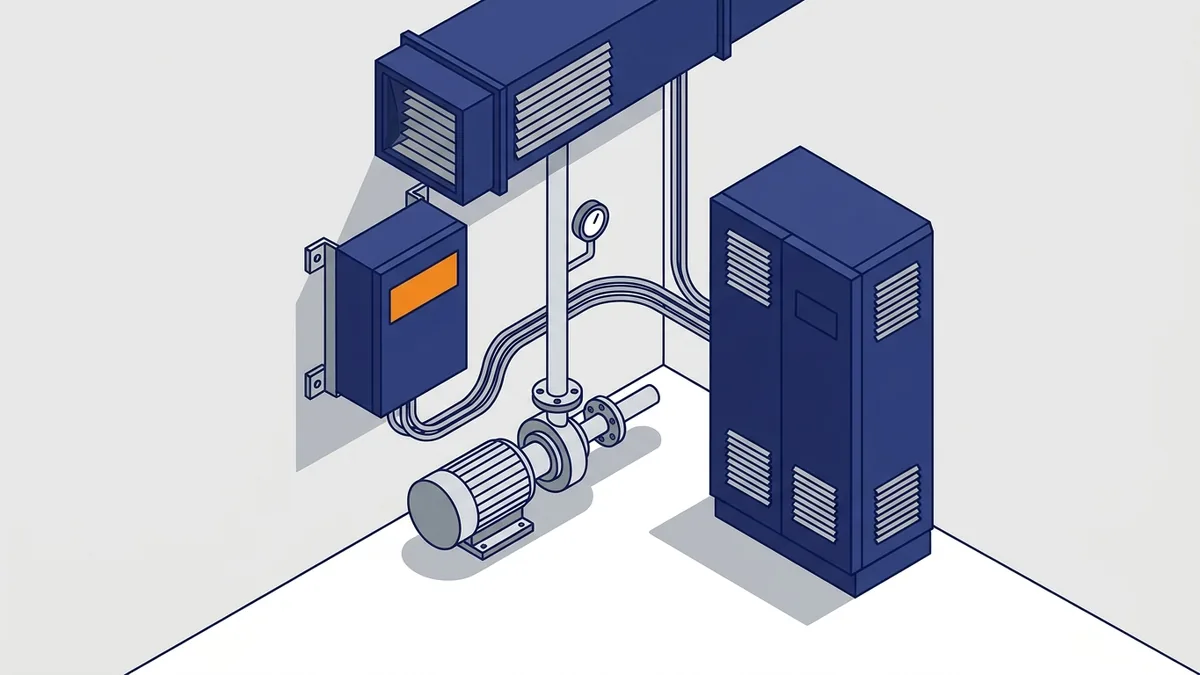
Also, the ACS880-31 is another ultra-low harmonic option, at 2.2 to 110 kW and 380 to 500 V. For more depth on HVAC drives, see our ACH550 and ACH580 posts.
What is the ABB ACQ580 water drive?
The ACQ580 is ABB’s drive for pumps in water and wastewater work. It builds on the ACS580 platform and adds pump-specific software. For example, typical functions include multi-pump control, pump cleaning, dry-run protection and flow calculation. As a result, you use it for water supply, pressure boosting, wastewater lift stations and similar duty.
ABB lists the ACQ580 family at about 0.75 to 500 kW, with 380 to 480 V as the main class. However, voltage options differ by variant, so confirm the ratings for your exact type code in the ABB Library.
Which ABB low voltage drive fits which job
Which ABB low voltage drive fits my application?
| Your job | Start with |
|---|---|
| Washdown or on-machine mounting | ACS255 IP66 |
| Compact machine in a panel | ACS180 or ACS380 |
| Pumps, fans, conveyors up to 355 kW wall-mounted | ACS580 |
| High power, 690 V, special duty | ACS880 |
| Building HVAC | ACH580 |
| Water and wastewater pumps | ACQ580 |
Questions to answer first
- What are the supply voltage and phase?
- What is the motor full-load current, not just hp?
- Is the duty light or heavy?
- What enclosure and ambient do you need?
- Which EMC category, fieldbus and safety (STO) do you need?
- Do harmonics matter?
Can I run a 3-phase motor from single-phase power?
Some ABB low voltage drives can. The ACS180 and ACS255 have 1-phase 200-240 V ratings with 3-phase output. The ACS255 also has 1-phase 110-120 V. Still, check the exact type code and the motor current.
Installation data: fuses, filters, cables and derating
What fuses, EMC filters, cable lengths and derating apply?
Exact values depend on the family, the frame size and the voltage class. So the hardware manual for your model is the final source. Still, these points hold across the range:
- Input fuses: each manual lists the fuse type and size by frame. Use those, not a guess based on hp.
- EMC filters: the ACS580 meets EMC level C2 for the first environment. On the ACS255, a “U” in the type code means no EMC filter.
- Motor cable length: the ACS580 allows up to 300 m (1,000 ft). For other families, read the cable section of the manual.
- Derating: expect to derate output current at high altitude, at high ambient temperature and at high switching frequency. The ACS255 lists -10 to 50 °C operation.
In addition, a longer motor cable often needs an output filter or a lower switching frequency. As a result, check the technical data table in the manual before you finalize the cable run or the panel layout.
How ABB drives compare with the alternatives
Inside the ABB line, the choice follows duty. First, micro drives suit small OEM jobs. Next, machinery drives suit compact machines. In turn, general purpose drives suit pumps, fans and conveyors, and industrial drives suit heavy or high-power work.
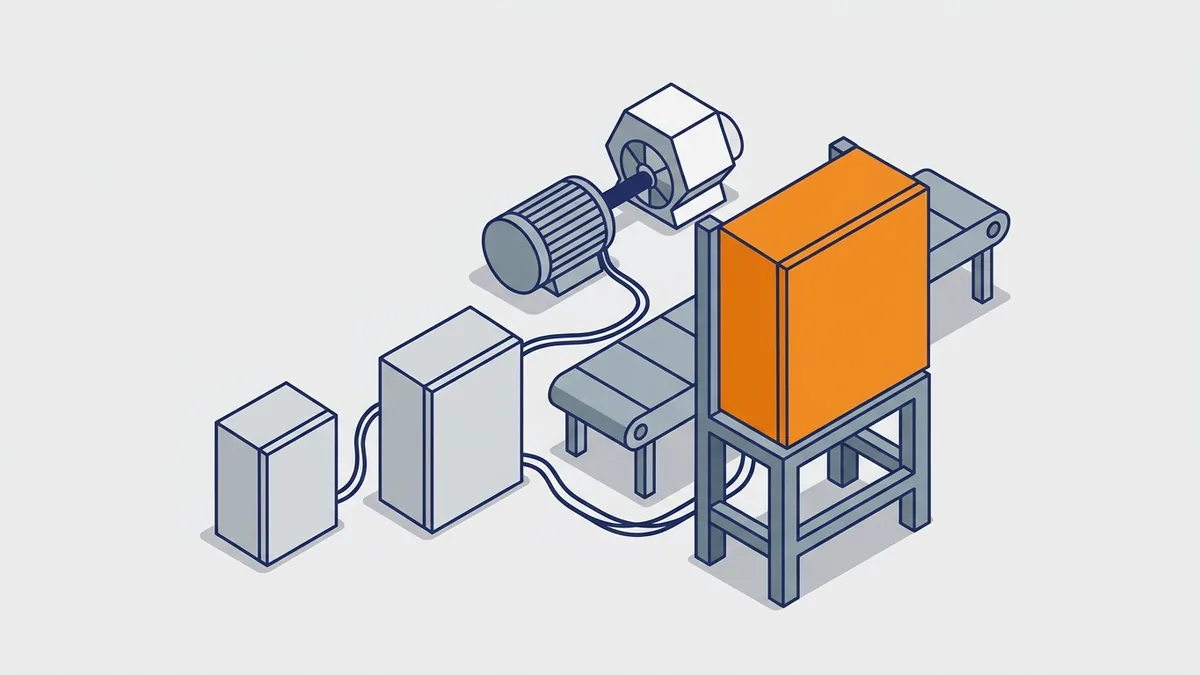
If you own an older ABB drive, the path usually moves up to a current family. For example, an ACS150 or ACS355 user often looks at the ACS180 or ACS580. Also, our ACS150 guide and other posts explain the legacy models.
Which current ABB model replaces each legacy drive?
| Legacy drive | Usual current family |
|---|---|
| ACS150 | ACS180 |
| ACS355 | ACS380 (or ACS580 for larger sizes) |
| ACS550 | ACS580 |
| ACH550 | ACH580 |
| ACS310 | ACS580 |
However, treat this as a starting point. Before you swap, compare the rated current, frame size, terminals and parameters, because they differ between generations. Also confirm the match in ABB’s current replacement guidance, or ask us.
As for other brands, we do not rank them here. A fair comparison needs each maker’s own documentation. So compare ratings, enclosure and features from each datasheet.
Reading ABB type codes and options
How do I read an ABB drive type code?
A type code packs the series, input, current and voltage into one string. Here are three examples.
- ACS255-01U-02A3-1+B063+F278: ACS255 series, 1-phase input (“01”), “U” for no EMC filter, 2.3 A (“02A3”), voltage class 1 (110-120 V), then option codes.
- ACS180-04S-02A4-2: ACS180 series, drive type “04S”, 2.4 A nominal (“02A4”), voltage code 2 (200-240 V).
- ACS580-01-03A3-4+L501: ACS580 series, “-01” wall-mounted, 3.3 A, voltage code 4 (380-480 V), then an option code. Look up “+L501” in the catalog.
Also, ACS255 voltage codes are 1 for 110-120 V, 2 for 200-240 V, 4 for 380-480 V and 6 for 500-600 V. For more, our “Drive Classes, Type Codes and Where to Find Manuals” post goes deeper.
What does +B063, +B068 or +F278 mean on an ACS255?
First, the +B063 code is the IP66/UL Type 4X enclosure without an input disconnect. Adding +F278 gives an input disconnect, a FWD/OFF/REV selector and a speed potentiometer. However, we did not find an ABB definition of +B068 in our sources. So read the ABB documents for it before you choose it.
Our stocked 0.5 HP examples
Which 0.5 HP ABB drives does Precision Electric carry?
We carry one 0.5 hp ACS180 and several 0.5 hp ACS255 IP66 drives. The table lists them. Also, you can add +F278 to any ACS255 for the disconnect, speed pot and FWD/REV switch.
| Model | Input | Output | Amps | Options |
|---|---|---|---|---|
| ACS180-04S-02A4-2 | 200-240 VAC | 240 VAC 3-phase | 2.4 | IP20 panel drive |
| ACS255-01U-02A3-1+B063 and +B063+F278 | 100-120 VAC 1-phase | 240 VAC 3-phase | 2.3 | +F278 on the second |
| ACS255-01U-02A3-1+B068 and +B068+F278 | 100-120 VAC 1-phase | 240 VAC 3-phase | 2.3 | +F278 on the second |
| ACS255-01U-02A3-2+B063 and +B063+F278 | 208-240 VAC 1-phase | 240 VAC 3-phase | 2.3 | +F278 on the second |
| ACS255-01U-02A3-2+B068 | 208-240 VAC 1-phase | 240 VAC 3-phase | 2.3 | None |
| ACS255-03U-02A3-2+B063 and +B063+F278 | 208-240 VAC 3-phase | 240 VAC 3-phase | 2.3 | +F278 on the second |
| ACS255-03U-01A2-4+B063 and +B063+F278 | 400-480 VAC 3-phase | 480 VAC 3-phase | 1.2 | +F278 on the second |
Two listings, the 01U-02A3-2+B063 and +B068 models, read “240 VAC 3 Phase Input” in their titles. However, the type code “01U” and the 208-240 V class point to a 1-phase input. So confirm the input with us against the SKU before you order. Also, the +B068 titles say “Outdoor,” so follow the indoor caution above.
Documents, software and support
Where can I find ABB drive catalogs and manuals?
First, start with the ABB Library. Its drives catalogs cover the ACS180, ACS380, ACS480 and ACS580, plus the ACS880 single drives catalog and an ACS255 US catalog. In addition, ABB has product pages for the ACS180, ACS580, ACS880-01 and HVAC drives.

To find the right manual, read the type code and rating label on the drive. Then search the ABB Library for that series.
Which software do I use to commission a drive and back up parameters?
For the ACS180, ACS380, ACS580 and ACS880, ABB’s PC tool is Drive composer. It comes in an entry version and a pro version. You use it to set parameters, monitor the drive, and save a parameter file as a backup. The panel on these drives can also back up and restore parameters.
You connect a PC to the drive’s control panel with a USB cable, or over Ethernet when the drive has an Ethernet fieldbus adapter. The exact connection kit differs by family, so check your hardware manual. For the ACS255, we did not confirm a tool name, so read its user manual.
Buying checklist and common mistakes
What mistakes do buyers make when ordering an ABB drive?
- Sizing by hp without checking motor amps.
- Ordering the wrong voltage code.
- Missing that “U” means no EMC filter.
- Picking an IP20 drive for washdown.
- Treating the overload rating as a continuous rating.
A one-minute pre-order checklist
- First, read the motor nameplate for volts, phase and full-load amps.
- Next, match the supply voltage and phase to the voltage code.
- Then choose light or heavy duty.
- After that, pick the enclosure and options, such as +F278.
- Finally, confirm the catalog revision for your series.
How much does an ABB low voltage drive cost and how long does delivery take?
However, we have no verified price or lead-time source for this guide. For that reason, check the product page for current price and stock.
When to repair, replace or call for help
First, repair makes sense when a drive shows fault codes, or when a failed IGBT or DC bus is suspected. It also makes sense when the model is obsolete and a replacement needs rework. On the other hand, replacement fits when a current family offers features you need, such as STO or lower harmonics.
Before you call about an ABB drive repair, have the full type code, the serial number and a short fault description ready. Then we can tell you whether repair or replacement is the better path.
What do ABB drive fault codes mean, and how do you clear them?
When a drive trips, its panel shows a fault code and a short text. On the ACS180, ACS380, ACS580 and ACS880, the codes are four-digit numbers. For example, these common ones are listed in ABB’s fault tables:
- 2310: overcurrent. Look for a short, a locked load or a ramp that is too fast.
- 3210: DC link overvoltage. Look for a deceleration that is too fast or a high supply voltage.
- 3220: DC link undervoltage. Look for a supply dip or a lost phase.
- 4210: IGBT overtemperature. Look for a blocked fan, dirty heat sink or high ambient.
The ACS255 uses a different code style, so use its manual. In every case, the fault list in the manual for your model is the final word.
To clear a fault, first find and fix the cause. Then press the Reset key on the panel, use a digital input set up for fault reset, or cycle the power. If the fault returns right away, stop and call for help. Also, wait the time in the manual after power-off before you touch any terminals, because the DC bus stays charged.
Frequently asked questions
What are ABB low voltage AC drives?
They are ABB’s electronic variable speed drives for AC motors. In total, they cover micro, machinery, general purpose, industrial and industry specific families. Also, ABB states the overall range as 0.18 to 5600 kW.
Which ABB low voltage drive should I choose for a small machine?
Look first at the ACS180 (0.25 to 22 kW, panel mounting) and the ACS255 micro drive (IP20 or IP66/NEMA 4X). However, the ACS255 IP66 is the pick when the drive must mount on the machine and face washdown. For pumps, fans and conveyors up to 355 kW wall-mounted, the ACS580 fits. Finally, if the duty is demanding or high-power, go with the ACS880.
What does the ACS255 +B063 and +F278 mean?
First, the +B063 code is the IP66/UL Type 4X enclosure without an input disconnect. Then the +B063+F278 code adds an input disconnect, a FWD/OFF/REV selector and a speed potentiometer. Also, a “U” in the type code means no EMC filter.
Can ABB low voltage drives run a 3-phase motor from single-phase power?
Some can. The ACS180 and ACS255 have 1-phase 200-240 V input ratings, and the ACS255 also has 1-phase 110-120 V, all with 3-phase output. Still, check the exact type code and the motor’s current.
What is the difference between light-duty and heavy-duty ratings on an ABB drive?
First, ABB lists both. For the ACS180-04S-02A4-2, light duty is 2.3 A (0.5 hp) and heavy duty is 1.8 A (0.33 hp). So size to the motor current and the duty your load needs, not to hp alone.
ABB low voltage drives give you a clear step up from micro to industrial, as long as you match the series, voltage code and options to the job. Finally, check the catalog revision for your model before you order.
If you want help choosing, a quote or a repair, contact Precision Electric or browse our ABB drives.