








ACS150 Part Numbers, Models, Ratings and NEMA 1 Guide
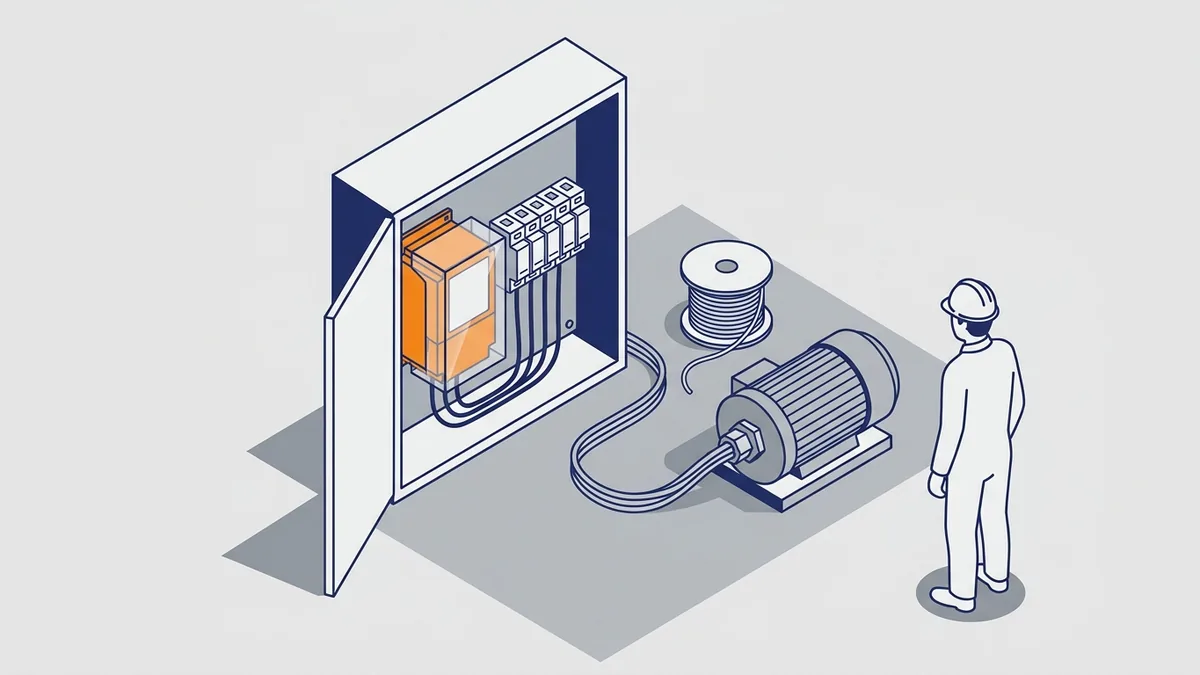
If you search for an acs150, you probably need to match a part number to a motor, replace a failed unit, or find out whether you can still buy one. This guide decodes the ACS150 part number, lists the models we sell, and explains the NEMA 1 question. Finally, it covers install checks and the move to ABB’s newer drive.
On this page
- What the ACS150 is and its status
- How to read an ACS150 part number
- ACS150 models and ratings
- Choosing the right ACS150 for your motor and supply
- What “NEMA 1” means on an ACS150
- Installing and wiring an ACS150
- Start-up, control and brake resistors
- ACS150 vs ACS180: replacing an ACS150
- Buying an ACS150: questions to ask before ordering
- Common mistakes and when to repair or call for help
- Frequently asked questions
What the ACS150 is and its status
What is the ABB ACS150?
The ABB ACS150 is a micro AC drive for controlling AC induction motors from 0.37 to 4 kW (0.5 to 5 HP). Also, you can mount it on a wall or in a cabinet. In addition, it comes with a built-in keypad and potentiometer, a brake chopper, an integrated EMC filter and coated circuit boards.
What is an ABB ACS150 used for?
In most plants, people use the ACS150 VFD on simple machines. For example, typical jobs include pumps, fans, conveyors, mixers, and door or gate control. In short, it suits basic speed control of one induction motor.
Is the ACS150 discontinued or obsolete?
Yes. ABB’s life cycle statement lists ACS150 modules as Obsolete since 1 January 2026. In that phase, ABB says the product is no longer available. Also, ABB’s conversion guide names the ACS180 as the replacement.
As a result, any ACS150 you buy now is not new from ABB. So ask the seller whether a unit is stock, surplus or repaired before you order.
Which models does this article cover?
First, this article covers the models we sell. In detail, those are the 1, 1.5, 2 and 3 HP units at 240 V, plus the 480 V units. We also point out the models that exist in ABB’s catalog but are not on our list.
How to read an ACS150 part number
How do I read an ACS150 part number?
Take ACS150-03U-04A7-2 as an example. Then each piece of the code tells you something about the drive.
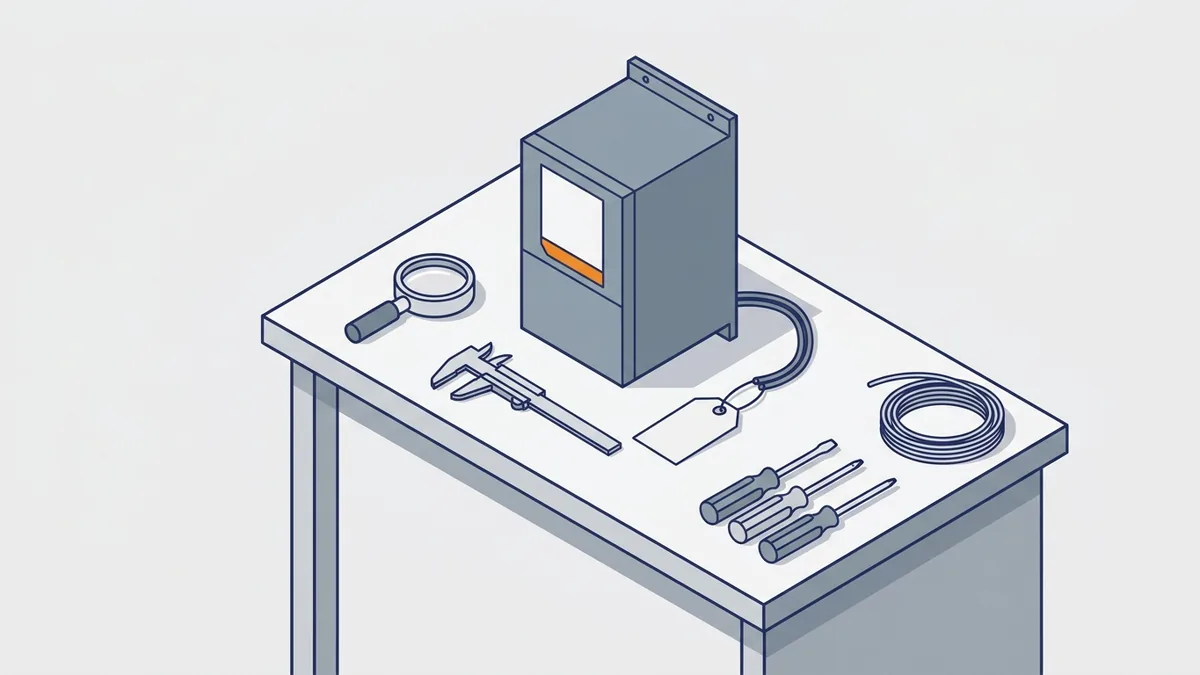
- ACS150 is the series.
- 03 means three-phase input. A 01 means single-phase input.
- U means the EMC filter is disconnected (plastic screw), with US parametrization. An E means the EMC filter is connected (metal screw).
- 04A7 means 4.7 A output current.
- -2 means a 200-240 V supply. A -4 means 380-480 V.
So this drive has three-phase input, a 4.7 A output and a 200-240 V supply. Also, it is a 1 HP, frame R1 drive.
How can I tell an E version from a U version?
First, read the letter in the part number. An E drive has the EMC filter connected through a metal screw. In contrast, a U drive has the filter disconnected through a plastic screw. As a result, you can also check the screw itself on a drive you already have.
What frame size is my ACS150 (R0, R1 or R2)?
First, the ACS150 comes in frame sizes R0 to R2. However, HP alone does not set the frame. For example, the three-phase 2 HP drive (03U-07A5-2) is frame R1. In contrast, the single-phase 2 HP drive (01U-07A5-2) is frame R2.
Because of this, always read the full part number or look it up in the table below. So do not guess the frame from the HP.
ACS150 models and ratings
What HP and amp ratings does the ACS150 come in?
First, this table lists every ACS150 we sell. Also, frame sizes come from ABB’s catalog data.
| Part number | HP | Input | Output amps | Frame |
|---|---|---|---|---|
| ACS150-01U-04A7-2 | 1 | 208-240 V, 1 phase | 4.7 | R1 |
| ACS150-01U-06A7-2 | 1.5 | 208-240 V, 1 phase | 6.7 | R1 |
| ACS150-01U-07A5-2 | 2 | 208-240 V, 1 phase | 7.5 | R2 |
| ACS150-01U-09A8-2 | 3 | 208-240 V, 1 phase | 9.8 | R2 |
| ACS150-03U-04A7-2 | 1 | 208-240 V, 3 phase | 4.7 | R1 |
| ACS150-03U-06A7-2 | 1.5 | 208-240 V, 3 phase | 6.7 | R1 |
| ACS150-03U-07A5-2 | 2 | 208-240 V, 3 phase | 7.5 | R1 |
| ACS150-03U-09A8-2 | 3 | 208-240 V, 3 phase | 9.8 | R2 |
| ACS150-03U-02A4-4 | 1 | 400-480 V, 3 phase | 2.4 | Check nameplate |
| ACS150-03U-03A3-4 | 1.5 (see note) | 400-480 V, 3 phase | 3.3 | R1 |
| ACS150-03U-04A1-4 | 2 | 400-480 V, 3 phase | 4.1 | R1 |
| ACS150-03U-05A6-4 | 3 | 400-480 V, 3 phase | 5.6 | R1 |
Note: however, our list shows the 3.3 A drive as 1.5 HP. So confirm that against the nameplate or ABB’s catalog before you rely on it.
ABB’s catalog also lists 0.5 HP and 0.75 HP drives, and a 5 HP 480 V drive (03U-08A8-4). However, they are not on our current list.
How much input current does an ACS150 draw on single-phase and three-phase supply?
In general, single-phase input draws far more current than three-phase for the same output. Also, these values are at 200 V, from ABB’s catalog. Then use them to size wiring and fusing.
| Model (-2) | 1-phase, no choke (A) | 1-phase, 5% choke (A) | 3-phase, no reactor (A) | 3-phase, 5% reactor (A) |
|---|---|---|---|---|
| 04A7-2 | 11 | 8.1 | 7.6 | 4.2 |
| 06A7-2 | 16 | 11 | 12 | 6.1 |
| 07A5-2 | 17 | 12 | 12 | 6.9 |
| 09A8-2 | 21 | 15 | 14 | 9.2 |
In addition, a choke or reactor lowers the input current. For this, ABB lists optional input reactors in the ACS150 catalog.
Choosing the right ACS150 for your motor and supply
Which ACS150 do I need for my motor and supply voltage?
First, match the supply. Here, you have three choices: single-phase 208-240 V in, three-phase 208-240 V in, or three-phase 400-480 V in. However, the output is always three-phase.
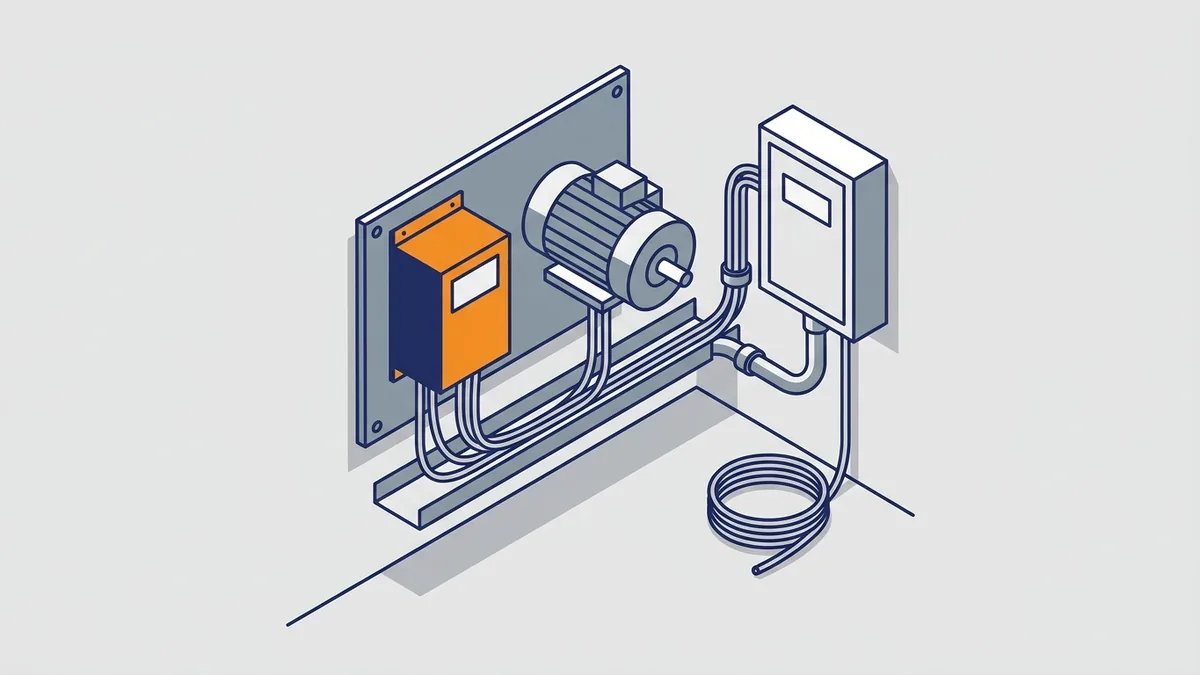
Next, match the motor’s full-load amps to the drive’s rated output amps. For this reason, ABB says the drive’s rated current must be at least the motor’s rated current to reach the rated power. So do not choose by the HP label alone.
Quick selection by motor HP and voltage
| Motor HP | 240 V, 1-phase supply | 240 V, 3-phase supply | 480 V, 3-phase supply |
|---|---|---|---|
| 1 | 01U-04A7-2 | 03U-04A7-2 | 03U-02A4-4 |
| 1.5 | 01U-06A7-2 | 03U-06A7-2 | 03U-03A3-4 |
| 2 | 01U-07A5-2 | 03U-07A5-2 | 03U-04A1-4 |
| 3 | 01U-09A8-2 | 03U-09A8-2 | 03U-05A6-4 |
What is the difference between the 01U and 03U models?
The 01U models take single-phase input. In contrast, the 03U models take three-phase input. In addition, both give the same output ratings. However, the single-phase models draw much more input current, and at 2 HP they use a bigger frame.
For safety, do not run a single-phase supply into a 03U drive, or the reverse. Then check the supply at the panel before you order.
Where does the ABB ACS150 fit, and where does it not?
In general, this drive fits simple loads such as pumps, fans and conveyors. However, it controls induction motors only. This guide does not cover fieldbus options, so check ABB’s catalog if you need network control.
What “NEMA 1” means on an ACS150
Is the ABB ACS150 NEMA 1 rated?
Not by itself. As shipped, the drive is IP20 / UL open. Instead, NEMA 1 comes from ABB’s MUL1-R1 option kit, which adds a hood and a connection box. Also, the kit ships with instruction sheet 3AFE68642868.
For example, our listings say “NEMA 1 Enclosed.” In this case, that wording refers to a drive fitted with this kit. So when the drive arrives, check that the hood and connection box are in place.
When does a wall installation need NEMA 1?
First, ABB’s manual tells you to check the enclosure requirements for the need for the NEMA 1 option in wall installations. Therefore, if the site needs more than an open drive, do not skip the kit. However, a drive in a closed cabinet follows the cabinet’s rating.
Dimensions and weight
Here, ABB’s catalog gives these figures for the NEMA 1 drive.
- Frame R0 weighs 3.3 lb. Meanwhile, frame R1 weighs 3.8 lb.
- Also, the NEMA 1 drive is 2.8 in wide and 5.6 in deep.
- Finally, height is about 10 to 11 in.
For comparison, one catalog listing gives the open ACS150-03U-04A7-2 as 8.0 in high, 2.8 in wide and 5.6 in deep.
Installing and wiring an ACS150
What safety steps come first?
First, never work on the drive, motor cable or motor with input power on. Next, after you disconnect power, wait 5 minutes for the DC capacitors to discharge. Then measure for voltage at the terminals before you touch anything.
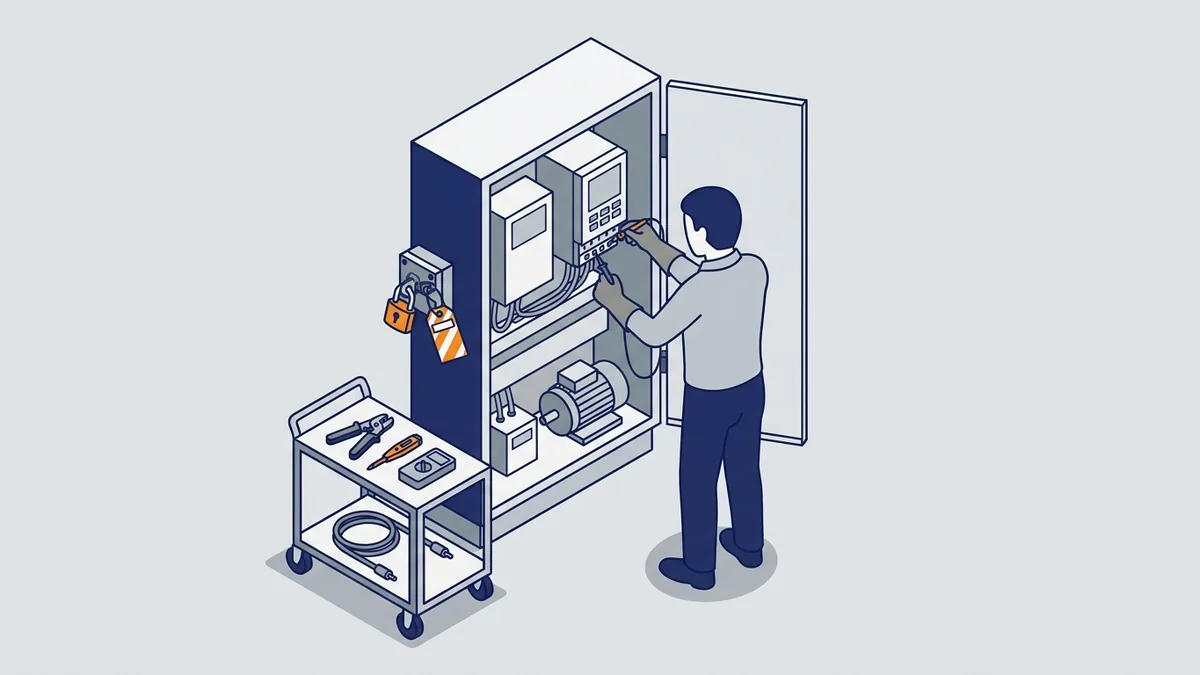
How do I wire and ground an ACS150?
First, connect the input phase conductors to U1, V1 and W1. Then connect the motor to U2, V2 and W2. Finally, tighten the terminals to 0.8 N·m (7 lbf·in).
Next, twist the motor cable shield into a short pigtail. Then fasten it under the grounding clamp. Also, if you use the NEMA 1 kit, make sure the hood and connection box are fitted.
How do I mount an ACS150?
You can mount the drive on a wall with screws, or you can snap it onto a 35 mm DIN rail. However, only frames R1 and R2 may be mounted horizontally. So mount an R0 drive upright. For free space and temperature limits, follow the mounting chapter of ABB’s user’s manual.
What fuses does an ACS150 need?
As one example, ABB’s catalog says the ACS150-03U-04A7-2 uses a 10 A gG fuse or a 15 A UL class T fuse. However, for other models, use the fuse table in ABB’s ACS150 catalog or user’s manual. So do not copy this example to a different rating.
When do I remove the EMC screw?
First, on IT (ungrounded) and corner-grounded TN systems, disconnect the internal EMC filter by removing the EMC screw. However, on three-phase U-type drives (ACS150-03U-), the factory has already removed the screw and put in a plastic one. So check this before you energize a drive on a grounded system.
Checks before you start
- First, disconnect the motor cable from terminals U2, V2 and W2.
- Next, measure insulation resistance between each phase conductor and Protective Earth, using 500 V DC.
- Then reconnect the cable and confirm the torque on every terminal.
- Also, do not switch the motor with an AC contactor or disconnecting device. Use the keypad or I/O commands instead.
- Finally, limit power-ups to two per minute.
Start-up, control and brake resistors
How do I start up and set the speed on an ACS150?
First, the built-in keypad and potentiometer let you set speed locally. In addition, ABB’s manual has step-by-step tasks for local and remote switching, start and stop, direction change, setting the frequency reference, browsing signals and resetting faults.
The manual also covers application macros. For example, in one constant-speed scheme, digital inputs DI3 and DI4 select the potentiometer or constant speeds 1 to 3 (parameters 1202 to 1204).
What are FlashDrop and DrivePM?
First, FlashDrop is a tool that copies and edits parameters. In addition, the package includes the FlashDrop tool, DrivePM software on CD-ROM, the user’s manual in PDF, a PC cable and a battery charger. As a result, you can set up several drives with the same settings.
Does the ACS150 have a brake chopper, and what resistor can I use?
Yes, a brake chopper is built in. However, you add an outside brake resistor when the load needs to slow down fast. Also, ABB lists a resistance range for each model.
| Model | Rmin-Rmax (ohm) |
|---|---|
| 01U-04A7-2 and 03U-04A7-2 (1 HP) | 40-200 |
| 01U-06A7-2 | 40-130 |
| 01U-07A5-2 | 30-100 |
| 01U-09A8-2 | 30-70 |
| 03U-02A4-4 (1 HP, 480 V) | 210-590 |
However, for other models, check ABB’s catalog.
Do I need to reform capacitors on a drive that has been in storage?
Yes, if the drive has been stored for over a year. The Rev D user’s manual (3AFE68576032) says so. ABB’s ACS150 quick installation guide also says to reform the DC link capacitors if the drive has not been powered up for a year or more. Older manual revisions give a two-year figure, so use the one-year limit.
Also, ABB has a separate capacitor reforming guide, document 3AFE68735190. So follow it before you power the drive up.
ACS150 vs ACS180: replacing an ACS150
What replaces the ABB ACS150?
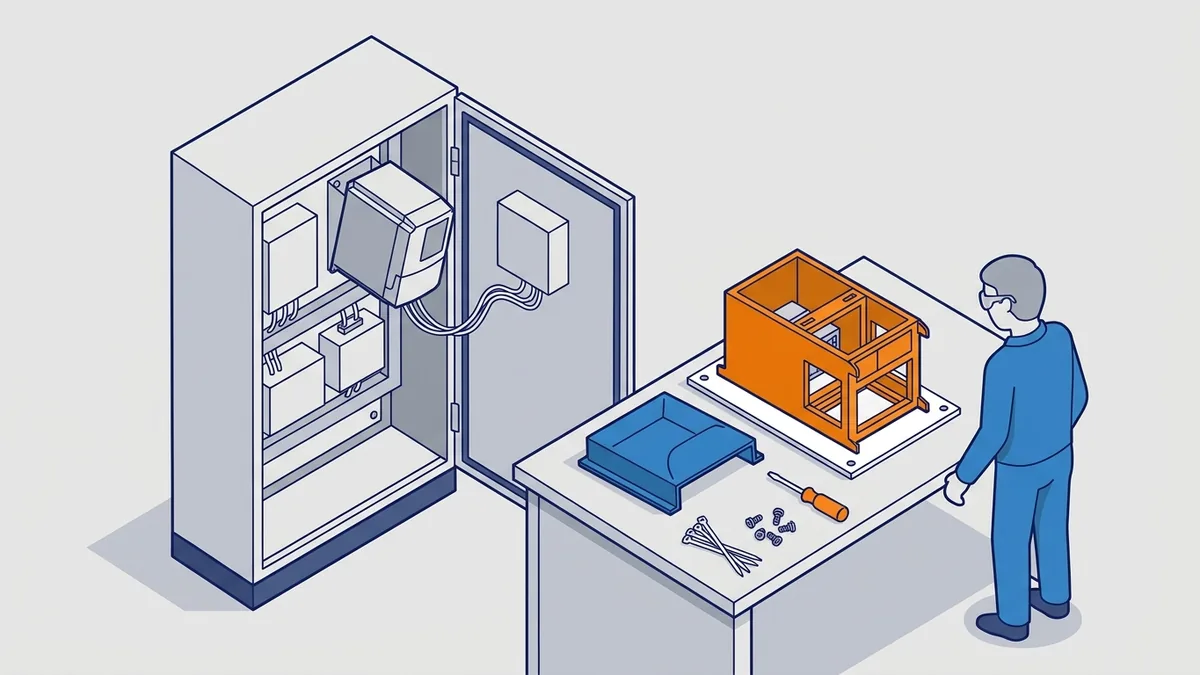
First, ABB’s conversion guide says to replace the ACS150 with the ACS180. The ACS180 is built for cabinet installation and is IP20 / UL open as standard, so it has no NEMA 1 hood as standard.
How do the two drives compare?
| Item | ACS150 | ACS180 |
|---|---|---|
| Status | Obsolete since 1 Jan 2026 | Current ABB replacement |
| Enclosure | IP20 / UL open; NEMA 1 with MUL1-R1 kit | IP20 / UL open; no NEMA 1 hood as standard |
| Control | See ABB’s ACS150 manual | Scalar and sensorless vector |
| Output frequency | 0-500 Hz (one listing) | 0-599 Hz |
| Type code suffix | -2 (200-240 V), -4 (380-480 V) | -1 (1-phase 200-240 V), -2 (3-phase 230 V), -4 (400 V) |
| Size, small frames | 70 mm wide (2.8 in) | R0 and R1 are 70 mm wide; R2 is 120 mm |
The ACS180 also lists light-duty and heavy-duty ratings for each model. In addition, its built-in EMC filter class depends on the type code: C2 for 04S-xxxx-1, C3 for 04S-xxxx-4, and C4 for 04S-xxxx-2 and 04N types.
Can an ACS180 directly replace an ACS150?
However, do not assume so. The type codes differ, so you cannot carry the ACS150 suffix over. For example, some distributors publish cross-references, such as ACS150-03U-02A4-2 to ACS180-04S-02A4-2. These are not ABB documents, so verify them against ABB’s ACS180 catalog and hardware manual.
Before you swap, check these items:
- Motor amps against the new drive’s rating.
- Fuse and cable sizes.
- Enclosure. NEMA 1 needs separate provision on the ACS180.
- Wiring and I/O connections.
- Parameter setup.
- Mounting holes and free space. The ACS180 needs at least 75 mm (3 in) above and below. Frame R0 needs 50 mm of side space.
Does the ACS180 have a brake chopper or a front potentiometer?
The ACS150 has a built-in brake chopper. However, ABB’s ACS180 R0 and R1 frames have none. So if your load needs a brake resistor, check the ACS180 frame before you order, and pick a larger frame or another braking method if needed.
Also, the ACS180 has no front potentiometer like the ACS150. As a result, plan an outside speed pot or a signal from your controller.
When should I keep the ACS150 and when should I move on?
First, keep the ACS150 when a repair or a same-model spare gets the machine running with no panel changes. However, move to the ACS180 when the old drive cannot be repaired, or when you can redo the panel work. Finally, in a plant with many ACS150 units, a mix of both is common.
Buying an ACS150: questions to ask before ordering
What should I check before ordering an ACS150?
First, start with these checks.
- Full part number. Therefore, input phase, voltage and current all matter.
- Condition and source. ABB lists the series as obsolete, so ask whether the unit is new surplus, stock or repaired. Also, ask about warranty.
- NEMA 1 kit. In addition, confirm the MUL1-R1 kit is included if you need it.
- Accessories. Finally, decide whether you need a brake resistor, an input reactor or fuses.
How do I judge a used or surplus ACS150?
First, ask for the nameplate details and the date code, and check that they match the part number you need. Next, ask whether the seller tested the drive, and how. Also, get the warranty terms in writing. Finally, remember the capacitor rule above: a drive that sat for over a year needs reforming before power-up.
Where do I download the ACS150 manual, catalog and software?
First, go to ABB Library, the document site on ABB’s website. Then search for the ACS150 micro drive manuals page. Once there, you will find the ACS150 User’s Manual (document 3AFE68576032, revision D) and the ACS150 micro drives catalog.
ABB Library also has the ACS150 product life cycle statement and the US catalog sheet 3AUA0000085631. In addition, for the replacement drive, look up the ACS180 machinery drives catalog, the ACS180 hardware manual and the ACS180 quick installation and start-up guide. Finally, DrivePM comes in the FlashDrop package listed above.
Common mistakes and when to repair or call for help
What mistakes do people make with the ACS150?
Most often, these errors come up:
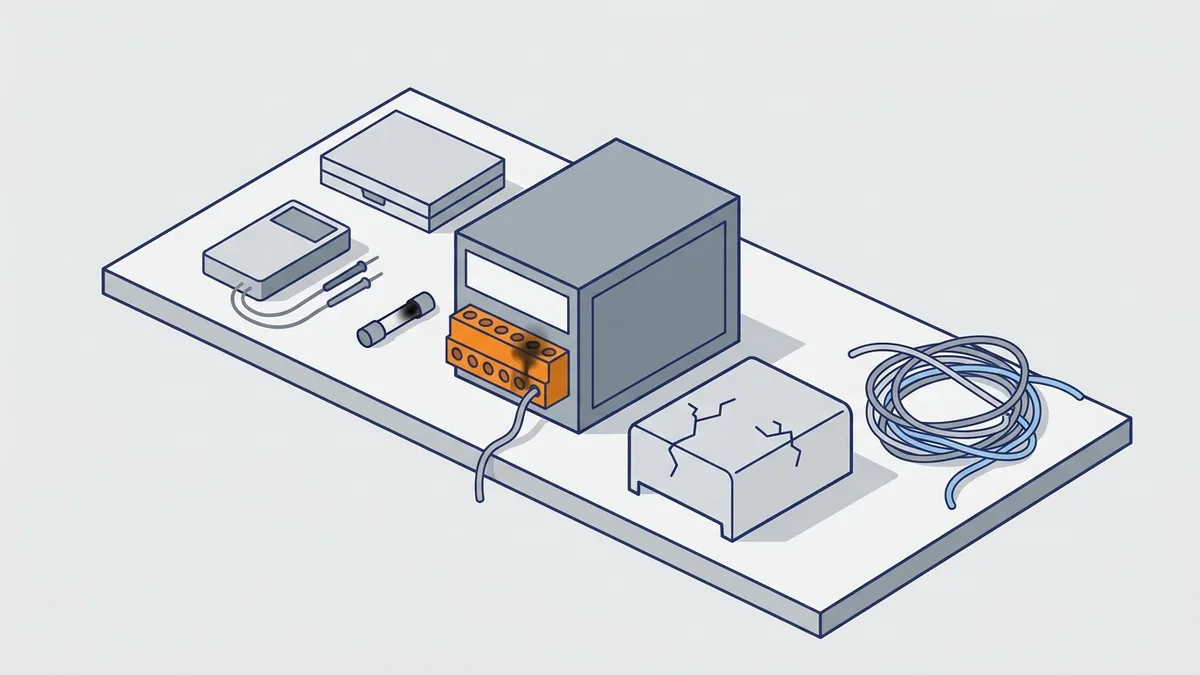
- Using a single-phase supply on a three-phase-input model (03U), or the reverse.
- Sizing by HP and ignoring motor amps.
- Leaving the EMC screw in on an ungrounded or corner-grounded system.
- Starting and stopping the motor with a contactor.
- Mounting on a wall without the NEMA 1 kit where the site needs it.
- Fitting a drive after long storage without reforming the capacitors.
When should an ACS150 be repaired instead of replaced?
In general, repair makes sense when the drive is an obsolete model that fits your panel and settings. First, a repair keeps the wiring, mounting and parameters the same. In addition, it saves the panel rework that a new drive type can bring.
What do ACS150 fault codes mean?
When a drive faults, the keypad shows a fault code. Start with the fault and alarm tables in the fault-tracing chapter of the user’s manual, because they list every code and its fix. Meanwhile, these common ones point to clear causes:
- Overcurrent (F0001): the output current is too high. Look for a short, a jammed load or a ramp that is too fast.
- DC overvoltage (F0002): the DC bus voltage is too high. This often happens when a load slows down too fast without a brake resistor.
- Drive overtemperature (F0003): the drive is too hot. Check the airflow and the ambient temperature.
- Short circuit (F0004): a fault in the motor or the motor cable.
- DC undervoltage (F0006): the DC bus voltage is too low, usually from a weak or missing supply.
Do not guess at fixes or parameter changes that the manual does not describe.
How do I find a repair service for an ACS150?
If the drive still will not run after you clear the cause, send it to a repair shop. Precision Electric repairs drives, so you can contact us with the full part number and the fault code. As a result, we can tell you what the repair involves. Repair costs depend on the failure, so ask for a quote.
Frequently asked questions
What is the ABB ACS150?
Briefly, the ABB ACS150 is a micro AC drive for controlling AC induction motors, from 0.37 to 4 kW (0.5 to 5 HP). Also, it mounts on a wall or in a cabinet. In addition, it has a built-in keypad and potentiometer, a brake chopper and an EMC filter.
Is the ABB ACS150 still made?
No. Instead, ABB’s life cycle statement lists ACS150 modules as Obsolete since 1 January 2026, and says the product is no longer available. Also, ABB’s conversion guide points to the ACS180 as the replacement.
Is the ACS150 NEMA 1?
Not by itself. First, the drive is IP20 / UL open as standard. Then NEMA 1 comes from ABB’s MUL1-R1 kit, which adds a hood and connection box. So check the kit is fitted if you need a wall-mounted NEMA 1 installation.
What does ACS150-03U-04A7-2 mean?
For example, it is an ACS150 with three-phase input (03), the EMC filter disconnected with US parametrization (U) and 4.7 A output (04A7). Also, the -2 means a 200-240 V supply. Overall, it is a 1 HP, frame R1 drive. However, a -01U code is single-phase input, and a -4 suffix is 380-480 V.
What replaces the ACS150?
First, ABB’s conversion guide says to replace the ACS150 with the ACS180. However, its type codes differ, with -1 for single-phase 200-240 V, -2 for three-phase 230 V and -4 for 400 V. So check current, enclosure and wiring against ABB’s ACS180 catalog and hardware manual before you order.
Can I switch an ACS150 on and off with a contactor?
No, because the manual says not to control the motor with an AC contactor or disconnecting device. Instead, use the keypad or I/O commands. Also, you can power up the drive only two times per minute.
The ACS150 is an obsolete but still common drive, so the part number, the supply and the motor amps decide which unit fits. Next, check the NEMA 1 kit, the EMC screw and the wiring before you power it up. If you need help matching a model, want a quote, or have a drive that needs repair, contact Precision Electric or browse our ACS150 drives.