Soft Start ABB Guide: Compare PSR, PSE and PSTX Models
Finding the right soft start ABB unit for a fixed-speed three-phase motor can mean hours of catalog reading. In fact, ABB sells several softstarter ranges, and their sizes overlap. In this guide, you will see PSR, PSE and PSTX side by side, learn which model fits your motor, and get a checklist to use before you order.
On this page
- What an ABB soft starter is and what it does
- The ABB soft starter line at a glance: PSR vs PSE vs PSTX
- ABB PSR compact soft starters (3 to 105 A)
- ABB PSE efficient soft starters (18 to 370 A)
- ABB PSTX advanced soft starters (30 to 1250 A)
- Which soft start ABB model fits which motor and application
- How do I size an ABB soft starter for my motor?
- What is the difference between normal duty (class 10) and heavy duty (class 30)?
- Do ambient temperature and altitude change the rating?
- Motor size to model examples
- Which ABB soft starter fits pumps, fans, conveyors and compressors?
- When does inside-delta connection help?
- ABB soft starter vs ABB drive: when to choose each
- Older ABB soft starters: PSS, PST and PSTB
- What to check before ordering an ABB soft starter
- Getting manuals, software and parts
- Frequently asked questions
What an ABB soft starter is and what it does
What is an ABB soft starter?
An ABB soft starter is a reduced voltage starter for three-phase AC motors. It brings the motor up to speed gently instead of throwing it straight onto full voltage. Then, after the start, the motor runs from the line at normal frequency. As a result, a soft start ABB device never changes motor speed while running.
Also, ABB spells the product “softstarter” in its catalogs, so search that way too. In short, the main ranges in this guide are PSR (compact), PSE (efficient) and PSTX (advanced).
How does an ABB soft starter work?
Inside, the unit uses thyristors, also called SCRs. These are solid-state switches that pass only part of each AC wave. First, the soft starter lets a low voltage reach the motor. Then it raises the voltage over the ramp time you set, until the motor sees full line voltage.
Next, a built-in bypass closes and carries the running current, so the thyristors stay cool. To stop, the unit can ramp the voltage down for a soft stop instead of a sudden coast. However, keep one limit in mind. Because a soft starter only lowers voltage, starting torque falls with the square of the voltage.
For example, half voltage gives only about a quarter of full-voltage torque. For the full theory, see our Soft Start Explained post. Meanwhile, this guide sticks to the soft start ABB range itself.
Why use a soft starter instead of a direct-on-line or star-delta starter?
A direct-on-line (DOL) starter switches the motor straight onto full voltage. As a result, it causes a large inrush current and a sharp torque jolt. A star-delta starter, which starts the windings in star and then switches to delta, softens the start. Still, it gives a second jolt at the switch-over.
In contrast, a soft start ABB unit ramps smoothly from start to full speed. Here is what you gain:
- Lower inrush current on your supply
- Less shock to belts, couplings and gearboxes
- Less water hammer in pump lines when you use a ramped stop
- A smaller starter, since ABB notes that a PSR with a manual motor starter is more compact than star-delta
- A controlled soft stop, which DOL and star-delta starters cannot give
The ABB soft starter line at a glance: PSR vs PSE vs PSTX
What ABB soft starter series are there?
ABB’s current main catalog (1SFC132012C0303, May 2023) covers four series: PSR, PSRC, PSE and PSTX. This guide covers PSR, PSE and PSTX, so check the catalog for PSRC. Each step up adds current range and features. However, older PSS, PST and PSTB units no longer appear in that catalog, and many still run in plants. For that reason, we cover them in their own section below.
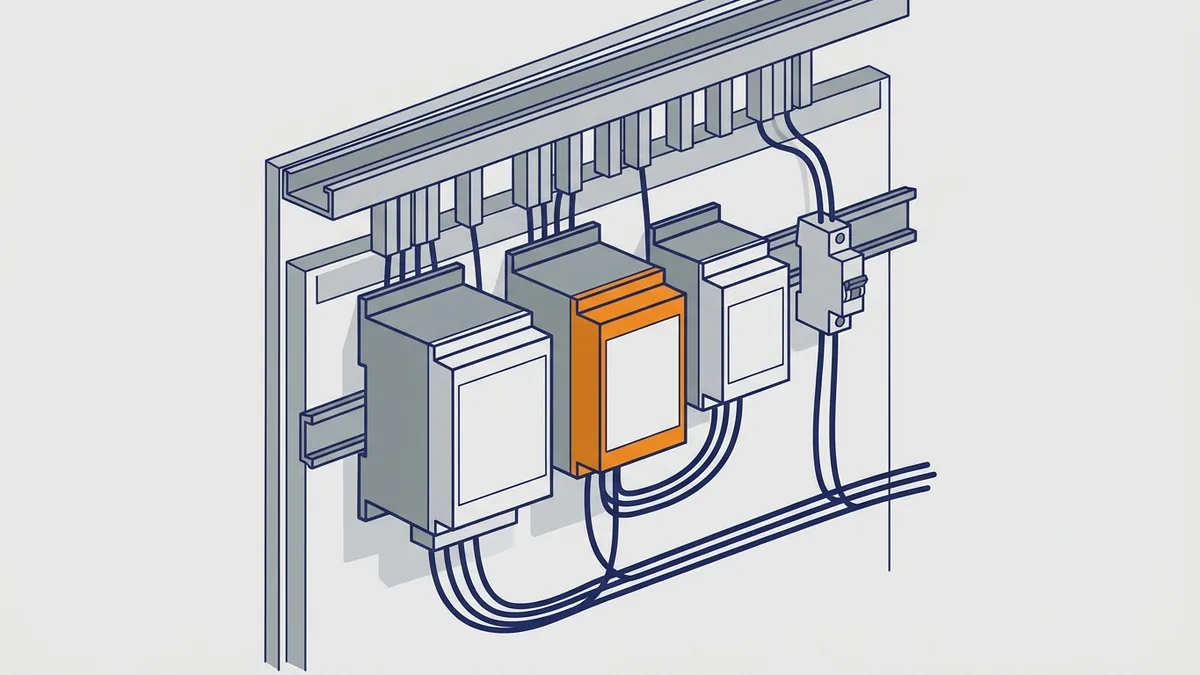
So when you shop for a soft start ABB replacement or a new install, first decide which range you need. Then pick the frame size.
What is the difference between ABB PSR, PSE and PSTX?
In short, PSR is a simple unit you set with three knobs. Next, PSE adds current limit, kick-start, torque control and a display. Finally, PSTX adds three-phase control, a graphical keypad, more fieldbus choices and pump functions. For a quick view, the table compares each soft start ABB range.
| Feature | PSR (compact) | PSE (efficient) | PSTX (advanced) |
|---|---|---|---|
| Current range | 3 to 105 A | 18 to 370 A | 30 to 1250 A (2160 A inside-delta) |
| Main voltage | 208 to 600 V | Also 208 to 600 V | 208 to 600 V; 208 to 690 V on several frames |
| Control supply | 100 to 240 V AC or 24 V AC/DC | Range of 100 to 250 V AC | 100 to 250 V AC |
| Thyristor control | Two-phase | Two-phase | Three-phase |
| Bypass | Built in | Yes, built in | Also built in |
| Setup | Three potentiometers | Illuminated symbol display; optional IP66 keypad | Graphical display; detachable IP66 keypad |
| Signals and communications | Run relay; TOR relay from 25 A | Run, TOR and Event relays; built-in Modbus RTU | Built-in Modbus RTU; other major protocols |
| Start and stop methods | Voltage ramp | Voltage ramp, torque control, current limit, kick-start | Torque control and more |
| Extras | DIN rail mounting on 3 to 45 A | Start, stop and reset inputs | Pump cleaning, pipe fill, motor preheat |
What current and voltage ranges do ABB soft starters cover?
Together, these three ranges cover 3 A to 1250 A in-line. A PSTX connected inside-delta goes up to 2160 A. In addition, all three run on 208 to 600 V main supply, and several PSTX frames go to 690 V.
ABB’s catalog summary shows slightly lower minimums of 1 A, 6 A and 9 A. So if your motor sits near the bottom of a range, check the catalog table for that frame. Also note the control supply: PSR accepts 100 to 240 V AC or 24 V AC/DC, while PSE and PSTX take 100 to 250 V AC.
ABB PSR compact soft starters (3 to 105 A)
The PSR is the smallest soft start ABB range. It suits small to mid-size motors, tight panels and simple pump, fan and conveyor duty. Because you set it with three potentiometers, there is no menu to learn.
What PSR models and ratings does ABB make?
ABB makes 13 PSR models, from PSR3 to PSR105. First, the table lists IEC current and power at 400 V, plus the UL maximum full-load amps (FLA). FLA is the current a motor draws at rated load, and it is the number you size by.
| Model | IEC max current | kW at 400 V | UL max FLA |
|---|---|---|---|
| PSR3 | 3.9 A | 1.5 | 3.4 A |
| PSR6 | 6.8 A | 3 | 6.1 A |
| PSR9 | 9 A | 4 | 9 A |
| PSR12 | 12 A | 5.5 | 11 A |
| PSR16 | 16 A | 7.5 | 15.2 A |
| PSR25 | 25 A | 11 | 24.2 A |
| PSR30 | 30 A | 15 | 28 A |
| PSR37 | 37 A | 18.5 | 34 A |
| PSR45 | 45 A | 22 | 46.2 A |
| PSR60 | 60 A | 30 | 59.4 A |
| PSR72 | 72 A | 37 | 68 A |
| PSR85 | 85 A | 45 | 80 A |
| PSR105 | 105 A | 55 | 104 A |
In North American terms, the PSR runs from 2 hp at 480 V on the PSR3 to 75 hp at 480 V on the PSR105. For example, the PSR3 UL/CSA rating is 3.4 A FLA. As a result, it covers 0.5 hp at 208 V, 0.75 hp at 240 V, and 2 hp at 480 or 600 V.
PSR features, settings and mounting
- Voltage ramp for soft start and soft stop
- Start ramp of 1 to 20 seconds and stop ramp of 0 to 20 seconds
- Initial voltage set from 40 to 70%, which gives an end voltage of 30 to 60%
- Built-in bypass and two-phase control (thyristors on two of the three phases)
- Run signal relay on all sizes, plus a Top of Ramp (TOR, full voltage) relay from 25 A up
For mounting, sizes 3 to 45 A fit on DIN rail, and all sizes can be screw mounted. In addition, ABB offers connection kits that join a PSR to an ABB manual motor starter. As a result, that pairing saves panel space and wiring.
How many starts per hour can a PSR do?
On PSR 3 to 45 A, the standard rating is 10 starts per hour. Also, each start can draw 4 times rated current for 6 seconds. With ABB’s auxiliary fan added, those same sizes handle 20 starts per hour. For PSR60 to PSR105, check the duty table in the catalog.
However, if your process starts more often, or each start runs longer, you may need a larger frame, a PSE or a PSTX. For PSR sizing, wiring, settings and troubleshooting steps, see our separate PSR guide. Because that guide covers them in full, we do not repeat them here.
ABB PSE efficient soft starters (18 to 370 A)
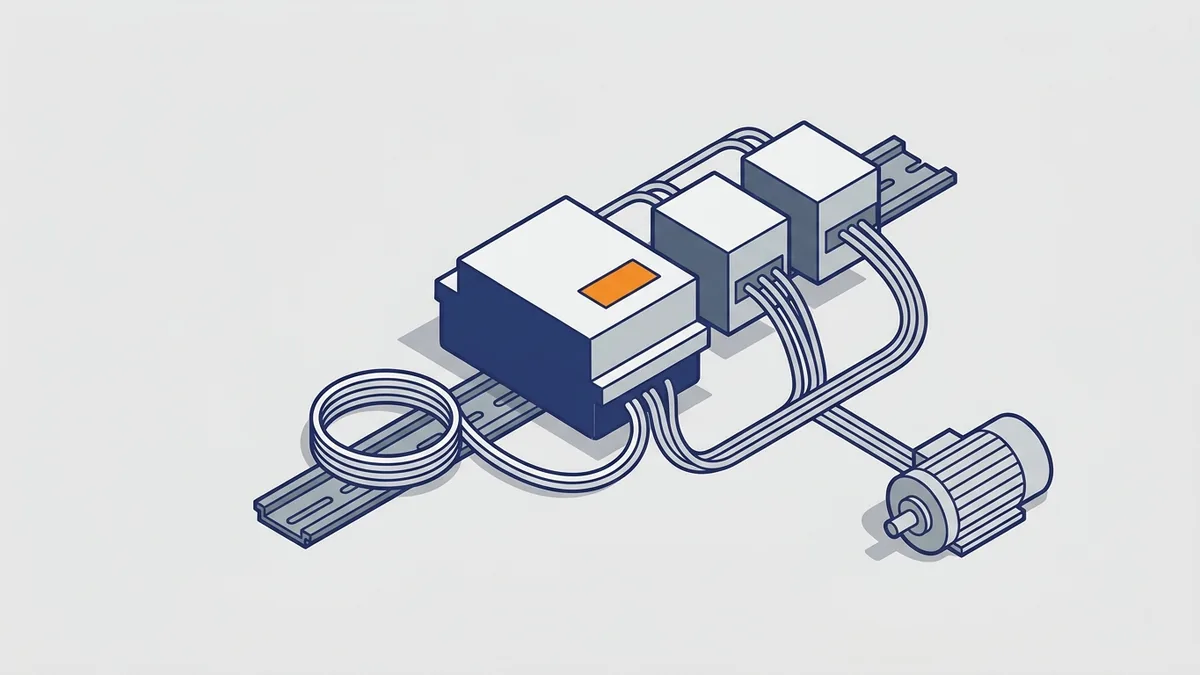
The PSE is the middle soft start ABB range. It fits mid-size pumps, fans, compressors and conveyors. So choose it when you need current limit or torque control, but not the full PSTX feature set.
What PSE models and ratings does ABB make?
ABB makes 15 PSE frames, from PSE18 to PSE370. All run on 208 to 600 V AC with a 100 to 250 V AC control supply. Here are the IEC ratings:
| Model | IEC max current | kW at 400 V |
|---|---|---|
| PSE18 | 18 A | 7.5 |
| PSE25 | 25 A | 11 |
| PSE30 | 30 A | 15 |
| PSE37 | 37 A | 18.5 |
| PSE45 | 45 A | 22 |
| PSE60 | 60 A | 30 |
| PSE72 | 72 A | 37 |
| PSE85 | 85 A | 45 |
| PSE105 | 106 A | 55 |
| PSE142 | 143 A | 75 |
| PSE170 | 171 A | 90 |
| PSE210 | 210 A | 110 |
| PSE250 | 250 A | 132 |
| PSE300 | 300 A | 160 |
| PSE370 | 370 A | 200 |
PSE UL ratings in horsepower
In addition, ABB’s catalog lists UL hp and FLA for each frame. For example, these three frames show the spread:
| Model | UL FLA | 208 V rating (hp) | 240 V rating (hp) | 480 V rating (hp) | 600 V rating (hp) |
|---|---|---|---|---|---|
| PSE18 | 18 A | 5 | 5 | 10 | 15 |
| PSE250 | 248 A | 75 | 100 | 200 | 250 |
| PSE300 | 302 A | 100 | 100 | 250 | 300 |
For other frames, take the UL hp and FLA from the catalog table before you order.
What extra features does the PSE have over the PSR?
The PSE keeps the PSR basics: two-phase control, built-in bypass and a voltage ramp for start and stop. Then it adds these features:
- Torque control for start and stop, which ramps motor torque instead of voltage for a smoother speed change
- Current limit, which caps the start current at a set level
- Kick-start, a short boost that breaks a sticky load loose
- Built-in Modbus RTU communication
- Three signal relays: Run, TOR and Event
- Start, stop and reset inputs
- An illuminated, language-neutral symbol display
- An optional external keypad rated IP66 (Type 1, 4X and 12)
PSE or PSTX: which one fits the 30 to 370 A overlap?
Both PSE and PSTX cover 30 to 370 A, so size alone will not decide. Instead, look at features. For example, the PSE is usually enough for a standard pump, fan or conveyor that needs current limit, torque control and Modbus RTU. Also, it is the simpler, lower-cost soft start ABB pick; check our shop listing for current pricing.
However, move to the PSTX if you need three-phase control, a graphical keypad or other fieldbus protocols. In addition, pump cleaning, motor preheat and inside-delta wiring also point to the PSTX.
ABB PSTX advanced soft starters (30 to 1250 A)
The PSTX is the top soft start ABB range. It fits large or critical motors, pump stations, water and wastewater plants and high-inertia loads. Also, it suits plants that want fieldbus data and diagnostics from each starter.
PSTX ratings and frame sizes
ABB builds the PSTX in six physical frames. Models run PSTX30, 37, 45, 60, 72, 85, 105, 142, 170, 210, 250, 300, 370, 470, 570, 720, 840, 1050 and 1250. In-line connection covers 30 to 1250 A, and inside-delta raises that to 2160 A.
Most frames run on 208 to 600 V. However, ABB sells 690 V versions on several frames, such as PSTX30-690-70, PSTX370-690-70 and PSTX1250-690-70, so check the type code for each model. In addition, every PSTX uses a 100 to 250 V AC control supply.
PSTX sample ratings
Next, the table shows sample ratings; take the rest from the catalog.
| Model | IEC current | kW at 400 V | UL FLA | 480 V rating (hp) |
|---|---|---|---|---|
| PSTX30 | 30 A | 15 | 28 A | 20 |
| PSTX37 | 37 A | 18.5 | 34 A | See catalog |
| PSTX45 | 45 A | 22 | 42 A | See catalog |
| PSTX60 | 60 A | 30 | See catalog | See catalog |
| PSTX72 | 72 A | 37 | See catalog | See catalog |
| PSTX85 | 85 A | 45 | See catalog | See catalog |
| PSTX370 | 370 A | 200 | See catalog | 300 |
| PSTX470 | 470 A | Check catalog | See catalog | Refer to catalog |
For example, the full UL rating of the PSTX30 is 7.5 hp at 208 V, 10 hp at 240 V, 20 hp at 480 V and 25 hp at 600 V.
What does the ABB PSTX offer that the PSE does not?
- Three-phase control, with thyristors on all three phases
- In-line or inside-delta connection
- A graphical display on a detachable keypad rated IP66 (4X outdoor)
- Many display languages (the count differs by catalog revision, so check the one for your unit)
- Built-in Modbus RTU, plus support for other major fieldbus protocols
- Built-in pump functions
Can an ABB soft starter handle pumps and water hammer?
Yes. Water hammer is the pressure surge and banging in pipes when flow starts or stops too fast. Because torque control on the PSE and PSTX ramps the pump smoothly, it cuts that surge, especially on stop. Beyond that, a soft start ABB PSTX goes further with three pump features:
- Torque control for soft pipe fill and less water hammer
- Pump cleaning, which can reverse pump flow to help clear the pump
- Motor preheat, which keeps an idle motor warm and dry
Which soft start ABB model fits which motor and application
Picking a frame is mostly about current and duty. First, use the steps below. Then check the examples and the application table.
How do I size an ABB soft starter for my motor?
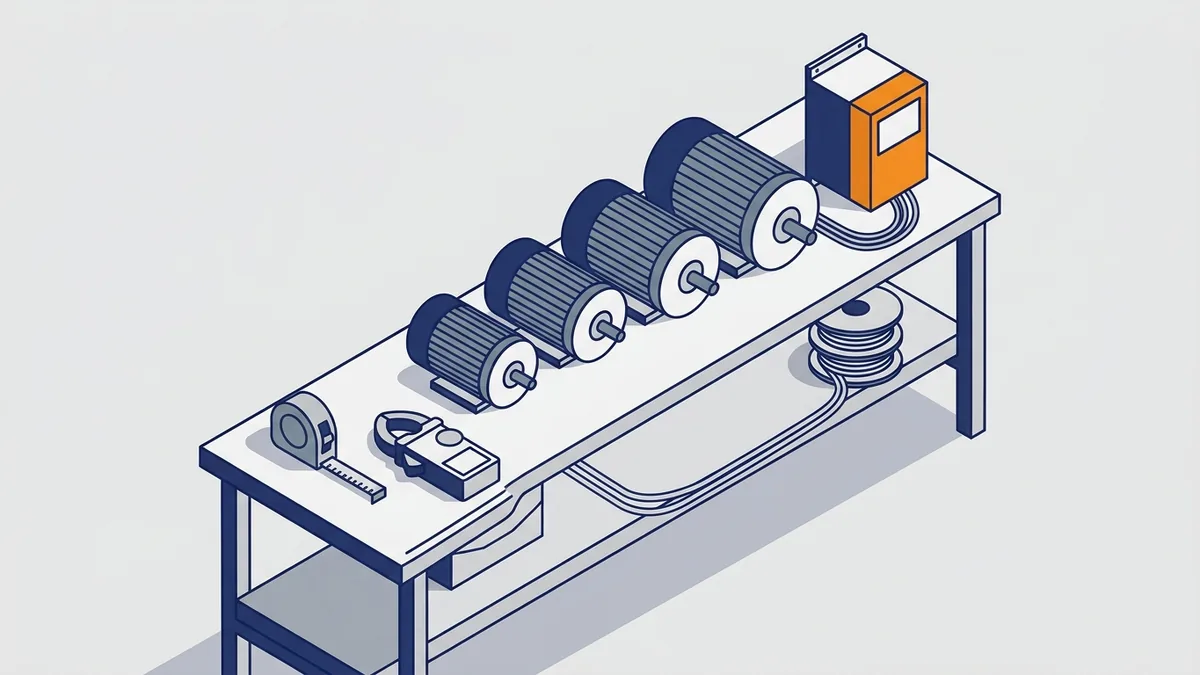
- First, read the motor nameplate: FLA, voltage, hp or kW, and whether it is wired delta or wye.
- Next, note the duty: starts per hour, start time and load type.
- Then choose the range (PSR, PSE or PSTX) by the features you need.
- After that, pick the frame whose rated current meets or beats the motor FLA. For NEMA motors, use the UL FLA column.
- Also check starts per hour and ambient temperature. Step up a size if the duty is heavy.
- Finally, select fuses or breakers from ABB’s tables and the NEC or local code.
Always size by FLA, not hp alone. Because two motors with the same hp can draw quite different current, a soft start ABB unit is rated in amps first.
What is the difference between normal duty (class 10) and heavy duty (class 30)?
The class number is the overload trip class. It sets roughly how many seconds the starter lets the motor carry a heavy overload before it trips. Class 10 trips fast and suits normal duty, such as a pump or a small fan that reaches speed in a few seconds. Class 30 trips slowly and suits heavy duty, such as a large fan or a high-inertia load that needs a long start.
To size a heavy-duty load, first note the real start time and the starts per hour. Next, use the heavy-duty rating in the ABB catalog for that range, not the normal-duty rating. If the catalog gives no heavy-duty figure that covers your start, go up one or more frames. Then confirm the choice against the catalog duty table.
Do ambient temperature and altitude change the rating?
Yes. Catalog current ratings assume a top ambient temperature and a top altitude. Soft starters are commonly rated for about 40 °C and up to about 1000 m. Above either limit, the starter must carry less current, which is called derating.
The exact derating factors differ by range and frame, so take them from the catalog for your model. If your panel runs hot or sits at high altitude, step up a frame. Also leave the mounting clearances the manual gives, because blocked airflow raises the temperature inside the starter.
Motor size to model examples
These examples come straight from ABB’s UL ratings. Still, always compare your actual motor FLA with the model’s FLA rating.
| Motor | Model | Model UL FLA |
|---|---|---|
| 0.5 hp at 208 V | PSR3 | 3.4 A |
| 2 hp at 480 V | PSR3 | 3.4 A |
| 5 hp at 208 V | PSE18 | 18 A |
| 10 hp at 480 V | PSE18 | 18 A |
| 20 hp at 480 V | PSTX30 | 28 A |
| 75 hp at 480 V | PSR105 | 104 A |
| 200 hp at 480 V | PSE250 | 248 A |
| 250 hp at 480 V | PSE300 | 302 A |
| 300 hp at 480 V | PSTX370 | See catalog |
Which ABB soft starter fits pumps, fans, conveyors and compressors?
Match the range to the load and the features it needs. For example, this table gives a starting point:
| Application | Usual soft start ABB pick | Why |
|---|---|---|
| Small pumps and fans | PSR | Simple voltage ramp, compact, low cost |
| Conveyors | PSE | Current limit and kick-start for loaded or sticky starts |
| Compressors | PSE | Current limit and torque control |
| Mid-size pumps | PSE | Torque control stop cuts water hammer |
| Large pumps and lift stations | PSTX | Pipe fill, pump cleaning, preheat, fieldbus |
| Critical motors on a plant network | PSTX | Graphical diagnostics, fieldbus |
When does inside-delta connection help?
Inside-delta means the soft starter sits inside the motor’s delta loop, in series with each winding. As a result, each starter phase carries about 58% of line current, so a smaller frame can run a bigger motor. Among current models, only the PSTX supports it. Also, the motor must be delta-wired with six leads brought out.
Finally, sizing also covers fuses, short-circuit rating and ambient temperature. For these, use the tables in ABB’s catalog and follow the NEC or local code. In addition, our Soft Start Explained post covers the general theory.
ABB soft starter vs ABB drive: when to choose each
Should I use an ABB soft starter or an ABB drive?
Use a simple rule. If the motor runs at one speed after the start and you only want a gentler start, use a soft starter. However, if you need speed control, flow control or energy savings while running, use a variable frequency drive (VFD).
A soft starter controls only voltage during the start, then runs the motor at line frequency. In contrast, a VFD controls both frequency and voltage. That is why a drive can change speed and a soft start ABB unit cannot.
Soft starter and VFD pros and cons
| Factor | ABB soft starter | ABB VFD |
|---|---|---|
| Speed control | No; fixed speed after start | Yes |
| Starting torque | Falls with the square of voltage | Rated torque from low speed |
| Energy while running | No savings; bypass only cuts the starter’s own losses | Savings on fans and pumps run at reduced speed |
| Soft start and stop | Yes | Yes |
| Cost and size | Lower cost, smaller, simpler | Higher cost, more setup |
| Supply | Three-phase in, three-phase out | Some models take single-phase input |
Also watch for loads that need high starting torque at low current. A soft starter cannot deliver that, so a drive is the better fit there.
Can I use an ABB VFD as a soft starter on a small motor?
Yes. A VFD can do a controlled soft start and soft stop on any motor it is sized for. On small motors, this often makes more sense than a soft starter. For example, the smallest PSR is rated 3.4 A FLA, which matches 0.5 hp at 208 V. In addition, a micro drive adds speed control, wash-down enclosures and single-phase input.
Which 0.5 HP ABB drives do we sell?
For that job, we sell these 0.5 HP ABB drives:
- ACS180-04S-02A4-2: 200 to 240 V AC three-phase input, 240 V AC three-phase output, 2.4 A
- ACS255-01U-02A3-1+B063: 100 to 120 V AC single-phase input, 240 V AC three-phase output, 2.3 A, NEMA 4X/IP66 indoor
- The -2+B063 version (ACS255-01U-02A3-2+B063) takes 208 to 240 V AC single-phase input, 2.3 A, NEMA 4X/IP66 indoor
- For three-phase input at 208 to 240 V AC, pick ACS255-03U-02A3-2+B063: 240 V AC three-phase output, 2.3 A, NEMA 4X/IP66 indoor
- At 400 to 480 V AC three-phase input, the ACS255-03U-01A2-4+B063 gives 480 V AC three-phase output, 1.2 A, NEMA 4X/IP66 indoor
- Outdoors, the ACS255-01U-02A3-1+B068 and ACS255-01U-02A3-2+B068 are NEMA 4X/IP66 versions with 100 to 120 V or 208 to 240 V single-phase input
- Versions ending in +F278 add an integrated disconnect, speed pot and forward/reverse switch
For a deeper comparison, read our Electronic Soft Start VS Variable Frequency Drive post and our ABB VFD Guide.
Older ABB soft starters: PSS, PST and PSTB
Which legacy ABB soft starter models are still in service?
Many plants still run ABB softstarters that no longer appear in the current catalog. For example, the older catalog lists these three:
- PSS: a flexible range for 18 to 300 A, in-line or inside-delta
- PST: 30 to 1050 A, up to 1810 A inside-delta, 208 to 690 V, overload class 10A, 10, 20 or 30, with Profibus, Modbus, DeviceNet or CANopen options
- PSTB: the version with a built-in bypass contactor, from 370 A
What replaced the ABB PSS, PST and PSTB soft starters?
ABB’s current catalog lists PSR, PSRC, PSE and PSTX, so your soft start ABB replacement will come from one of those. By features, the PSTX sits closest to the PST and PSTB. For example, it shares inside-delta wiring, overload classes 10A to 30, built-in bypass and fieldbus support. For a PSS, however, the PSE or PSTX may fit, depending on the features you used.
Still, do not assume a drop-in swap. Instead, match current, voltage, control supply and connection type, then confirm the successor with ABB. Also plan for control changes. For instance, the PST used ABB’s FieldBusPlug and an LCD keypad, while the PSTX has built-in Modbus RTU and a detachable keypad.
What to check before ordering an ABB soft starter
What do I need to know before ordering an ABB soft starter?
First, gather these details before you request a soft start ABB quote:
- Motor FLA, plus hp or kW
- Main supply voltage (208 to 600 V, or up to 690 V on some PSTX frames)
- Control supply voltage (PSR: 100 to 240 V AC or 24 V AC/DC; PSE and PSTX: 100 to 250 V AC)
- Connection: in-line or inside-delta
- Starts per hour and start time
- Ambient temperature and mounting (DIN rail, panel or enclosure)
- Bypass (all three current ranges have it built in)
- Communications: relays only, Modbus RTU or another fieldbus
- Keypad or enclosure rating, such as an IP66 keypad
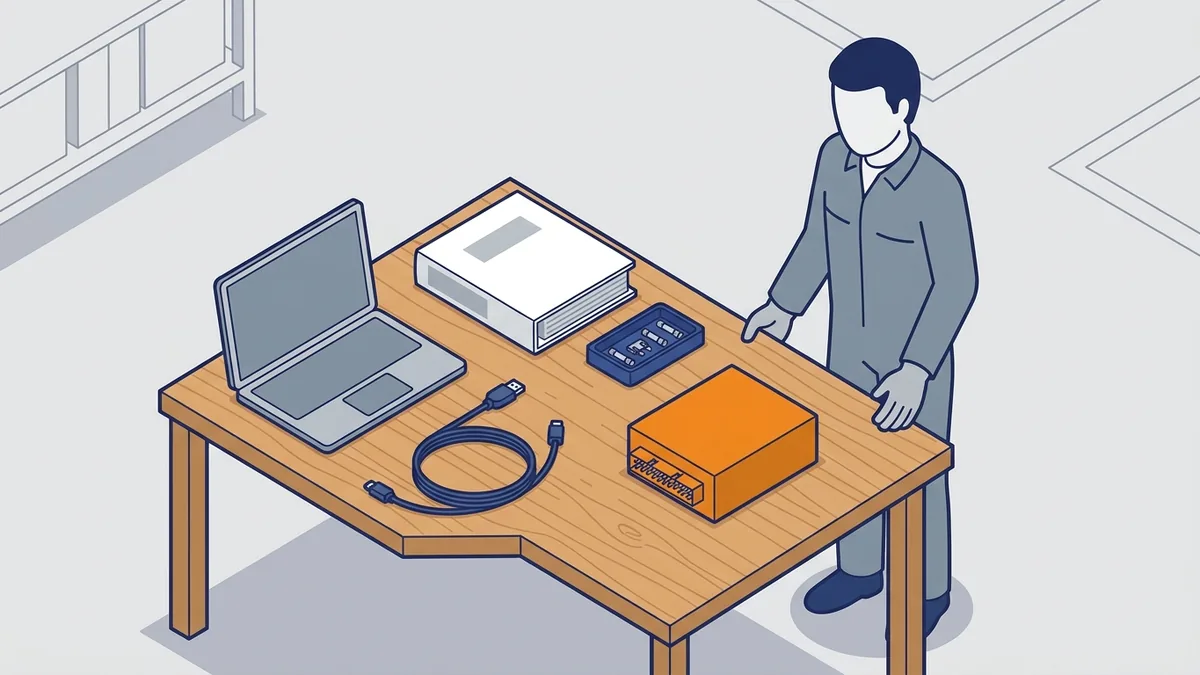
Also keep three documents at hand: the ABB catalog, the installation and commissioning manual for your range, and a photo of the motor nameplate.
What are common mistakes when choosing an ABB soft starter?
- Sizing by hp only instead of FLA
- Expecting speed control or energy savings while running
- Using a soft starter where high starting torque at low current is needed
- Ignoring starts per hour and start time
- Ordering the wrong control supply voltage
- Assuming a legacy unit swaps one-for-one
How do I read an ABB soft starter part number?
ABB type codes follow a clear pattern. For example, take PSE18-600-70:
- PSE: the range
- 18: the current rating, here 18 A
- 600: the 600 V main voltage class
- 70: the control supply code
ABB’s catalog key lists code 70 as 100 to 250 V AC and code 81 as 24 V DC. However, other suffixes exist, such as the -11 on PSR3-600-11, so check the key in the catalog for your range. Also, the frame number is close to the rating but not always exact. For instance, the PSE105 is rated 106 A.
How do I wire and commission an ABB soft starter?
Terminal layout and parameters differ by range, so follow the installation and commissioning manual for your model. The general order is the same for all three ranges:
- First, switch off and lock out the supply, then mount the starter with the clearances the manual gives.
- Next, wire the three-phase supply to the line terminals (L1, L2, L3) and the motor to the load terminals (T1, T2, T3).
- Then wire the control supply and the start and stop signals. On a PSE, also wire the reset input if you want to reset from a panel.
- After that, set the motor current and ramp times. On a PSR, use the three potentiometers. On a PSE or PSTX, use the display or keypad.
- Finally, run the first start with the motor uncoupled if you can. Watch the current and the ramp, then adjust the settings and retest under load.
Getting manuals, software and parts
Where do I get ABB soft starter manuals and catalogs?
First, start at ABB’s document library at library.e.abb.com. Then search for these titles:
- ABB Softstarters PSR, PSE and PSTX catalog
- The PSE18…PSE370 installation and commissioning manual from ABB
- ABB PSTX catalog for water and wastewater
- The older ABB catalog for softstarter types PSR, PSS, PSE, PST and PSTB
Also, you can use the ABB US product pages at electrification.us.abb.com, such as the PSE Open Softstarters page. For setup software or fieldbus files, check the downloads on the ABB product page for your range.
How do I confirm the exact model before buying a replacement?
First, read the full type code from the nameplate, including both suffixes. Next, note the control supply voltage and any revision marking. Then compare those ratings with the catalog for your soft start ABB unit before you buy. Finally, photos of the nameplate and wiring help a supplier confirm the match.
What do ABB soft starter fault and trip indications mean?
The exact codes and lights differ by range, so read the fault list in your manual. Still, most faults fall into a few groups:
- Overload: the motor drew too much current for too long. Check for a jammed load, worn bearings or a trip class set too low.
- Locked rotor: the motor shaft is not turning, so current stays very high. Free the load and check the motor.
- Phase loss: one supply phase is missing. Check fuses, breakers, contactors and wiring.
- Thyristor or bypass fault: a power part in the starter may have failed.
To clear a fault, first fix the cause. Then reset with the reset input or keypad on units that have one, or follow the reset steps in the manual. However, do not keep resetting a thyristor or bypass fault, because that can damage the starter or motor.
When should I get help or a repair for an ABB soft starter?
Call for help when the problem goes beyond a setting change. For example:
- Repeated overload or fault trips with no clear cause
- Suspected failed thyristors (SCRs)
- A legacy model you cannot identify
- Doubt about whether the application suits a soft starter at all
Precision Electric repairs and supplies drives, motors and controls. So we can test a failed unit or help you choose a current soft start ABB model.
Frequently asked questions
What are the ABB soft starter ranges?
ABB’s current catalog covers PSR, PSRC, PSE and PSTX. This guide covers PSR (compact, 3 to 105 A), PSE (efficient, 18 to 370 A) and PSTX (advanced, 30 to 1250 A). However, older PSS, PST and PSTB units still turn up in plants. As a result, any new soft start ABB order will come from one of the current ranges.
Which ABB soft starter should I choose?
First, choose by motor FLA and voltage. Then, PSR suits small, simple fixed-speed loads. Next, PSE adds current limit, kick-start and torque control. Finally, PSTX is for large or critical motors that need three-phase control, a graphical keypad, fieldbus and pump functions.
Is an ABB soft starter or a VFD better?
Neither is better for every job. Use a soft starter when the motor runs at one speed after starting and you only need a gentler start. However, use a VFD when you need speed control, flow control or energy savings while running.
Does an ABB soft starter have a bypass?
Yes. PSR, PSE and PSTX all list a built-in bypass in ABB’s catalog. Once the motor is at full speed, the bypass reduces heat and energy loss in the soft start ABB unit itself. However, it does not cut the motor’s own energy use.
What control voltage does an ABB soft starter need?
PSR takes 100 to 240 V AC or 24 V AC/DC. In contrast, PSE and PSTX take 100 to 250 V AC. Because the type-code suffix sets the control supply, check it before you order.
Where do I find ABB soft starter manuals?
Use ABB’s document library at library.e.abb.com and the product pages at electrification.us.abb.com. For example, the catalog and the installation and commissioning manual for your range have the ratings and settings. So keep both on hand when you size or replace a unit.
A soft start ABB choice comes down to three things: motor current, the features you need and how often the motor starts. PSR covers simple small motors, PSE adds current limit and torque control, and PSTX handles large, critical and pump duty. However, if you need speed control, an ABB drive is the better route. Contact Precision Electric for help picking a model, a quote or a repair, or browse our ABB drives.