








Eaton Motors: Hydraulic, Electric and Motor Control Guide
If you search for eaton motors, you may find hydraulic catalogs, resale listings and drive pages all mixed together. This guide sorts out what the phrase means, which Eaton products run, start and protect a motor, and how to pick the right one. You will also see the ratings of the drives Precision Electric stocks and the mistakes to avoid before you order.
On this page
- What “Eaton motors” means today
- Eaton hydraulic motors
- Legacy Eaton electric motors and DC motors
- Eaton motor control: the products that run, start and protect motors
- Variable frequency drives for low-voltage motors
- What is the Eaton DG1 and what ratings does it come in?
- What is the Eaton H-Max drive and what is it for?
- What is the Eaton SPX9000 and is it still available?
- How do I troubleshoot a fault on a DG1, H-Max or SPX9000?
- What cable length, output filter and reactor limits apply?
- Can I use a standard motor on a VFD?
- Soft starters, contactors, starters and overload relays
- Medium-voltage motor control
- Which Eaton drive fits which job
- Eaton motor drives we stock: models and ratings
- How to read an Eaton drive model number
- Matching a drive to your Eaton motors
- What buyers ask before ordering Eaton motors and drives
- Common mistakes and when to call for repair
- Frequently asked questions
What “Eaton motors” means today
What are Eaton motors?
Eaton’s motors and generators page lists electric motors, high-speed hydraulic motors, gear and vane motors, hydraulic motor-driven generators and low-speed high-torque (LSHT) hydraulic motors. It also lists generators that turn an aircraft’s fluid power into emergency electrical power. However, the current range on that page is mostly hydraulic.
For plant electricians, the phrase usually points to one of two things. Either it means the drives, starters and controls that run a motor, or it means an older Eaton electric motor already in service.
Does Eaton still make electric motors?
Eaton’s page does list an Electric motors category. However, our search did not find a current catalog of NEMA or IEC AC induction motors there, so we cannot say either way. Before you assume Eaton AC motors exist for your job, read the nameplate and confirm with Eaton.
How do I replace a legacy Eaton motor with another brand?
We do not have an official Eaton cross-reference table, so match the nameplate instead. Standard NEMA and IEC motors from different brands fit each other when the key data matches. Check these items:
- Frame size and mounting style
- HP (or kW) and rpm
- Voltage, phase and frequency
- Enclosure type and service factor
- Shaft size and rotation
Also note the full-load amps, because they should match your drive or starter settings. Send us the nameplate details and we can help you check the match.
Quick router
Use this list to find your path among Eaton motors and related products:
- Hydraulic motor: fluid power parts, covered in the next section.
- Legacy electric or DC motor: an older Eaton or Dynamatic unit already installed.
- Motor control: a drive, soft starter, starter or overload relay that runs the motor.
Eaton hydraulic motors
What hydraulic motors does Eaton make?
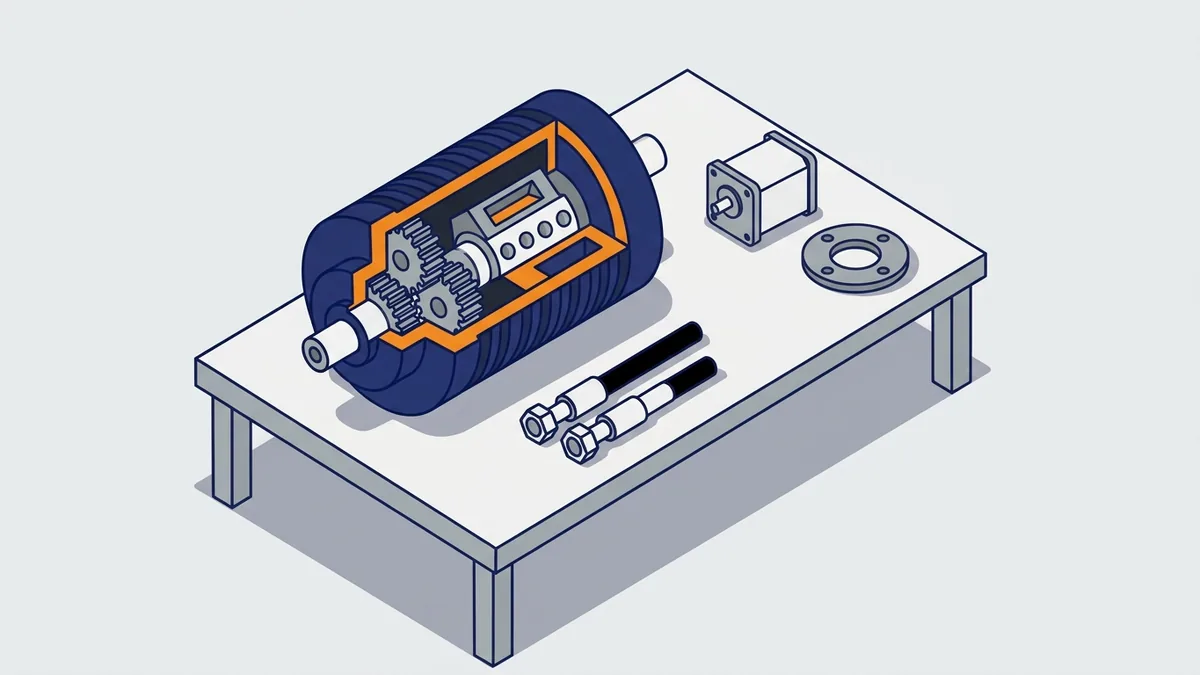
Eaton hydraulic motors include Geroter/Geroler, gear, piston and vane designs. The low-speed high-torque group includes Char-Lynn motors in low, medium and high pressure, Hydre-MAC radial piston motors and Xcel motors. In addition, Eaton introduced the X3 plug-in variable piston motor for mobile equipment, which it describes as the most compact on the market.
Who owns Eaton hydraulics now, and where do I buy hydraulic motors?
Eaton’s hydraulics business was sold to Danfoss and now operates as part of Danfoss Power Solutions. Because the Eaton pages we reviewed still list these products, check the current brand and part number before you order. These are fluid-power parts, not electrical ones. So buy them from a hydraulic distributor or from Danfoss Power Solutions, not from an electrical supplier.
Legacy Eaton electric motors and DC motors
Where do I find repair or replacement for an old Eaton or Dynamatic DC motor?
Older Eaton and Dynamatic DC motors, eddy-current clutches and stepping motors show up on surplus marketplaces. Treat those listings as resale, not as current catalog items. Because condition and history vary, do not count on them as a plain replacement.
First, pull the nameplate data: model, HP, rpm and volts. Then use it to find a repair path or a drive-compatible replacement. If the motor is worth saving, repair is often the faster route. Also, send us the nameplate details and we can tell you what is possible.
Eaton motor control: the products that run, start and protect motors
What Eaton products control and protect a motor?
Eaton motor control covers four main groups. Variable frequency drives (VFDs) change motor speed. Soft starters ramp a motor up and down.
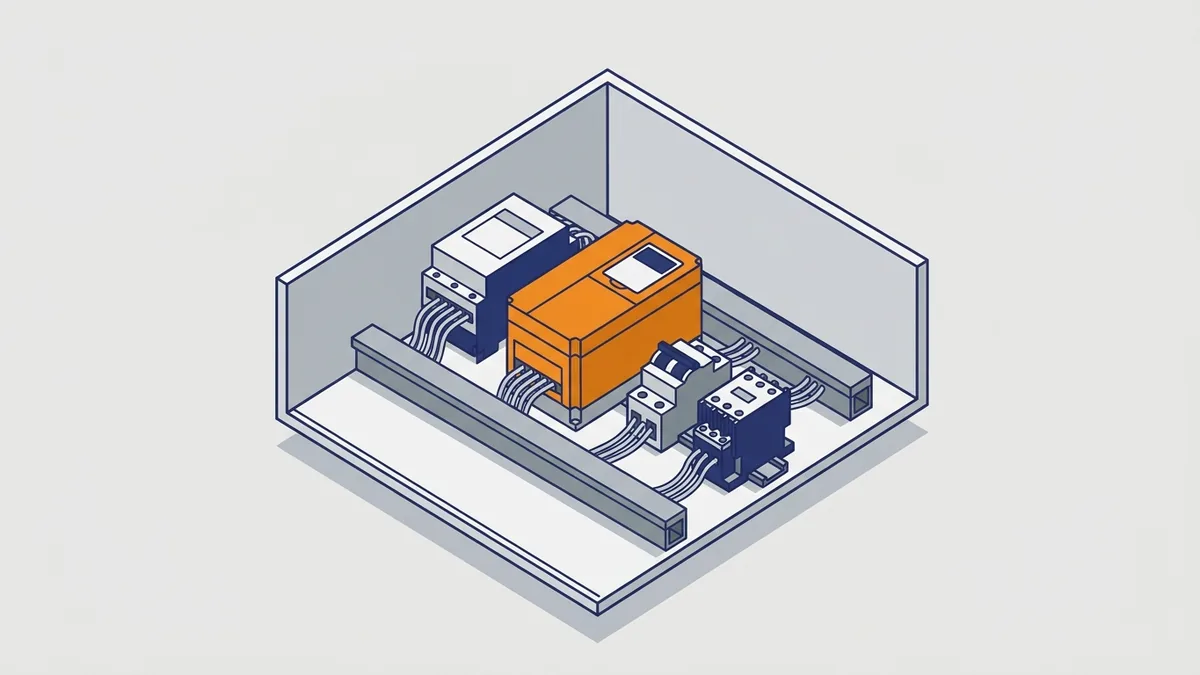
Next, contactors and starters switch power on and off. Overload relays protect the motor from too much current. In addition, Eaton builds motor control centers (MCCs), which house these parts in one lineup.
Variable frequency drives for low-voltage motors
Eaton motor drives are the answer when you need speed control. Three lines matter most for the units we stock.
What is the Eaton DG1 and what ratings does it come in?
The PowerXL DG1 is a general-purpose drive. It comes in 230 V, 400-500 V and 525-600 V classes and covers 0.75 kW to 630 kW. For example, standard features include these:
- EMI/RFI filters (EMC Category C2) and an internal DC choke for THDi under 30%
- Modbus RTU on board, plus Modbus TCP, BACnet MS/TP and IP, and EtherNet/IP
- Two extra I/O slots and an onboard IEC 61131-3 PLC
- Fire mode, plus single-drive and multi-drive setups for multi-pump and fan jobs
What is the Eaton H-Max drive and what is it for?
The H-Max is Eaton’s HVAC drive family, built for fans and pumps. It comes in NEMA Type 1/IP21, NEMA Type 12/IP54 and NEMA 3R/IP44, in 208 V and 380-480 V classes. The 380-480 V examples have a graphical keypad and EMC C2 input.
Also, catalog notes list varnished, corrosion-resistant boards, a DC link choke and a battery for the real-time clock. The family goes above 100 HP, with a 150 hp, 205 A unit listed.
What is the Eaton SPX9000 and is it still available?
The SPX9000 is a high-performance range for large loads. Its pages list models up to 1000 HP at 575 V. However, some catalog numbers are marked Discontinued on Eaton’s site, but that does not mean the whole line is gone. So check the status of your exact catalog number before you specify it. In fact, we stock 1000 HP open-chassis SPX9000 units, listed below.
How do I troubleshoot a fault on a DG1, H-Max or SPX9000?
Each drive has its own fault code list, so use the manual for your exact model rather than a generic chart. The steps are similar on all three:
- Write down the fault code and what the drive was doing when it tripped.
- Look up the code in the fault table of the manual.
- Check the common causes: motor or cable faults, a load that is too heavy, a supply voltage that is too high or low, and heat from a blocked fan or filter.
- Fix the cause, then reset the drive.
If the same fault comes back, stop resetting it. Repeated resets can damage the power section. At that point, send the drive in for repair.
What cable length, output filter and reactor limits apply?
Limits differ by drive model, voltage and frame, so the manual for your catalog number gives the real figures. Long motor leads cause voltage spikes at the motor, because the drive output pulses travel down the cable and reflect at the motor end. As a result, long runs often need an output reactor or a dV/dt filter. Also, shielded motor cable and short leads cut noise and stress. Always check the manual before you pick a filter.
Can I use a standard motor on a VFD?
Sometimes, but it depends on the motor, the cable length and the voltage. An inverter-duty motor is built for drive use. It has stronger insulation that handles voltage spikes, which matter most on 460 V and higher systems.
Bearing currents are another risk. Drive output can send current through the motor bearings and pit them. Fixes include an insulated bearing or a shaft grounding ring. In addition, a standard motor cools itself with a shaft-mounted fan, so it may overheat at low speed under a heavy load. Check with the motor maker before you run a standard motor on a drive.
Soft starters, contactors, starters and overload relays
What soft starters, starters and overload relays does Eaton offer?
Eaton’s soft starters control acceleration and deceleration of three-phase motors, with current ranges from 0.8 A to 1,000 A. The lines include Tru-Start, S611, S811+/S801+ and S701. The S811+/S801+ has a built-in overload (11-1000 A) and a run bypass contactor. It also offers soft stopping, which avoids water hammer, and PC control through Power Xpert InControl.
On the starter side, the XT IEC line of contactors and starters covers 7 A to 3185 A. Its electronic overload relays go to 1500 A and its thermal overload relays to 630 A. Next, the XT electronic motor starter is a solid-state unit rated 0.18-9 A. It can reverse without a second contactor and is rated SIL 3 per IEC 62061.
For NEMA-style control, Freedom starters use adjustable bimetallic overload relays with interchangeable heater packs. They cover applications up to 900 hp. Finally, the C440 is a self-powered electronic overload relay up to 175 A, and with external CTs it protects motors up to 1500 FLA.
How do I select a soft starter, contactor or overload relay?
Start with the motor nameplate and work through these steps:
- Read the full-load amps (FLA), voltage and service factor.
- Pick a contactor or soft starter whose current rating covers the FLA for your duty.
- Choose an overload relay whose adjustment range includes the FLA, then set it using the nameplate and your electrical code.
- Choose the trip class for the load.
- Check the short-circuit rating and the fuse or breaker type that the maker lists for that exact catalog number.
Trip class sets how fast an overload relay trips. Class 10 trips fastest and suits normal starts. Class 20 and Class 30 allow longer starts, so they suit heavy loads such as large fans. In addition, short-circuit and fuse ratings come from the maker’s coordination tables, so do not guess them. If you want a second check, send us the nameplate and the catalog number.
Medium-voltage motor control
What does Eaton offer for medium-voltage motors?
Eaton’s medium-voltage motor control includes Ampgard, which is certified to UL 347. It also includes the SC9000 EP variable frequency drive, designed for induction or synchronous motors. Since the products we stock are low-voltage, we list these for completeness.
Which Eaton drive fits which job
Should I use a VFD, soft starter or across-the-line starter?
Use a drive when you need speed control or must hold a setpoint. Use a soft starter when you only need a smooth start and stop. However, an across-the-line starter is the simplest and lowest-cost choice, but it gives the motor a hard start.
| Method | Best for | Trade-off |
|---|---|---|
| VFD | Speed control, setpoints, energy savings on fans and pumps | Most parts to set up |
| Soft starter | Smooth start and stop only | No speed control while running |
| Across-the-line starter | Simple loads, lowest cost | Hard start on the motor and the load |
Which Eaton drive fits my application?
Choose the DG1 for general machinery and multi-pump or fan setups. For HVAC fans and pumps, the H-Max is the better fit. The SPX9000 suits high-performance or very large loads. This guide does not rank Eaton against other brands, because we gathered no sourced comparison data. Here, the alternatives are other control methods and other Eaton lines.
Eaton motor drives we stock: models and ratings
Which Eaton drives does Precision Electric stock and at what ratings?
The table shows our listed models for Eaton motors. Each pair of NEMA 1 and NEMA 12 units shares the same ratings. Also, confirm family details on the Eaton product page for your catalog number.
| Family | HP | Input class | Output current | Enclosure |
|---|---|---|---|---|
| DG1 | 10 | 208-240 V | 31 A | NEMA 1 and NEMA 12 |
| DG1 | 10 | 400-480 V | 16 A | NEMA 1 and NEMA 12 |
| DG1 | 100 | 400-480 V | 140 A | NEMA 1 and NEMA 12 |
| H-Max | 100 | 208-240 V | 261 A | NEMA 1 and NEMA 12 |
| H-Max | 100 | 400-480 V | 140 A | NEMA 1 and NEMA 12 |
| SPX9000 | 1000 | 400-480 V | 1300 A | Open chassis |
| SPX9000 | 1000 | 540-600 V | 1030 A | Open chassis |
Notice that the 10 HP/16 A and 100 HP/140 A pairings are 480 V ratings. A 240 V drive of the same HP carries about twice the current. For example, the 10 HP DG1 draws 31 A at 208-240 V but 16 A at 400-480 V.
How to read an Eaton drive model number
How do I read an Eaton drive model number?
Take DG1-34016FB-C21C as an example. It shows the DG1 family, then a voltage class: 32 for 208-240 V, 34 for 380-500 V and 35 for 525-600 V. Next come the current code and frame, then the enclosure code at the end.
The suffix matters most for the enclosure. C21C is IP21 / NEMA Type 1, and C54C is IP54 / NEMA 12. So DG1-34031FB-C54C is the NEMA 12 version of a 31 A unit. For the full code table on these Eaton motor drives, see our post on Eaton VFD families, DG1 codes and setup checklists.
Matching a drive to your Eaton motors
How do I size an Eaton drive to my motor?
First, size by motor full-load amps, not HP alone. Then compare the drive’s output current to the motor nameplate. Next, check the input voltage class against your supply, because a 240 V drive will not fit a 480 V system. For wiring steps, use the drive manual and our wiring posts.
What are CT and VT ratings?
CT means constant torque, for loads like conveyors and mixers. VT means variable torque, for loads like fans and centrifugal pumps. As a result, the same drive can carry a higher HP rating in VT than in CT. For example, a DG1 525-600 V page lists 20 HP at 22 A CT or 25 HP at 27 A VT.
What are the altitude, cable length and start-frequency limits?
Eaton’s DG1 page lists operation up to 3000 m, with 1% derating per 100 m above 1000 m. It also allows mains switch-on at most once every 60 seconds. However, cable length limits depend on the model, so look them up in the manual. Finally, check the EMC category and the supply frequency range.
What buyers ask before ordering Eaton motors and drives
What warranty and documents come with Eaton drives?
Eaton Selling Policy 25-000 applies in general. DG1 drives carry 24 months from shipment as standard, and 36 months with Eaton certified start-up, covering parts, labor and travel. SPX9000 pages list 2 years. In addition, H-Max pages list one year from installation or 18 months from shipment, whichever comes first.
For documents, go to Eaton’s product pages for datasheets and manuals. Eaton’s Volume 6 and motor control catalogs are PDFs with ordering data. Also, SPX9000 pages link to the drives and soft starter catalog (CA04020001E).
Is the model I need discontinued, and what replaces it?
Some SPX9000 catalog numbers show as Discontinued on Eaton’s site. So ask us to confirm the status and the replacement path, including any wiring or parameter changes. We do not post prices or lead times, because manufacturer pages do not list them. Instead, send a quote request.
What do repair or replacement cost, and how long do they take?
Cost and time depend on the model, the damage and parts on hand, so we do not post figures. For a repair, send the nameplate data, the fault history and any photos. Then we inspect the unit and quote the work. For a replacement, send the catalog number and we confirm availability and timing in your quote.
Common mistakes and when to call for repair
What are common mistakes when ordering an Eaton drive?
These mistakes come up most often with Eaton motor control orders:
- Ordering by HP only and ignoring motor amps.
- Mixing up 208-240 V and 400-480 V drives.
- Choosing NEMA 1 where dust or washdown needs NEMA 12 or 3R.
- Ignoring cable length limits or the one-start-per-60-seconds limit.
- Using a drive as a mains disconnect that gets cycled often.
When should I send an Eaton drive or motor for repair?
Send it in after repeated faults or a damaged power section. Also, send obsolete SPX or SVX units that have no direct replacement. In addition, a legacy DC motor with a good frame is often worth repairing.
Frequently asked questions
Does Eaton make electric motors?
Eaton’s motors page lists an Electric motors category, but its current range there is mostly hydraulic motors and aircraft generators. We did not find a current Eaton NEMA or IEC AC induction motor catalog. As a result, most plant needs are really Eaton drives, starters and overload relays, or a legacy Eaton or Dynamatic DC motor. Check the nameplate and confirm with Eaton.
What Eaton product do I use to control the speed of a motor?
Use a variable frequency drive. Eaton’s low-voltage lines include the PowerXL DG1 (0.75-630 kW), the H-Max for HVAC and the SPX9000 for high-performance and large loads. For medium-voltage motors, use the SC9000 EP.
Do I need a drive or a soft starter for my Eaton-controlled motor?
Use a drive when you need speed control or to hold a setpoint. Use a soft starter when you only need a smooth start and stop. For example, Eaton’s S811+/S801+ soft starters include a bypass contactor and overload, and soft stopping helps prevent water hammer in pumps.
What is the difference between NEMA 1 and NEMA 12 on Eaton DG1 drives?
On Eaton’s DG1 pages, the C21C suffix is IP21 / Type 1. The C54C suffix is NEMA 12 / IP54. So choose NEMA 12 for dusty or dripping environments.
What warranty comes with Eaton drives?
Eaton’s DG1 and SPX9000 pages list 24 months from shipment as standard. The DG1 page also lists 36 months with Eaton certified start-up. However, H-Max pages list one year from installation or 18 months from shipment, whichever comes first.
Eaton motors can mean hydraulic motors, legacy electric motors or the drives and starters that run them, so start with the nameplate and the job. Then match amps, voltage class and enclosure before you order. If you need help choosing a drive, a quote or a repair, contact Precision Electric or browse our Eaton drives.