How Much Does Motors Cost? Price Ranges and Cost Drivers
If you are asking how much does motors cost, the honest answer is that it depends on the motor. Price moves with horsepower, enclosure, duty rating, efficiency and more. This guide gives dated example prices, shows what drives them, and explains why the purchase price is the smaller part of what a motor costs you.
On this page
- How much does motors cost? Quick price ranges
- Motor prices by horsepower and type
- What drives the price of a motor
- Premium and super-premium efficiency motors: what the extra cost buys
- The real cost of owning a motor: purchase price vs energy
- Repair or replace: what each costs
- Costs people forget when buying a motor
- Where to buy and how to get an accurate motor quote
- Common mistakes when budgeting for a motor
- When to call a repair shop or supplier
- Frequently asked questions
How much does motors cost? Quick price ranges
The short answer to “how much does motors cost” is that no single number exists. In practice, five things move the price most: horsepower, enclosure and duty rating, efficiency class, voltage, and brand. For example, a 1 hp motor can cost about $150 or more than $900, depending on how it is built.
The table below shows example prices from public listings. Treat them as snapshots, not a price list. However, the retailer page is undated and appears old, and marketplace prices change daily. So always get a quote against your nameplate.
| Motor | Example listed price | Source type |
|---|---|---|
| 1 hp, single-phase, 56 frame import | About $150 to $192 | Marketplace listings |
| 1 hp, 3-phase, 56C, 230/460 V | About $166 | Marketplace listing |
| 1 hp, 3-phase, inverter-duty, 56C (Marathon Black Max) | $399.99 plus shipping | Marketplace listing |
| 1 hp, single-phase ODP (Baldor EL11310) | $676.51 list, $563.76 sale | Retailer page, undated |
| 1 hp, 143T severe-duty (IEEE 841) | About $741 to $777 | Online motor seller |
| 1 hp, stainless steel | $859.99 | Online motor seller |
| 1 hp, 143TC explosion-proof | $907.99 | Online motor seller |
| 15 hp, 230 V, 3-phase (Tatung) | $1,559.99 list, $1,299.99 sale | Retailer page, undated |
| 100 hp crusher-duty, 1800 RPM | $7,808.99 | Trade blog snapshot |
| 100 hp crusher-duty, 1200 RPM | $11,167.99 | Trade blog snapshot |
Also, some listings on the seller pages do not make the price-to-model pairing fully clear. Confirm the exact model on the page before you rely on a figure.
How much is a motor, and how much for a motor?
People ask “how much is a motor” or “how much for a motor” as if the motor were one product. It is not. For example, a small import motor for a bench fan and a severe-duty motor for a wet mill both carry a horsepower rating, yet they are built and priced very differently.
So start with your nameplate. Once you know the horsepower, speed, frame, voltage and enclosure, the price question becomes much easier to answer.
How much does it cost? A budget figure in three steps
When someone asks only “how much does it cost,” they usually need a budget number. First, find the horsepower and construction you need. Next, compare the closest example prices in this guide. Finally, add a margin and ask for a real quote. In addition, plan for the extra costs covered later, such as the drive, installation and downtime.
Motor prices by horsepower and type
Many readers ask “how much are motors” in general. However, the same horsepower can span a wide price range because of construction. For instance, the example 1 hp listings above run from about $150 to over $900.
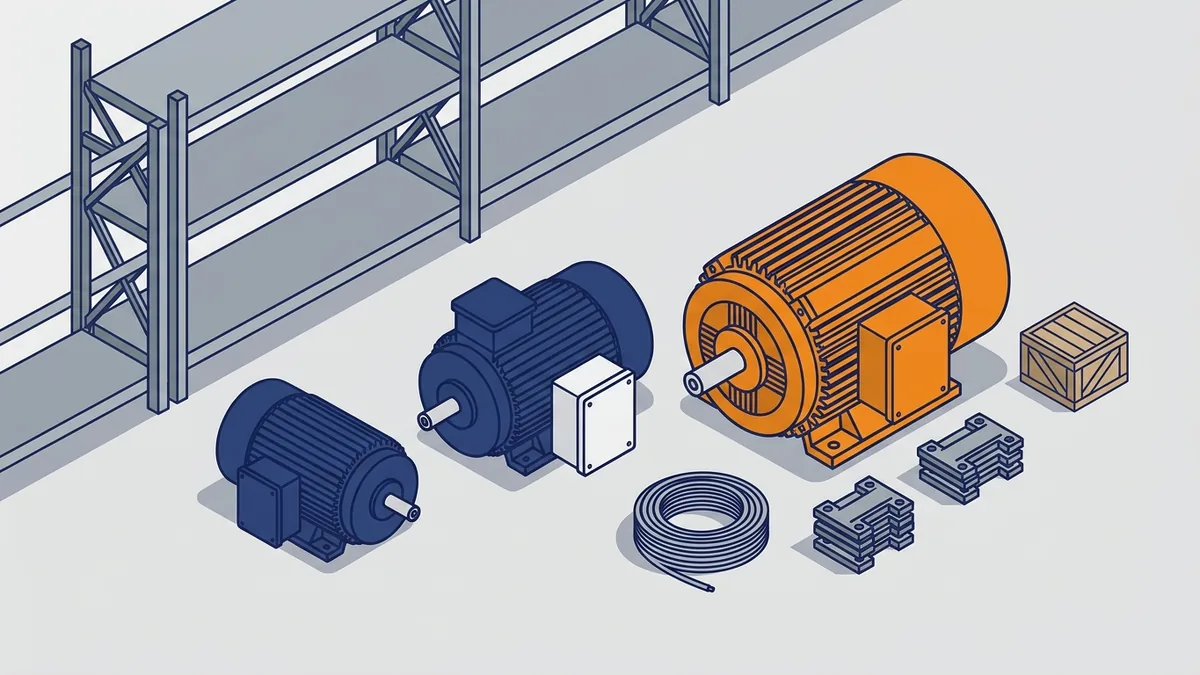
These are the main types and how each one changes the price:
- General-purpose: the baseline. It is the cheapest option for a clean, dry, line-powered job.
- Inverter-duty: built to run on a variable frequency drive (VFD). It costs more than a general-purpose motor of the same size.
- Severe-duty (IEEE 841): built for harsh, wet or dirty areas. The listings we found showed a 60 month warranty.
- Explosion-proof: built for hazardous areas. It carries a clear premium.
- Stainless steel: made for washdown and corrosive areas. It also costs more.
- Single-phase and 575 V: these change the price too, and the right choice depends on your supply.
Small motors (under 5 hp)
At 1 hp, the range is wide. Import single-phase listings sit around $150 to $192. In an undated snapshot, the Baldor single-phase listing was $676.51 list and $563.76 sale. Then severe-duty, stainless and explosion-proof listings ran about $741 to $908.
However, the low-cost listings are often non-industrial import brands. They may not meet your plant’s specification for frame, efficiency or duty. So check the spec before you buy on price alone.
Mid-size motors (5 to 50 hp)
In the same undated retailer snapshot, Tatung general-purpose 230 V 3-phase motors were listed as follows:
- 3 hp: $594.41 list and $495.34 sale.
- 7.5 hp: $907.69 list and $756.41 sale.
- 15 hp: $1,559.99 list and $1,299.99 sale.
A 5 hp motor falls between the 3 and 7.5 hp listings in that snapshot. For the real figure, ask for a quote. Next, look at special construction. On the online motor seller’s pages, a 20 hp explosion-proof motor was about $2,980.99 and a severe-duty listing was $3,036.99. Also, a 25 hp explosion-proof listing was $4,028.99.
Price per hp falls as size grows. For example, one trade blog worked out about $67.62 per hp for a 50 hp motor. In contrast, some 1.5 hp motors in the same blog came to about $339 to $960 per hp. Use this as a pattern, since the blog is a secondary source.
Large motors (75 hp and above)
A 75 hp, 1800 RPM, 365T, 575 V premium-efficiency severe-duty listing showed $7,063.99. For 100 hp crusher-duty motors, the trade blog listed $7,808.99 for 1800 RPM (405T frame, $78.09 per hp). In contrast, it listed $11,167.99 for 1200 RPM (444T frame, $111.68 per hp).
The slower motor costs more at the same hp because it needs a larger frame. That is why motors with different speeds, frames and construction are not substitutes just because the hp matches. At this size, quotes, lead times and repair options matter more than catalog price. So ask early.
What drives the price of a motor
Why does one motor cost more than another of the same horsepower? Several factors stack up. The industrial motor cost you see on a quote is the sum of these choices:
- Horsepower: more output means more copper, steel and frame.
- Speed (RPM) and frame: slower motors have more poles and larger frames, so they cost more.
- Enclosure: an open drip-proof (ODP) motor costs less than a totally enclosed fan-cooled (TEFC) motor, and explosion-proof costs more again.
- Duty rating: general-purpose, inverter-duty and severe-duty each carry a different price.
- Efficiency class: higher efficiency costs more up front.
- Voltage and phase: special voltages such as 575 V can change the price.
- Brand and warranty: longer warranties and known brands usually cost more.
The listings show this clearly. At 1 hp, a $400 inverter-duty motor and a $908 explosion-proof motor are the same size but not the same machine. The cost of a 3 phase motor therefore depends as much on its build as on its horsepower.
What to have ready for a quote
For an accurate quote, copy these items from the nameplate:
- Horsepower and RPM.
- Frame size.
- Voltage, phase and frequency.
- Enclosure type.
- Service factor.
- Whether a VFD will run the motor, so you need inverter-duty.
Which nameplate details show hazardous-area or inverter-duty suitability?
These two features are more than price add-ons. They are safety and reliability requirements, and the nameplate tells you whether a motor qualifies.
For a hazardous area, look for a listing mark and the area rating. It names the Class (the type of hazard, such as gas or dust), the Division (how likely the hazard is) and the Group letter (the specific material). Many nameplates also show a temperature code, which limits the motor’s surface temperature. Match every item to your site’s area classification. A motor that only says “TEFC” is not rated for a hazardous area.
For a VFD, look for wording such as “inverter duty” or “inverter rated.” Many nameplates also give the speed range the motor can run at and whether the rating is for constant or variable torque. If the nameplate does not say it, ask the maker before you pair the motor with a drive.
Premium and super-premium efficiency motors: what the extra cost buys
Efficiency classes rank how much of the electricity a motor turns into work. From lowest to highest, they are NEMA Standard, Energy Efficient, NEMA Premium (IE3) and Super Premium (IE4). Each step wastes less energy as heat.
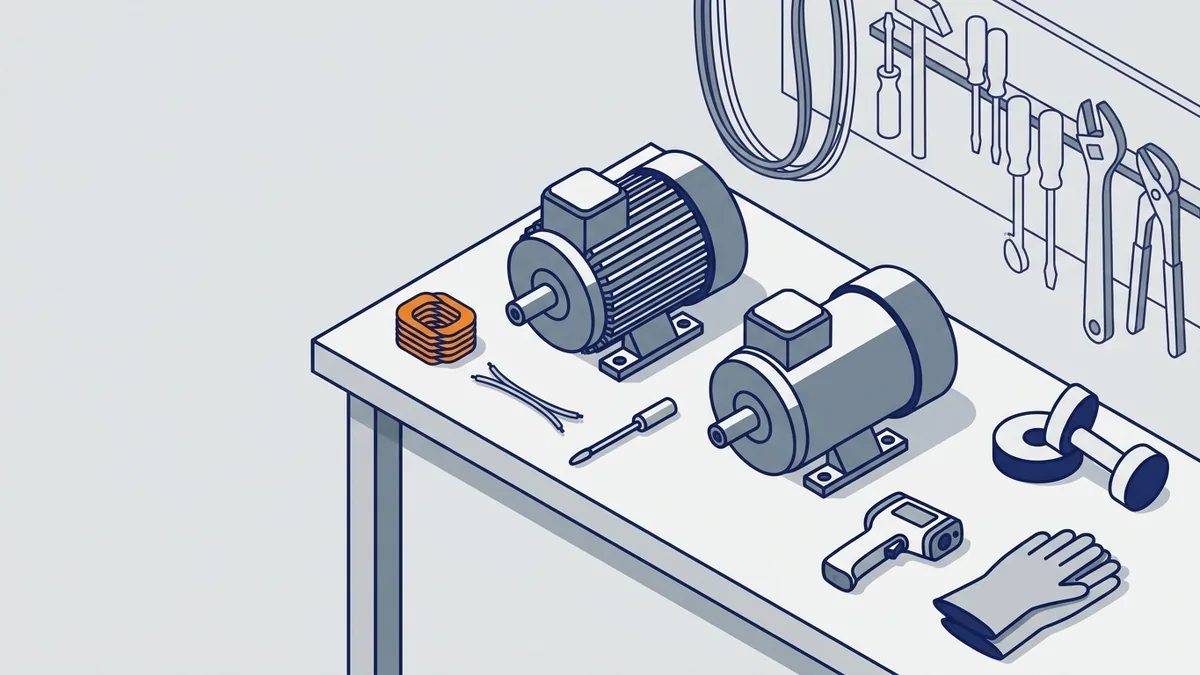
That extra efficiency costs money up front. For example, sources put the premium at roughly 10 to 30 percent over a standard-efficiency motor. In addition, one fact sheet says premium-efficiency motors cost 15 to 30 percent more than energy-efficient ones. These figures are estimates and vary with size. One example from a trade publication compared a 600 hp standard-efficiency motor at $40,000 with a super-premium motor at $55,000.
For that money, you get lower power bills. NEMA estimates yearly savings of $126 for a 10 hp motor moving from Energy Efficient to Premium Efficiency. For a 100 hp motor, it estimates $278. Both assume 8,000 running hours a year. Also, percentage gains are higher for smaller motors.
Are premium-efficiency motors worth the extra cost?
Often, yes, if the motor runs a lot. DOE advises you to consider premium efficiency for new purchases, when you rewind or repair a failed standard motor, and when the existing motor is oversized and underloaded. It is most worthwhile above about 2,000 run hours a year. In addition, high utility rates, repair costs that are a large share of replacement price, and rebates also help.
However, check the details. Premium designs can have lower starting torque and higher inrush current. So when you swap one in, keep full-load speed and locked-rotor torque close to the original motor.
The 2027 DOE efficiency rule and what it means for motor prices
DOE’s 2023 direct final rule sets new efficiency standards for electric motors. It became effective September 29, 2023. Compliance is required on and after June 1, 2027. The question many buyers have is how the June 2027 DOE rule will affect motor prices and availability.
According to ABB, the rule covers three-phase, single-speed, continuous-duty squirrel-cage induction motors from 1 to 750 hp. They run on 60 Hz power at 600 V or less, in standard NEMA or IEC frames. From June 1, 2027, mid-range motors must meet IE4. However, smaller and larger motors continue to meet IE3. Expanded fractional horsepower coverage follows on January 1, 2029.
For prices, expect compliant motors to cost more than the older designs they replace. However, motors already installed can keep running. Also, compliant motors built before the deadline can still be sold and installed. Liquid-cooled, submersible, synchronous and inverter-only motors are exempt.
Two cautions apply. First, sources describe the IE4 band only as “mid-range” or about 100 to 250 hp. Verify the exact hp and pole scope in 10 CFR 431.25 in the Federal Register before you buy. Second, the DOE electric motors page also lists a “delay of effective date” entry. So check that page for the current status before you treat the 2027 date as settled.
What does the “delay of effective date” entry mean for buyers?
A delay of effective date is a procedural notice. It pauses when a rule takes effect so the agency can review comments on it. It does not by itself cancel the rule. The Federal Register also carries a later notice that confirms the effective and compliance dates.
For you, the safe approach is to plan around June 1, 2027 and check the DOE page before you place large orders. If you stock spares for mid-range motors, ask your supplier how the date affects what you can buy.
The real cost of owning a motor: purchase price vs energy
The purchase price is only the start of what a motor costs. DOE and the Hydraulic Institute/Europump summary define life-cycle cost as the total cost to purchase, install, operate, maintain and dispose of equipment. For a motor that runs most of the day, electricity dominates that total.
WEG, a motor maker, states that purchase price is about 2% of a motor’s lifetime cost and electricity is more than 97%. The DOE sourcebook shows a 100 hp motor at 94.5% efficiency running 6,300 hours a year for 18 years at $0.075/kWh. In that example, roughly 95% of lifetime cost is electricity and about 5% is purchase and repair. Likewise, Advanced Energy’s 75 hp example reaches 97%.
So the share varies from about 1% to 5% for purchase, depending on tariff and hours. Do not treat any one percentage as exact. The pattern is what matters: energy dwarfs the sticker price.
What does a motor really cost over its life?
A motor really costs the sum of five things: buying it, installing it, running it, maintaining it and disposing of it. For a motor that runs most hours of the year, running it means paying for electricity, and that is by far the biggest piece. As a result, the price on the quote is only a few percent of the lifetime bill in the examples above.
In practice, this changes how you compare motors. First, estimate your run hours and your tariff. Then add the energy cost to the purchase price, plus installation, repair and downtime. Finally, compare motors on that total, not on the sticker price.
A worked example of lifetime cost
A Specifying Engineer example puts numbers on it. A motor runs 5,000 hours a year at $0.083/kWh. It costs about $7,000 to buy and about $620,000 to power over 20 years. In the same article, boosting efficiency by 10% to 15% can often pay back in one to three years.
Those are the article’s own assumptions, and your tariff and hours will differ. Even so, the lesson holds. A small efficiency gain on a motor that runs all year saves far more than a lower price tag.
How long does a motor last?
Motor life varies a lot. The DOE motor life tip sheet says it can range from less than two years to several decades, depending on conditions and maintenance. For example, DOE’s June 2023 rule used an average life of 13.6 years in its cost analysis. That number is a modelling input, not a measured service life.
Because of this wide range, plan for the cost of keeping a motor healthy. In addition, DOE says to complete an economic analysis before a motor fails.
How to calculate payback on a more efficient motor
You can check payback yourself. DOE’s motor repair tech brief gives this formula for the power you save:
kW saved = hp x L x 0.746 x (1/E_existing – 1/E_new)
Here L is the load factor and E is efficiency, both as decimals. Next, find the yearly savings and the payback:
- Annual savings = kW saved x run hours per year x cost per kWh.
- Payback in years = extra installed cost / annual savings.
Here is an illustration with assumed numbers. A 50 hp motor runs at a 0.75 load factor. Moving from 93% to 95% efficiency saves about 0.63 kW. At 6,000 hours and $0.08/kWh, that is about $300 a year. As a result, if the premium motor costs $600 more, payback is about two years.
A fact sheet citing DOE-funded data used the same method. It found savings of about $132 a year and a payback of 4.9 years on a $650 premium. So use your own hours and tariff. Motors with high run hours pay back fastest.
Repair or replace: what each costs
Is it cheaper to repair or replace a motor? DOE says to run an economic analysis before the motor fails, so you are not deciding in a rush. The answer depends on size.
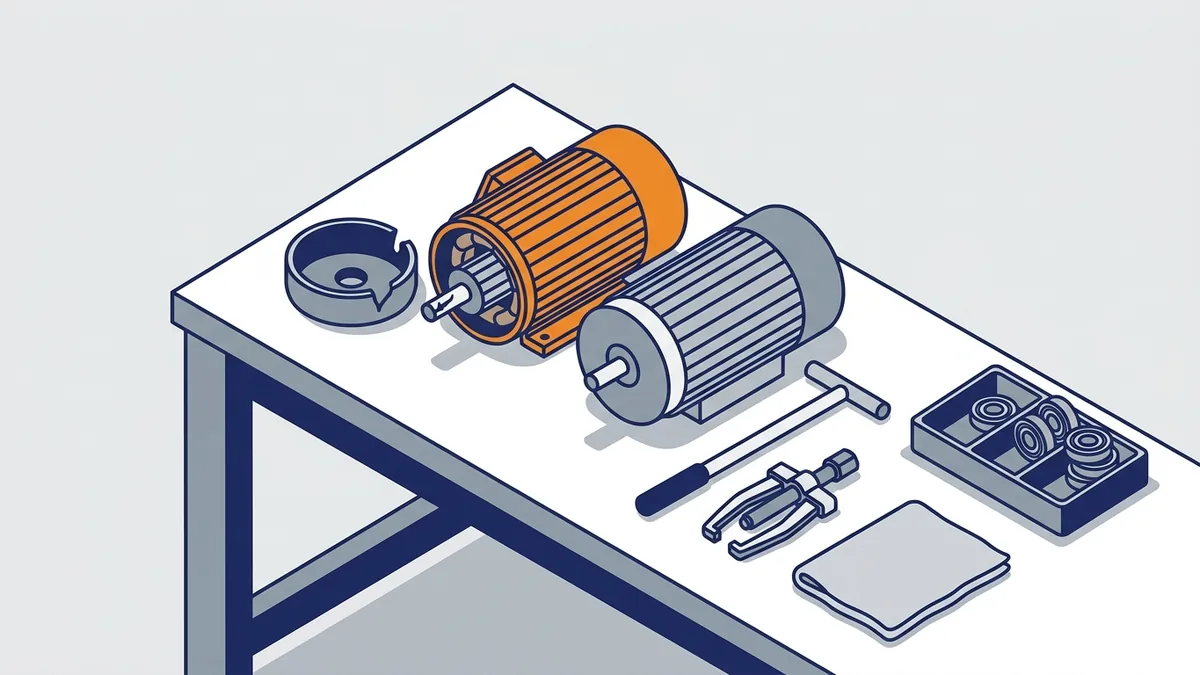
- For the smallest, least expensive standard-efficiency motors, replace when a key part such as a bearing fails.
- Motors up to 20 or 50 hp may get new bearings, but they are often scrapped after a winding failure.
- Larger, more expensive motors may be refurbished and rewound to extend life indefinitely.
Many companies also use a percentage rule. They lean toward replacement when the repair quote reaches about 50% to 75% of a new motor’s price. Our own motor basics post puts the lean point at about 50 to 60 percent. Treat this as a rule of thumb, not a standard. Instead, DOE and Advanced Energy frame the breakpoint as a calculation using electric rate, run hours, payback needs, load and supplier discount.
Downtime often decides the question. The EASA/DOE guide says production downtime is usually the deciding factor. Availability of a replacement and the effort to retrofit it matter too. Also, a repair shop can give you a repair quote and a replacement price side by side, which makes the comparison simple.
Costs people forget when buying a motor
The motor price per horsepower is not the full bill. Other costs come with every purchase, and they can change which motor is the best buy. This section answers what other costs come with a motor, such as the drive, installation and downtime.
- Shipping: large motors are heavy, and freight adds up.
- Installation labour: setting, aligning and wiring take time.
- Couplings and bases: a new frame may need a new base or coupling.
- Downtime: every hour the line is stopped has a cost.
- Warranty: length differs by seller. The severe-duty listings we found show 60 months.
Do I need an inverter-duty motor if I use a VFD?
Often, yes. DOE’s sourcebook says that when the driven equipment uses a VFD, you should make sure the motor is designed for use with inverters. Also, a drive adds its own cost, so price the drive and any filter or cabling separately. Our VFD posts cover sizing, speed control and wiring, so we do not repeat them here.
Matching a replacement motor
Next, check that the new motor fits the job. Full-load speed and locked-rotor torque should be close to the original. However, a higher-efficiency motor can have higher inrush current and lower starting torque. As a result, you may need to check starters and breakers before you install it.
Where to buy and how to get an accurate motor quote
Catalog listings are only a guide. They show a typical electric motor price, but your motor has its own nameplate. So read it first, then ask for a quote that matches it.
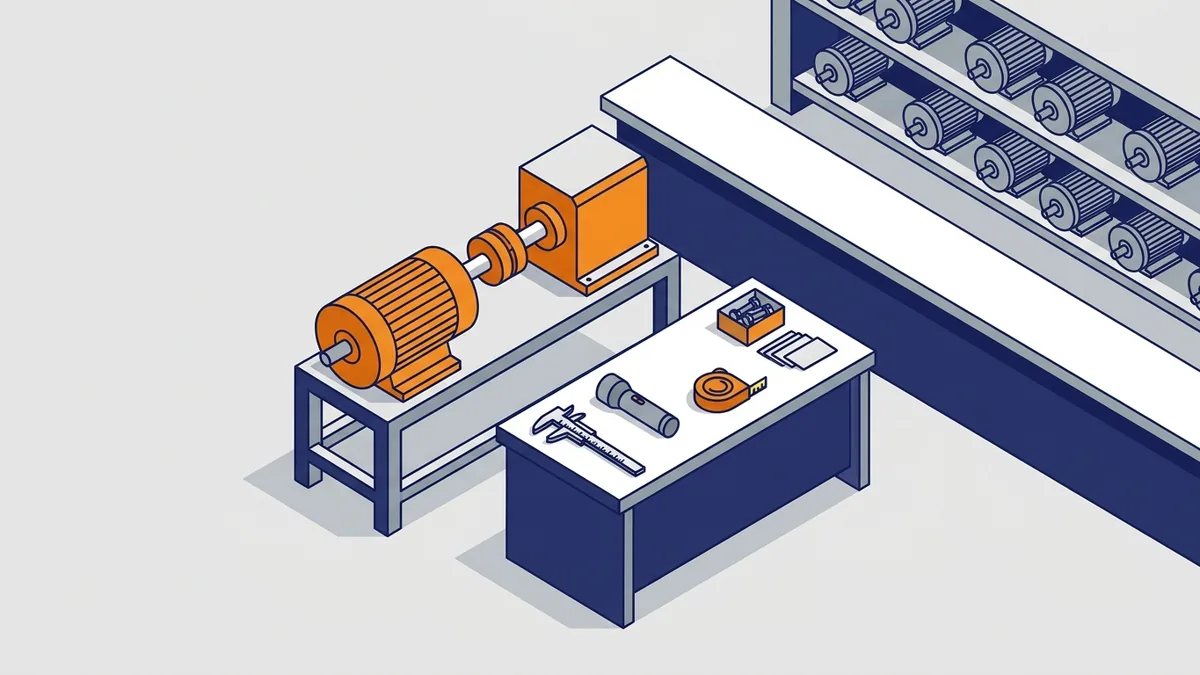
Ask for three things:
- A price for the new motor.
- A repair quote on the failed motor.
- The lead time on both.
Then compare the total, including downtime, not just the price.
Where can I find motor repair and efficiency guidance?
Several free sources help. The US DOE electric motors standards page lists the current rule status. The Federal Register carries the direct final rule and the confirmation of effective and compliance dates. In addition, the DOE sourcebook on improving motor and drive system performance covers efficiency in depth. DOE Motor Systems Tip Sheets #1 and #3 cover when to buy premium motors and how to extend motor life.
For repair, the EASA/DOE guide “A Guide to AC Motor Repair and Replacement” covers the repair-or-replace decision, choosing a qualified repair vendor and typical repair steps. DOE’s Model Repair Specifications for Electric Motors help you write a repair spec. Also, the tip sheets point to EASA for repair and rewind guidelines and to Motors Matter for a motor management planning kit. Finally, ABB’s article “Understanding the 2027 DOE motor standards” explains the new rule in plain terms.
One caution: DOE sources point to a software tool called MotorMaster+ for repair-or-replace maths. However, DOE reportedly no longer lists it, so use the formula above instead.
Common mistakes when budgeting for a motor
What mistakes do buyers make when budgeting for a motor? These five come up most:
- Buying on purchase price alone. Energy cost usually outweighs the sticker price many times over.
- Buying the cheapest listing for a duty it was not built for. A general-purpose motor on a VFD, in a wet area or in a hazardous area can fail early.
- Oversizing the motor. A motor that runs lightly loaded wastes energy and costs more to buy.
- Ignoring efficiency rules. Check the compliance date before you order, especially for mid-range motors.
- Waiting for failure. Set a repair-or-replace policy before a motor fails, so you are not deciding under pressure.
When to call a repair shop or supplier
Call instead of ordering online when the job is not routine. Here is when to pick up the phone:
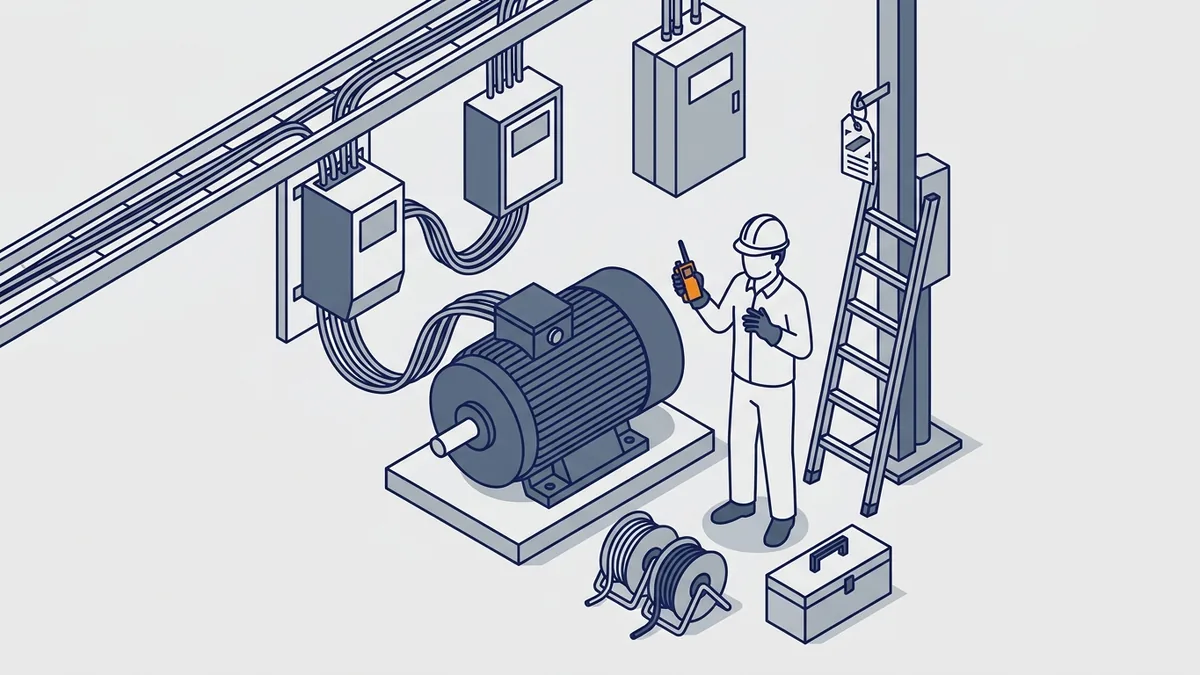
- The motor is large, critical, in a hazardous area, or has a long lead time.
- A winding test shows unbalanced, grounded or shorted windings, and the repair-versus-replace maths is close.
- You plan a VFD-driven replacement and need to confirm that the motor and drive match.
In these cases, a quick call can save days of downtime. For example, a supplier can confirm the nameplate data, check stock and quote repair and replacement side by side.
Frequently asked questions
How much does a motor cost?
It depends on horsepower, speed, enclosure, duty rating and efficiency class. In the listings we found, a 1 hp motor ranged from about $150 for an import single-phase unit to $400 to $900 for inverter-duty, severe-duty or explosion-proof units. Also, a 15 hp general-purpose 3-phase listing was about $1,300 to $1,560, and 100 hp crusher-duty motors were about $7,800 to $11,200. Treat these as examples and get a quote against your nameplate.
How much is a motor for an industrial application?
Price rises with horsepower, but not in a straight line, so price per hp falls as size grows. However, special construction raises the price over a general-purpose motor of the same hp. Severe-duty, explosion-proof, stainless and inverter-duty motors are examples.
Are premium-efficiency motors worth the extra cost?
Sources put the premium at roughly 10 to 30% over a lower-efficiency motor. However, energy is the largest lifetime cost, and WEG states that purchase price is 2% of lifetime cost and electricity over 97%. In addition, payback depends on run hours and tariff, and DOE advises you to consider premium efficiency above about 2,000 hours a year.
Is it cheaper to repair or replace a motor?
DOE says to run an economic analysis before failure. Small standard motors are usually replaced, and motors up to 20 to 50 hp are often scrapped after a winding failure. In contrast, larger motors are usually rewound. A common rule of thumb leans toward replacement when the repair quote reaches about 50 to 75% of a new motor’s price, and downtime often decides.
Will motor prices change in 2027?
DOE’s 2023 rule requires higher efficiency for covered motors made or imported from June 1, 2027, with mid-range motors moving to IE4. So check the DOE page for current status. Expect compliant motors to cost more than the older designs they replace.
No single figure answers how much does motors cost, but you now have ranges by size and type, the factors that move them, and a way to weigh price against energy and downtime. Start with your nameplate, compare total cost, and decide on repair or replacement before a failure. If you want a quote, a repair estimate or help matching a motor to your job, contact Precision Electric.