NEMA Ratings Explained: Every Enclosure Type and How to Choose
NEMA ratings tell you which conditions an electrical enclosure can handle, but the long list of Types makes it easy to pick the wrong one. If you need to specify or replace a panel, drive, starter or junction box, a wrong choice can let in water, dust or rust. In this guide, you will learn what each Type means, how to choose one step by step, and which mistakes to avoid.
On this page
- What is a NEMA rating?
- The NEMA ratings chart: every Type and what it protects against
- Indoor-only Types: 1, 2, 5, 12, 12K and 13
- Indoor or outdoor Types: 3 through 6P
- How deep and how long can Type 6 and 6P enclosures be submerged?
- Hazardous-location and older Types: 7, 9, 8 and 10
- Which NEMA ratings are for indoor use and which are for outdoor use?
- What does the X in a NEMA rating mean?
- Which NEMA Types are for hazardous locations?
- What about Division 2, Class III and Zone locations?
- Are higher NEMA ratings better?
- What is a NEMA 3R rating?
- What is a 4X NEMA rating?
- NEMA 3R vs 4X vs 4 vs 12: how the common Types differ
- How to choose the right NEMA rating: inputs you need
- Step-by-step method for choosing NEMA enclosure types
- Worked example: choosing NEMA ratings for four sites
- NEMA vs IP ratings: converting one way only
- NEMA vs UL Type ratings and the current standard name
- Cost, materials and where to get the standard
- Common mistakes that weaken NEMA enclosure ratings
- When to call a specialist or ask the manufacturer
- Frequently asked questions
What is a NEMA rating?
A NEMA rating, properly called a NEMA enclosure Type, is a standard label for an enclosure. It tells you which environmental conditions the enclosure protects its contents from when it is completely and properly installed. For example, a Type can cover falling dirt, rain, dust, hose water, ice, oil, corrosion or, for hazardous-location Types, explosive atmospheres.
The Types come from NEMA 250, Enclosures for Electrical Equipment. However, NEMA now publishes that standard as ANSI/NEMA EN 10250. In addition, it covers enclosures for electrical equipment rated 1000 V or less.
What are NEMA ratings?
NEMA ratings are a set of numbered and lettered Types, such as 1, 3R, 4X and 12. Each Type is an environmental category, so it describes a place and its hazards. For example, Type 12 suits a dusty indoor plant floor, while Type 3R suits outdoor rain. In addition, you may see this system called NEMA enclosure types, NEMA Type ratings or NEMA enclosure classifications.
Also, these NEMA ratings have nothing to do with NEMA motor frames or NEMA plug and receptacle shapes. Those come from separate NEMA standards. In this article, every Type refers to the box, panel or device housing.
What enclosure NEMA ratings and NEMA box ratings mean on a nameplate
On a nameplate or in a catalog, enclosure NEMA ratings and NEMA box ratings mean the same thing. They state the Type the housing meets, such as “Type 4X” or “NEMA 4X.” That marking applies to the full assembly, with its gaskets, latches and fittings in place.
However, a Type sets characteristics, not a size. A Type 4X label does not tell you the box dimensions or how much heat it can shed. So for sizing and heat, you still need data from the enclosure and equipment makers.
What NEMA ratings leave out
First, the rating applies only when the enclosure is complete and properly installed. The standard does not cover protecting people when a door is open for service, testing, troubleshooting or calibration, or after the box is damaged. In addition, it requires you to install and use the enclosure per the maker’s instructions and NEC 110.3(B). That NEC section says to follow the instructions that come with listed or labeled equipment.
The NEMA ratings chart: every Type and what it protects against
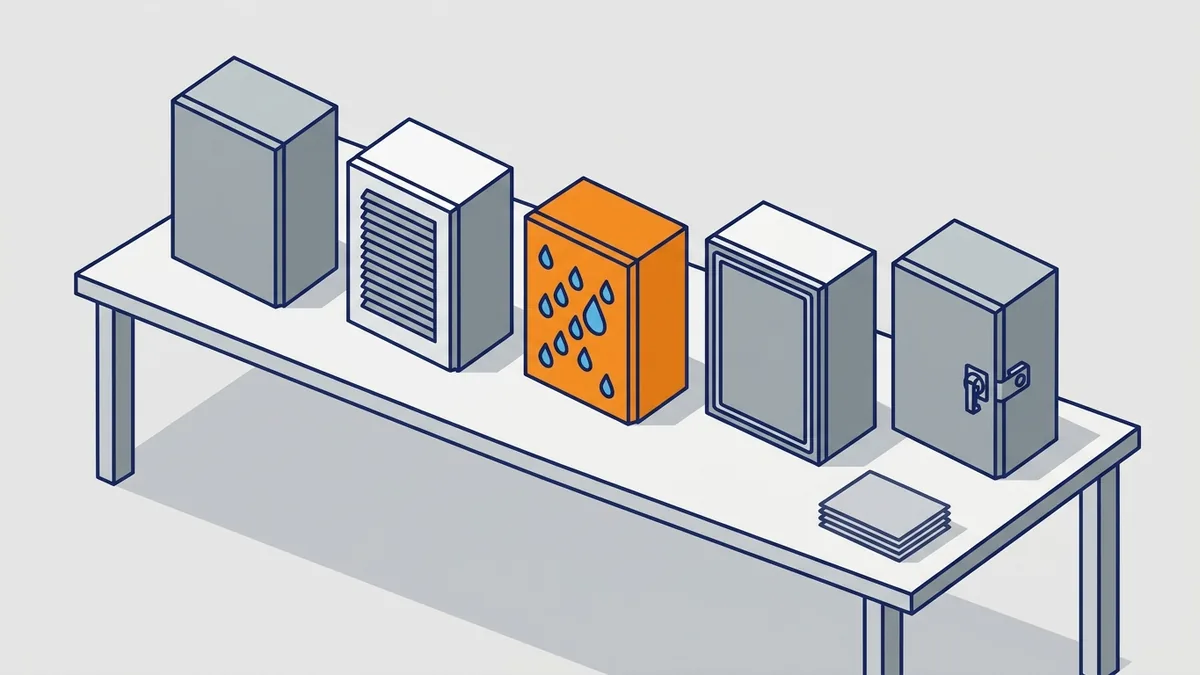
The tables below list every Type in the current standard. They also show two older hazardous Types you may still find on legacy equipment. Read them as a menu of environments, not a ranking from worst to best.
Indoor-only Types: 1, 2, 5, 12, 12K and 13
First, these Types suit enclosures that stay inside a building. None of them has a rating for rain, sleet, snow or ice.
| Type | Location | Protects against | Typical use | Key limitation |
|---|---|---|---|---|
| 1 | Indoor | Access to hazardous parts, falling dirt | Dry, clean electrical rooms | No water or dust protection |
| 2 | Indoor | Type 1 plus dripping and light splashing water | Indoor spots with drips or condensation | Not for dust or outdoor use |
| 5 | Indoor | Falling dirt; settling airborne dust, lint and fibers | Indoor areas with settling dust | Not for outdoor use |
| 12 | Indoor | Falling dirt; circulating dust, lint, fibers and flyings; dripping water; built without knockouts | Dusty plant floors | Not for outdoor use |
| 12K | Indoor | Same as Type 12, but with knockouts | Dusty indoor areas where knockouts help wiring | Not for outdoor use |
| 13 | Indoor | Dust and dripping water plus spraying oil and coolant | Machine tools, CNC controls | Not for outdoor use |
Indoor or outdoor Types: 3 through 6P
Next, these Types work inside or outside. Because they handle rain and ice, they are the usual choices for exposed sites.
| Type | Location | Protects against | Typical use | Key limitation |
|---|---|---|---|---|
| 3 | Indoor or outdoor | Windblown dust, rain, sleet, snow; undamaged by ice | Outdoor gear at dusty, windy sites | Not hose-tight |
| 3R | Indoor or outdoor | Falling rain, sleet, snow; undamaged by ice | Outdoor disconnects and panels | Not dust-tight; may be ventilated |
| 3S | Indoor or outdoor | Type 3 plus external mechanisms that still work when ice-laden | Outdoor switches in icy climates | Not hose-tight |
| 3X, 3RX, 3SX | Indoor or outdoor | Same as 3, 3R or 3S plus corrosion resistance | Corrosive outdoor sites | Same limits as the base Type |
| 4 | Indoor or outdoor | Windblown dust and rain, splashing and hose-directed water; undamaged by ice | Washdown without corrosion | No added corrosion resistance |
| 4X | Indoor or outdoor | Type 4 plus corrosion resistance | Food plants, coastal and chemical sites | Not submersible or explosion-proof |
| 6 | Indoor or outdoor | Hose water and occasional temporary submersion at limited depth; undamaged by ice | Pits or low spots that may flood briefly | Not for prolonged submersion |
| 6P | Indoor or outdoor | Water during occasional prolonged submersion | Areas that can stay flooded | Confirm depth and time with the maker |
How deep and how long can Type 6 and 6P enclosures be submerged?
The standard’s submersion tests use about 6 ft (1.8 m) of water. Type 6 is tested for temporary submersion, about 30 minutes at that depth. Type 6P is tested for prolonged submersion, about 24 hours at that depth.
However, those figures are test conditions, not a promise for every product. A maker may mark a different depth or time on the nameplate. So always follow the maker’s stated depth and duration, and do not assume a Type 6 box can stay flooded for days.
Hazardous-location and older Types: 7, 9, 8 and 10
Finally, these Types cover explosive atmospheres and mining. Types 8 and 10 appear only on legacy equipment.
| Type | Location | Protects against | Typical use | Key limitation |
|---|---|---|---|---|
| 7 | Indoor, hazardous | Class I, Division 1, Groups A, B, C, D; contains an internal explosion | Flammable gas or vapor areas | Needs hazardous-location selection |
| 9 | Indoor, hazardous | Class II, Division 1, Groups E, F, G | Combustible dust areas | Needs hazardous-location selection |
| 8 (older editions) | Indoor or outdoor, hazardous | Class I, oil-immersed equipment | Legacy equipment | Not in the current standard’s scope |
| 10 (older editions) | Mining | Mining applications | Legacy equipment | Not in the current standard’s scope |
Which NEMA ratings are for indoor use and which are for outdoor use?
Indoor-only NEMA ratings are Types 1, 2, 5, 12, 12K and 13. Next, Types 3, 3X, 3R, 3RX, 3S, 3SX, 4, 4X, 6 and 6P work indoors or outdoors. Watch Type 5 in particular. Its number sits between 4 and 6, yet it is not for outdoor use.
What does the X in a NEMA rating mean?
The X stands for added corrosion resistance. So Type 4X is Type 4 plus corrosion protection, and Type 3RX is Type 3R plus corrosion protection. As a result, X Types usually use stainless steel, fiberglass or plastic instead of plain painted steel.
Which NEMA Types are for hazardous locations?
Types 7 and 9 are the hazardous (classified) location Types in the current standard. Type 7 suits indoor Class I, Division 1, Groups A, B, C or D areas, where flammable gases or vapors may be present. Also, it contains an internal explosion without causing a hazard outside. Meanwhile, Type 9 suits indoor Class II, Division 1, Groups E, F or G areas, where combustible dust may be present.
In addition, older editions of NEMA 250 listed Type 8 for Class I oil-immersed equipment and Type 10 for mining. You may still see these on legacy gear. However, the current scope lists only 7 and 9 for hazardous locations.
What about Division 2, Class III and Zone locations?
Hazardous areas are not only Division 1. In a Division 2 area, the gas, vapor or dust is present only under abnormal conditions, such as a leak or a failure. Even so, the equipment must be suitable and marked for that location, so do not assume any box will do.
Class III areas hold ignitable fibers and flyings, such as in textile or wood-working plants. NEC Articles 500 through 503 cover Classes and Divisions.
The Zone system is a second method. Zones 0, 1 and 2 cover gases and vapors, and Zones 20, 21 and 22 cover combustible dust. NEC Articles 505 and 506 cover them. Zone equipment carries its own markings instead of a NEMA Type, so ask the maker or a specialist to confirm it fits your area.
Are higher NEMA ratings better?
No. Because NEMA ratings are environmental categories, not a ladder, a higher number does not mean better protection. For example, Type 12 handles circulating dust indoors, but it is not meant for outdoor use, where a Type 3R works well. So always pick the Type that matches your conditions, not the biggest number.
What is a NEMA 3R rating?
A NEMA 3R rating means the enclosure protects against falling rain, sleet and snow. It also stays undamaged when ice forms on the outside. Among outdoor NEMA ratings, 3R is the common baseline for panels, disconnects and meter-type equipment.
However, Type 3R is not dust-tight, and it is not rated for windblown dust or hose-directed water. That is why 3R boxes may have vents or drain openings. Also, 3R does not require external handles or mechanisms to work when they are covered in ice.
How 3R compares with Types 3, 3S and 3RX
Three close relatives of 3R handle extra conditions:
- Type 3 adds windblown dust protection to rain, sleet, snow and ice.
- With 3S, external mechanisms such as handles still work when ice-laden.
- Finally, 3RX keeps 3R protection and adds corrosion resistance.
So if wind drives dust across the site, step up to Type 3 or 3S. If ice often locks the handle, choose 3S. Finally, if salt air or chemicals are the issue but there is no dust or hose spray, 3RX may fit.
What is a 4X NEMA rating?
A 4X NEMA rating covers everything in Type 4, plus an extra level of corrosion resistance. You can use a 4X enclosure indoors or outdoors. Because it handles water and corrosion together, it is one of the most common NEMA ratings in washdown areas, coastal sites and chemical plants.
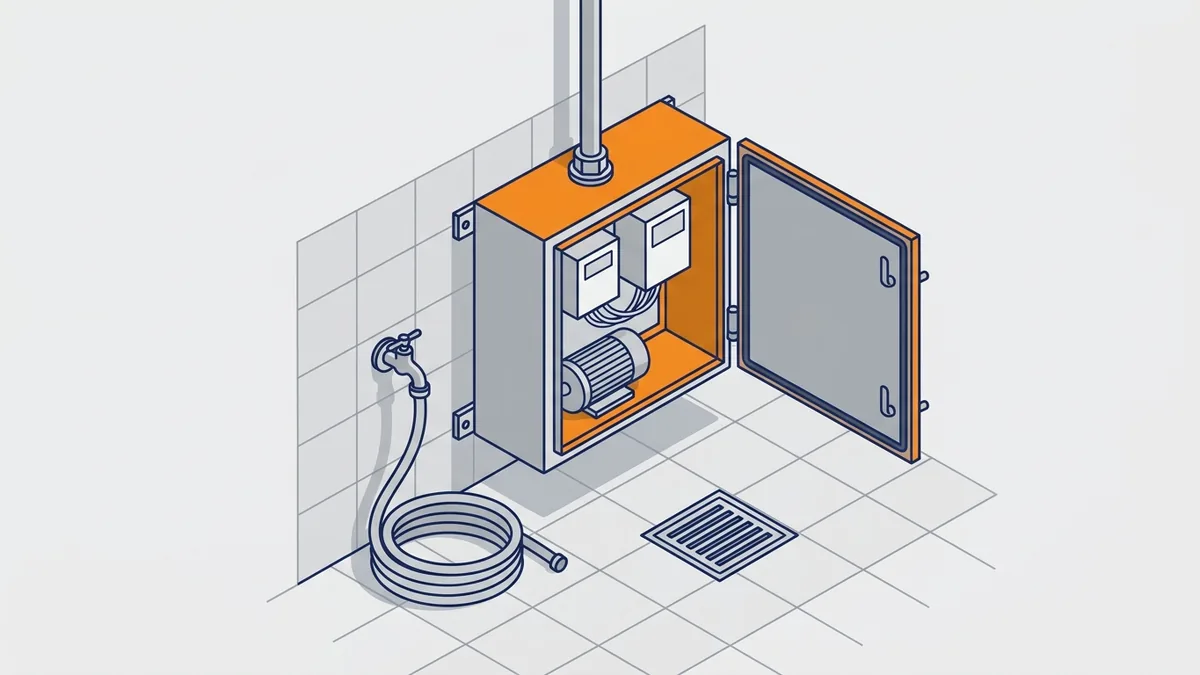
What a NEMA 4X enclosure protects against
A Type 4X enclosure protects its contents against:
- Windblown dust and rain
- Splashing water
- Hose-directed water
- Damage from ice forming on the enclosure
- Corrosion, at a higher level than Type 4
For the hose test, Type 4 and 4X enclosures must keep out at least 65 gallons per minute (gpm) of water. The water comes through a 1 in nozzle from at least 10 ft away for 5 minutes.
Which materials make a 4X enclosure?
Most 4X enclosures use stainless steel, fiberglass or plastic. In general, a painted carbon steel box is a Type 4, not a 4X. Still, check the nameplate, because only the certified marking tells you which Type the maker tested.
How do stainless steel, fiberglass, polycarbonate and coated steel compare?
Each material handles corrosion in its own way:
- 304 stainless steel: resists rust well in general indoor and washdown use, but chlorides such as salt can pit it.
- 316 stainless steel: adds molybdenum, so it resists salt air and chlorine-based cleaners better than 304.
- Fiberglass: does not rust and resists many chemicals and salt, but it needs UV protection outdoors.
- Polycarbonate: does not rust and takes impact well, but some solvents and long sun exposure can harm it unless the maker added UV protection.
- Coated steel: works until the coating is scratched or worn, then it can rust at the damage.
For 4X, the standard includes a corrosion test. Metal boxes face a salt spray (fog) test, and nonmetallic boxes face aging tests such as UV exposure. The standard sets the exact hours and pass criteria, so ask the maker for the test data if your site is harsh.
What a 4X rating does not cover
Many buyers expect too much from 4X. Here is what it does not include:
- Submersion: not covered. NEMA treats submersion under Types 6 and 6P.
- Explosive atmospheres: not covered. Hazardous locations need Types 7 or 9 with listed equipment.
- Chemical compatibility: not guaranteed for every chemical. You still need to check the material against your specific chemicals.
In short, treat 4X as dust, water and corrosion protection only.
NEMA 3R vs 4X vs 4 vs 12: how the common Types differ
Types 1, 12, 3R, 4 and 4X cover most of the NEMA ratings that technicians and buyers deal with. Next, the table compares them side by side. Each column heading is the Type number.
Side-by-side comparison of five common Types
| Condition | 1 | 12 | 3R | 4 | 4X |
|---|---|---|---|---|---|
| Indoor use | Yes | Yes | Allowed | Allowed | Yes |
| Outdoor use | No | Not rated | Yes | Rated | Yes |
| Falling dirt | Yes | Yes | Covered | Yes | Yes |
| Dripping water | No | Yes | Yes | Covered | Yes |
| Rain, sleet, snow and ice formation | No | Not rated | Yes | Yes | Covered |
| Circulating or windblown dust | No | Circulating dust, indoors | No | Yes | Covered |
| Hose-directed water | No | Not rated | No | Yes | Covered |
| Added corrosion resistance | No | Not included | No | Not included | Yes |
What is the difference between NEMA 3R and 4X?
The difference comes down to dust, hose water and corrosion. Type 4X adds protection against windblown dust, splashing water, hose-directed water and corrosion. By contrast, 3R only handles falling rain, sleet, snow and ice. Also, 4X uses dust-tight gaskets and sealed construction, while 3R may be vented.
Because of that extra sealing and material, 4X costs more. So use 3R for covered or partly exposed outdoor spots that see only rain. Then choose 4X for fully exposed sites with direct spray, salt air or chemicals. Keep in mind that you cannot substitute 3R where 4X is required.
Can I use NEMA 12 outdoors?
No. Type 12 is an indoor-only Type, built for falling dirt, circulating dust, lint, fibers and dripping water. It has no rating for rain, sleet, snow or ice. For outdoor use, start at Type 3R and work up from there.
Quick rules for the common NEMA ratings
- Dry, clean indoor rooms call for Type 1.
- Dusty indoor floors with some drips call for Type 12.
- Outdoor rain and snow with no dust or hose spray call for Type 3R.
- Hose-down or windblown dust without corrosion calls for Type 4.
- Hose-down plus salt air or chemicals, indoors or out, calls for Type 4X.
How to choose the right NEMA rating: inputs you need
Choosing between NEMA ratings starts with the install site, not the catalog. So write down the conditions before you shop. As a result, good inputs make the choice fast and keep you from paying for protection you do not need.
What information do I need before choosing a NEMA Type?
Gather these six environmental inputs first:
- Location: indoor, outdoor under a cover, or outdoor and fully exposed.
- Water: none, dripping or condensation, rain, hose or washdown, or submersion.
- Dust and fibers: none, settling dust or lint, circulating dust, or windblown dust.
- Corrosion: coastal salt air, road salt, washdown chemicals, fertilizer or process fumes.
- Ice and cold: ice forming on the box, or a handle or mechanism that must work when ice-laden.
- Oil or coolant: spray or splashing from machine tools.
How do temperature, UV and condensation affect the choice?
A Type does not set a temperature range, so check the maker’s data for the hottest and coldest conditions on your site. Cold can stiffen gaskets and make some plastics brittle. Heat, including sun on the box, adds to the heat the equipment makes inside.
UV light from the sun can crack or fade plastics and age gaskets. So outdoors, choose fiberglass or plastic that the maker states is UV resistant, and consider a sun shield.
Condensation is a separate problem. When temperatures swing, a sealed box can pull in humid air and then drip as it cools. To handle it, ask the maker about drain or breather fittings rated for the same Type, or add a thermostat-controlled space heater inside.
Hazardous areas and specification requirements
Next, check two more items. First, find out if the area is a hazardous (classified) location, which carries a Class, Division and Group. That calls for a different selection process, covered in the steps below.
Then, check what the job specification, customer or local code already requires. Some specs call for a UL Type listing, not just a NEMA Type. If so, note it now, because it limits which products you can buy.
Step-by-step method for choosing NEMA enclosure types
With your inputs in hand, run through these steps in order. The order matters, because a hazardous area overrides everything else in NEMA ratings selection.
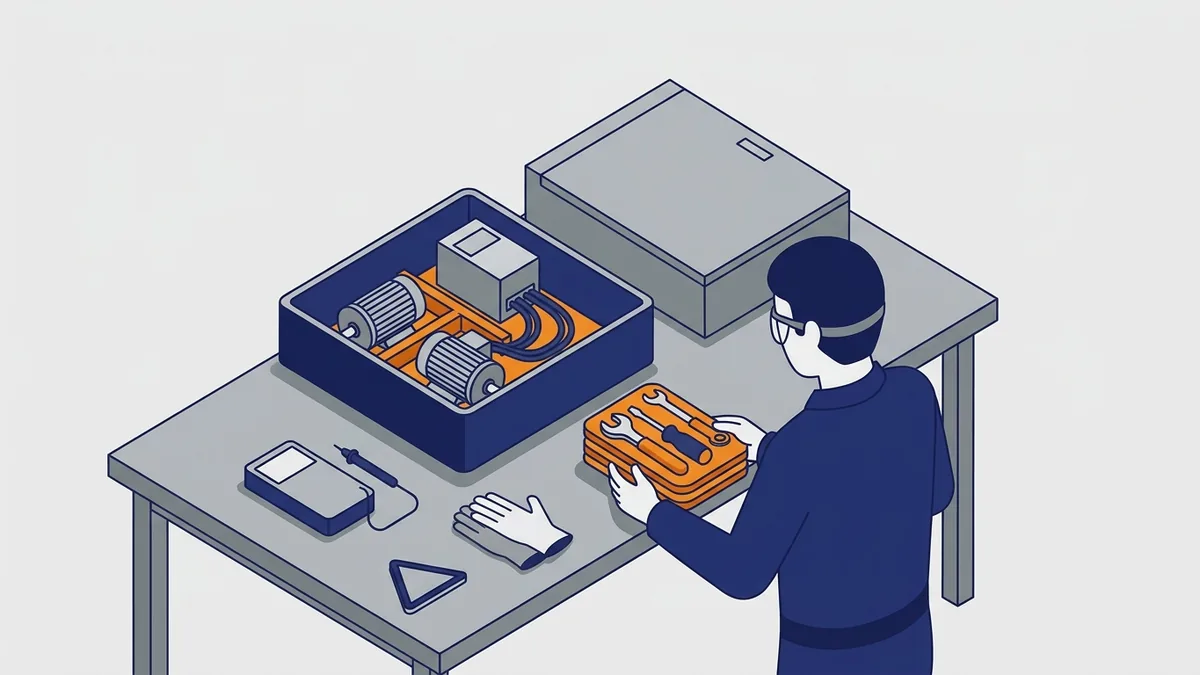
How do I choose the right NEMA rating?
- Decide indoor-only or indoor/outdoor. If the box sits outside, rule out Types 1, 2, 5, 12, 12K and 13.
- Check for a hazardous classification. If the area is classified, stop and go to Types 7 or 9 with equipment listed for that Class and Group.
- Add up the exposures. List every condition from your inputs: water, dust, ice, oil and corrosion.
- Pick the lowest Type that covers every exposure. For example, rain plus windblown dust points to Type 3, not 3R.
- Pick the material. Where corrosion exists, choose stainless steel, fiberglass, plastic or coated steel certified for an X Type.
- Confirm the certification. Look for the Type on the nameplate or a UL listing, not just “weatherproof” or “heavy duty.”
- Plan the install so the rating survives. Use hubs and fittings rated for the same Type, keep gaskets in place, latch doors and seal unused knockouts.
How do you size a sealed Type 4 or 4X box and handle heat?
A sealed box sheds heat only through its outside surface. So start by adding up the heat the equipment gives off, in watts, from each maker’s data sheet. Then find the box’s usable surface area, counting only sides that have air around them. Sides against a wall or the floor do not count.
Next, use the enclosure maker’s heat transfer figure for the material and finish. The temperature rise inside is roughly the total watts divided by that figure times the surface area. Compare the result with the highest ambient temperature on site and the temperature limit of your equipment.
If the box runs too hot, you have a few options:
- Choose a larger enclosure with more surface area.
- Add a sealed cooling device, such as an air-to-air heat exchanger or an enclosure air conditioner, rated for the same Type.
- Add a sun shield outdoors.
Do not cut open vents or add plain fans, because that breaks the Type 4 or 4X seal.
How do you add hubs and cutouts without voiding the Type rating?
Field changes can void the rating, so follow the maker’s instructions first. Many makers list where you may cut and which fittings to use. If the instructions do not allow a change, ask the maker before you drill.
When the maker allows openings, follow these rules:
- Use conduit hubs, glands and fittings marked for the same Type as the box, or higher.
- Keep entries on the bottom or sides. Avoid the top, where water pools.
- Use a punch or hole saw sized for the fitting, then remove burrs and metal chips.
- Seal with the gasket or sealing ring that comes with the hub, and tighten it fully.
- Touch up bare metal edges on coated steel, so rust does not start.
- Close unused openings with plugs marked for the same Type.
Never modify a hazardous-location enclosure in the field unless the maker’s listing says you can.
Worked example: choosing NEMA ratings for four sites
The four sites below are illustrative scenarios built from the Type definitions, not a real site survey. Still, they show how the steps work in practice.
Site A: inland outdoor disconnect and starter
A disconnect and motor starter sit outside at an inland pump station. They see light rain and snow, but no hose spray, dust or chemicals. Because only falling rain, sleet, snow and ice apply, Type 3R covers every exposure. In practice, a powder-coated steel 3R box is a common fit.
Site B: which NEMA rating fits a washdown area?
A food or beverage plant hoses down its process line daily with cleaning chemicals. That means hose-directed water plus corrosion. So the answer is Type 4X, usually in 316 stainless steel or a non-metallic material. Also, confirm that the material suits your specific cleaning chemicals.
Site C: which NEMA rating fits coastal or chemical sites?
An outdoor control panel sits near the ocean or beside a chemical process. Salt air or fumes attack the enclosure, and wind may drive dust or spray at it. In that case, Type 4X in 316 stainless steel or fiberglass is the safe choice. However, if the only exposures are rain plus corrosion, with no dust or hose spray, Type 3RX may be enough.
Site D: which NEMA rating fits oil or coolant spray indoors?
A CNC control cabinet sits in a machine shop where oil and coolant spray from the tool. Type 13 adds protection against spraying oil and coolant, so it is the match. Meanwhile, a dusty indoor production floor with some dripping water calls for Type 12 instead.
Reasoning table for the four sites
| Site | Location | Water | Dust | Corrosion | Oil or coolant | Resulting Type |
|---|---|---|---|---|---|---|
| A: inland disconnect and starter | Outdoor | Rain, snow | None | Not an issue | Absent | 3R |
| B: food plant washdown | Indoor | Daily hose-down | Not the deciding factor | Cleaning chemicals | None | 4X, stainless or non-metallic |
| C: coastal or chemical panel | Outdoor | Rain, possible spray | Possible windblown dust | Salt air or fumes | None | 4X (3RX if rain and corrosion only) |
| D1: CNC control | Indoor | Coolant | Shop dust | None | Spraying oil and coolant | 13 |
| D2: dusty production floor | Indoor | Dripping water | Circulating dust | None | Absent | 12 |
NEMA vs IP ratings: converting one way only
Many buyers ask how NEMA ratings compare with IP ratings. The short answer is that you can convert NEMA to IP, but never IP to NEMA.
How NEMA ratings and IP ratings differ
IP ratings come from IEC 60529, and they rate only how well a box keeps out solids and water. In contrast, NEMA Types also cover corrosion, external icing, oil resistance, gasket ageing, impact on walls and door latching. In addition, IEC allows some water to get in, as long as it does not reach live parts.
As a result, an IP66 enclosure is not automatically a NEMA 4 or 4X. It may never have faced a corrosion, ice or gasket-ageing test. For the full IP code breakdown, see our post on NEMA enclosure ratings and IEC protection codes.
The one-way NEMA-to-IP cross-reference
A Type-rated enclosure can carry an approximate IP rating. The common table comes from NFPA 79 Table F.5.5. However, third-party tables do not always agree, so treat these values as rough guides:
| NEMA Type | Approximate IP rating | Note |
|---|---|---|
| 1 | IP20 | Third-party cross-reference |
| 2 | IP22 | Third-party cross-reference |
| 3R | IP14 | NEMA-derived cross-references give IP14; IP54 is the figure for Types 3 and 3S, and only a few third-party charts list IP24 |
| 4 and 4X | IP66 | IP66 alone does not prove a NEMA Type |
| 6 | IP67 | Third-party cross-reference |
| 6P | IP67 | NEMA-based charts match Type 6; some third-party charts list IP68, so sources conflict |
| 12 and 12K | IP52 | NEMA-based charts list IP52; IP54 is the figure for Type 13, and IP54 for Type 12 appears only in third-party charts |
For a spec or submittal, quote NFPA 79 Table F.5.5 or the maker’s datasheet, not a random web chart. Also, the Siemens IP vs NEMA white paper and NEMA’s Brief Comparison of NEMA 250 and IEC 60529 both explain why the table works one way only.
NEMA vs UL Type ratings and the current standard name
Two naming questions come up often with NEMA ratings. One is about the standard’s new name, and the other is about UL.
What happened to NEMA 250?
NEMA revised NEMA 250 and renamed it ANSI/NEMA EN 10250. The 2024 edition superseded ANSI/NEMA 250-2020. However, one publication index already lists a 2026 edition as current and the 2024 edition as withdrawn. So check the NEMA 250 standards page on the NEMA website or the ANSI Webstore before you cite an edition in a spec.
Is a NEMA Type the same as a UL Type?
No. A NEMA Type marking does not mean the enclosure also meets the same UL Type rating. UL 50E covers environmental construction and performance for nonhazardous Types, while UL 50 covers general construction. In addition, both NEMA 250 and UL 50/50E add requirements for wall impact, gasket ageing, oil resistance, corrosion and latching.
So read the nameplate and catalog wording closely. “UL Type 4X” points to a UL listing, while “NEMA 4X” may be the maker’s own claim. If your spec calls for UL, ask the supplier which standard they verified.
How do NEMA Types map to CSA and UL Types?
UL and CSA use the same style of Type numbers, such as 3R, 4X and 12. That makes them easy to compare, but the numbers are not an automatic match. Each body tests to its own standard, so the marking on the product is what counts.
In the United States, look for a UL Type marking. In Canada, look for a CSA Type marking, which falls under the CSA C22.2 enclosure standards. If a spec calls for one of them, buy a product that carries that mark. Also, ask the supplier for the listing, since a NEMA claim alone does not prove either one. The nVent standards summary on NEMA, UL and CSA ratings is a handy free reference.
What does NEC Table 110.28 require?
NEC 110.28 covers enclosures for common electrical equipment rated 1000 V or less in nonhazardous locations. Examples include panelboards, enclosed switches and motor controllers. It requires you to select the enclosure Type from Table 110.28, based on the conditions at the site.
The table matches each exposure, such as rain, sleet, ice, windblown dust, hose water, corrosion or submersion, with the Types that suit it. It has separate columns for indoor and outdoor locations. So your NEMA Type must appear in the table for the conditions you listed. Read the table in the NEC edition your local authority has adopted, because rows can change between editions. Hazardous locations follow NEC Articles 500 through 506 instead.
Cost, materials and where to get the standard
Price and paperwork matter as much as protection when you buy an enclosure. Here is what to expect.
How much does a higher NEMA rating cost?
In general, higher NEMA ratings cost more. A 4X enclosure costs more up front than a 3R, mainly because of sealing and corrosion-resistant materials. Still, a stainless 4X box can lower lifecycle cost at a corrosive site. By contrast, a cheaper 3R steel box there may need repainting or full replacement.
Prices vary by size, material and maker, so compare quotes for the same Type and material. Also, do not over-specify 4X where 3R does the job, since that only adds cost.
Where can I buy the NEMA 250 standard?
The full standard is a paid document. You can buy ANSI/NEMA EN 10250 as a PDF from the ANSI Webstore or the Accuris store, and the price depends on edition and member status. For a free overview, download NEMA’s Enclosure Types summary PDF from the NEMA website. In addition, the nVent standards summary on NEMA, UL and CSA ratings is another free reference.
Where to find the NEMA Type on a product
First, check the nameplate or label on the housing or inside the door. Next, read the datasheet, which should state the Type and whether it is UL listed. Finally, check the catalog type code, since some makers build the Type into the part number.
Common mistakes that weaken NEMA enclosure ratings
Most problems with NEMA ratings come from a wrong pick or a sloppy install. Watch for these mistakes:
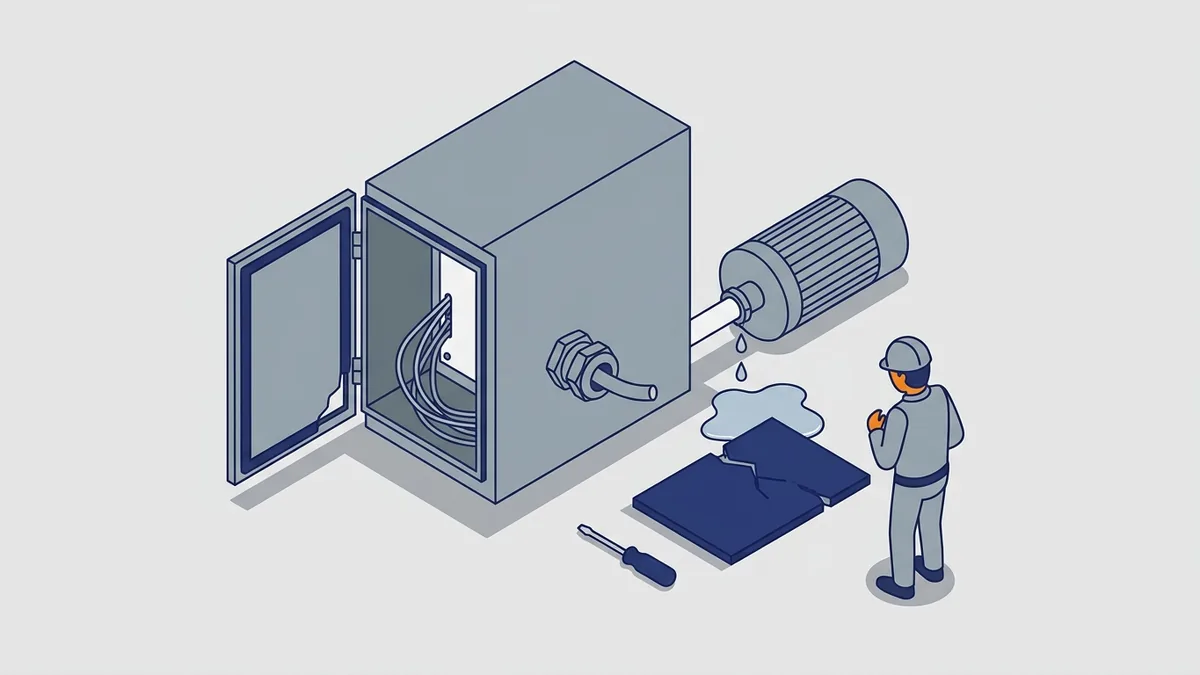
- Assuming a higher number is better. Types are categories, so match the environment.
- Using Type 1 or 12 outdoors. Both are indoor-only.
- Choosing 3R where dust or hose water is present. It is neither dust-tight nor hose-tight.
- Specifying painted-steel Type 4 where corrosion exists. Choose 4X or another X Type with corrosion testing.
- Treating IP65 or IP66 as a NEMA Type. Verify the NEMA criteria on the datasheet.
- Expecting 4X to cover submersion, explosive atmospheres or all chemicals. It covers none of these.
- Breaking the rating during install. Wrong conduit hubs, open knockouts, missing gaskets and open doors all let water and dust in.
- Over-specifying 4X where 3R is enough. That adds cost with no benefit.
- Ignoring heat build-up. Sealed boxes trap heat, so size the box or add sealed cooling as shown above.
As a result, any of these can leave you with a box that carries a Type label but no longer delivers that protection.
When to call a specialist or ask the manufacturer
Some jobs need more than a chart of NEMA ratings. Ask the equipment maker or a specialist in these cases:
- Any hazardous (classified) location, where Types 7 and 9 and listed equipment apply.
- Chemical exposure where material compatibility matters.
- Submersion or flooding risk, where Types 6 and 6P apply.
- Replacing a damaged or corroded enclosure on a drive or motor controller. Confirm with the maker which Types the product is certified for.
For drive-specific enclosure guidance, see our VFD enclosure articles. And if you need help matching a drive, starter or control to the right Type, our team can talk it through with you.
Frequently asked questions
What is a NEMA rating?
A NEMA rating, properly a NEMA enclosure Type, tells you which conditions an enclosure protects its contents from when properly installed. These include falling dirt, rain, dust, hose water, ice, oil, corrosion and, for hazardous-location Types, explosive atmospheres. The Types come from NEMA 250, now republished as ANSI/NEMA EN 10250, for equipment rated 1000 V or less.
What are the NEMA ratings?
Indoor NEMA ratings are Types 1, 2, 5, 12, 12K and 13. Types 3, 3X, 3R, 3RX, 3S, 3SX, 4, 4X, 6 and 6P work indoors or outdoors. For hazardous locations, the current standard lists Types 7 and 9, while older editions also had 8 and 10. For details, the chart above shows what each one protects against.
What is a NEMA 4X rating?
NEMA 4X is for indoor or outdoor use. It covers windblown dust and rain, splashing and hose-directed water, and ice forming on the enclosure, plus extra corrosion resistance. However, it is not a submersion rating or an explosion-proof rating.
What is a NEMA 3R rating?
NEMA 3R is for outdoor use against falling rain, sleet and snow, and it stays undamaged when ice forms on it. It is not rated for windblown dust or hose-directed water. Because of that, 3R enclosures may be ventilated.
Is NEMA 4X better than NEMA 3R?
Type 4X protects against more, including dust, hose water and corrosion, and it costs more. However, NEMA Types are environmental categories, not a ladder. So 3R is enough for ordinary rain without dust, hose water or corrosion. When those conditions are present, use 4X.
Can I convert an IP rating to a NEMA rating?
No. NEMA-to-IP cross-references work one way only, because NEMA ratings also cover corrosion, ice, oil and gasket ageing. IEC 60529 does not require those tests. So an IP66 enclosure is not automatically a NEMA 4 or 4X.
NEMA ratings describe environments, not quality levels, so the right Type is the one that matches your site. First, gather your inputs, follow the steps in order, and confirm the certification on the nameplate. Then install with rated fittings and intact gaskets so the protection lasts.
If you need help choosing an enclosure Type, a quote on a replacement, or repair of a damaged drive or control, contact Precision Electric today.