








Soft Start Explained: How It Works, Sizing and AC Kits
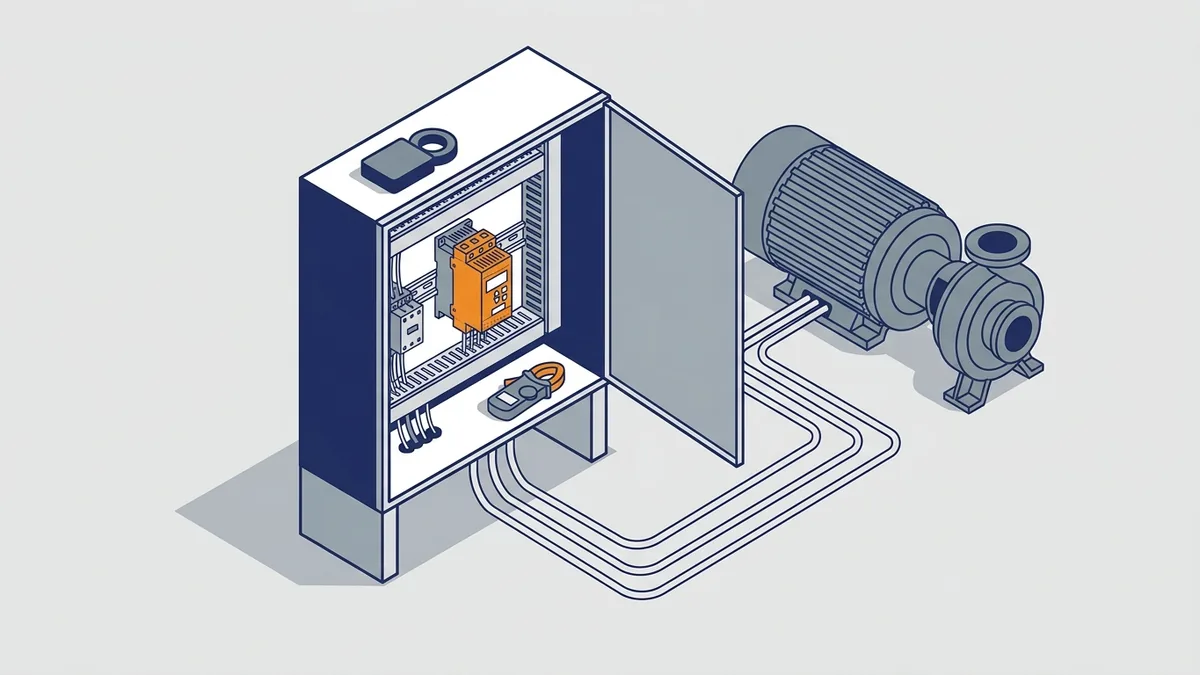
A soft start limits the big surge of current a motor or air conditioner compressor pulls when it turns on. If you deal with flickering lights, tripping breakers, a stalling generator or worn couplings, this guide is for you. You will learn how a soft start works, how to size and set one, and how AC soft start kits compare to hard-start capacitors.
On this page
- What Is a Soft Start?
- How Does a Soft Start Work?
- Why Limit Starting Current? What a Soft Start Protects
- Soft Start Control Methods: Voltage Ramp, Current Limit, Torque Control and Kick Start
- Soft Start vs Direct-On-Line, Hard Start and VFD
- AC Soft Start Kits for Air Conditioners and Heat Pumps
- What is an AC soft start kit and what does it do?
- Benefits of an air conditioner soft starter
- What is the difference between a soft start and a hard-start kit?
- How do I choose an AC soft start kit for my compressor?
- Will an AC soft start kit work with inverter compressors, ECM systems or 3-phase units?
- How do I size a generator, inverter or battery for an AC unit with a soft start kit?
- How is an AC soft start kit installed, and can I do it myself?
- Industrial Soft Starters: Choosing and Sizing One
- How do I size an industrial soft starter?
- What to compare on a soft starter datasheet
- Do altitude, high ambient temperature and panel cooling change the size?
- How do I wire an industrial soft starter?
- Can I use power-factor capacitors, several motors or reversing with a soft starter?
- What start ramp, initial voltage and current limit should I set?
- Soft Starter Standards, Ratings and Markings
- How Much Does a Soft Start Cost?
- Common Soft Start Mistakes and Troubleshooting
- Where to Find Manuals, Selection Tools and Standards
- Frequently asked questions
What Is a Soft Start?
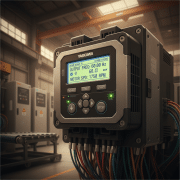
A soft start is a device that slowly raises the voltage applied to an AC motor at start. Without one, the motor gets full line voltage all at once. With one, current and torque build up smoothly instead of in one hard jolt. Eaton and other makers call the industrial version a reduced voltage soft starter (RVSS).
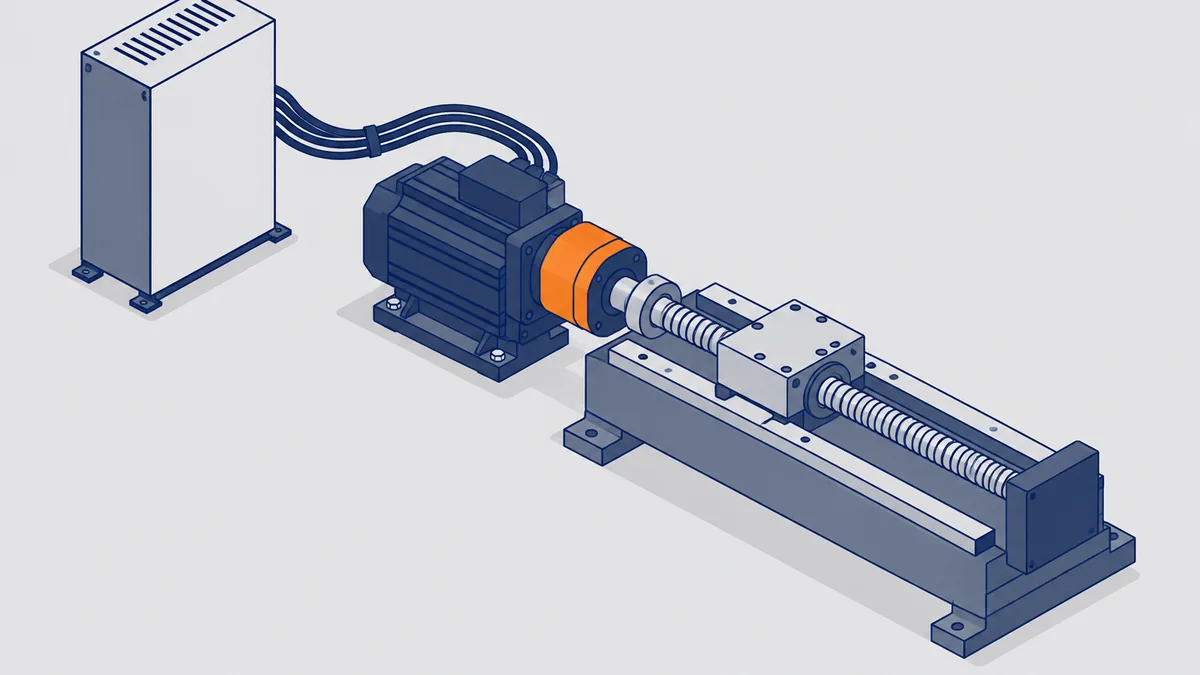
This cuts inrush current, the short surge a motor draws as it starts. It also limits torque shock, the sudden twist that hits belts, couplings, gearboxes and pipes. Then, once the motor reaches speed, the soft start steps aside and the motor runs on full line voltage.
Does “AC soft start” mean a motor starter or an air conditioner kit?
The phrase has two common meanings, and the overlap confuses many buyers. First, “AC” can mean alternating current. In that sense, an ac soft start is any soft starter for an AC motor. These industrial units control 3-phase motors on pumps, fans, compressors and conveyors.
Second, “AC” can mean air conditioner. An a/c soft start, or a/c soft start kit, is a small module that limits inrush on an air conditioner or heat pump compressor. Both types use the same idea: limit the current surge at start. However, they differ in size, wiring and who usually installs them.
What a soft start is not
A soft start is not a speed controller. It only shapes the start, plus the stop on units with that feature. After that, the motor runs at line frequency and full speed. Also, it does not lower running amps or your energy use once the motor is up to speed.
How this guide is organized
Each section stands on its own, so you can jump to the part you need:
- How a soft start works, including SCRs, the ramp, bypass and soft stop
- Why starting current matters and what a soft start protects
- Control modes and how a soft start compares to other starting methods
- AC soft start kits for air conditioners and heat pumps
- Sizing and setting an industrial motor soft starter
- Standards, ratings, cost, common mistakes and where to find manuals
How Does a Soft Start Work?
In short, a soft start trims the voltage the motor sees, then raises it over a few seconds. Back-to-back SCRs in each phase delay their turn-on point in every AC half-cycle. As a result, the motor first sees only part of the waveform, so voltage, current and torque start low. When the ramp ends, the SCRs conduct fully, and most units then close a bypass contactor.
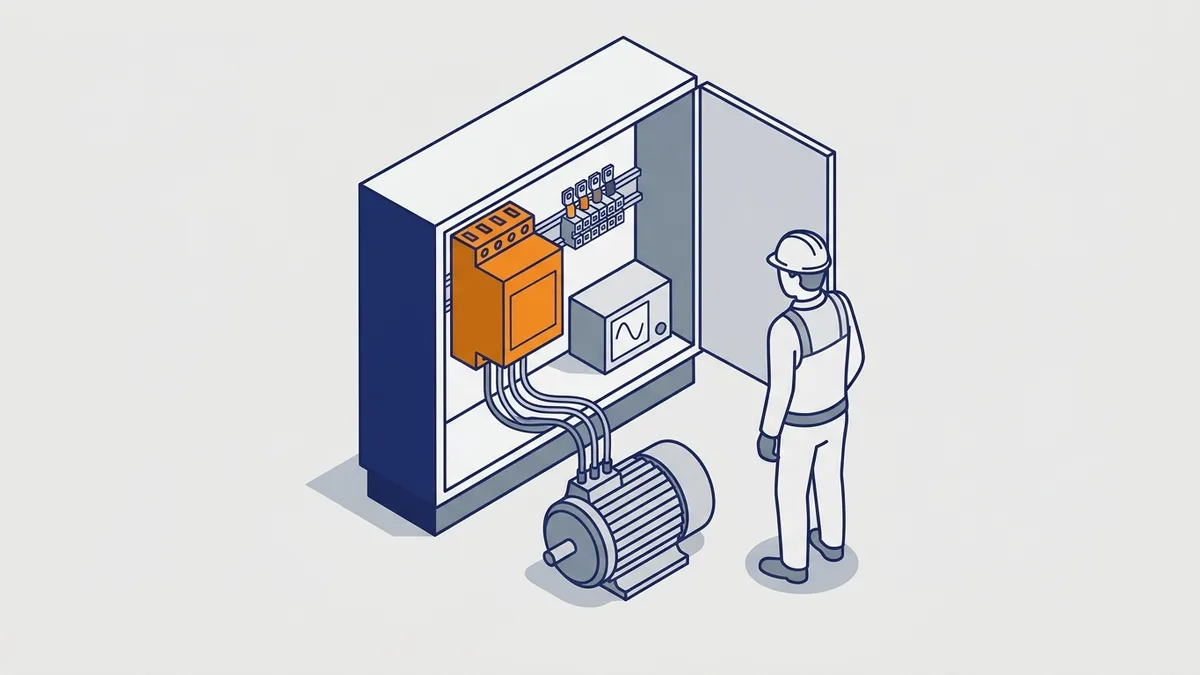
SCR phase-angle control: what do the SCRs do in a soft starter?
An SCR (silicon controlled rectifier, also called a thyristor) is a solid-state switch. It turns on when it gets a gate signal and stays on until its current drops to zero. A soft starter places two SCRs back to back in each phase, one for each half of the AC wave.
Next, the controller picks the moment in each half-cycle to fire the SCRs. Firing late lets only the tail of the sine wave through, which leaves a gap or “notch” in the voltage. The wider the notch, the lower the RMS voltage, meaning the effective voltage, at the motor. With zero notch width, the motor gets full voltage.
Notice that the frequency never changes. The motor still sees line frequency, and only the voltage magnitude changes. That is the key difference between a soft start and a variable frequency drive (VFD).
The start ramp and why a soft starter uses a bypass contactor
The ramp begins at an initial voltage, often 30 to 60% of line voltage according to one industry source. Then it rises to full voltage over a set time, commonly adjustable from 1 to 30 seconds. In practice, most starts last only a few seconds.
Once the motor is at speed, a bypass contactor closes. From then on, line current flows through metal contacts instead of the SCRs. Because SCRs make heat while they conduct, the bypass cuts heat and running losses. Eaton says this significantly reduces heating. In addition, makers can size the SCRs for short starting duty instead of continuous duty.
Bypass designs come in two types:
- Built-in bypass: the contactor sits inside the starter. For example, ABB’s PSE and PSTX ranges have a built-in bypass.
- External bypass: you add a separate contactor. Some models have no internal bypass at all. One selection guide notes that Schneider’s ATS480 needs an added contactor if you want bypass.
Soft stop: can a soft starter slow a motor down smoothly?
Yes, if the unit has a soft-stop function. Many soft starters ramp voltage down at stop as well as up at start. For example, ABB’s PSE and PSTX ranges offer a stop ramp of 0 to 30 seconds.
Soft stop helps most on pumps. A sudden stop can cause water hammer, the pressure surge that bangs pipes and valves. For that reason, the ABB Softstarter Handbook suggests a stop ramp with torque control for pumps. However, a basic soft start without soft stop does nothing at shutdown, and the motor simply coasts down.
Why Limit Starting Current? What a Soft Start Protects
Why is motor starting current so high?
At the instant of start, the rotor is not turning yet. So the motor acts almost like a short circuit and pulls a large current until it builds speed. Sources give different figures for this surge, so treat any single number with care:
- One industry source puts direct-on-line (DOL) starting at 5 to 7 times full-load amps (FLA). It also quotes 600 to 700% of FLA.
- Other sources quote 6 to 8 times FLA for across-the-line starting.
- Generac says air conditioner compressors draw three to six times full-load running amps at start without a soft starter.
Overall, expect roughly 3 to 8 times FLA, depending on the motor, the load and the method. With a soft start, sources quote about 2 to 3, 3 to 3.5, or 3 to 5 times FLA, depending on settings and load. One source sums it up as 150 to 350% of FLA instead of 600 to 700%.
Why does high starting current matter?
A big inrush causes trouble on both the electrical and the mechanical side:
- Voltage dip: other equipment on the same supply sees a sag.
- Light flicker: lights dim each time the motor starts.
- Nuisance trips: breakers may trip even though the circuit is sized for running current.
- Backup power overload: a generator, inverter or solar system may stall or fault.
- Mechanical shock: full torque at once slams belts, couplings, gearboxes, conveyors and pipes.
A soft start eases all of these. Eaton also says soft starters reduce the voltage drop that normally comes with motor starting.
The 25% transformer rule of thumb
One industry source gives a handy check. If a single motor’s full-load current equals or exceeds 25% of the transformer serving it, DOL starting will cause unacceptable sag. In that case, a soft start or another reduced-voltage method is worth a look.
Still, keep one limit in mind. A soft start reduces the peak at start only. Once the motor is at speed, running current and energy use stay the same.
Soft Start Control Methods: Voltage Ramp, Current Limit, Torque Control and Kick Start
Most soft starters offer more than one way to control the start. The right mode depends on the load and on how strong your power supply is.
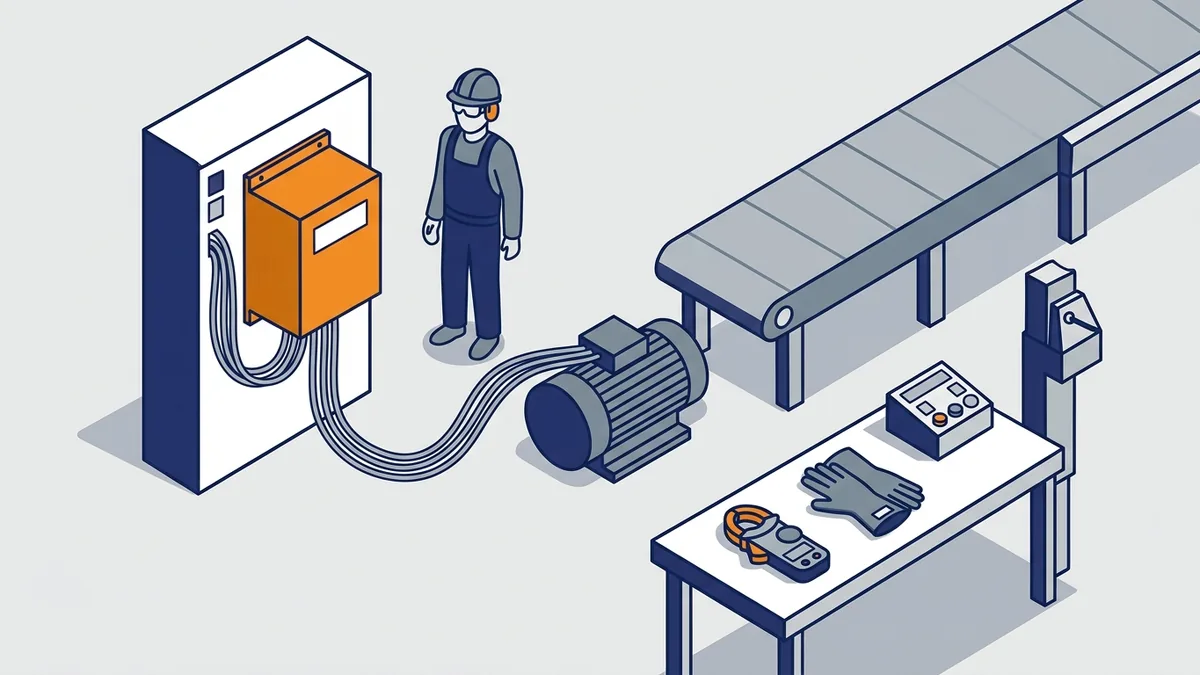
Voltage ramp
Voltage ramp is the simplest mode. You set an initial voltage and a ramp time, and the starter raises voltage on a timer. It is open loop, meaning it does not watch current or speed while it ramps.
Current limit
Current limit holds the starting current under a ceiling you set. So it suits weak supplies, long feeders and generators. ABB lets you set the limit from 1.5 to 7 times Ie, the rated operating current of the starter. ABB also suggests a softstarter with current limit to keep control of starting current, and the PSTX offers three types of current limit.
Torque control
Premium units such as the ABB PSTX offer torque control. Instead of following a voltage line, the starter shapes the motor torque. As a result, acceleration and stopping are smoother, which helps on pumps and conveyors.
Kick start
Kick start gives a short boost at the very beginning of the start. Then the normal ramp takes over. ABB lists kick start for breaking away jammed pumps or conveyor belts.
Typical adjustment ranges
As an example, here are the adjustable ranges from the ABB Softstarters PSR, PSE and PSTX Catalog for the PSE and PSTX:
| Setting | ABB PSE/PSTX range |
|---|---|
| Start ramp | 1 to 30 s |
| Stop ramp | 0 to 30 s |
| Initial and end voltage | 30 to 70% |
| Current limit | 1.5 to 7 x Ie |
| Bypass | Built in |
Why initial voltage matters
Motor torque falls with the square of voltage. For example, at 50% voltage the motor makes only about 25% of its normal torque. Because of this, a low initial voltage can leave a loaded motor humming without turning. If that happens, raise the initial voltage or add kick start.
Soft Start vs Direct-On-Line, Hard Start and VFD
Several methods can start a motor, and each one trades current, torque and cost differently. The table below gives a quick view. Figures come from the sources cited above, and actual results depend on settings and load.
| Method | Starting current | Starting torque | Speed control | Harmonics |
|---|---|---|---|---|
| Direct-on-line (DOL) | About 5 to 8 x FLA | Full, all at once | No | None |
| Star-delta | Roughly one third of DOL | Roughly one third of DOL | No | None |
| Soft starter | About 2 to 5 x FLA, adjustable | Reduced and adjustable | No; runs at full speed | Only during start and stop |
| VFD | Low; can reduce starting kVA | High torque per line amp | Yes | Continuous |
| Hard-start capacitor | Not limited; adds a current kick | Boosted | No | None |
Soft start or VFD: which should I use?
Choose a soft start when the load runs at one speed and only the start causes trouble. Choose a VFD when you need speed control or sustained low-speed running. Because a soft starter controls voltage without changing frequency, it cannot run the motor at different speeds.
Siemens lists soft starter advantages as lower watt loss, no harmonics except during acceleration and deceleration, less maintenance and lower initial cost. However, a soft start cannot match the torque per line-side amp of a VFD or autotransformer starter. For the full comparison, read our post “Electronic Soft Start VS Variable Frequency Drive.”
Replacing an old star-delta starter
Some soft starters can replace an older star-delta starter. For example, ABB says its PSS can connect inside-delta as a cost-efficient replacement. For more ABB-specific detail, see our “ABB Soft Start” post.
AC Soft Start Kits for Air Conditioners and Heat Pumps
This section covers what people mean by a/c soft start, ac soft start kit and AC soft start kit. These products fit home, RV and light commercial air conditioners and heat pumps. They share the same goal as an industrial soft starter, which is to tame the inrush at start.
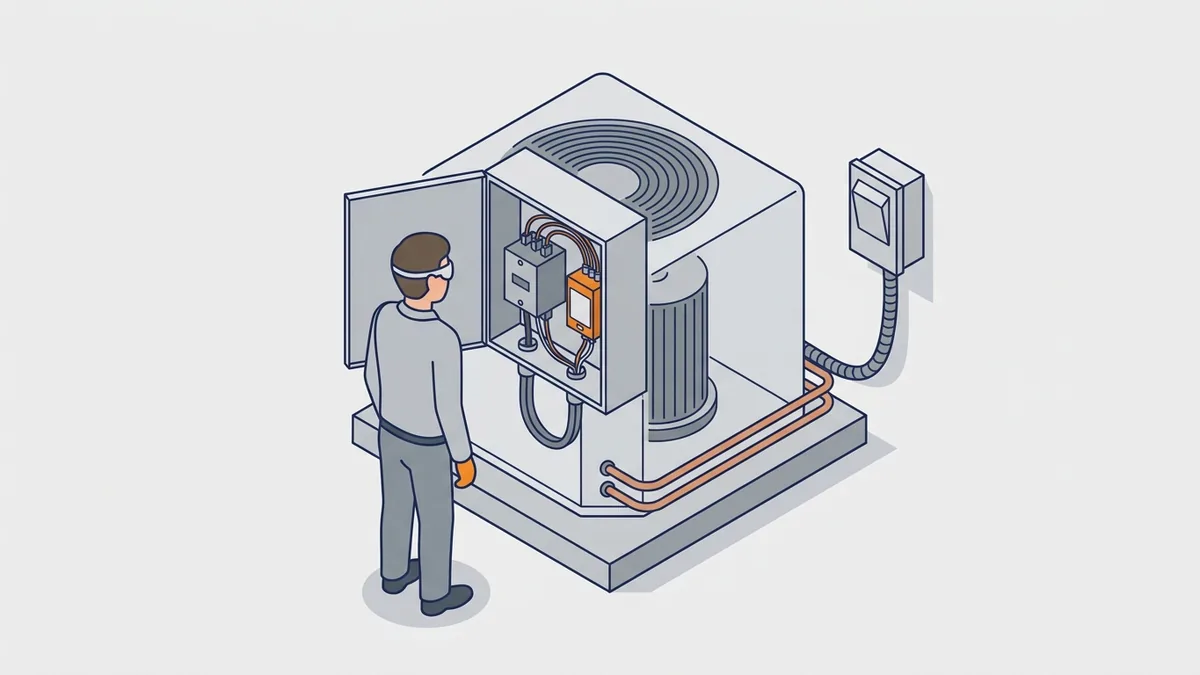
What is an AC soft start kit and what does it do?
A single-phase compressor acts like a locked rotor at start. So it pulls a big inrush called LRA, short for locked rotor amps. An air conditioner soft starter ramps that current up over a short time instead. The compressor still starts, but with a much smaller spike.
Makers state these reductions. Treat them as manufacturer claims, not independent test results:
- Generac Sure Start: up to 70% less inrush (LRA).
- Hyper Engineering single-phase: up to 70% less LRA and inrush.
- Hyper Engineering three-phase Sure-Start: up to 40% less LRA and inrush, and up to 70% less start-up torque.
- Single-phase kits in general: makers claim reductions of up to about 70 to 75%.
Generac also gives example sizes. It says a 3-ton compressor could draw up to 50 A at start and a 5-ton up to 85 A. With the kit, Generac says these could drop to about 15 A and 25 A. Similarly, an RV guide cites 45 to 60 A of inrush on a roof unit that runs at 12 to 16 A.
Benefits of an air conditioner soft starter
The main reasons people add a kit are practical:
- A generator, inverter or solar backup can start the unit.
- Lights flicker less, and breakers trip less often.
- The compressor starts with less noise and less stress.
Remember that a soft start lowers start amps only, not running amps. As one anecdote, a forum user reported a roof unit with 62 A LRA and about 12 A running current. After a Micro-Air soft start, the user said start current peaked at about 15 A. Also, the surge happens every time the compressor cycles on, so the kit works on every start.
What is the difference between a soft start and a hard-start kit?
A hard-start kit adds an extra start capacitor. It gives the compressor a bigger current kick to help it break loose. A soft start does the opposite, because it limits and ramps the inrush current.
So a hard-start kit is not a soft start, even though both target hard-starting compressors. SoftStart Home says a hard-start device can improve starting but is not a permanent fix. The company also says it may lead to premature compressor failure if the run capacitor fails. That is a vendor claim, so check the compressor maker’s guidance too.
How do I choose an AC soft start kit for my compressor?
Start with the compressor nameplate, not just the unit’s tonnage. Write down these values:
- Phase: single-phase or three-phase
- Voltage, for example 240 V
- FLA or RLA (rated load amps)
- LRA
- Horsepower or tonnage
Next, compare those values to each kit’s stated range. Here are examples from the makers:
- Generac Sure Start 16-32 FLA: 240 V single-phase compressors with full-load current of 16 to 32 A.
- Hyper Engineering single-phase: adjusts itself across 1.75 to 7 hp, and the seller lists it as ETL, CE and RoHS compliant.
- Micro-Air EasyStart Flex: home air conditioners or heat pumps up to 6 tons.
- Hyper Engineering three-phase Sure-Start: connects between the contactor and the motor, with reverse phase and brownout protection.
An RV guide advises matching the kit to the compressor’s LRA and BTU rating. It also says to confirm compatibility with your exact rooftop unit. In every case, check the kit maker’s compatibility list against your nameplate LRA.
Many kits learn your compressor over several starts. For example, Micro-Air describes a five-start learning process. So do not judge the result on the first start.
Will an AC soft start kit work with inverter compressors, ECM systems or 3-phase units?
Not always. Each kit fits a certain type of compressor, so check these cases before you buy:
- Variable-speed or inverter-driven compressors: these already ramp up through their own drive, so a kit usually has no job to do. Do not add one unless the compressor maker says so.
- ECM systems: an ECM is usually the blower motor. A soft start kit is made for the compressor, not the blower.
- 3-phase commercial units: use a kit made for three-phase, such as the Hyper Engineering three-phase Sure-Start. A single-phase kit will not fit.
- Compressors outside the listed range: do not stretch the limits. If your FLA, LRA, voltage or horsepower falls outside the maker’s range, pick another kit or ask the maker.
How do I size a generator, inverter or battery for an AC unit with a soft start kit?
Size the backup source for the starting surge first, then check the running load. For single-phase power, apparent power in kVA equals volts times amps divided by 1,000. For example, Generac’s 3-ton figure of 50 A at 240 V is about 12 kVA at start. With the kit at about 15 A, that falls to about 3.6 kVA. Running at 12 A would be about 2.9 kVA.
Then add the rest of the load you run at the same time. Also, ask the generator maker how much margin it wants, since engines and alternators differ.
For an inverter, check its surge rating and how long it holds that surge. For a battery bank, size it for the running load over your needed run time. The kit lowers the surge, but it does not lower running amps.
How is an AC soft start kit installed, and can I do it myself?
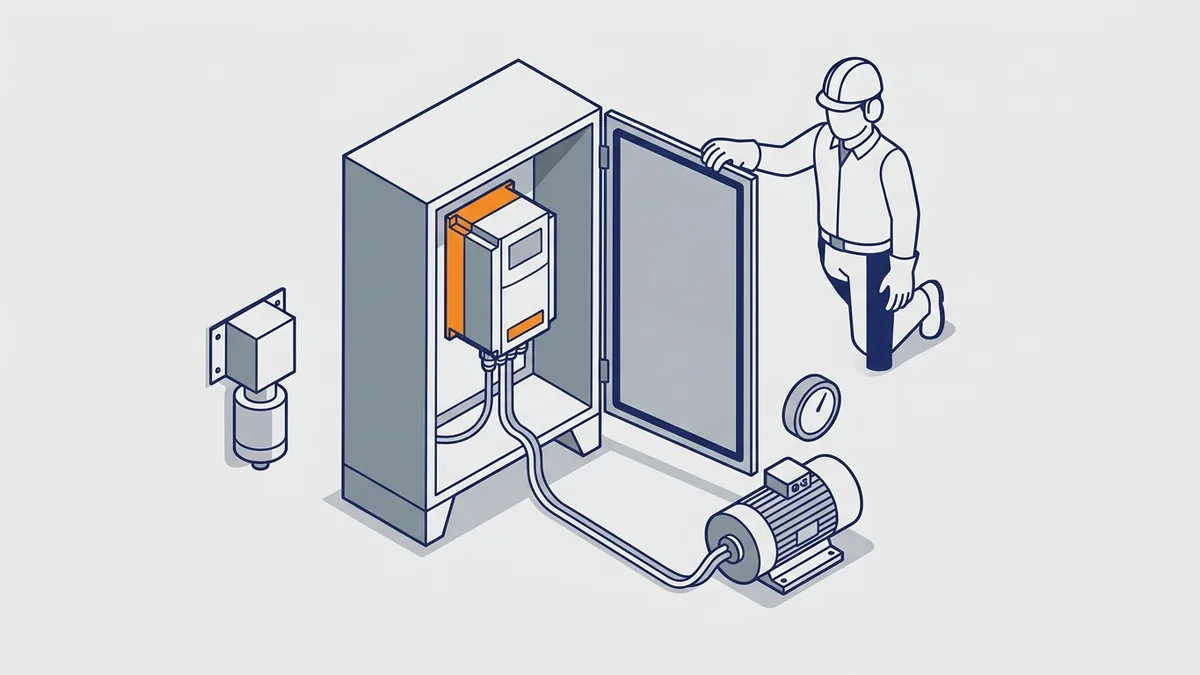
Installing a kit means wiring into the compressor’s start circuit near the run capacitor and contactor. A qualified HVAC technician should do the work, with power off and locked out. Also, run capacitors can hold a charge, so the tech must discharge them safely first.
We do not give step-by-step wiring, because each kit differs. For example, Generac’s kit names terminals for Run Winding, Run Capacitor, T2, Start Winding and Compressor Common. SoftStart Home says its device installs in parallel to the run capacitor, so wiring and location need careful thought. Follow the kit maker’s diagram exactly.
Install times vary. One Micro-Air customer review reports a heat pump install in under half an hour, but that is a testimonial, not a standard. Finally, follow the kit’s instructions for removing any existing hard-start kit or start parts.
Industrial Soft Starters: Choosing and Sizing One
An industrial soft starter fits constant-speed loads where only the start causes trouble. Good fits include pumps, fans, compressors and conveyors. If the load needs speed changes, go back to the VFD section above.
How do I size an industrial soft starter?
Size by current and duty, not by kW or horsepower alone. Follow these steps:
- Read the motor’s full-load current (FLC) from the nameplate.
- Apply the maker’s starts-per-hour derating factor.
- Check the duty rating against your real load, start time and starts per hour.
- Match the rating to the bypass type: AC-53b for a bypassed starter, AC-53a for a non-bypassed one.
- Confirm the ambient temperature and enclosure suit your site.
Starts per hour matter a lot. One secondary source estimates a 100 hp NEMA B motor can take about 2 cold starts per hour across the line. With a soft starter at 300% current limit, it estimates about 4 to 6. Treat that as a typical figure, not a rating.
What to compare on a soft starter datasheet
- Bypass: built in or external.
- Rating conditions: ABB bases its ratings data on 40 °C ambient, 4 x Ie starting current and a 6 s ramp. Harder conditions may call for a larger size.
- Duty: allowed starts per hour and start time.
- Enclosure: IP rating, often IP00 or IP20 for chassis units.
- Short-circuit rating: SCCR or coordination with the upstream fuse or breaker.
- Features: torque control, motor protection and communication options.
Heavy, high-inertia loads such as flywheels and large fans take longer to reach speed. Because of that, they may need a larger starter. Use the maker’s selection software, or ask us to check your sizing.
Do altitude, high ambient temperature and panel cooling change the size?
Yes. Ratings assume set conditions, such as the 40 °C ambient in the ABB data above. If your panel runs hotter, or your site sits high above sea level, the starter usually needs derating. That means you pick a larger unit or accept a lower current rating. Thin air cools less well, so many makers start derating above roughly 1,000 m (3,300 ft). The exact point and the amount differ by model, so use the derating curves in the maker’s manual.
For mounting, follow the maker’s clearances above and below the unit. Also keep it away from other heat sources, and keep vents clear. A bypassed starter makes little heat while the motor runs. However, a unit without bypass makes heat the whole time, so it needs more cooling. Size panel fans or air conditioning for the heat the starter gives off, as listed in the datasheet.
How do I wire an industrial soft starter?
Terminal names vary by maker, so always follow the wiring diagram for your model. In general, the power side works like this:
- Line terminals: incoming 3-phase power, often marked L1, L2 and L3 (or 1, 3 and 5).
- Motor terminals: output to the motor, often marked T1, T2 and T3 (or 2, 4 and 6).
- Control terminals: control power, start and stop inputs, and relay outputs for run, fault and bypass.
- Bypass: with a built-in bypass, there is nothing to add. With an external bypass, the contactor ties the line side to the motor side, and the starter’s bypass relay output closes it.
Next, pick a control scheme. In 2-wire control, one maintained contact, such as a switch or PLC output, starts the motor when closed and stops it when open. In 3-wire control, a momentary start button and a normally closed stop button work with a seal-in circuit, so the motor keeps running after you release start.
Put short-circuit protection ahead of the starter, using the fuses or breaker the maker lists. Many soft starters include an electronic overload. If yours does not, add an overload relay between the starter and the motor, or use the one the maker names. With an external bypass, make sure the motor stays protected while the bypass carries current. A qualified electrician should do the work, with power off and locked out.
Can I use power-factor capacitors, several motors or reversing with a soft starter?
Each case has its own rule:
- Power-factor correction capacitors: never connect them on the motor side of the starter. The SCRs can be damaged. Connect them on the line side, or switch them in only after the bypass closes.
- Multiple motors on one soft starter: only some makers allow it. The starter must carry the total current of all motors. Each motor also needs its own overload protection. Ask the maker first.
- Reversing duty: most soft starters only start and stop one direction. For reversing, use two contactors on the line side to swap two phases, and reverse only when the motor is stopped. Some models offer a reverse function, so check the manual.
What start ramp, initial voltage and current limit should I set?
The ABB Softstarter Handbook gives basic recommended settings for common loads. However, the handbook is an older document. So treat these as starting points, and confirm them against the current manual for your exact model.
| Setting | Pump | Compressor |
|---|---|---|
| Start ramp | 10 s | 5 s |
| Stop ramp | 10 to 20 s | 0 s |
| Initial voltage | 30% | 30% (piston), 40% (screw) |
| Stop mode | Torque control | No soft stop |
| Current limit | 3.5 x Ie | 3.5 x Ie |
Then fine-tune on site. If the motor hums without turning, raise the initial voltage or add kick start. If the starter trips on a long start or the motor runs hot, shorten the ramp or raise the current limit within the ratings.
Soft Starter Standards, Ratings and Markings
Which standards apply to soft starters?
IEC 60947-4-2 covers semiconductor motor controllers, starters and soft-starters for circuits up to 1,000 V AC. It includes units with a series mechanical switching device, such as a bypass contactor. The current consolidated version is IEC 60947-4-2:2020+AMD1:2024, edition 4.1, published November 5, 2024. A corrected version is dated March 2026.
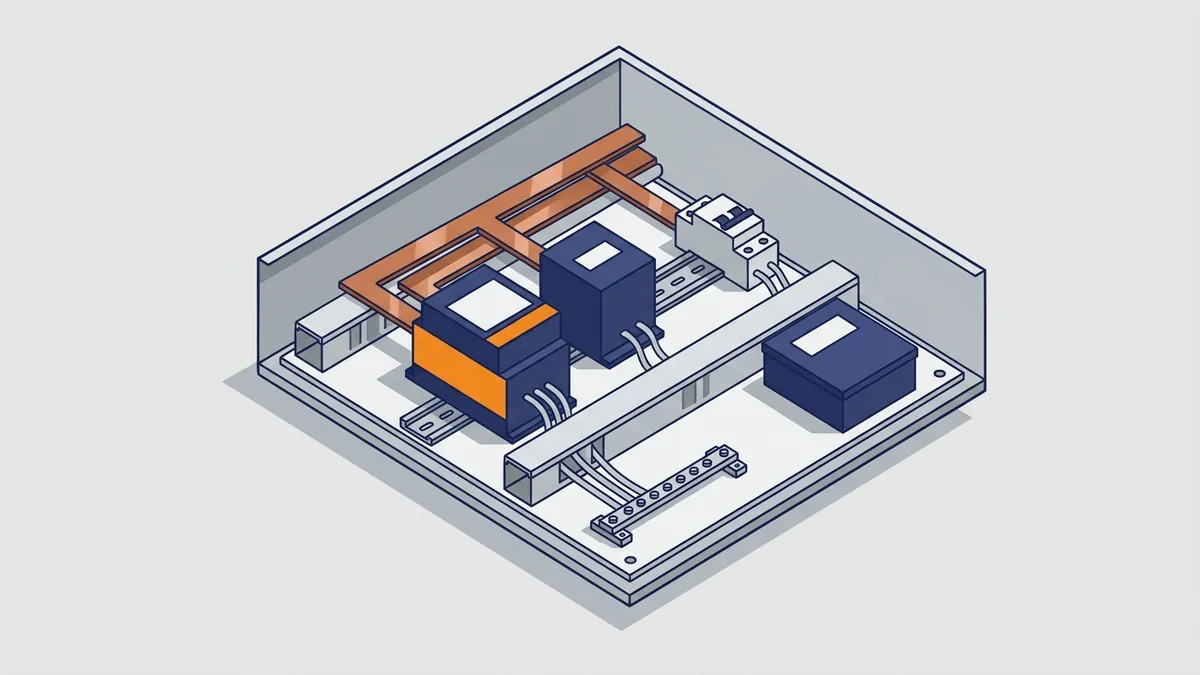
According to ABB, EN 60947-4-2 is the harmonized European standard and is identical to the IEC text. In addition, ABB’s handbook lists UL 508 and CSA C22.2 No. 14 among the standards used for softstarters.
How do I read AC-53a and AC-53b ratings?
AC-53a and AC-53b are utilization categories, meaning duty classes that describe how the starter is used. The AC-53a category applies when the SCRs carry current all the time, with no bypass. Bypassed starters fall under AC-53b, where the SCRs carry current only during the start.
For a non-bypassed unit, the rating appears as a four-part code, such as 100 A : AC-53a : 3.0-15 : 50-6. First, 100 A is the rated current. Next, AC-53a is the category.
Then, 3.0-15 means a start at 3.0 times rated current for 15 seconds. Finally, 50-6 means a 50% on-load factor and 6 starts per hour. AC-53b codes differ in the last part, so check the datasheet legend.
Check the short-circuit rating
Datasheets also declare an SCCR or short-circuit coordination rating. Make sure it covers the available fault current at your panel. Also confirm that your upstream fuse or breaker matches what the maker lists.
What fuse, breaker and conductor rules apply under NEC/UL versus IEC?
Under the NEC, motor circuits fall under Article 430. Branch-circuit conductors are generally sized at 125% of the motor’s full-load current from the NEC tables, not the nameplate. Short-circuit protection must also follow the NEC motor rules. For a soft starter, use only the fuse or breaker type and maximum size the maker lists for that model. A UL 508 listed starter carries a short-circuit current rating, and your available fault current must not exceed it.
Under IEC, the focus is coordination. Type 1 coordination allows damage to the starter after a short circuit. Type 2 allows only light contact welding. Soft starters often need semiconductor fuses to reach Type 2, so read the maker’s coordination tables. Your local code and a qualified engineer have the final say on exact sizes.
How Much Does a Soft Start Cost?
We do not quote list prices here, because costs vary widely and we found no reliable figures. Instead, these factors drive the cost:
- Motor current rating and voltage
- Built-in bypass or external bypass
- Control features such as torque control, motor protection and fieldbus communication
- Enclosure type
- For AC kits, the compressor size and the brand
Soft start cost compared to a VFD
One secondary source compared starters for a 15 hp reciprocating compressor on a 30 kVA solar inverter. It found the soft starter’s parts cost was roughly half that of a comparable VFD. Also, commissioning took minutes rather than hours. For medium voltage, a Siemens manager quoted in a source says a 4,000 hp soft starter may cost as little as 33% to 40% of a VFD. That is roughly a 2.5 to 3:1 cost ratio. Use both as relative guidance only.
Do not count on energy savings to pay for a soft start. It reduces peak demand at start but not consumption once the motor is at full speed.
Common Soft Start Mistakes and Troubleshooting
What are the common soft start mistakes?
- Using it for speed control: a soft starter cannot vary speed, so use a VFD.
- Undersizing: choosing by kW alone and ignoring starts per hour, start time or derating.
- Initial voltage too low: the motor hums without turning.
- Ramp too long: the motor and starter heat up during long starts.
- Missing bypass: forgetting a bypass contactor on a no-bypass model, or not setting the external bypass parameter on models that have one.
- Confusing kits: treating a hard-start capacitor as a soft start.
- Skipping the nameplate: installing an AC kit without matching the compressor’s phase, voltage, FLA and LRA.
- Wrong expectations: expecting a lower electric bill or lower running amps.
What if the supply is still too weak?
On weak supplies, generators and inverters, use current limit mode first. Then set the lowest limit that still starts the load reliably. If the source cannot take any increase above running current, a VFD may be the better choice, since it can reduce starting kVA.
What do common soft starter fault codes mean, and how do I clear them?
Code numbers and names differ on every model, so use the fault table in your manual. The common faults share these general meanings:
- Overcurrent: current went above the set trip level. Look for a jam, a short, a ramp that is too fast or a current limit that is too high.
- Locked rotor or stall: the motor drew start-level current and did not reach speed. Check for a seized load, low voltage or an initial voltage that is too low.
- Phase loss: one input or output phase is missing. Check fuses, contactors, loose lugs and the motor leads.
- SCR shorted: a thyristor is conducting when it should not. This usually means a failed power module, so do not keep running it.
- Bypass failure: the bypass contactor did not close or open as commanded. Check the contactor, its coil and the bypass setting.
To clear a fault, find and fix the cause first. Then reset it with the reset button, a control input or the fieldbus, as your manual describes. If a fault returns right after reset, stop and get the unit checked.
When should I call for repair?
Call a repair shop when a soft starter shows these signs:
- It trips on overcurrent or locked rotor even with sensible settings.
- Overheating or a temperature trip keeps happening.
- The bypass fails to close at the end of the ramp.
- It shows SCR faults or a shorted thyristor alarm.
For air conditioners, send compressor starting problems to a qualified HVAC technician. A failing capacitor, contactor or compressor can look like a soft start problem.
Where to Find Manuals, Selection Tools and Standards
Go to the source documents when you need exact data for your model. These are good places to start:
- ABB Softstarter Handbook: theory, standards and basic settings by application, found in the ABB library.
- ABB Softstarters PSR, PSE and PSTX Catalog: ratings, adjustment ranges and features for current ABB ranges.
- Older catalog, Softstarters Type PSR, PSS, PSE, PST and PSTB: older ABB ranges, including the PSS inside-delta option.
- Eaton Reduced Voltage Soft Starter overview: Eaton’s RVSS product page.
- IEC Webstore: the official IEC 60947-4-2 publication.
- Micro-Air EasyStart Flex Home Soft Starter page: specs and compatibility for home units.
- SoftStart Home: the maker’s site for its home AC soft start product.
Also, most makers offer selection software on their websites for sizing by load and duty. Before you call us, have the starter’s full model number and the motor or compressor nameplate data ready. With those, we can answer your question much faster.
Frequently asked questions
What is a soft start?
A soft start is a device that slowly raises the voltage applied to an AC motor when it starts, instead of applying full line voltage at once. This reduces inrush current and torque shock. Industrial soft starters do this for 3-phase motors, while AC soft start kits do it for air conditioner compressors.
How does a soft start work?
Back-to-back SCRs in each phase delay their turn-on point in every AC half-cycle, so the motor first sees only part of the waveform. The voltage then ramps up over a set time until the SCRs conduct fully. Most units then close a bypass contactor, so current flows through contacts instead of the SCRs.
What is an AC soft start kit?
It is a small electronic module for an air conditioner or heat pump compressor that limits start-up (locked rotor) current. Manufacturers claim reductions of up to about 70 to 75% on single-phase units. It lowers start amps only, not running amps, so match it to the compressor nameplate and the kit’s compatibility list.
Is a soft start the same as a hard-start kit?
No. A hard-start kit adds extra capacitance to give the compressor a bigger kick at start, while a soft start limits and ramps the inrush current. SoftStart Home says a hard-start device may lead to premature compressor failure if the run capacitor fails. Treat that as a vendor claim and check the compressor maker’s guidance.
Does a soft starter save energy or give speed control?
No to both. A soft starter only controls the start, and the stop if equipped, then runs the motor at line frequency and full speed. It gives minimal energy savings. If you need speed control, look at a VFD.
A soft start cuts the current surge and torque shock at start, which protects your supply, your backup power and your machinery. Size it by current and duty, set it from the maker’s current manual, and remember it does not control speed or lower running amps. For air conditioners, match the kit to the compressor nameplate and let a qualified technician install it.
If you need help sizing, setting up or repairing a soft starter, contact Precision Electric for advice, a quote or a repair.