








ABB Disconnect Switch Guide: Types, Ratings and Catalog Codes
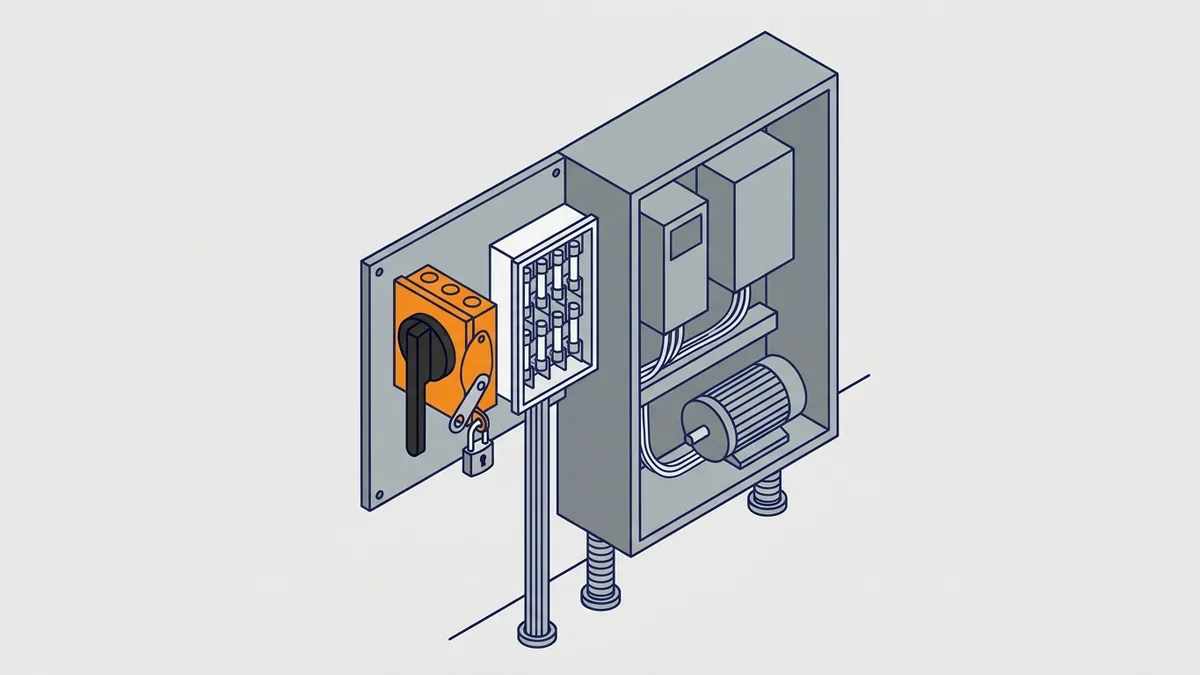
An ABB disconnect switch is the lockable switch you open to cut power to a motor, drive or panel before you work on it. However, ABB sells several product families under that one search term, so the right pick depends on the load, the standard and the enclosure. This guide sorts the line into clear choices and shows how to read the codes before you order.
On this page
- What an ABB disconnect switch is and what it does
- The ABB disconnect families at a glance
- Enclosed Spec-Setter safety switches
- What is the difference between general duty and heavy duty ABB safety switches?
- Can an ABB disconnect be used as service equipment?
- The newer EOH and EOHU heavy duty range
- Double-throw and transfer versions
- How do I read an ABB Spec-Setter or EOH catalog number?
- What NEMA enclosure types are available?
- OT and OS rotary disconnect switches for panels and machines
- What amp, voltage and horsepower ratings do OT and OS switches have?
- How do I size an OT or OS switch for a motor?
- What is the ABB OT Plus switch-disconnector and who is it for?
- What does the fuse class in an OS catalog number mean?
- Which fuse classes go with which switch sizes?
- Are the handle and shaft included with OT and OS switches?
- Which ABB disconnect meets NFPA 79 for a machine panel?
- Is there an ABB DC disconnect switch for solar?
- The disconnect built into ABB ACS255 drives (+F278)
- How to choose: fusible or not, UL 98 or IEC, enclosure and rating
- Installing a disconnect and locking it out
- Using a disconnect with a VFD: placement and code
- ABB vs other ways to disconnect a drive
- Ordering questions, documents and cost
- Common mistakes and when to call for help
- Frequently asked questions
- What is an ABB disconnect switch?
- What is the difference between fusible and non-fusible ABB disconnect switches?
- What amp ratings do ABB disconnect switches come in?
- Do ABB ACS255 drives come with a built-in disconnect?
- Do I still need a separate disconnect if my VFD has an integral one?
- What is the difference between general duty and heavy duty ABB safety switches?
What an ABB disconnect switch is and what it does
A disconnect is a manually operated, lockable switch. It isolates a motor, drive or panel from its power source so people can service it safely. In addition, ABB’s wider switch family includes switch-disconnectors, switch fuses, transfer switches, bypass switches and fuses.
ABB lists uses such as building power distribution, HVAC, water pumping stations, data centers and photovoltaic installations. In plants, however, the most common use is isolating a motor or a machine control panel.
Here is the one-line map. The term “ABB disconnect switch” covers these families:
- OT: non-fusible rotary switches.
- OS and OESA: fusible rotary switches.
- OTDC: DC switches for photovoltaic use.
- Spec-Setter: enclosed NEMA safety switches.
- ACS255 with +F278: a disconnect built into an IP66 drive.
The ABB disconnect families at a glance
In North America, you will mostly shop UL 98, UL 508 and NEMA KS1 ratings. Also, ABB sells IEC 60947-3 rated switches. The table below shows each family with only the ranges ABB documents.
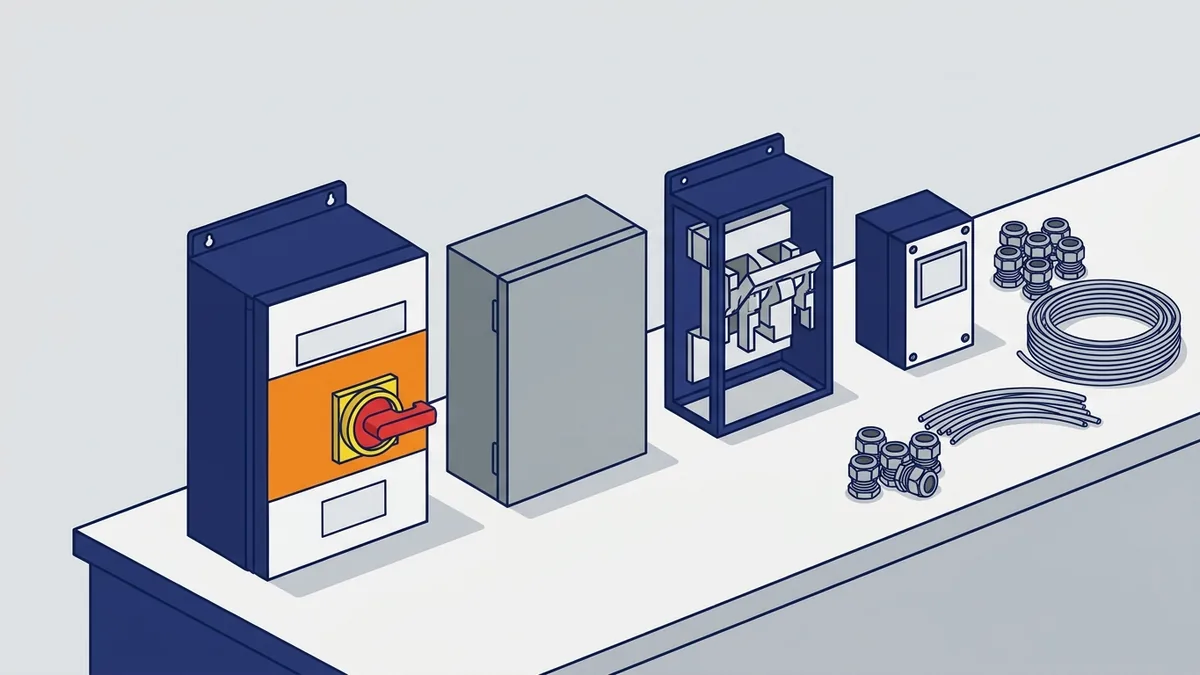
| Family | Fusible? | Amp range | Standards and notes |
|---|---|---|---|
| Spec-Setter general duty | Both | 30 to 600 A, 240 V AC max | NEMA KS1; NEMA 1 and 3R |
| Spec-Setter heavy duty | Both | 30 to 1200 A, 600 V AC | UL 98, CSA, NEMA KS1; NEMA 1, 3R, 4/4X, 5/12 |
| EOH and EOHU heavy duty | Both | 30 to 1200 A | UL 98, UL 50, UL 50E, NEMA KS-1; NEMA 1, 3R, 12, 4X stainless |
| OT rotary | Non-fusible | 20 to 80 A (UL 508), 30 to 2000 A (UL 98) | IEC 60947-3, UL 508, UL 98, CSA; 600 V max |
| OT Plus | Non-fusible | 16 to 160 A | Up to 800 VAC; 3, 4, 6 and 8 poles |
| OS and OESA rotary | Fusible | 30 to 1200 A (UL 98) | Class J and other fuse systems |
| OTDC | DC switch | See ABB catalog | Photovoltaic; UL 98B; up to 1500 Vdc |
| ACS255 +F278 | Built into drive | Drive sizes only | IP66 drives only |
How do OT, OS, OESA, OTDC and Spec-Setter differ?
OT is the non-fusible line, and it relies on protection upstream. In contrast, OS and OESA hold fuses, so they protect the circuit at the switch. OTDC handles DC and solar work. Finally, Spec-Setter switches come fully enclosed, while the other lines are open switches you mount yourself.
ABB safety switch vs OT or OS rotary switch
An ABB safety switch is a complete enclosed unit, ready to wire. An OT or OS rotary switch is an open switch. It mounts behind a door or inside a panel, and it needs a handle and shaft. As a result, panel builders lean toward rotary switches, and field installs lean toward safety switches.
Enclosed Spec-Setter safety switches
Spec-Setter switches come in a box with a handle, so you mount, wire and lock them out. Two lines cover most jobs: general duty and heavy duty. Also, ABB’s newer EOH and EOHU range adds to the heavy duty side.
What is the difference between general duty and heavy duty ABB safety switches?
General duty switches run 30 to 600 A at 240 V AC maximum. They come in NEMA 1 (indoor) and 3R (outdoor) enclosures. In comparison, heavy duty switches run 30 to 1200 A at 600 V AC, and they add NEMA 4/4X and 5/12 options.
Heavy duty units are UL 98 listed and CSA certified. They meet Federal Specification WS-865C and NEMA KS1. In addition, they have a red donut handle, a viewing window, Cu/Al lugs rated 60/75 °C and DC-rated options.
Note one trap. General duty switches are not suitable as service equipment in Canada. So use a heavy duty switch there.
Can an ABB disconnect be used as service equipment?
Only if the switch is marked “suitable for use as service equipment.” Not every switch carries that marking, so read the label or the data sheet for your catalog number. In addition, a service-entrance switch needs a neutral and a main bonding connection. Many switches use a neutral kit for this, so check whether your catalog number includes one or needs one added. Also, ask the authority having jurisdiction (AHJ) before you use any switch as service equipment.
The newer EOH and EOHU heavy duty range
EOH and EOHU switches are fusible and non-fusible from 30 to 1200 A. They meet UL 98, UL 50, UL 50E and NEMA KS-1. They come in NEMA 1, 3R and 12 steel enclosures, and in NEMA 4X stainless steel versions such as EOH361S, EOHU361S and the EOHU364SS variants. However, CSA approval was still pending on the source page, so confirm it before you order for a CSA job.
Double-throw and transfer versions
Some Spec-Setter types are double throw. They switch a load between two sources. ABB’s emergency power transfer switches are non-fusible, 100 to 200 A for 120/240 V three-wire systems and 200 A for 240 V four-wire systems, in NEMA 3R enclosures. Because these are not motor disconnects, do not order them for that job.
How do I read an ABB Spec-Setter or EOH catalog number?
The Spec-Setter key uses letters and digits with fixed meanings:
- H is heavy duty, and G is general duty.
- C is non-fusible double throw, and D is fusible double throw.
- The amp digit is 1 for 30 A, 2 for 60 A, 3 for 100 A, 4 for 200 A and 5 for 400 A.
- N means non-fusible. A blank means fused.
- The enclosure suffix is blank for NEMA 1, R for NEMA 3R and SS for NEMA 4/4X stainless steel type 304.
EOH numbers follow ABB’s own scheme. For example, EOH361K is 30 A, EOH364JK is 200 A and EOHU368J is 1200 A. For the exact position of each character, use the ordering code section in ABB’s Disconnect switches catalog.
What NEMA enclosure types are available?
General duty gives you NEMA 1 and 3R. Heavy duty gives you NEMA 1, 3R, 4/4X and 5/12. Also, the 4/4X version is stainless steel for wet or corrosive areas. Finally, EOH and EOHU come in NEMA 1, 3R and 12 steel, plus NEMA 4X stainless steel.
OT and OS rotary disconnect switches for panels and machines
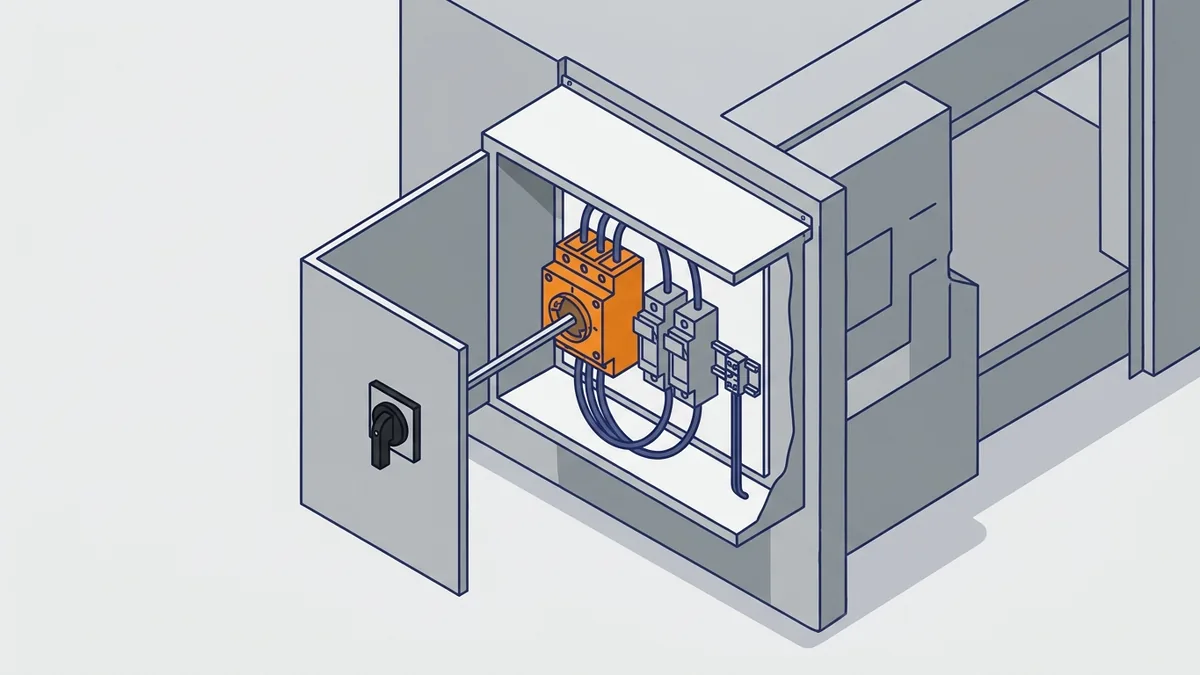
These open switches mount in a panel or behind a door. You add a handle and shaft, and you pick the fuse system on the OS side. Because they are modular, one family can serve manual and motorized uses.
What amp, voltage and horsepower ratings do OT and OS switches have?
The OT series runs 20 to 80 A under UL 508 and 30 to 2000 A under UL 98, at 600 V maximum. ABB lists horsepower ratings up to 800 A. With fuses, ratings reach 200 kA, and the switch is rated for up to 20,000 operations. In addition, it is tested to IEC 60947-3, UL 508, UL 98 and CSA.
The UL 98 and UL 508 table lists these sizes:
- Fusible: OS30, OS60, OS100, OS200, OS400, OS600, OS800 and OS1200.
- Non-fusible: OT30, OT60, OT100, OT125, OT200, OT400, OT600, OT800 and OT1200, then OETL-NF1600 through OETL-NF2000.
The IEC non-fusible line runs 16 to 3150 A. Also, ABB says UL 98 and UL 508 switches are OSHA lockout/tagout disconnects.
How do I size an OT or OS switch for a motor?
Horsepower ratings differ by size, voltage and phase, so each catalog number has its own set. They sit on the product data and ordering table. For example, the 30 A OS30FAJ12 is rated 7.5 HP at 240 V, 15 HP at 480 V and 20 HP at 600 V.
To size any other part, follow these steps:
- Find the motor horsepower, voltage and phase.
- Open the ABB data sheet for the OT or OS size you are considering.
- Read the HP rating in the column for your voltage.
- Pick the next size up if the rating is lower than the motor.
Never assume the 240 V rating carries over to 480 or 600 V.
What is the ABB OT Plus switch-disconnector and who is it for?
OT Plus covers 16 to 160 A with 3, 4, 6 and 8 poles. It supports applications up to 800 VAC and has better breaking capacity for motor loads. ABB claims up to 53% lower power losses. Besides that, it has adjustable fourth-pole timing, quick-spring terminals and a universal auxiliary contact. ABB names control panels, robotics, automation and drives as uses, so it suits panel builders most.
What does the fuse class in an OS catalog number mean?
The fuse class tells you which fuses the switch accepts. For example, OS30FAJ12 is a Class J fuse system switch. It is front operated, UL 98, base mounted and 3 pole, with screw terminals. Its ratings are 7.5 HP at 240 V, 15 HP at 480 V and 20 HP at 600 V. Likewise, OS60GJ03 is a 60 A Class J switch rated 15 HP at 240 V.
The J in these codes goes with Class J. However, other fuse classes, such as CC and L, exist in the range. So match the switch to the fuses you will install.
Which fuse classes go with which switch sizes?
Fuse classes follow amp ranges. Class CC fuses cover small sizes up to 30 A. Class J fuses cover up to 600 A. Class L fuses start above 600 A, so the 800 A and 1200 A sizes use Class L. As a result, a small OS30 can take CC or J, the mid-range sizes use J, and the largest sizes use L.
However, each fusible switch accepts only the fuse system in its catalog number. Check that code and the fuse size limit on the data sheet before you buy fuses. In addition, a non-fusible OT switch has short-circuit ratings only when the listed upstream fuse or breaker protects it.
Are the handle and shaft included with OT and OS switches?
Sometimes. For that reason, check the ordering table for each catalog number.
- OESA250 to OESA400 include handle OHB125J12 and shaft OXP12X250.
- OESA630 to OESA800 include handle OHB145J12 and shaft OXP12X250.
- OS32 to OS160 include handle OHB65J6 and shaft OXP6X161.
- OS60GJ03 does not include the handle and shaft.
Flange handles are separate parts. OHF1C12 fits NEMA 1, 3R and 12, and OHF1C4 fits NEMA 4 and 4X. Also, ABB’s UL 98 fusible switches are listed under UL file E101914.
Which ABB disconnect meets NFPA 79 for a machine panel?
ABB’s route to NFPA 79 is its flange-operated fusible and non-fusible disconnect switches. UL 98 switches suit motor disconnects or industrial control panel disconnects, and they carry horsepower and amp ratings. In addition, for IEC OT switches from 160 to 3150 A, a UK distributor describes an IP65 handle that padlocks in OFF and interlocks with the door in ON.
Is there an ABB DC disconnect switch for solar?
Yes. OTDC switch-disconnectors serve photovoltaic uses, and the UL versions follow UL 98B. Also, IEC single-circuit 1500 VDC variants exist. For example, the OTDC S2.0 series is a compact 1500 Vdc switch for DC-21B and DC-PV2 uses, with variants up to 40 kA short circuit. Amp ranges and voltage classes differ by catalog number, so pick the part from ABB’s OTDC data sheet.
The disconnect built into ABB ACS255 drives (+F278)
An ABB disconnect can also live inside a drive. The ACS255 IP66 drive has a sealed ABS enclosure and a corrosion-resistant heat sink for wash-down areas. It also uses conduit cable entry and has a separate terminal access cover.
Do ACS255 drives come with a disconnect, and what does +F278 mean?
Only with the +F278 option. It puts operator controls on the front cover: a disconnect, a FWD/OFF/REV selector and a speed pot. ABB says +F278 is available on IP66 drives only. So do not assume every ACS255 has one. For the sizes, voltages and input ratings that offer it, check the model code and ABB’s ACS255 data.
ACS255 +B063 vs +B068, with or without +F278
+B063 is the IP66/UL Type 4X drive without an input disconnect. In contrast, +B063+F278 adds the input disconnect and operator controls. Meanwhile, +B068 is the outdoor version. The U in the type code means no EMC filter.
For example, ACS255-01U-02A3-1+B063 is a 0.5 HP, 2.3 A drive for 100 to 120 VAC single-phase input. Its +B063+F278 twin adds the disconnect, speed pot and forward/reverse switch. We stock both, plus 208 to 240 VAC and 400 to 480 VAC versions. To confirm the input phase, read the model code, not the listing title.
The built-in switch can save a separate enclosure. However, it may not remove the need for a second one, as the code section below explains.
How to choose: fusible or not, UL 98 or IEC, enclosure and rating
Choosing the right ABB disconnect switch takes seven steps:
- Note the load and voltage.
- Pick the HP or amp rating in the right standard.
- Choose fusible or non-fusible, based on where overcurrent protection sits.
- Set the pole count.
- Pick the enclosure type.
- Choose the handle and padlock option.
- Add auxiliary contacts if you need them.
Fusible or non-fusible?
A fusible switch holds fuses and gives overcurrent protection at the disconnect. In contrast, a non-fusible switch only isolates, so it relies on an upstream breaker or fuses. Also, non-fusible ABB switches have fuse-withstand ratings only when an upstream fuse of the listed type protects them.
UL 98 or IEC?
First, match the standard to your site. North American plants usually specify UL 98, UL 508 and NEMA. Meanwhile, IEC 60947-3 ratings suit equipment built to IEC. Do not mix the two, because the amp and HP numbers differ between the standards.
Which accessories and options can I add?
Most options come in a few groups:
- Auxiliary contacts: these give a control circuit a signal that the switch is open or closed. Pick the contact type and count from the data sheet for your switch.
- Padlock option: the handle locks in the OFF position so you can lock out the switch.
- Viewing window: heavy duty Spec-Setter units have one, so you can see the blades are open without opening the door.
- Neutral kit: this adds a neutral bar, mainly for service-entrance use.
- Handle and shaft: the shaft must reach from the switch to the door handle. Measure the depth of your enclosure, then match the shaft to the ABB ordering table.
Installing a disconnect and locking it out
What do I check before wiring a disconnect?
Follow the markings and instructions that ship with the switch. First, connect incoming power to the LINE terminals and the load to the LOAD terminals. Next, check that the lugs suit your wire material and size. Heavy duty Spec-Setter lugs are Cu/Al rated 60/75 °C. Then tighten each lug to the torque printed on the switch or in its instruction sheet, because torque values differ by size. Finally, bond the enclosure with the ground lug or bar so metal parts stay at ground potential.
How do I lock out and tag out with a disconnect?
Your plant procedure comes first. In general, the steps follow OSHA lockout/tagout rules:
- Tell affected workers that you will shut the equipment down.
- Stop the machine with its normal controls.
- Move the disconnect handle to OFF.
- Put your own padlock and tag on the handle.
- Release or block any stored energy.
- Test with a meter to prove the circuit is dead, then start work.
Remember that a lockout only isolates the load side of the switch. The LINE terminals can still be live.
Using a disconnect with a VFD: placement and code
Code rules vary by edition and by local authority. So check the NEC edition your area adopted, ask the authority having jurisdiction (AHJ), and read your plant lockout rules. The notes below are practice context, not code text.
Do I need a disconnect for a VFD, and where does it go under NEC 430.102?
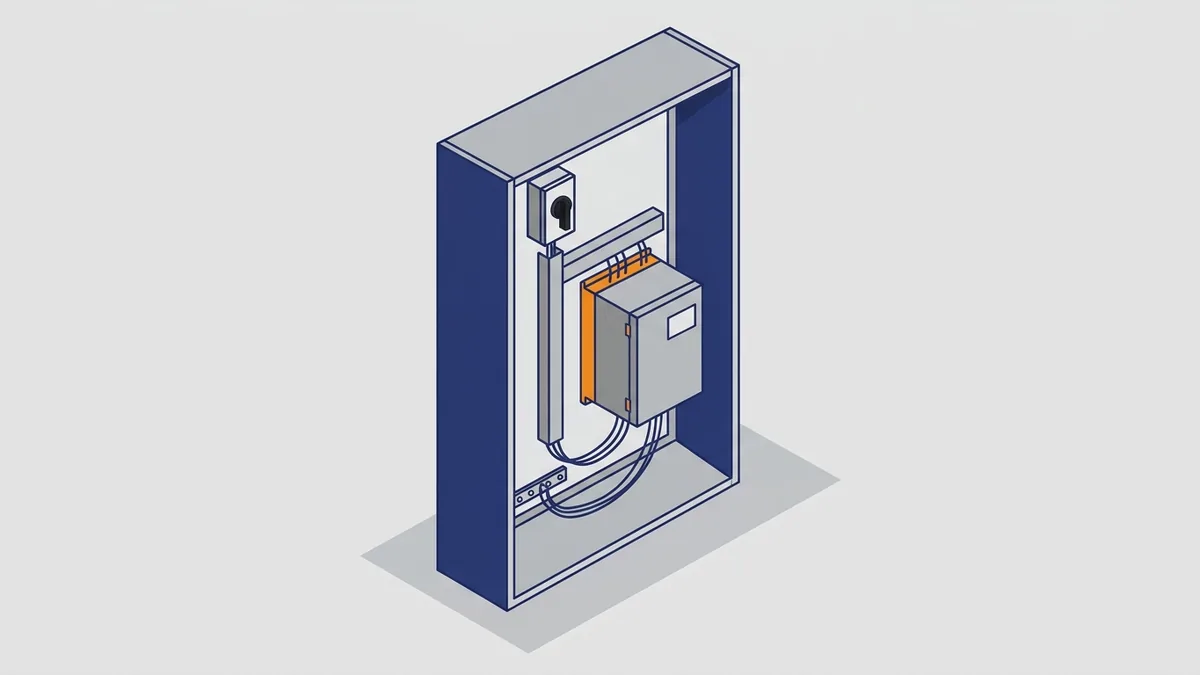
NEC 430.102 has two parts. Part (A) calls for a disconnect in sight of the controller, and a VFD counts as a controller. Part (B) calls for a disconnect in sight of the motor and driven machinery. In some cases, the (A) disconnect can also serve the motor if it is in sight and no more than 15 m (50 ft) away.
Can I put a disconnect between the VFD and the motor?
You can, but take care. For example, opening a switch on the drive output while the motor runs can damage the drive. One secondary source suggests wiring an early-break auxiliary contact to the drive stop input, so the drive stops before the output contacts open. It names ABB OT as a switch with early-break contacts. Even so, confirm this in the drive manual first.
Is a built-in drive disconnect enough?
Often it covers the controller requirement in 430.102(A). However, it does not automatically cover (B). If the motor is out of sight or more than 50 ft away, you still need a disconnect at the motor. In short, the integral switch can serve both only if it meets both rules. So check each install.
ABB vs other ways to disconnect a drive
Here is how the ABB options compare, based on ABB’s own documents. This guide does not compare other brands.
- Separate ABB safety switch: a ready enclosure, good near the motor, and available fusible. However, it adds mounting and wiring time.
- OT or OS in a panel: compact and door-mountable, and it suits NFPA 79 machine panels. On the other hand, you add the handle, shaft and any enclosure.
- Integral +F278: no extra box and one less wiring step. However, it exists only on IP66 ACS255 drives and may not satisfy the motor-in-sight rule.
- Breaker as a disconnect: a breaker can sometimes serve as a disconnect. Check the code and the breaker’s listing for your use.
How does an integral drive disconnect compare with a separate ABB safety switch or panel switch?
The integral +F278 disconnect is part of the drive. As a result, you mount no extra box and make one less wiring step. However, it works only on IP66 ACS255 drives, and it isolates the drive, not a motor that sits far away.
A separate ABB safety switch or an OT or OS panel switch works with any drive or load. For example, you can place a Spec-Setter switch right at the motor to meet the in-sight rule. Likewise, an OT or OS switch in the panel gives a door-mounted, lockable disconnect for machine controls.
In practice, the integral switch suits a wash-down drive near its motor. In contrast, pick a separate switch when the motor is out of sight, when you need fuses, or when the drive is not an ACS255 with +F278.
Ordering questions, documents and cost
Where do I find ABB datasheets, catalogs and ordering codes?
Start with the ABB Library, where the switch disconnector catalogs live. Next, the ABB Empower e-catalog gives product data by catalog number. ABB’s Spec-Setter brochure and the OT Plus catalogue are also useful. Finally, for ordering code construction, see the Disconnect switches section in ABB’s catalog.
What information do I need to order the right ABB disconnect?
Send us these details:
- The full catalog number, if you have it.
- Amp rating and horsepower.
- Voltage.
- NEMA type.
- Fusible class, if fusible.
- Handle and shaft needs.
How much does an ABB disconnect switch cost?
Price depends on the family, amp size, enclosure and options. Old ABB catalogs show list prices, but street prices vary. So check the product page or ask Precision Electric for a quote.
Common mistakes and when to call for help
What mistakes do buyers make when ordering a disconnect?
- Mixing UL 98 and IEC ratings.
- Ordering a switch without its handle and shaft.
- Choosing the wrong fuse class.
- Using a general duty switch where heavy duty or a Canadian service rating is required.
- Using a switch rated for lighting where a motor-rated one is needed.
- Opening the load side while the motor runs.
- Assuming every ACS255 includes a disconnect.
When should I call for help?
Call if a switch is hot, discolored or will not latch. Also, call if a drive trips after you operate a disconnect. Finally, call if you need a replacement and the old catalog number is unreadable.
Frequently asked questions
What is an ABB disconnect switch?
It is a manually operated, lockable switch that isolates a motor, drive or panel from its supply for service. ABB sells it as open rotary switch-disconnectors (OT non-fusible, OS fusible) and as enclosed Spec-Setter and EOH safety switches. It is also a built-in option on ACS255 IP66 drives (+F278).
What is the difference between fusible and non-fusible ABB disconnect switches?
A fusible switch holds fuses and gives overcurrent protection at the disconnect. However, a non-fusible switch only isolates, so it relies on an upstream breaker or fuses. In ABB’s range, OS and OESA are fusible and OT is non-fusible.
What amp ratings do ABB disconnect switches come in?
ABB’s UL 98 range covers 30 to 2,000 A non-fusible and 30 to 1200 A fusible. Meanwhile, IEC-rated switches run 16 to 3150 A non-fusible and 30 to 1200 A fusible. Spec-Setter heavy duty safety switches are 30 to 1200 A at 600 V AC.
Do ABB ACS255 drives come with a built-in disconnect?
Only with the +F278 option. +B063 is the IP66/Type 4X drive without an input disconnect. In contrast, +B063+F278 adds the input disconnect, FWD/OFF/REV selector and speed pot. ABB says +F278 is available on IP66 drives only.
Do I still need a separate disconnect if my VFD has an integral one?
The integral disconnect can satisfy the controller requirement in NEC 430.102(A). However, the motor and driven machinery also need a disconnect in sight under 430.102(B), normally within 50 ft. The integral switch can serve both only if it meets that. So check the current NEC edition, the AHJ and your plant lockout rules.
What is the difference between general duty and heavy duty ABB safety switches?
General duty switches are 30 to 600 A at 240 V AC maximum, in NEMA 1 and 3R. In contrast, heavy duty switches are 30 to 1200 A at 600 V AC, in NEMA 1, 3R, 4/4X and 5/12. Also, general duty switches are not suitable as service equipment in Canada.
Pick the family first, then the standard, then the rating and enclosure, and you will land on the right ABB disconnect switch. Always confirm code questions with the AHJ. If you want help matching a part, quoting a replacement or checking a drive with +F278, contact Precision Electric or browse our ABB products.