








ABB VFD Earth Fault: Causes, Codes and Step-by-Step Checks
Your ABB drive tripped and you need to know if it is an abb vfd earth fault or something else. The codes get mixed up often, and F0001 is not an earth fault on most drives. This article sorts out the codes by series, then walks you through one ordered test sequence and tells you when to send the drive for repair.
On this page
- What an ABB VFD earth fault means
- Is F0001 an ABB VFD earth fault? Why the codes get confused
- ABB earth fault codes by drive series
- Safety before you touch the drive
- Step-by-step checks for an ABB drive ground fault
- Installation causes of an ABB VFD ground fault trip
- Earth fault parameters: why you should not disable them
- When an ABB VFD earth fault means repair
- Repair or replace: how to choose and move your settings
What an ABB VFD earth fault means
An earth fault, or earth leakage, means the drive sees an imbalance in the output phase currents. The cause is usually a ground fault in the motor or the motor cable. The drive trips to protect itself and the motor. Many technicians call this an ABB drive ground fault, and “earth” and “ground” mean the same thing here.
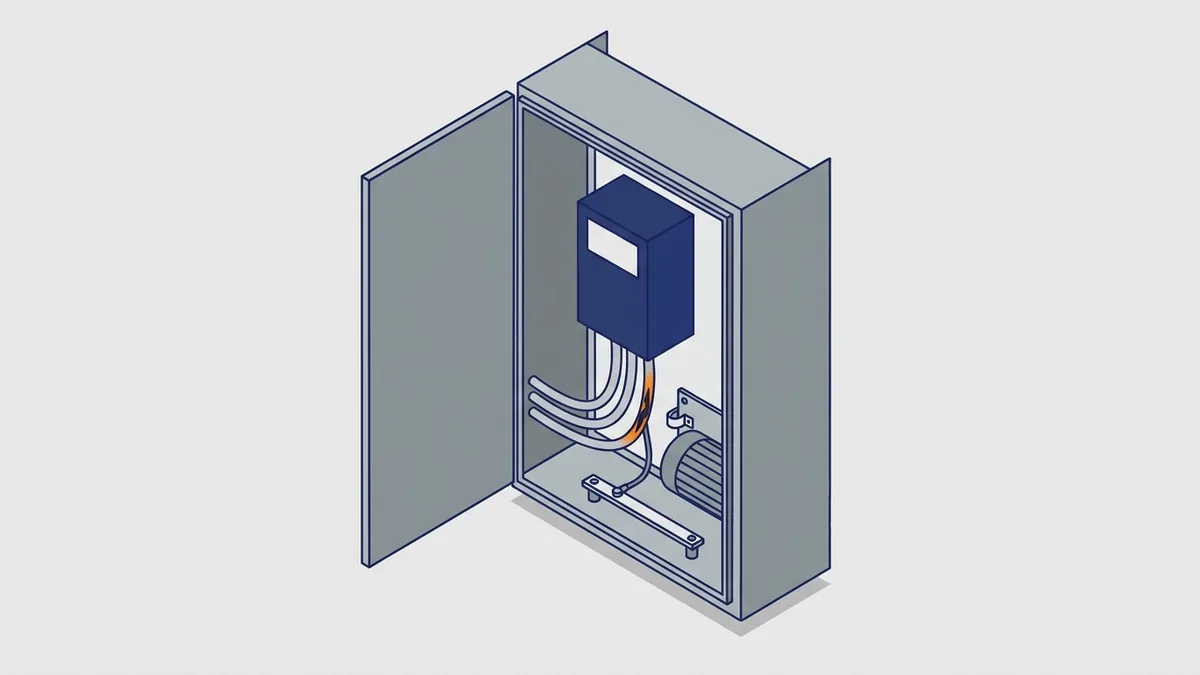
How the drive detects an earth fault
As a general principle, the drive adds up the three output phase currents. In a healthy circuit the sum is zero, because all current that leaves on one phase returns on another. If the sum is not zero, some current is going to ground. The drive reads that imbalance and trips.
Fault versus warning for earth leakage
A fault stops the drive from modulating, which means it stops switching its output. The fault LED turns red. A warning, which starts with an A, lets the drive keep running. So an ABB A2B3 earth leakage warning tells you leakage is present, but the drive has not stopped yet. Treat it as an early alert and test the cable and motor soon.
Is F0001 an ABB VFD earth fault? Why the codes get confused
Searches for the abb earth leakage fault and the abb vfd f0001 fault often land on the wrong code. Three different codes are in play, and they change by drive series. Sort them out before you start testing.
F0001 on the ACS355 and ACS550
On the ACS355 and ACS550, F0001 is OVERCURRENT. Its fieldbus code is 2310. It is not an earth fault. ABB’s own checks for it are:
- Motor load
- Acceleration times, parameters 2202 and 2205
- Motor and cable, including correct phasing
Code numbers change between series
Do not assume a code means the same thing on every drive. Overcurrent is 0001 on an ACS355. On an ACS580 or ACS880 it is 2310. Always confirm the series first, then read the code.
When an overcurrent trip hides an earth fault
An overcurrent trip can still come from an earth fault or a supply phase loss. So if an F0001 or 2310 will not go away, run the same insulation tests you would run for an ABB VFD ground fault trip. That way you rule out the cable and motor early.
The ACS255 uses its own numbers
The ACS255 numbers its faults differently, with hex codes. For example, 0x03 means instantaneous overcurrent at the drive output. Check section 14.1 of the ACS255 manual for the exact display and meaning. Do not read an ACS255 code from a table written for another series.
ABB earth fault codes by drive series
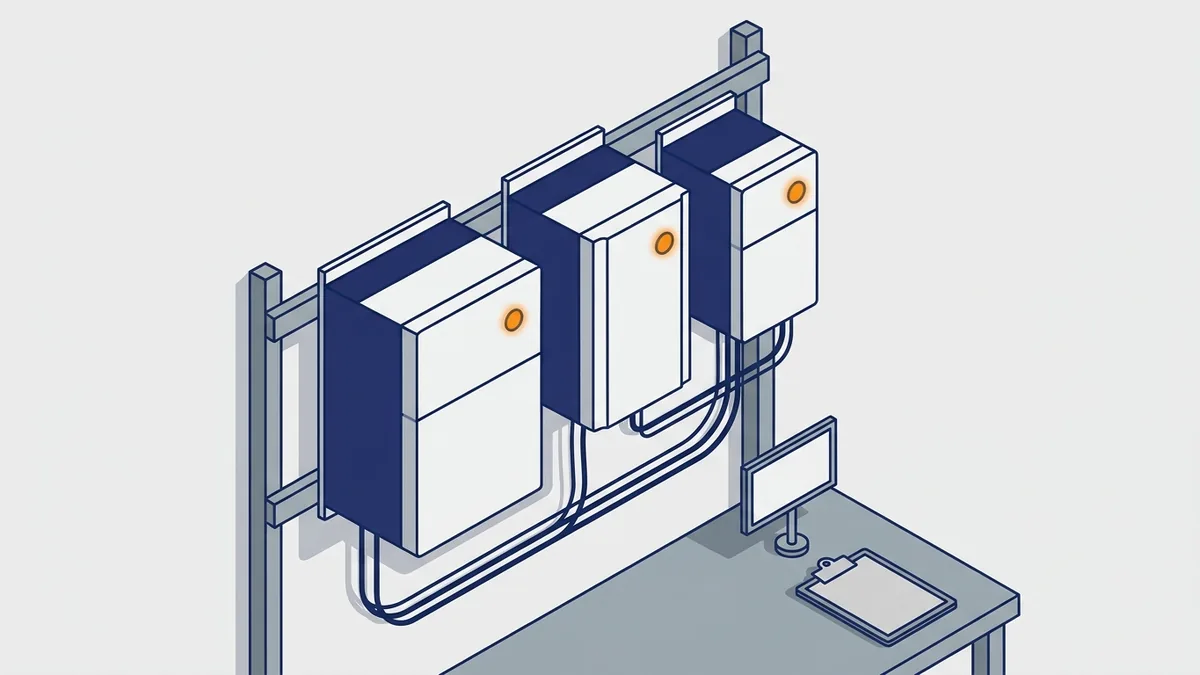
This table shows where the abb vfd earth fault code lives on each series, plus the neighbouring codes people mix it up with.
| Series | Earth fault code | Neighbouring codes |
|---|---|---|
| ACS355 | 0016 EARTH FAULT (fieldbus 2330) | 0001 Overcurrent (fieldbus 2310) |
| ACS550 | 0016 EARTH FAULT (fieldbus 2330) | 0001 Overcurrent (fieldbus 2310) |
| ACS510 and ACH550 | 0016 EARTH FAULT (fieldbus 2330) | 0001 Overcurrent (fieldbus 2310) |
| ACS180 | 2330 Earth leakage fault; A2B3 warning | 2310 Overcurrent; 2340 Short circuit |
| ACS580 | 2330 Earth leakage fault; A2B3 warning | 3181 Cable or wiring fault (see below); 2310 Overcurrent; 2340 Short circuit |
| ACS880 | 2330 Earth leakage fault; A2B3 warning | 2310 Overcurrent; 2340 Short circuit |
| ACS255 | Own hex numbering | See section 14.1 of the manual |
So the ABB ACS355 F0016 earth fault and the ABB 2330 earth leakage fault describe the same type of problem on different series.
What does fault 3181 mean on an ACS580?
Fault 3181 looks like an earth fault, but it is not a failed motor. It means the input power cable and the motor cable are wrongly connected. For example, the supply may be wired to the motor terminals. Check the wiring at the drive before you test the motor.
Where to see the earth fault code and fault history
Open the panel fault log first. Then check the aux code and the event log if your drive has them. Write down the code, the time and the drive state before you reset anything. The history lives in different places by series:
- ACS355: parameter 0401 holds the last fault. Parameters 0412 and 0413 hold the two before it.
- ACS180, ACS580 and ACS880: the Warnings and faults parameter group 04 holds the present fault and the earlier ones.
- ACS255: parameter 0401 stores the last four trips.
What do aux codes and event log entries mean?
The aux code is an extra number saved with the fault. It gives detail the main code does not. On parallel-module ACS880 drives, the aux code identifies the module or phase that saw the fault. That tells you which module to test first.
The event log adds the time and order of events. For example, a warning that appears before the trip shows leakage was building. Look up the exact aux code in the firmware manual for your drive, because the meaning changes by series.
Safety before you touch the drive
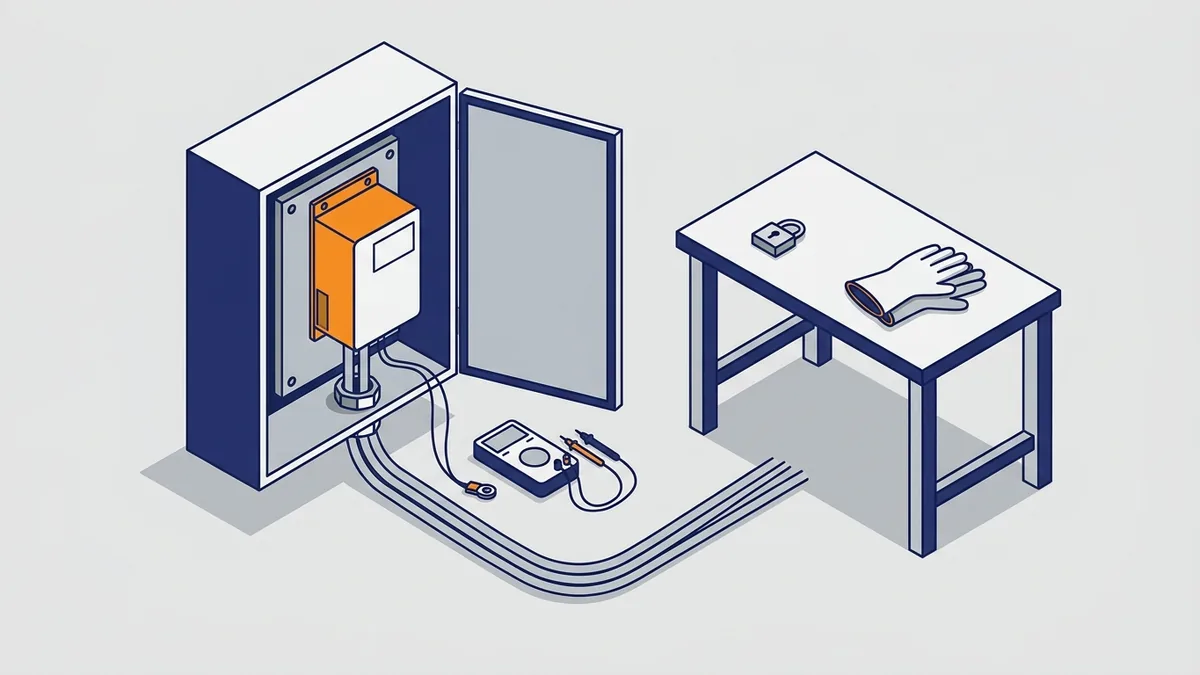
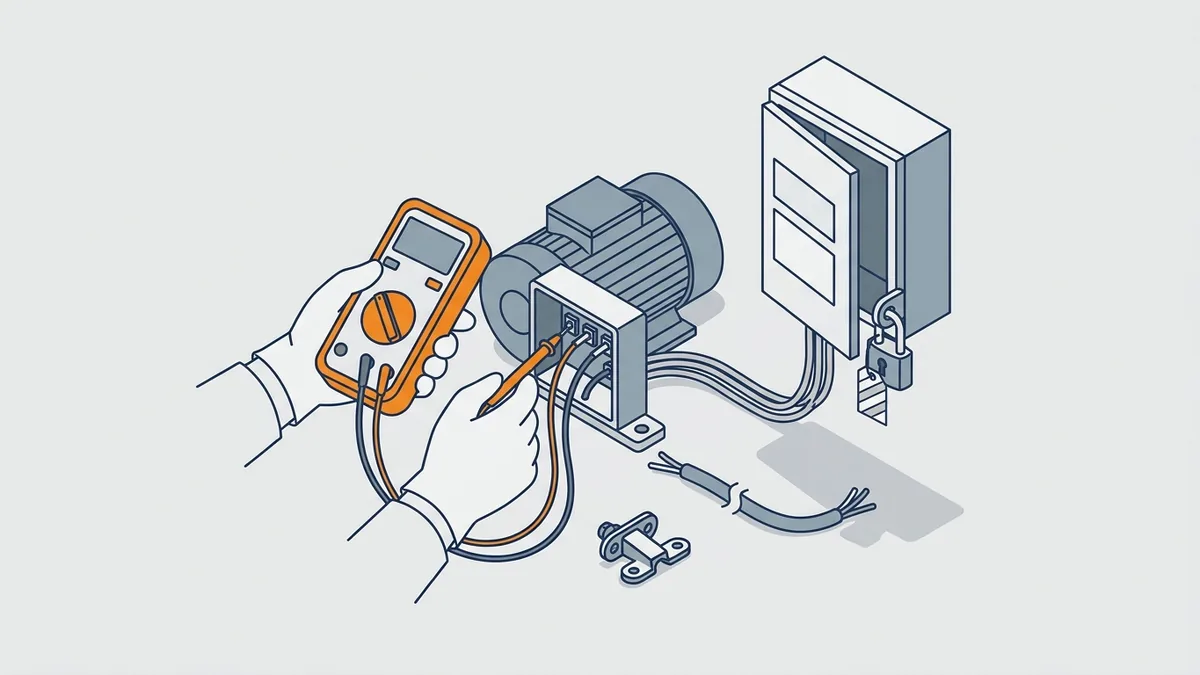
A drive keeps dangerous voltage after you switch it off. Follow your site lockout and tagout rules, and use a qualified person for all work.
- Open and lock out the supply disconnect.
- Wait for the time printed on the drive label so the DC bus can discharge.
- Measure with a meter to prove the input terminals, output terminals and DC bus are dead.
- Only then remove motor cables.
Never run a megger on cables that are still connected to the drive. The test voltage can destroy the drive’s output stage.
Step-by-step checks for an ABB drive ground fault
Work in this order. Each step narrows the problem, so you do not replace a good part.
Step 1: Lock out and read the earth fault log
Lock out the drive, then read the log. Note the exact code and which series you have. If the code is F0001 or 2310, also check load and acceleration times. If it is 0016 or 2330, go on to the insulation tests.
Step 2: Disconnect the motor cable at the drive
Remove the motor leads from the drive output terminals U, V and W. Keep them apart and safe. This lets you test the drive on its own later and the cable and motor on their own now.
Step 3: Megger the cable and motor for ground faults
A megger is an insulation tester. It applies a high test voltage and reads resistance to ground. First disconnect the cable from the motor. Then test the cable alone, each phase to ground. Next test the motor windings alone, each phase to ground.
- A low or falling reading on the cable points to damaged insulation, water or a crushed section.
- A low reading on the motor points to a failed winding or a wet terminal box.
Also look for damage you can see. Check for burnt marks, water in conduit and cable cut by a clamp.
What insulation resistance is a pass or fail?
ABB specifies a 1000 V DC measuring voltage between each phase conductor and PE. The insulation resistance of an ABB motor must be more than 100 Mohm at 25 °C. A reading below that fails.
For motors from other makers, ABB says to use the motor manufacturer’s documentation. If the motor passes but the cable fails, replace or repair the cable run.
Step 4: Run the drive with no motor
If the cable and motor pass, reconnect nothing. Power up the drive with the output open and try a start. A drive that trips on an earth fault with no load has a problem inside, usually in the current sensing or output stage. In that case, stop and go to the repair section.
How do you tell a failed drive from an installation problem?
Know what to expect from the drive-only test. An open output can trip an output phase loss fault, because the drive sees no motor current. That is normal and does not mean the drive failed. Only an earth fault code with the output open points to the drive.
ABB suggests trying scalar control for this trial. Scalar control does not depend on motor current feedback as much as vector control does. If the drive runs clean with no motor, the cause is in the installation or the motor under load.
Installation causes of an ABB VFD ground fault trip
If the drive, cable and motor all test well, look at what else touches the output. Check these from most to least common.
Long motor cable and earth leakage
Long cable has more capacitance to ground. Each switching pulse pushes charging current into that capacitance, and the drive can read it as leakage. The maximum cable length depends on the drive series and the switching frequency. Check the limit in the technical data of your drive’s hardware manual. If you are over the limit, consider an output reactor or a filter, and ask the maker for the right part.
PFC capacitors and surge absorbers
Power factor correction capacitors and surge absorbers must not sit on the motor cable. They create large current spikes when the drive switches. Remove them from the output side. Then retest.
Contactors in the motor cable
A contactor between the drive and motor can open or close while the drive runs. That causes spikes and false trips. If you need one, wire it so it only switches with the drive stopped, and follow the drive manual.
Grounded supply and EMC screws
Some supplies are grounded on one corner or are unbalanced. These can raise leakage current and trip the drive. Check the supply type against the drive manual.
On IT (ungrounded) and corner-grounded supplies, the manual tells you to remove the EMC filter screw and, on many frames, the VAR (varistor) screw. Which screws to remove depends on the series and frame size. Read the supply section of your hardware manual and follow it exactly.
Earth fault parameters: why you should not disable them
Some drives let you change how the drive reacts to an earth fault. On the ACS355, parameter 3017 is the earth fault setting. On the ACS880, parameter 31.20 sets whether an earth fault gives a fault, a warning or no action.
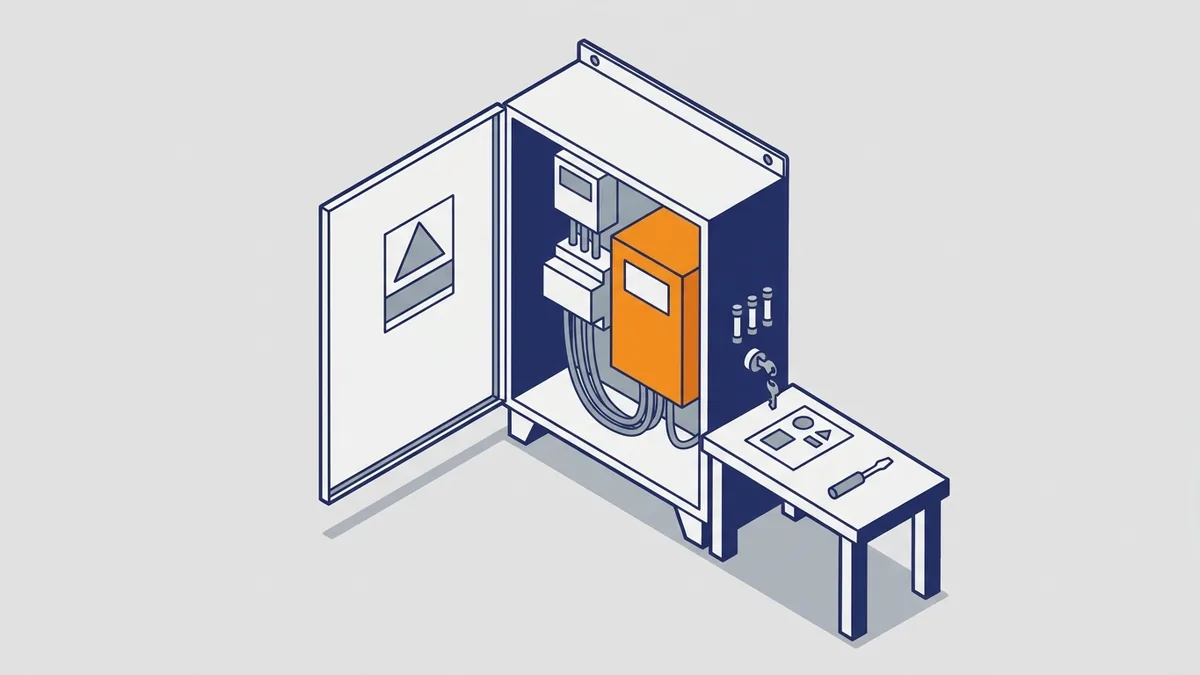
Do not turn this protection off to get the drive running. ABB warns that disabling earth fault protection may damage the drive. A real ground fault will then pass large current through the output stage with nothing to stop it. Find and fix the cause instead.
When an ABB VFD earth fault means repair
Stop testing and send the drive for repair when:
- The cable and motor pass insulation tests, and the drive still trips with the motor disconnected.
- The trip returns at once after you fix the installation causes.
- You see burnt smells, damaged terminals or a swollen or scorched board.
- The log shows repeated earth fault and overcurrent trips together.
Do not keep resetting a drive that trips on an abb vfd earth fault. Each restart can stress the output stage more. Send the drive with the fault log notes, the series and the full model code.
Repair or replace: how to choose and move your settings
Compare the repair quote and turnaround with the price and lead time of a new drive. A repair often costs less, but a long wait can cost more in lost production. If the drive is old or has failed more than once, a swap may make more sense.
Back up your parameters first
Before the drive leaves, save its settings. Use the panel’s parameter copy function or ABB’s Drive composer PC tool where your series supports it. Also photograph the nameplate and write down the wiring on the control terminals. Then you can load the same settings into a repaired or new drive.
Match the replacement drive
Match the voltage, phase and current rating to the motor nameplate before you order. Also check that the control I/O and any fieldbus option fit your wiring. Firmware versions can differ, so check that the parameter file you saved will load into the new drive. If it will not, re-enter the key settings by hand.
We sell ABB ACS180 drives, such as the ACS180-04S-02A4-2, and many ACS255 Micro drives in NEMA 4X/IP66 indoor and outdoor versions.
An earth fault trip comes from the motor, the cable, the installation or the drive itself, and the test order above finds which one. Confirm your series and code first, since F0001 is overcurrent on the ACS355. If you need help with a tripped drive, a repair or a replacement, contact Precision Electric.