Lenze Servo Motor Guide: Series, Ratings and Drive Pairing
A lenze servo motor can mean several different product lines, and the name on the nameplate does not always tell you which one you have. This guide maps the Lenze servo motor series, shows their ratings, and explains which drives run them. It also covers how to decode model codes, how Lenze compares with other brands, and what to do when a motor fails.
On this page
- What a Lenze servo motor is and how the line is organized
- Lenze servo motor series compared
- MCS synchronous motors
- m850 synchronous motors
- MCA, MQA and SDSGA asynchronous motors
- Which Lenze servo drive runs which motor
- Lenze AC Tech i510 and i550 drives: where they fit and where they don’t
- Lenze servo motor vs alternatives
- What to check before ordering or replacing a Lenze servo motor
- Lenze servo motor repairs
- What are common Lenze servo motor faults, and how do I tell a motor fault from a drive fault?
- How do I test a servo motor to tell a motor fault from a drive fault?
- When should I repair rather than replace a Lenze servo motor?
- How long does Lenze servo motor repair take and what does it cost?
- What should I send with a Lenze servo motor for repair?
- Where do I send it to Precision Electric?
- Where to get Lenze manuals, catalogs and sizing software
- Frequently asked questions
What a Lenze servo motor is and how the line is organized
What is a Lenze servo motor?
A Lenze servo motor is a motor built for precise control of position, speed and torque. To do this, it runs with a servo inverter that reads feedback from the motor. Lenze Americas is based in Uxbridge, MA, and is a subsidiary of Lenze SE in Germany. In addition, the company makes inverters, servo lines and gear motors.
How is the line organized?
Lenze’s servo motor brochure lists five series. First, MCS and m850 are synchronous motors. Next, MCA, MQA and SDSGA are asynchronous motors. Because each series covers a different torque range, the series name is the first thing to find on your motor.
Lenze AC Tech, drives and motors are not the same thing
In the US, “Lenze AC Tech” is the Lenze drive brand. However, the servo motor is a separate product. A Lenze servo drive and motor work as a pair, but you buy and size them separately. This matters because the drives we stock are not servo drives, as a later section explains.
Lenze servo motor series compared
Which series are available?
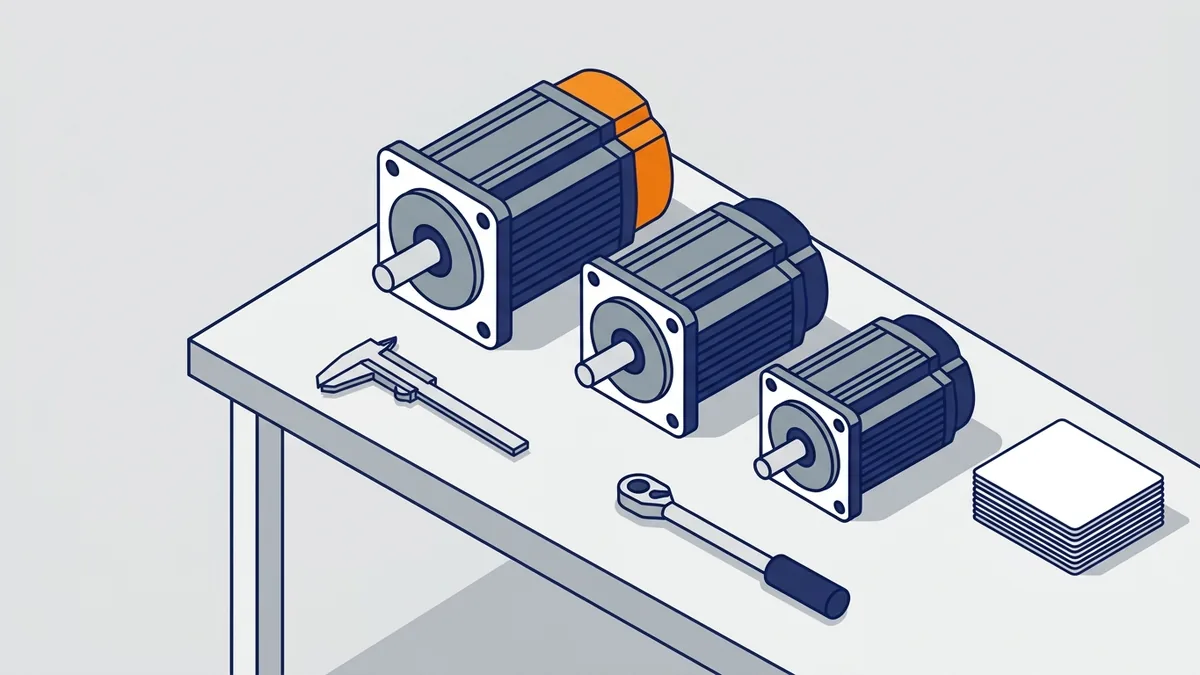
The table below uses figures from Lenze’s servo motor brochure. Torque is in newton-meters (Nm). Standstill torque is the torque the motor holds at zero speed. In contrast, rated torque is what it delivers continuously.
| Series | Type | Standstill torque | Rated torque |
|---|---|---|---|
| MCS | Synchronous | 0.8 to 86 Nm | 0.5 to 72 Nm |
| m850 | Synchronous | 0.18 to 67 Nm | 0.12 to 35 Nm |
| SDSGA | Asynchronous | 0.3 to 2.2 Nm | 0.27 to 1.9 Nm |
| MCA | Asynchronous | 2.3 to 290 Nm | 2.0 to 280 Nm |
| MQA | Asynchronous | 76 to 325 Nm | Not listed here |
Before you order, confirm these numbers in the current Lenze catalog. Some tables here come from hosted copies of Lenze documents, and Lenze updates its data.
What is the difference between MCS and m850?
The MCS suits jobs where space is tight but dynamics and precision are strict. It has high overload capacity, low inertia and high power density. By comparison, the m850 has medium dynamics in the upper power range. Lenze positions it for positioning in packaging and material handling.
The m850 also has a smooth, easy-to-clean housing that suits the food industry. In short, pick the MCS for fast, compact axes. However, pick the m850 for steady positioning and washdown-style cleaning needs.
MCS synchronous motors
What are the ratings of the MCS series?
MCS motors cover 0.25 to 15.8 kW. Rated torque runs from 0.5 to 72 Nm, and peak torque reaches up to 190 Nm. Because these figures come from hosted copies of Lenze documents, check the current catalog.
The brochure gives three sample ratings:
- MCS 12D41L: 4.3 Nm rated at 4050 rpm
- For the 12H30L, 8.0 Nm rated at 3525 rpm
- Finally, the 12L20L offers 13.5 Nm rated at 1950 rpm
What are the MCS frame sizes?
The frame code is a two-digit number. It stands for the square dimension of the motor flange. For example, the MCS manual gives these codes:
- 06 = 62 mm
- 09 = 89 mm
- 12 = 116 mm
- 14 = 142 mm
- 19 = 192 mm
In addition, the operating instructions list other codes, such as 10 for 102 mm.
How do I read a Lenze MCS model code such as MCS 12H30L?
Start with the series, then the frame, then the length letter. In MCS 12H30L, “12” is the 116 mm frame and “H” is the length. Next, the “30” points to a rated speed of about 3000 rpm, and the sample rating for this motor is 8.0 Nm at 3525 rpm. The position after rated speed is the inverter mains connection. “L” means 3 x 230 V and “-” means 3 x 400 V, so 12H30L is the 230 V version. Feedback and brake codes come after that, so cross-check every character against the project-planning manual.
What do the 230 V and 400 V versions mean for drive choice?
The mains code tells you the supply voltage the motor is designed to run from through its inverter. The “L” motors suit a drive on a 3 x 230 V supply. The “-” motors suit a drive on a 3 x 400 V supply. As a result, you pick a drive whose mains rating matches the motor version.
Because the rated speed and torque data in the catalog assume that supply, do not swap one version for the other. Also check the voltage class of the drive you plan to use, not just its current rating.
What protection rating do MCS motors have?
A distributor lists MCS motors as IP54, with IP65 optional. Other features listed there include cooling with or without an axial external fan, SpeedTec connectors and an electronic nameplate. However, treat that as a secondary source. Then confirm it in the Lenze catalog for your exact motor.
m850 synchronous motors
Where is the m850 used, and with which gearboxes?
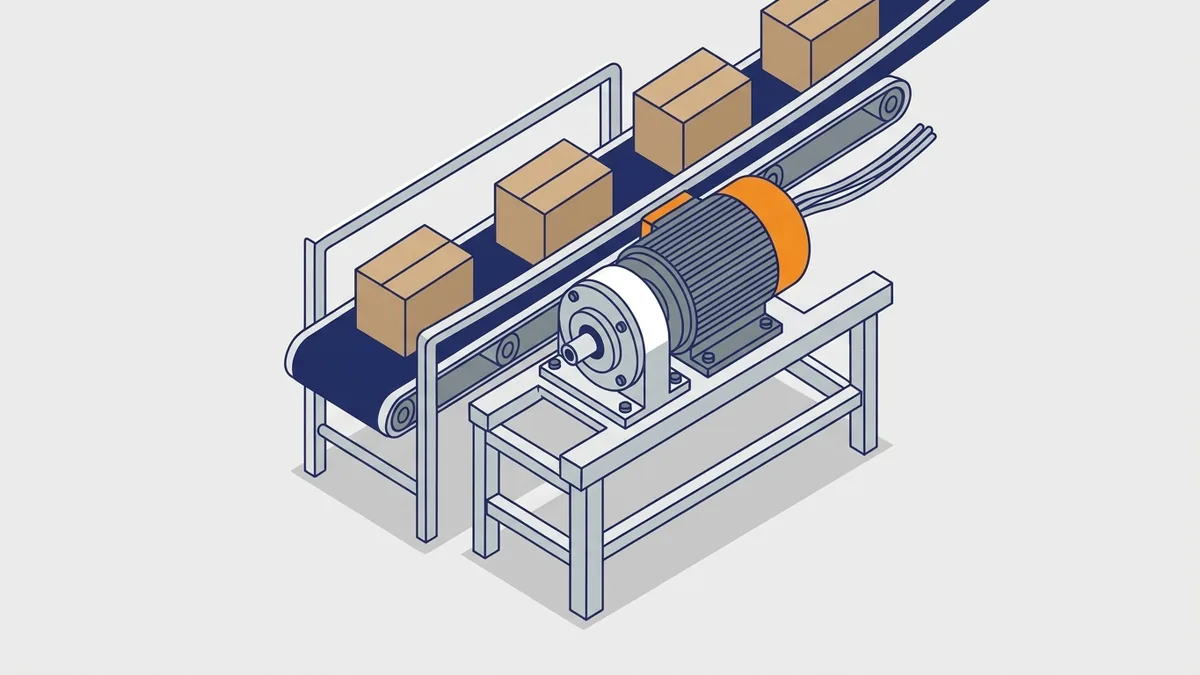
The m850 fits packaging and material handling. Also, its smooth housing works in food plants. Lenze optimizes it for use as a geared motor with g500, g7x0 and g8x0 gearboxes.
What feedback does the m850 use?
Lenze’s US page lists a resolver, an absolute value encoder and a digital absolute value encoder for One Cable Technology (OCT). Because OCT carries power and feedback in one cable, you wire less. At launch, press material described a resolver as standard with multi-turn sin/cos encoders as options.
Why do m850 torque figures differ?
The figures are not in conflict, because they measure different things. In the brochure, 0.18 to 67 Nm is standstill torque and 0.12 to 35 Nm is rated torque. The brochure also gives 200 Nm as peak (maximum) torque. As a result, check which kind of torque a figure describes, and confirm it in the current datasheet for the motor you plan to buy.
For more detail on this series, see our existing m850 and MCS posts.
MCA, MQA and SDSGA asynchronous motors
What are MCA, MQA and SDSGA motors?
These are asynchronous (induction-type) servo motors. SDSGA sits at the low-torque end, with 0.3 to 2.2 Nm standstill torque. Meanwhile, MCA covers 2.3 to 290 Nm standstill, and MQA covers 76 to 325 Nm. So if you need higher torque than the synchronous series offer, MCA and MQA are where to look.
The operating instructions cover the MCA, MCS, MQA, MDxKS and MDFQA motors. They also give frame size codes by square dimension. For mounting details, use that document.
Which Lenze servo drive runs which motor
Which drive do I need for my motor?
Lenze pairs its servo motors with cabinet servo inverters. The right drive depends on the motor series, the feedback type and your control architecture. For example, the main options are:
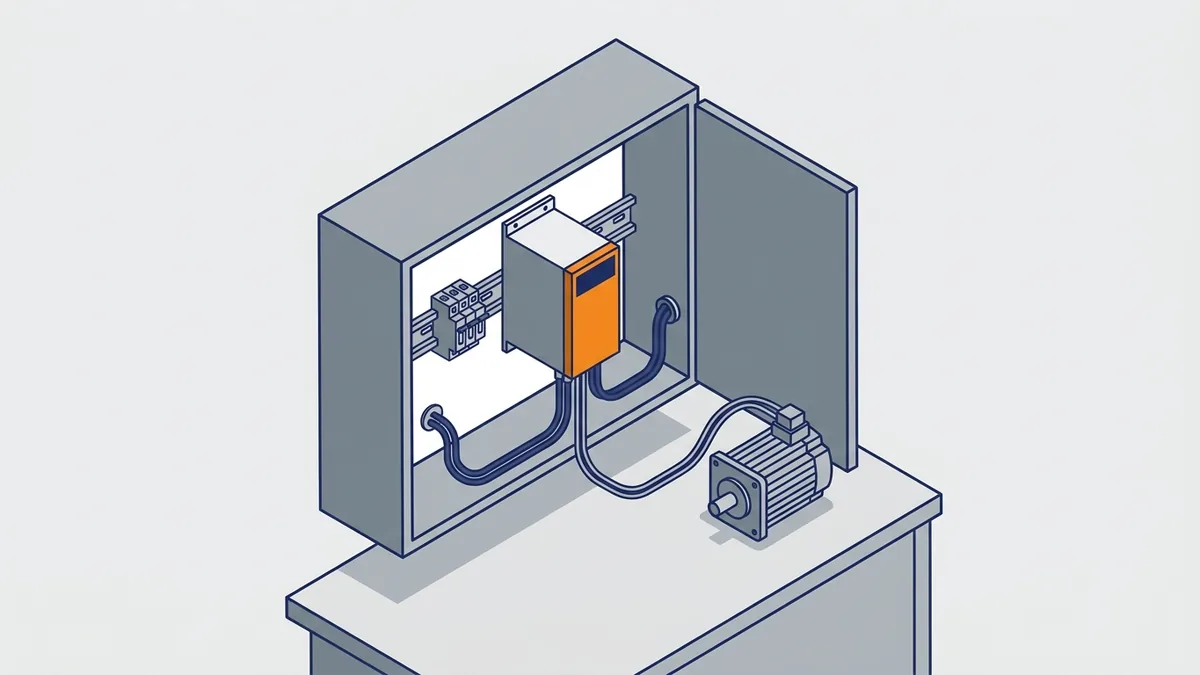
- i700: an EtherCAT drive with resolver and encoder feedback. Axis modules have peak output currents of 5 to 64 A, and double axes go up to 32 A. It supports CiA 402 modes (position, velocity, torque) and the STO safety function.
- i750: a multi-axis drive made for centralized architectures. Like the i950, it uses One-Cable Technology.
- i950: can run stand-alone or under a controller, up to 110 kW. It also uses One-Cable Technology.
- 9400 HighLine: covers 0.37 to 240 kW in Single Drive and 0.37 to 30 kW in Multi Drive. In addition, it has a resolver input and a multi-encoder input.
Which drive runs an MCS or m850?
The m850 pages name the i700 or i750 and the i950. In addition, older documents name the 9400 and 8400 TopLine. The i700 appears on the US page and in older documents, while the global page lists the i750 in its place. For that reason, do not assume the i700 is current.
Then use the selection tables in the project-planning manual for the exact motor and inverter pair. Our existing MotionMatch post covers sizing.
How do I check that a motor and inverter match?
We do not list every motor and inverter pair here, because Lenze publishes them in its selection tables and updates them. However, you can check any pair against four points before you order:
- Mains voltage: the drive supply must match the motor version, 230 V or 400 V.
- Current: the drive must deliver the motor’s rated current continuously. It must also cover the peak current your move profile needs.
- Feedback: the drive must have an input for the feedback fitted, such as a resolver, sin/cos encoder or OCT.
- Control and safety: the drive must fit your network and offer the safety function you need, such as STO.
If a pair passes all four, confirm it in the manual’s tables. If it does not, pick another drive.
Lenze AC Tech i510 and i550 drives: where they fit and where they don’t
Is the Lenze AC Tech i510 or i550 a servo drive?
No. The 0.33 HP i510 and i550 drives we stock are variable frequency drives (VFDs) for AC induction motor speed control. As a result, they do not run Lenze MCS or m850 servo motors. Lenze’s own servo drives are the i750, i950 and 9400.
The same goes for the SMVector, another Lenze AC Tech drive. It is a general-purpose VFD, not a servo drive. Because the 230 V “L” MCS motors may look like a US fit, ask Lenze to confirm any pairing with a US drive before you buy.
Can a Lenze i510 or i550 VFD run a servo motor?
Lenze documentation gives the i550 a 22 kW limit for sensorless control of synchronous motors. Servo control for asynchronous motors (SC-ASM) with an HTL encoder is a separate mode, and the manual does not give it that limit. One distributor guide merges the two. So check Lenze’s i550 documentation before you specify it for a servo application.
What is the difference between the Lenze i510 and i550?
Lenze describes the i510 cabinet drive as compact, with scalable functions and fast commissioning. A distributor guide says it covers 0.25 to 15 kW for pumps, fans, conveyors and basic machine tasks. By contrast, the i550 cabinet covers 0.25 to 132 kW and adds more networking and safety options.
How do I read our stocked i510 and i550 variants?
Our 0.33 HP IP20 drives differ in a few ways. Because the model code identifies each variant, read it before you order.
- I/O or network option: basic I/O, application I/O, CANopen, Modbus-RTU or EtherCAT.
- Input voltage: 120 VAC or 208-240 VAC single phase.
- STO module: included or not. STO (safe torque off) changes the safety function you get.
- Keypad: none on these models.
Lenze servo motor vs alternatives
How does Lenze compare with other servo motor brands?
Lenze’s documents point to packaging, handling and geared-servo packages. For example, the m850 pairs with g500, g7x0 and g8x0 gearboxes, which gives a matched motor and gearbox from one maker. We make no claim that Lenze beats other brands. Instead, choose by the torque, speed, feedback and space your machine needs.
For other makers, see our posts on Baldor and brushless servo motors.
Can I swap in another brand?
Sometimes, but torque and speed are not enough. In addition, a cross-brand replacement must match these points:
- Frame size and flange
- Shaft size and keyway
- Feedback type
- Connector
- Brake, if fitted
What to check before ordering or replacing a Lenze servo motor
What should I check before ordering a replacement Lenze servo motor?
First, read the nameplate. Note the type code, rated torque and speed, feedback type and brake option. MCS motors also carry an electronic nameplate. Then confirm the following:
- Mounting, frame size and shaft match your machine.
- Protection class fits the site, such as IP54 standard or IP65 optional on MCS.
- Connectors and brake match.
- Any gearbox fits the new motor.
- The drive supports the motor. Older 9300 and ECS controllers in old MCS data are legacy.
What feedback options do Lenze servo motors offer, and does my drive support them?
Resolver feedback is standard on MCS and m850. Options include sin/cos encoders and, on the m850, a digital absolute value encoder for One Cable Technology. However, the drive must support the feedback type fitted to the motor. For example, a motor with OCT needs a drive with OCT, such as the i750 or i950.
Lenze servo motor repairs
What are common Lenze servo motor faults, and how do I tell a motor fault from a drive fault?
Common reasons to send a motor out include bearing noise, feedback faults, winding or insulation failure, and brake or connector damage. However, the drive is often the real fault. For instance, one repair company notes that a down machine may have a bad drive rather than a bad motor.
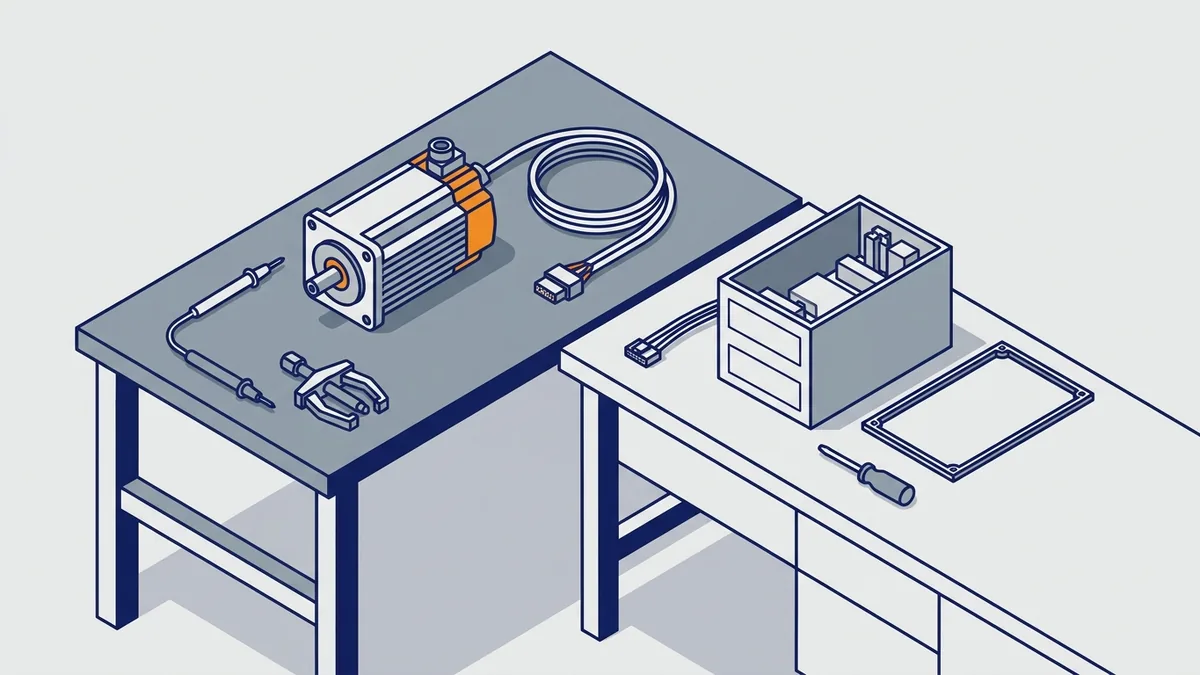
Before you pull the motor, confirm the drive, cables and feedback are good. Then follow the fault-code steps in the Lenze manuals for your drive. Each drive family uses its own codes, so look them up in the manual for your exact model.
How do I test a servo motor to tell a motor fault from a drive fault?
First, lock out power and wait for the drive’s DC bus to discharge. Then disconnect the motor cable at the motor. Use the manual for your motor for the exact limits. The checks below are the usual steps:
- Winding resistance: measure phase to phase. The three readings should match each other and the datasheet value. An open or uneven reading points to a winding fault.
- Insulation resistance: use a megohmmeter from each phase to the motor frame. A low reading means insulation damage. Use the test voltage the manual allows, and never apply it to feedback or brake wires.
- Feedback: check the cable and connector first. For a resolver, compare its winding resistance to the manual. For an encoder, a known-good cable or motor is the fastest test.
- Brake: measure the coil resistance. Then apply the rated DC voltage from the nameplate and listen for it to release. The shaft should then turn freely by hand.
- Bearings: turn the shaft by hand. Grinding or rough spots mean bearing wear.
If the motor passes every check, the drive, cable or setup is the more likely cause.
When should I repair rather than replace a Lenze servo motor?
Several independent service centers advertise Lenze servo motor repairs, usually with a free evaluation first. Next, compare the repair quote against the replacement lead time. Also ask whether the series is still current, since older motors may be hard to replace. Finally, our Allen-Bradley repair-versus-replace post gives a framework you can reuse.
How long does Lenze servo motor repair take and what does it cost?
It depends on the shop and the damage, so we give no figures here. As an example, ACS Industrial Services says it usually evaluates within 72 hours and offers rush repair in as little as 3 to 5 business days for an extra fee. Precision Electronic Services, a different company from Precision Electric, advertises a free evaluation and a 2-year repair warranty. In short, use these only as questions to ask any shop.
What should I send with a Lenze servo motor for repair?
Send the motor with a short note so the shop can work faster. For best results, include these items:
- A photo of the nameplate, and the full type code
- The symptom and any drive fault codes
- The drive model and feedback type
- Brake, gearbox or connector details
- Your contact details and any deadline
Where do I send it to Precision Electric?
[Shop to add: Precision Electric repair intake steps, turnaround and warranty terms for Lenze servo motors.]
Where to get Lenze manuals, catalogs and sizing software
Where can I find Lenze servo motor manuals, catalogs and sizing software?
Start with Lenze’s US product pages for current data on the m850 and the drive portfolio. Then use these documents:
- The Lenze servo motors brochure, which covers 0.18 to 325 Nm.
- The MCS synchronous servo motors project-planning manual.
- The operating instructions for MCA, MCS and MQA servo motors.
- The i700 servo inverter hardware manual.
- Lenze’s positioning applications brochure for the US.
Also, for sizing, use Lenze’s MotionMatch software. Our existing MotionMatch post explains it.
Frequently asked questions
What Lenze servo motors are there?
Lenze’s brochure lists five servo motor series. First, MCS and m850 are synchronous. Next, MCA, MQA and SDSGA are asynchronous. Overall, rated torque runs from about 0.12 Nm at the small end to 280 Nm or more at the top, depending on the series.
Which drive runs a Lenze MCS or m850 servo motor?
Lenze pairs them with its cabinet servo inverters. The m850 pages name the i700 or i750 and the i950, and older documents also name the 9400 and 8400 TopLine. For the exact motor and inverter combination, use the selection tables in the project-planning manual.
Can a Lenze i510 or i550 VFD run a servo motor?
The 0.33 HP i510 and i550 drives we stock are variable frequency drives for AC induction motors. Lenze documentation gives the i550 a 22 kW limit for sensorless control of synchronous motors, while servo control for asynchronous motors with an HTL encoder is a separate mode. Because of that, check Lenze’s i550 documentation before you specify it for a servo application.
Can a Lenze servo motor be repaired?
Yes. Several independent service centers advertise repair of Lenze servo motors, usually with a free evaluation first. Before you send the motor out, confirm the drive, cable and feedback are good. Then compare repair cost against replacement lead time.
What feedback do Lenze servo motors use?
Resolver feedback is standard on MCS and m850. In addition, optional feedback includes sin/cos encoders and, on the m850, a digital absolute value encoder for One Cable Technology. As a rule, the drive must support the feedback type fitted to the motor.
Lenze’s servo line is easy to navigate once you know the five series, the feedback type and the drive that pairs with each motor. Always confirm ratings and drive pairing in current Lenze documents before you buy. If you need help with a Lenze drive, a replacement or a repair, contact Precision Electric, or browse our Lenze AC Tech drives.