








Soft Start for Well Pump: What It Does and When to Use One
A soft start for a well pump limits the surge and shock when the pump motor starts. If you are deciding whether to add one, this article explains what it does and which motors can use it. It also covers how it is set up, and how it differs from the starters made for heat pumps.
On this page
- What a soft start for a well pump is
- Why people add a soft start to a well pump
- Know your motor first: what decides whether a soft start can be used
- How a well pump soft start is set up and wired
- Soft start with a generator, inverter or solar supply
- Soft start for a heat pump
- Soft start vs VFD for a well or water pump, in short
- Choosing and buying: what to check
- Common mistakes and when to call for help
- Frequently asked questions
- What is a soft start for a well pump?
- Does a well pump need a soft start?
- Can I use a soft starter on a single-phase submersible well pump?
- What soft-start settings does a submersible motor need?
- Can I use a soft start with a generator on a well pump?
- Is a soft start for a heat pump the same as for a well pump?
What a soft start for a well pump is
What is a soft start for a well pump?
It is an electronic device that raises the voltage to the pump motor gradually. Without it, the motor sees full line voltage the moment it starts. After the ramp, the motor runs at full voltage and normal line frequency.
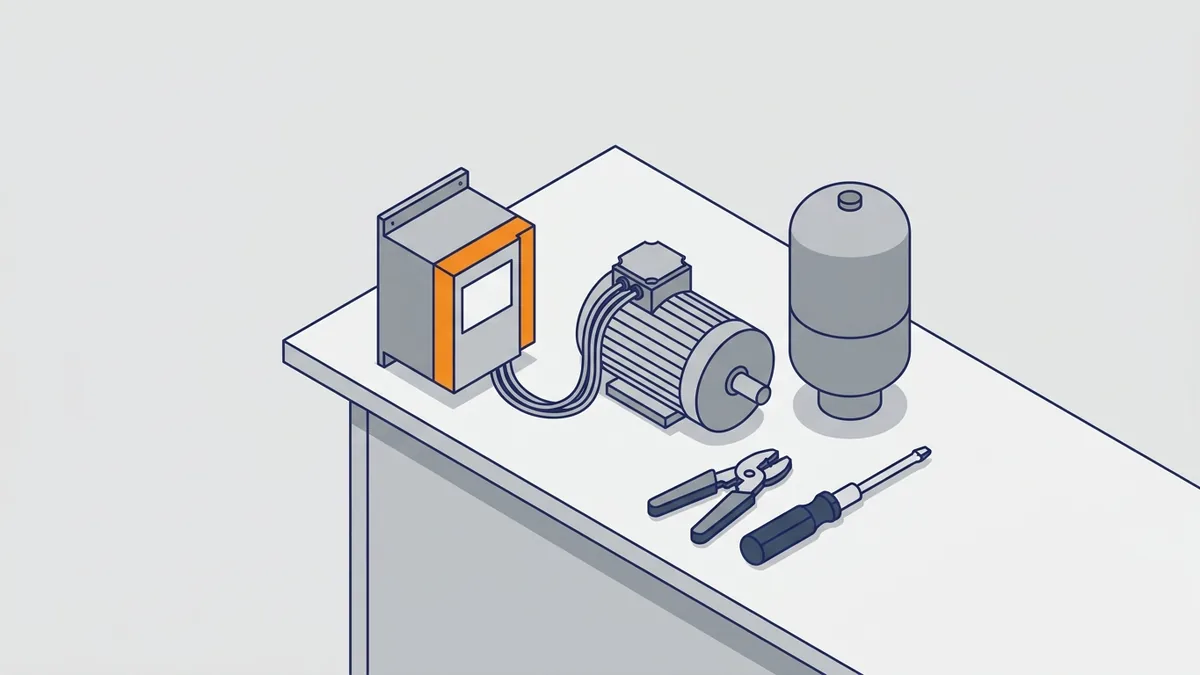
This matters because a motor at rest draws a high inrush current. The sudden torque also stresses the machine. In a well, the pump, drop pipe and water column all accelerate with the motor. As a result, a hard start shocks shafts, couplings and piping.
On a submersible pump, Franklin Electric also says reduced-voltage starting cuts upthrust at start. Upthrust is the upward force on the pump stages when the pump starts.
Soft start, soft starter and reduced voltage starter: what is the difference?
In practice, people use these names for the same job. “Soft start” is the function. “Soft starter” is the device. “Reduced voltage starter” (RVS) is the broader trade term, and it also covers autotransformer starters. A well pump soft starter, a soft start well pump controller and a well pump motor starter with a soft-start function all describe a unit that eases the motor up to speed.
For the general mechanics of soft starters, see our existing posts. This article stays with the well-pump case.
Why people add a soft start to a well pump
Why would I put a soft start on a well pump?
There are a few common reasons:
- Weak supply: A generator, inverter or solar supply may barely start the pump. A lower start surge helps a marginal source.
- Light dips: Lights flicker on the house circuit when the pump starts.
- Mechanical stress: Start-up shocks the shaft, couplings and pipe. Some larger starters also have a soft stop to ease pressure surges in the piping.
- Utility rules: Some larger three-phase pumps must limit voltage dip.
Does a well pump need a soft start?
Not usually. Franklin says all of its three-phase submersible motors are suitable for full-voltage starting. A soft start helps when the supply is weak, when lights dip, or when you need to limit stress and upthrust. If none of those apply, the pump can start across the line.
Does it save energy or change pump speed?
No. A soft starter changes voltage but not frequency, so it cannot change motor speed. After the ramp, the pump runs at full speed with the same flow and the same energy use. If you need to vary flow or pressure, you want a different tool, covered below.
Know your motor first: what decides whether a soft start can be used
How do I know if my well pump motor can use a soft starter?
Check the motor type and where the start parts sit. First, find out if it is single-phase or three-phase. Next, find out if it is submersible or a surface pump.
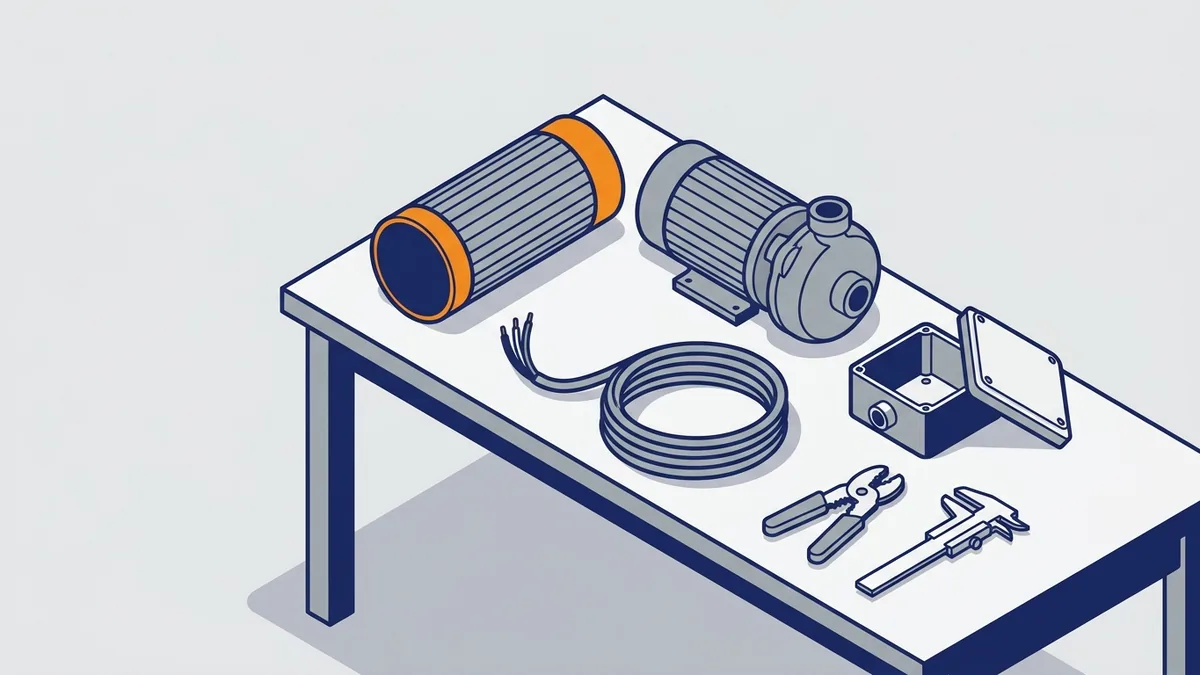
Then, for single-phase submersibles, find out if it is two-wire or three-wire. Do this before you shop. Finally, confirm with the pump or motor maker.
Three-phase submersible pumps
Yes, a three-phase submersible pump can use a soft starter. Franklin allows reduced-voltage starters and drives on its three-phase submersible motors. Its rules differ from those for normal air-cooled motors. In its AIM manual, Franklin says to use an autotransformer or a solid-state RVS to soft-start standard three-lead motors.
Several limits apply:
- Supply the motor with at least 55% of rated voltage for enough starting torque.
- Get the motor to full voltage within three seconds at most.
- Bridge the soft starter with a contactor after run-up.
- Solid-state starters may not work with Franklin’s SubMonitor or SubMonitor-Plus protection.
The current AIM manual also says to set acceleration time to two seconds at most, but only when a SubMonitor or SubMonitor-Plus is used. That is because of the 3-second reaction time of those relays. Without them, the limit is three seconds. Also, Franklin says 7.5 to 30 hp three-phase encapsulated motors can start up to 200 times per 24 hours with a properly set RVS or VFD.
Single-phase submersible pumps: two-wire and three-wire
Maybe. It depends on the motor. Two-wire motors have the start parts inside the motor, down the well. Three-wire motors use a control box above ground with a start capacitor and relay.
Some single-phase kits are sold for submersible, jet and booster pumps. SoftStartUSA lists its well pump kit for 120V 1/2 to 1.5 HP and 240V 1/2 to 3 HP. It installs between the power source and the pressure switch.
Capacitor-start motors need care. The motor must reach cut-out speed before the start capacitor overheats, so a long ramp can hurt it. The maker’s retailer page says the kit mounts beside the main service panel with three wire connections. It also says there is no need to access or modify the pump. Treat that as unverified. The Franklin guidance covered here applies to three-phase motors, so get approval from the pump or motor maker before you fit a single-phase unit.
Surface, jet and booster pumps
A surface, jet or booster pump uses an ordinary air-cooled motor. General soft-starter and drive guidance applies to it. Pump-type units, such as the Franklin Water IPS-RV and the Goulds AquaStart, ship with pump settings preset and add pump protection. The single-phase kits above also list jet and booster pumps. Even so, confirm the motor type first.
How a well pump soft start is set up and wired
Where is the starter installed?
On a single-phase kit, it sits between the supply and the pressure switch. On a three-phase pump, it goes in the motor circuit with a bypass contactor. A qualified electrician should do this work. The control box and supply wiring are not a place for guesswork.
What are the wiring steps, fuse sizes and code rules?
The starter’s manual and wiring diagram come first, because terminal labels differ by model. In general, an electrician follows these steps:
- Turn off and lock out the power, then confirm it is dead with a meter.
- Check that the starter’s voltage and current ratings suit the motor.
- Mount the starter in a proper enclosure.
- Wire the supply to the line terminals and the motor to the load terminals.
- Connect the bypass contactor if the starter does not have one built in.
- Ground the starter and set the overload to the motor nameplate.
- Restore power and test the start and the running current.
Breaker and fuse sizes are not one number. Use the starter maker’s table and the motor’s nameplate. In the US, the National Electrical Code (NEC) covers motor circuits in Article 430, and your local inspector has the final say. We do not list sizes here because the right one depends on your motor and starter.
What ramp time and start voltage should I use on a submersible motor?
The main settings are start voltage, ramp time, current limit and stop ramp. For Franklin’s 6 in. and 8 in. encapsulated motors, the manual says to set the start voltage to 55% of nominal. It also says to keep run-up and delay times to three seconds at most, then bridge with a contactor.
Do not treat those numbers as a rule for every well pump. They come from Franklin’s submersible motor manuals. Ramps on general air-cooled loads often run much longer. A submersible motor relies on fast acceleration, so a long ramp does not suit it. Check the manual for your own motor.
After the install, check the motor voltage at full conduction. Also check the running current against the nameplate.
What settings suit other pumps, surface pumps and jet or booster pumps?
No single set of numbers fits every pump. For a non-Franklin submersible, ask the pump or motor maker for its limits, and follow them before you adjust anything. For a surface, jet or booster pump, start with the pump preset on a pump-type starter, if it has one.
From there, adjust a little at a time. The goal is a smooth start that does not hum or stall. A stop ramp can also help on larger pumps, because it eases pressure surges in the piping.
Does a soft start protect the pump from dry running?
Not by itself. A basic soft starter leaves the circuit after the ramp, so it gives no protection while the pump runs. Overload and dry-run protection must come from another device. Alternatively, use a pump-type starter with built-in protection. The Franklin IPS-RV, for example, senses power to guard against dry-run, dead head, runout and a jammed impeller.
Soft start with a generator, inverter or solar supply
Can a soft start help a generator or solar inverter start a well pump?
It can help. A lower start surge lets a marginal source start the load. SoftStartUSA says its kit can help a smaller generator start a well pump. Treat that as a product claim, not a rating. The pump, the supply and the starter must all suit each other.

Can I use one with a minimum-size generator?
No. Franklin gives a clear caution here. A minimum-rated generator already acts as a soft start for the motor. A reduced-voltage starter also lowers the voltage, and combining the two risks severe motor damage from low voltage.
Instead, size the generator properly. For two-wire motors, Franklin says the best starting comes from a rating 50% above its table minimum. Also, start the generator before the motor and stop the motor before the generator.
Soft start for a heat pump
What is a soft start for a heat pump?
A soft start for a heat pump is a different product from a well pump soft starter. It controls a refrigerant compressor, not a water pump. It limits the inrush when the compressor starts, so it suits generator, solar and weak-supply cases. Do not swap it with a pump unit. Check with the heat pump or compressor maker before you fit one.

Wiring detail matters too. One maker says a wrong wire gauge or terminal connection gives no inrush reduction. In addition, inverter-driven heat pumps already ramp up, so they generally do not need one.
How do I size a heat pump soft starter, and does it affect the warranty?
Start with the compressor nameplate. It lists the RLA (rated load amps) and the LRA (locked rotor amps, the surge at start). Pick a starter whose current rating covers the RLA, and whose maker says it suits your voltage and compressor type. Then compare the starter’s start current with the LRA to see how much it cuts.
For wiring, follow the starter’s diagram and use the wire gauge it calls for. Remove any hard-start kit first. As for the warranty, rules differ by maker, so ask the heat pump maker in writing before you add a part to the circuit.
Is a hard-start kit the same thing?
No. A hard-start kit adds a start capacitor and relay. It raises torque and raises inrush, which is the opposite of a soft start. Do not run a soft starter together with a hard-start kit. Instead, remove the kit before you fit an HVAC soft starter.
Does a geothermal heat pump need a soft start on the well or loop pump or on the compressor?
A geothermal heat pump has two motors. One is the refrigerant compressor. The other is a separate circulating pump for the water circuit. The soft-start question for the compressor is not the same as for the water pump. Treat each on its own, and ask the heat pump maker which one, if either, should get a starter.
Soft start vs VFD for a well or water pump, in short
How is a soft start for a water pump different from a VFD (variable frequency drive)? A soft starter changes voltage only, then the motor runs at line frequency. A VFD changes voltage and frequency, so it can vary speed.
Choose a soft start when you only need gentle starting on a constant-speed pump. Choose a VFD when flow or pressure must vary. One source also says VFDs are not recommended for single-phase capacitor-start motors. Our existing soft start vs VFD post has the full comparison.
When is a VFD or constant-pressure drive the better choice?
A drive makes sense when you want steady water pressure at every tap. It adjusts pump speed to match demand, which a soft starter cannot do. Some drives are built for single-phase well pumps, but check that the drive and motor are made to work together.
Running cost depends on how much you use water and how often the pump runs at part speed. We do not quote prices here. Ask for a quote based on your motor and the pressure you want.
Choosing and buying: what to check
What do I need to know to choose a soft starter for a well pump?
Gather these facts first:
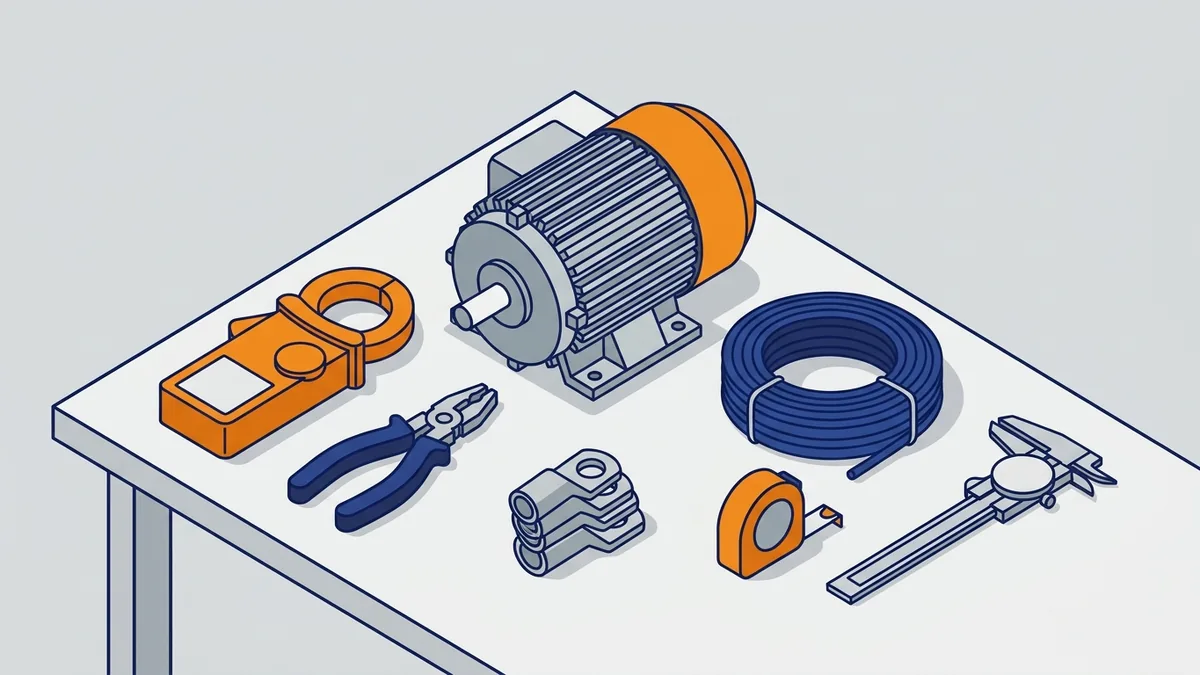
- Motor: phase, voltage, HP, full-load amps, wire count and whether it is submersible or surface.
- Starter: rated current and voltage, built-in bypass, enclosure rating and pump protection such as dry-run and underload.
- Ramp limits: make sure they match the motor maker’s rules.
Also ask the pump maker if the pump is under warranty or has an unusual motor.
How do I size a soft starter for my pump?
Work from the motor nameplate. First, match the starter’s voltage to your supply. Next, make sure its continuous current rating covers the motor’s full-load amps. Submersible motors often run into their service factor, so also check the service-factor amps on the nameplate.
Then check duty. Look at the starter’s limit for starts per hour and compare it with how often your pump cycles. A small pressure tank makes a pump cycle more often, so this matters. If the numbers sit close, choose the next size up and confirm with the starter maker.
What is a soft start well pump controller with built-in protection?
It is a pump-type starter that adds protection to the ramp. The Franklin IPS-RV has factory defaults set for submersible pump protection. It also has a well recovery mode of up to 48 hours and an across-the-line start for emergencies.
The Goulds AquaStart is a combination soft starter with preset pump settings. It works with centrifugal and submersible pumps and uses Thermal Image Motor Protection. The line is rated 5 to 175 HP at 230V, 10 to 200 HP at 460V and 15 to 200 HP at 575V.
What does it cost?
We do not quote prices here, and we found no reliable well-pump kit prices. General guidance puts a soft starter below a VFD, roughly 40 to 60% of the cost. That comes from a contractor-supply blog, so use it only as a rough guide. For a real number, ask for a quote based on your motor.
Common mistakes and when to call for help
What are the common mistakes with well pump soft starters?
- Setting a ramp that is too long, or a start voltage that is too low, on a submersible.
- Pairing a soft start with a minimum-size generator.
- Leaving a hard-start kit in place on an HVAC compressor.
- Fitting a single-phase kit to a motor with start parts inside it, or without maker approval.
- Assuming the soft start protects the motor while it runs.
What fault codes or trip messages do pump soft starters show?
Codes differ from one maker and model to the next, so use your starter’s manual to decode them. Most units report the same kinds of faults. These include overload, phase loss or imbalance, over-temperature, underload (often a sign of dry running) and a failed start.
A trip tells you where to look, not what broke. For example, an underload trip may point to a low well, not a bad starter. Write down the message before you reset the unit.
When should I call a technician or send a starter for repair?
Call when you see intermittent starting, repeated overload trips, a failed start capacitor or a tripped dry-run protector. A shorted SCR (the power switch inside the starter) can show up as heat or noise after bypass. These signs may point to the pump, motor or supply, not only the starter, so a technician should check all three. Our repair shop can test drives, starters and controls when a unit fails.
Frequently asked questions
What is a soft start for a well pump?
It is an electronic starter that raises the voltage to the pump motor gradually. This reduces the start-up current surge and mechanical shock. Then the motor runs at full voltage and speed. Pump-type versions may add dry-run and overload protection.
Does a well pump need a soft start?
Not usually. Franklin says its three-phase submersible motors are suitable for full-voltage starting. A soft start helps when the supply is weak, a generator or inverter struggles, lights dip, or you need to limit mechanical stress and upthrust.
Can I use a soft starter on a single-phase submersible well pump?
Some single-phase kits are sold for 120V 1/2 to 1.5 HP and 240V 1/2 to 3 HP pumps. Motor type matters. Capacitor-start motors need a start that reaches cut-out speed quickly, and two-wire motors have the start parts down the well. Confirm with the pump or motor maker first.
What soft-start settings does a submersible motor need?
Franklin’s manual for its encapsulated motors says to set the starting voltage to 55% of nominal. It also says to keep ramp and delay times to three seconds at most, then bridge the starter with a contactor. Check the manual for your motor.
Can I use a soft start with a generator on a well pump?
Yes, but never add a reduced-voltage starter to a minimum-size generator. Franklin warns that both lower the voltage and risk severe motor damage. Size the generator properly instead. For two-wire motors, Franklin suggests a rating 50% above its table minimum.
Is a soft start for a heat pump the same as for a well pump?
No. A heat pump soft start is made for a refrigerant compressor and limits its inrush. A well pump soft start is made for a pump motor. Do not swap them, and do not run a soft starter together with a hard-start kit.
A soft start for a well pump is a useful tool, but not a default. The motor type, the supply and the maker’s limits decide if it fits. If you are unsure, contact Precision Electric for help with a quote, a repair or the right starter for your pump.