Soft Start for Air Conditioner: How It Works and When to Use It
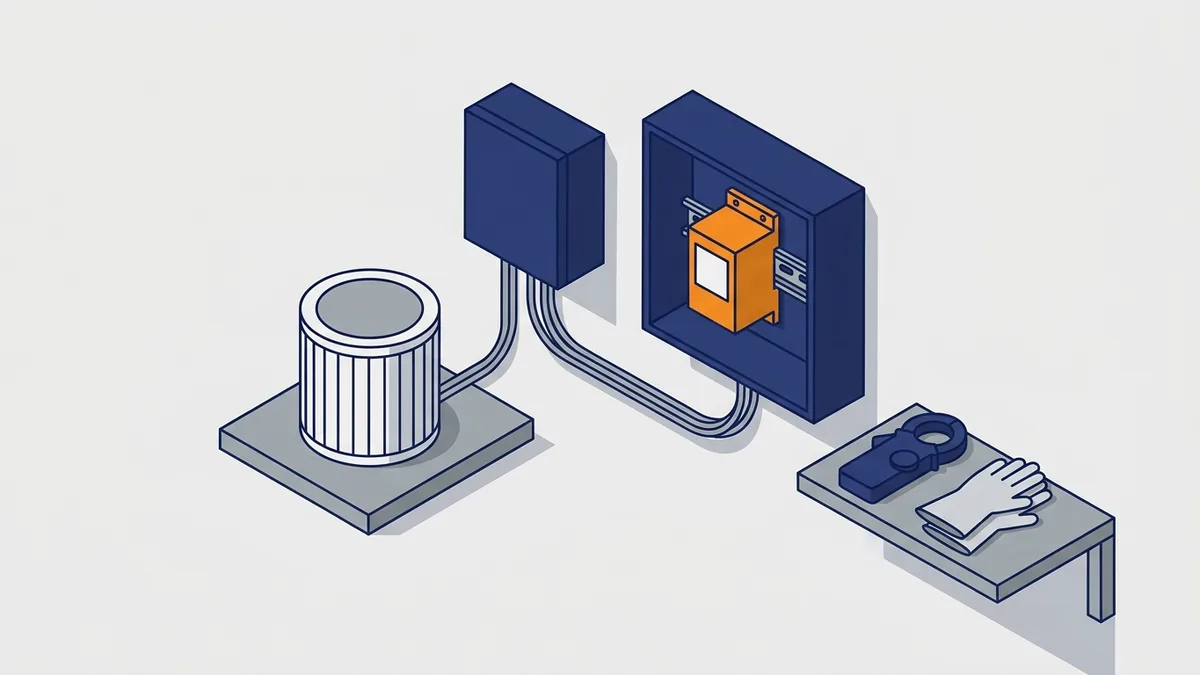
A soft start for air conditioner compressors cuts the current surge that hits when the unit turns on. If your generator bogs down, your lights flicker, or you can’t tell a soft start from a hard start kit, this guide is for you. You will learn what the device does, how it works, and whether your equipment needs one.
On this page
- What a soft start for an air conditioner is
- Why compressors draw a big surge at startup
- How a soft start works
- Soft start vs hard start kit vs PTCR
- Soft start kits for central air, heat pumps and RV units
- Does your air conditioner need a soft start?
- What to check before you add any start device
- Installing a soft start kit
- Results to expect and how to verify
- Common mistakes and when to call for help
- Where to get manuals and parts
- Frequently asked questions
What a soft start for an air conditioner is
What is a soft start kit for an air conditioner?
A soft start is a small electronic controller wired in series with a single-phase compressor. It ramps voltage and current up gradually instead of applying full power at once. As a result, the starting current drops. Micro-Air says its EasyStart can cut start current by up to 75% compared with the compressor’s LRA (locked rotor amps, explained below).
You will see several names for the same device: soft start, softstart, soft starter, AC soft starter and soft start kit. In this article, they all mean the same thing.
What it changes and what it does not
A soft start for AC lowers the starting current. However, it does not change running current, running watts or cooling output. Once the compressor is up to speed, the unit runs as it did before.
Why compressors draw a big surge at startup
Why does an air conditioner compressor draw so much current when it starts?
The motor is at rest when the thermostat calls for cooling. Until the rotor spins up, the motor draws its maximum current. Then the current falls as the motor gains speed.
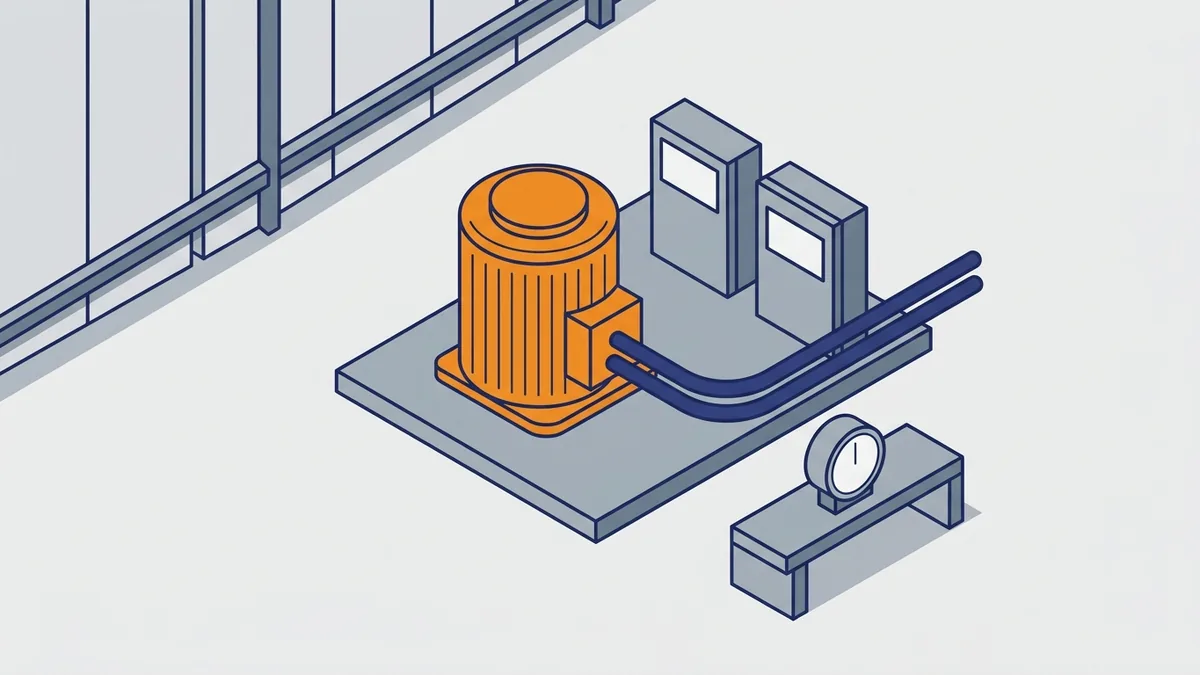
Scroll compressors start unloaded. So the surge comes mostly from the motor and rotor mass spinning up, not from refrigerant pressure.
What are locked rotor amps (LRA) and where do I find them?
LRA is the maximum current the compressor draws while the motor is stationary at startup. One calculator source puts it at about 5 to 7 times the running load amps (RLA). You can read both numbers on the nameplate or the unit’s spec sheet.
For example, a packaged gas/electric unit on 208/230 V, single phase, lists these compressor ratings across its models:
| Rating | Lowest model | Highest model |
|---|---|---|
| Rated load amps (RLA) | 12.8 A | 29.3 A |
| Locked rotor amps (LRA) | 58.3 A | 134 A |
Where the surge shows up
The surge causes real problems on weak supplies. Look for these signs:
- Lights that dim when the compressor starts
- Breaker trips at startup
- A generator or inverter that overloads
- A weak utility feed or a 30-amp supply
How a soft start works
How does a soft start work?
Inside the controller, a microcontroller drives solid-state switching. It raises the voltage and current to the compressor in steps instead of all at once. Because the motor sees a gentler ramp, the peak current stays lower.
Micro-Air’s EasyStart uses a 4-part, self-optimizing start ramp. Over the first few starts, it learns the compressor. Then it works only while the motor starts and switches itself out of the circuit.
How much does a soft start reduce starting amps?
Micro-Air states 65 to 75% below LRA. However, treat that as a manufacturer figure, because real results depend on the unit. A calculator page quotes about 65 to 70% for electronic soft starters in general.
Soft start vs hard start kit vs PTCR
What is the difference between a soft start and a hard start kit?
They do different jobs. A hard start kit adds a start capacitor and a potential relay. It gives the compressor more starting torque, then drops out when the motor nears speed. A soft start limits the peak current and adds no torque.
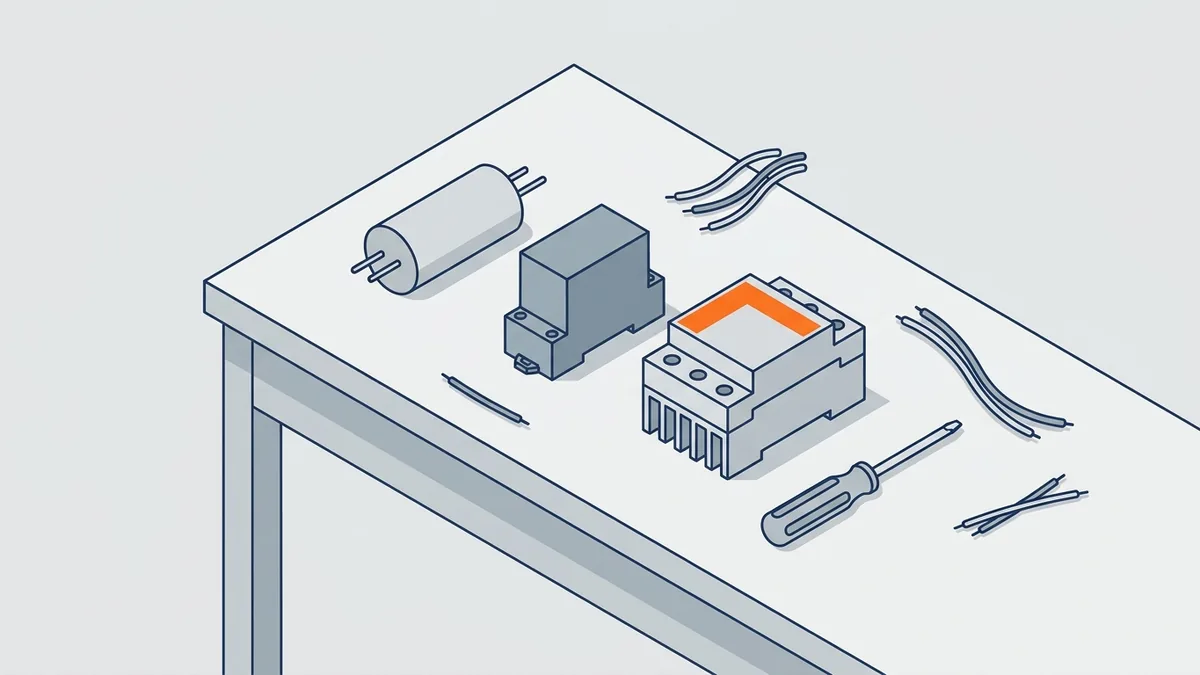
Hard start kits do not reduce starting current. A meter may read lower because the surge is shorter and the meter shows a time-averaged value. In fact, the extra jolt raises the inrush peak.
Is a PTCR device a soft start?
No. A PTCR is a thermistor whose resistance rises as it heats, so it takes itself out of the circuit. HVAC School calls it a start device with nothing “soft” about it. However, some sellers label PTCR kits as soft starts, but they are start-assist parts.
Single-phase soft starts need advanced algorithms. For that reason they cost more than hard start parts, and they can’t give the large start-winding boost a hard start gives.
Side-by-side comparison
| Device | What it does | Main use | Who it is for |
|---|---|---|---|
| Soft start | Ramps voltage and current; lowers peak starting current; adds no torque | Generator, inverter or weak supply that can’t handle the surge | Owners with a supply problem |
| Hard start kit | Start capacitor plus potential relay; adds starting torque | Compressor that won’t start or starts hard | Techs fixing a hard-starting unit |
| PTCR device | Thermistor in the start circuit; drops out as it heats | Basic start assist | Not a true soft start |
So pick by the problem. A compressor that won’t start points one way. A supply that can’t handle the surge points the other.
Soft start kits for central air, heat pumps and RV units
What is a Micro-Air soft start?
Micro-Air’s EasyStart is a soft starter for single-phase compressors. A micro air soft start comes in a few versions:
- EasyStart Flex: aimed at residential and commercial AC and heat pump units. A retailer lists the Flex 398 for up to 6 tons, with fault detection and a short-cycle delay timer.
- EasyStart 366: a board-only OEM part for 115 and 230 VAC compressors from 1 ton (12,000 BTU) to 6 ton (72,000 BTU). Micro-Air says it can’t give detailed technical support to DIY customers on single installs.
- EasyStart 364: an older model for compressors up to 3 tons. A retailer lists it as discontinued.
How do you pick the right Micro-Air model for your unit?
Start with three numbers from the compressor nameplate: supply voltage, RLA and tonnage. Then check each against the model’s limits. The voltage must match, and the compressor’s RLA must fall under the model’s maximum. The EasyStart 366 manual lists maximum RLA limits of 25 A and 35 A, depending on the version.
Next, check the tonnage range. For example, the 366 covers 1 to 6 tons, and a retailer lists the Flex 398 for up to 6 tons. If your unit sits near a limit, or you are unsure, ask Micro-Air before you buy.
Can I use a soft start on central air?
Yes, in many cases. A central air soft start goes in the outdoor condensing unit, near the contactor and run capacitor. It pairs with one compressor. Always match the model to the compressor’s tonnage and voltage.
Copeland also offers an OEM compressor soft starter, the CSS-25U, CSS-32U and CSS-32W, for single-phase compressors. This part limits starting current to under 45 A (30 A on one part number). Also, it handles motors up to 25 A or 32 A. On 230 V, it adjusts itself for 50/60 Hz and motor current.
It also adds protection: low-voltage shutdown, locked rotor recognition, an alarm relay and a delay that limits starts. A Copeland product guide says it keeps starting current below the limit set for residential heat pumps. Because it is an OEM part that equipment makers build in, it is not a field retrofit kit like the Micro-Air models.
Do variable-speed or inverter AC units need a soft start?
No add-on is needed. A drive already ramps the compressor up on a set ramp. Copeland’s guide says the internal compression parts always start unloaded. However, for third-party drives on Copeland variable-speed scrolls, the control system must include a soft start-and-stopping routine, along with discharge temperature and overload protection.
Is a soft start compatible with 2-stage, ECM or specific control boards?
A soft start works on the compressor only. An ECM is a blower motor, so a compressor soft start does not replace it or change how it runs. For inverter-driven units, see the section above.
We have no maker compatibility list for 2-stage units or for specific control boards. So send the manufacturer your unit’s model number and the board type, and get a yes in writing before you buy.
Does your air conditioner need a soft start?
Does my air conditioner need a soft start?
It makes sense mainly when the supply can’t handle the compressor’s LRA. Good reasons include:
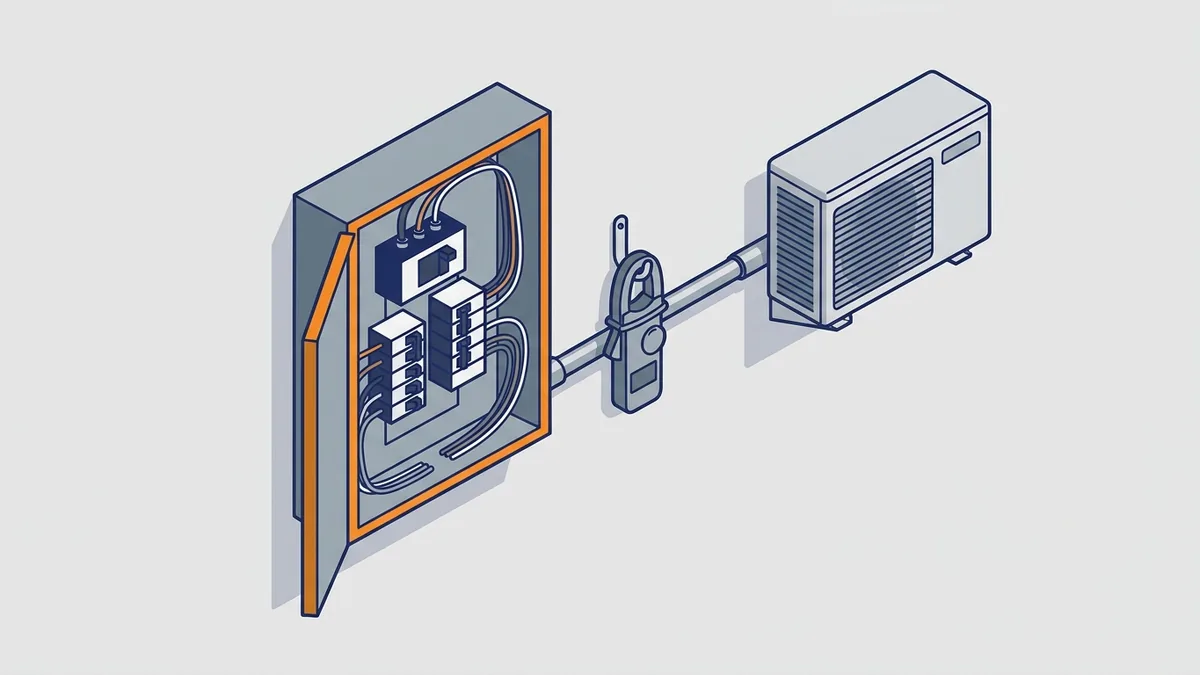
- Running on a generator or inverter
- Using a limited utility feed or a 30-amp supply
- Seeing lights flicker at startup
- Adding an AC without upgrading the service
However, a soft start does not repair a weak capacitor, worn contactor, wiring fault or failing compressor. Diagnose those first. A weak supply that sags in voltage is a wiring or supply question before it is a start-device question.
Will a soft start let a smaller generator run my AC?
It can, but only if the generator still covers the running load plus every other connected load. A soft start lowers only the startup current. So compare the LRA, the running load and everything else on the circuit.
How do you size a soft start for a generator or inverter?
You size the generator or inverter, because the soft start only lowers the surge. Use this method with your own nameplate numbers. Volts times amps gives volt-amps (VA), which is close to watts for a rough check.
Here is an example using the lowest model in the table above on 230 V, with 58.3 A LRA and 12.8 A RLA:
- Without a soft start, the start surge is about 58.3 A × 230 V, or roughly 13,400 VA.
- With a 65 to 75% cut, the start current is about 14.6 to 20.4 A. That is roughly 3,400 to 4,700 VA.
- Running load is about 12.8 A × 230 V, or roughly 2,900 VA.
- Add your other loads. Say they total 1,000 W. The start demand is then about 4,400 to 5,700 VA.
Compare that total to the surge rating of your generator or inverter, not just its running rating. This is an illustration, not a maker’s sizing table. The real cut varies, so measure the start with a clamp meter and ask the generator maker for its motor-start guidance.
Will a soft start lower my electric bill or extend compressor life?
No bill savings, because it does not lower running wattage. On life, Micro-Air’s sources disagree. One retailer page says compressors usually fail mechanically before electrically, so it does not change longevity. However, another Micro-Air page says it “can help.” For that reason, don’t promise a longer life.
What to check before you add any start device
What should I check before adding a soft start or hard start?
First, find out why the unit struggles. A start device on a faulty system only hides the problem. Check these items:
- Test the run capacitor in microfarads.
- Measure line voltage at the contactor during start.
- Inspect the contactor points.
- Confirm the windings are not grounded or open.
- Read the OEM guidance for the model, and check that any control board is compatible.
- Plan on one soft start per compressor.
For example, a hard start on a grounded compressor won’t save it. Likewise, a wrongly sized hard start kit can damage the compressor.
Installing a soft start kit
How do you install a soft start on an air conditioner?
Wiring work involves line voltage. Only qualified people should do it, with power disconnected, locked out and verified at zero volts at the contactor. We don’t give step-by-step wiring here, because each kit connects differently. Instead, follow the maker’s manual and wiring diagram.
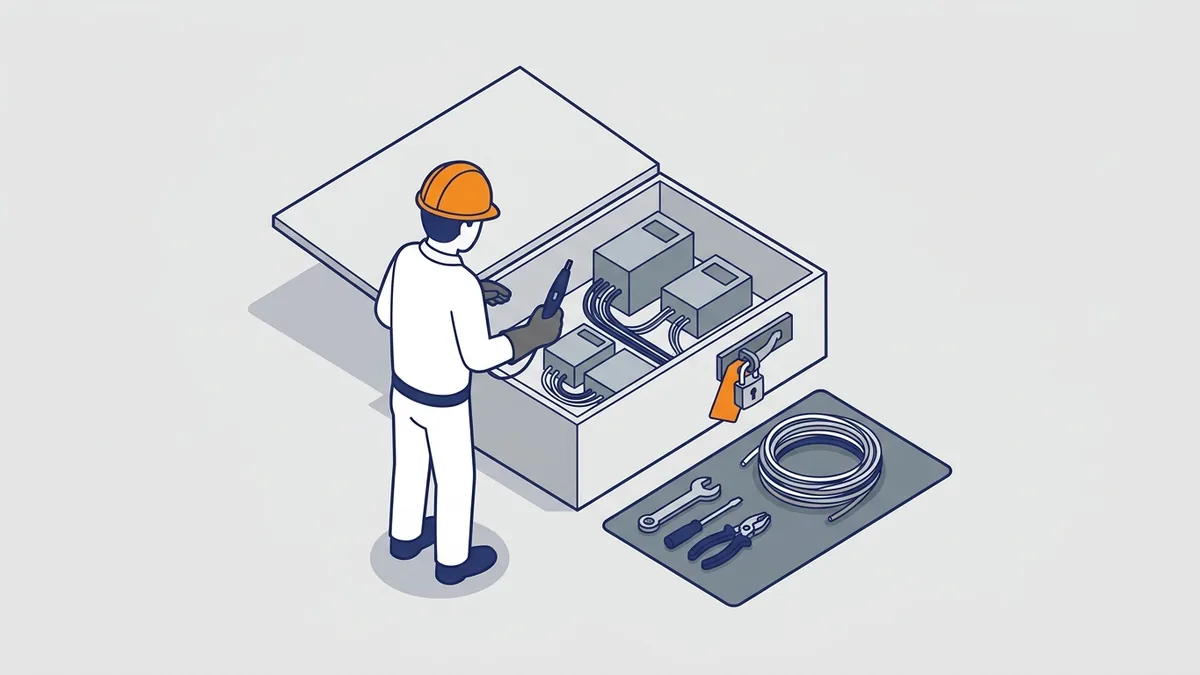
In general, a soft start connects to the line side and to the compressor common and run terminals, and sometimes the start terminal. Expect 4 to 6 wires. Also note that 2-wire and 3-wire hard start kits connect differently, so never mix up their diagrams.
Then mount and seal the unit and route the wiring as the manual says. Hard start kits, for example, must be mounted upright. Micro-Air units adjust over several starts, so early starts may read higher than later ones.
How long does installation take?
It varies. One customer on Micro-Air’s site reports a heat pump install in under half an hour after a 5-start learning process. However, treat that as one person’s story, not a promise.
Does a third-party soft start affect the AC warranty, and do codes apply?
It can. Warranty terms differ by maker, and adding a part the maker did not supply may change your coverage. So read the warranty and ask the manufacturer before you install.
Code rules also vary by location. The work is line-voltage wiring, so electrical code applies, and some areas require a permit. Ask your local building or electrical authority before you start.
Results to expect and how to verify
How much improvement will you see in practice?
Measure it. Use a recording clamp meter or the maker’s app, and compare the start before and after. That tells you more than any quoted percentage.
Micro-Air’s site also shows customer reports, such as a 6-ton unit with 124 A locked rotor current starting at 36 A, a 71% cut. These are anecdotes, not specs. As a result, your unit may differ.
Running current and cooling output stay the same. Likewise, the electric bill stays the same.
What can you do if the soft start does not start the compressor?
We don’t have a reliable list of fault codes, so use the manual for your model to read any LED or app fault. Meanwhile, work through the basics:
- Wait out any delay timer. Some soft starts hold off a restart after a stop.
- Confirm line voltage at the contactor. A low supply can trip the protection.
- Compare every wire to the maker’s diagram.
- Test the run capacitor and inspect the contactor.
- Check the compressor windings for a ground or open.
If the compressor still won’t start, call the maker’s support or a licensed HVAC tech.
Common mistakes and when to call for help
What mistakes should I avoid with a soft start kit?
- Buying a hard start when you want a lower generator surge, or the reverse
- Adding a soft start to hide a failing compressor
- Choosing the wrong size or voltage
- Using a model not rated for the unit’s tonnage
- Stacking a hard start with a soft start without asking the soft start maker
When should I call a technician instead of adding a kit?
Call a licensed HVAC tech if the job involves compressor windings, the refrigerant circuit or panel work. Also call one if your checks show a bad capacitor, contactor or winding.
Where to get manuals and parts
Where do I find soft start manuals and spec sheets?
Start with the makers. These sources cover this topic:
- Micro-Air’s EasyStart Flex page for the home soft starter
- Micro-Air’s EasyStart 366 page for the board-only OEM model
- Copeland’s compressor soft starter sheet for the CSS-25U, CSS-32U and CSS-32W
- Copeland’s application guidelines for variable-speed scroll heat pump compressors
- ICM Controls’ paper, Soft-Start vs. Hard-Start in HVAC/R
- Supco’s product pages for the 3W1 and SPP6 Super Boost hard start kits
- HVAC School’s article, This is Not a Soft Start
How much does a soft start kit cost?
We found no first-party price, so we won’t quote one. Instead, check current pricing with the manufacturer or a distributor, and ask for the warranty terms at the same time.
Frequently asked questions
What is a soft start kit for an air conditioner?
It is a small electronic controller wired in series with a single-phase compressor. It ramps voltage and current up gradually, which lowers the starting (locked rotor) current. However, running current and cooling output stay the same.
Is a soft start the same as a hard start kit?
No. A hard start kit adds a start capacitor and a potential relay (or PTCR) for more starting torque, and it does not reduce starting current. A soft start limits the starting current and adds no torque. So pick the one that fits your problem.
What is a Micro-Air soft start?
EasyStart is Micro-Air’s soft starter for single-phase compressors. It uses a 4-part, self-optimizing ramp and switches out of the circuit after starting. The Flex model targets residential and commercial AC and heat pump units, and the 366 board-only version is an OEM part for 1 to 6 tons.
Do I need a soft start for central air?
Mainly when a generator, inverter or limited supply can’t handle the compressor’s LRA, or when lights flicker at startup. However, it does not fix a weak capacitor, worn contactor, wiring fault or failing compressor, so diagnose those first.
Will a soft start lower my electric bill or extend compressor life?
It does not lower running wattage, so don’t expect a lower bill. Micro-Air’s own copy says it does not change compressor longevity, though another page says it “can help.” For that reason, don’t promise a longer life.
A soft start for air conditioner compressors solves one narrow problem: a startup surge your supply can’t handle. Diagnose the unit first, match the device to the problem, and follow the maker’s manual. If you need help choosing parts, a repair or a quote, contact Precision Electric.