








Eaton Ampgard Medium-Voltage Starters: Ratings and Versions
If you run or specify medium-voltage motors, you need a clear picture of eaton ampgard before you order parts or plan a project. This guide covers the versions, ratings, starter types, Classic Ampgard support and how to identify your equipment. You will also see how Ampgard compares with the SC9000 drive and with low-voltage options.
On this page
- What Eaton Ampgard is
- Eaton Ampgard versions and ratings at a glance
- Eaton Ampgard 7.2 kV class (2.5, 5.0, 7.2 kV)
- Eaton Ampgard AR and ductless AR arc-resistant versions
- Eaton Ampgard 15 kV class
- Eaton Ampgard starter types and which one fits the motor
- Eaton Ampgard RVSS soft starter
- Eaton Ampgard vs SC9000 drive vs low-voltage drives and soft starters
- Standards, safety and protection
- Classic Ampgard: support after December 15, 2025
- How to identify your Eaton Ampgard and order parts
- Common mistakes and when to call for help
- Cost and lead time
- Frequently asked questions
What Eaton Ampgard is
What is Eaton Ampgard?
Eaton Ampgard is Eaton’s family of metal-enclosed medium-voltage motor control. It controls and protects motors and equipment rated 2300-13,800 V nominal, with a 15,000 V maximum. In addition, it is certified to UL 347 and has been on the market for more than 50 years.
Each starter uses Type SL vacuum contactors and current-limiting power fuses. It also has an isolation switch rated for 10,000 mechanical operations. As a result, the starter coordinates the fuses, contactor, current transformers, protective relays and the motor.
Who makes Eaton Ampgard and what were the earlier brands?
Eaton makes Ampgard. Earlier generations were sold under the Westinghouse and Cutler-Hammer names, so you may see “Cutler-Hammer Ampgard” on older nameplates. In addition, Eaton’s aftermarket offer still supports current Ampgard, past generations and those legacy brands.
Is Eaton Ampgard a drive?
No. Ampgard is starter and control gear, not a variable frequency drive. However, the SC9000 is the medium-voltage drive, and it can share a lineup and bus with Ampgard. Because we cover the SC9000 and soft starts in other posts, this guide stays on the starter line.
Eaton Ampgard versions and ratings at a glance
What voltage classes and horsepower ratings does Eaton Ampgard cover?
The line has two main classes. First, the 2.5/5.0/7.2 kV class covers 50-8000 hp. Second, the 15 kV class covers 100-7500 hp at 7200-13,800 V. Next, the table below shows the catalog page figures for each version.
| Version | Power | Input voltage | BIL | Main bus |
|---|---|---|---|---|
| 7.2 kV class | 50-8000 hp | 2400-6900 V | 60 kV | Up to 3000 A |
| Ampgard AR | Up to 8000 hp or 720 FLA | 2400-7200 V | Check the design guide | Check the design guide |
| 15 kV class | 100-7500 hp | 7200-13,800 V | 75 kV / 95 kV | Up to 3000 A |
The 7.2 kV class has a 50 kA rms symmetrical interrupting rating and a 0 to 40 °C ambient range. Likewise, the 15 kV class lists 0 to 40 °C. Also, the ductless AR version meets the same Type 2B rating as Ampgard AR.
Why do the catalog page and design guide differ?
The 7.2 kV catalog page shows 2400-6900 V input. However, the design guide (DG020001EN) covers equipment up to 7200 V and lists up to 8000 hp or 800 FLA. For this reason, use the design guide for exact voltage and current. For voltages above 7200 V, use the 15 kV design guide, DG020003EN.
Eaton Ampgard 7.2 kV class (2.5, 5.0, 7.2 kV)
What features come standard?
- Design and testing to UL 347
- Type SL vacuum contactors
- Top-mounted main bus
- Arc-resistant enclosures as an option
- An isolation switch rated for 10,000 mechanical operations
Medium duty per UL 347 means three 30-second starts per hour. In addition, the 2300-6900 Vac class has a 60 kV BIL impulse rating.
What are the Ampgard 7.2 kV contactor ratings?
The Type SL contactor comes in 400 A and 800 A ratings. For example, the catalog table lists starters at 400 and 800 A for 2200-7200 V, up to 8000 hp. The 400 A contactor is rated 400 A enclosed, with a 60 kV BIL and an 80 ms closing time. Finally, pickup voltage is 80% and dropout is 60% of rated coil voltage.
How do you pick fuses and contactor settings for a motor FLA?
Start with the motor’s full load amps (FLA) from the nameplate. Then match that FLA to the fuse and contactor tables in the design guide for your voltage class. The fuses must clear fault current above what the contactor can interrupt, so do not swap in a fuse size by guesswork. Also, the 60% dropout figure above is a coil voltage rule, not a motor setting.
What is the real current limit of the 400 A starter?
The 400 A contactor is rated 400 A enclosed. However, some enclosures limit continuous current to 360 A, and the Ampgard AR table above lists 720 FLA for a structure. Therefore, check the design guide for your enclosure before you size the motor load.
What is the Main Breaker Ampgard (MBA)?
The Main Breaker Ampgard is a fully integrated, metal-enclosed Type VCP-W drawout vacuum circuit breaker. It is bus connected, also called close-coupled, to the Ampgard starters in one assembly. As a result, you get the main breaker and the starters in a single lineup.
Eaton Ampgard AR and ductless AR arc-resistant versions
What is Ampgard AR and how is it different from ductless AR?
Ampgard AR is certified to IEEE Std C37.20.7-2017 and rated arc-resistant Type 2B. It protects people at the front, sides and rear of the enclosure, even with the low-voltage control doors open. In addition, the design guide (DG020002EN) lists a 50 kA arc fault for 0.5 seconds at 2400-7200 V.
Ductless AR uses arc-absorbing technology, so you need no exhaust ductwork. It also meets Type 2B and is certified to IEEE C37.20.7-2017 Annex I.
Which one fits your room?
Standard AR needs a path to vent gases, so it suits rooms where you can run ducts. On the other hand, ductless AR saves space and ductwork cost. However, check the room and the design guide before you choose.
Ampgard AR works with the Eaton EMR series of motor protection relays. Its starter types are FVNR, RVR, RVAT and RVSS.
What room and installation needs should you plan for?
Plan the floor space, door swing and working clearance before you order. Standard AR also needs a duct or plenum to carry gases out of the room, while ductless AR does not. Structure widths and weights differ for the 7.2 kV and AR lineups, so take them from the design guide for your class. Also, ask Eaton which enclosure types, such as NEMA 1, 12 or 3R, fit your site.
Eaton Ampgard 15 kV class
What does Ampgard 15 kV cover?
This class covers 100-7500 hp at 7200-13,800 V, with 75 kV or 95 kV BIL and a main bus up to 3000 A. For example, the design guide lists full and reduced voltage starting of motors up to 7500 hp induction and 8500 hp synchronous. The starter types are FVNR, RVR and RVAT.
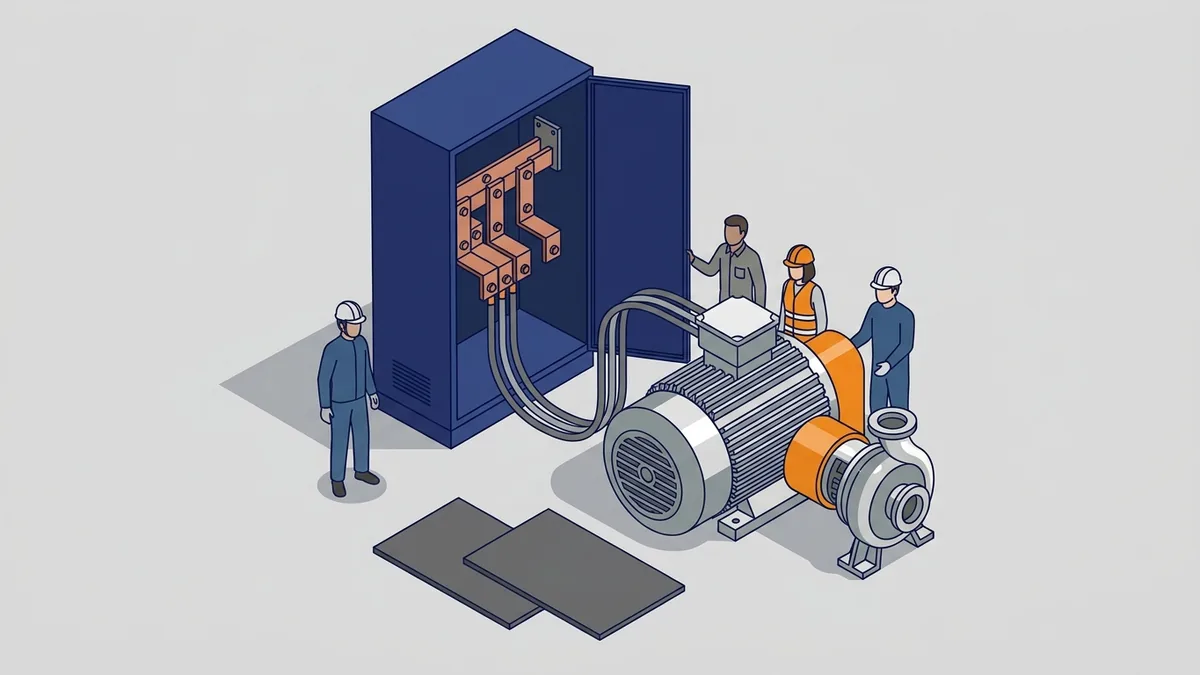
A vacuum starter can replace the medium-voltage breakers traditionally used to start 15 kV motors. As a result, it can save space and cut maintenance. In addition, the control panel includes an EMR-3000 motor protection relay.
Can 15 kV starters be ordered arc-resistant?
No. Eaton lists 15 kV starters as not available in arc-resistant construction. If you need arc-resistant gear, the Ampgard AR and ductless AR versions stop at 7200 V. For higher voltage, ask Eaton about other ways to cut arc-flash risk.
How big is a 15 kV structure?
The brochure lists standard structures of 36 W x 92 H x 30 D inches, including a 12-inch top-mounted main bus compartment. The conduit area fits two 500 kcmil cables per phase. Dielectric withstand is 36 kV. Also, do not order from the 7.2 kV page when your gear is 15 kV, because the two are separate products.
Eaton Ampgard starter types and which one fits the motor
What starter types does Ampgard offer and how do I choose?
Ampgard offers four main types:
- FVNR is full voltage non-reversing.
- RVR is reduced voltage reactor.
- RVAT is reduced voltage autotransformer.
- RVSS is reduced voltage solid state.
The 7.2 kV design guide also lists two-speed (one and two winding), reversing and transformer feeder types as options. Next, use the table to match the starter to your supply and load.
| Starter | Best fit |
|---|---|
| FVNR | Supply and machine can take full inrush and starting torque |
| RVR (reactor) | Supply needs lower inrush current |
| RVAT (autotransformer) | Supply needs lower inrush, with more torque per amp than a reactor |
| RVSS (solid state) | Load needs a smooth, adjustable start |
Classic Ampgard also covered synchronous motors with full voltage, primary reactor and autotransformer starters. In short, start with the supply and the load. If the supply can handle a full-voltage start, FVNR is simplest.
How does current Ampgard handle synchronous motors?
The 15 kV design guide lists starting of synchronous motors up to 8500 hp. Synchronous motors need field control as well as a starter, and that differs between brush-type and brushless motors. Because of this, tell Eaton which type you have, and give the motor data, before you order.
Eaton Ampgard RVSS soft starter
What is the Ampgard RVSS soft starter and what are its ratings and start modes?
The Ampgard RVSS soft starter gives a smooth, controlled start. Ratings reach 720 A at 4160 V and 360 A at 6900 V, with horsepower through 5000 hp. In addition, it includes internal fault protection and motor protection.
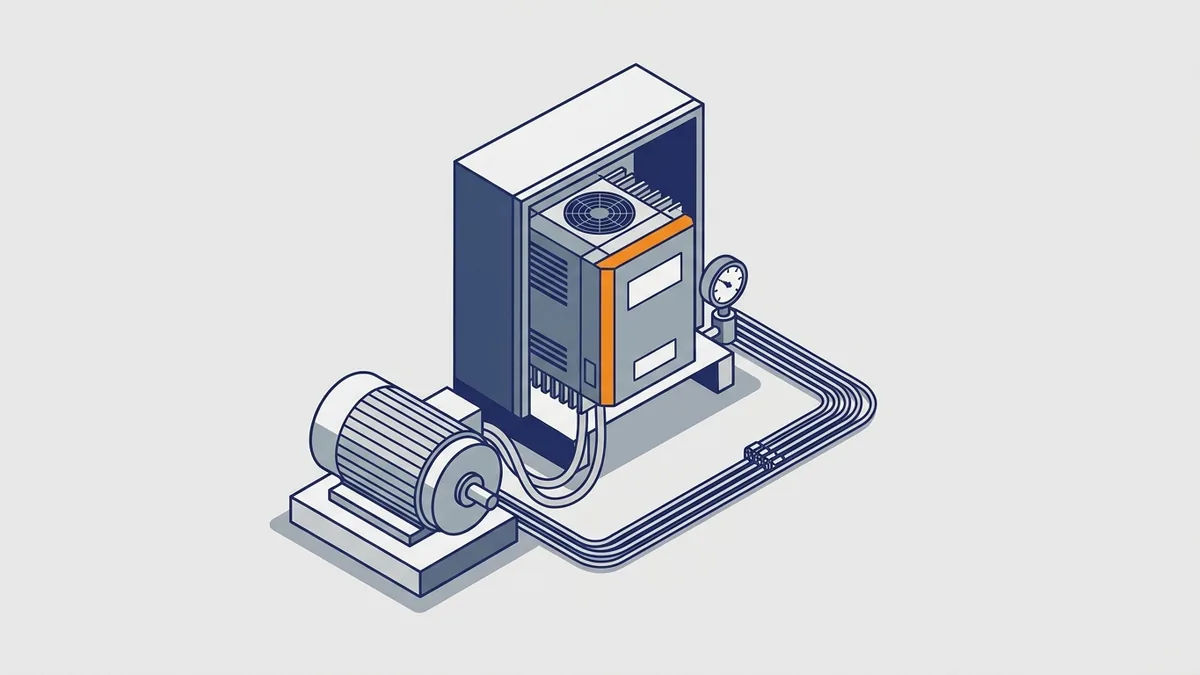
The start modes are:
- Voltage ramp with current limit
- Kick start
- Pump acceleration
- Torque ramp
- Voltage ramp with limited voltage sag
- Current ramp
Eaton lists these benefits: no shock to mechanical parts, less coupling and shaft damage, fewer rotor and winding failures, and no belt squeal or breakage. However, Eaton recommends Classic Ampgard solid-state soft start only on power that would allow full-voltage starting.
What happens in RVSS emergency bypass?
In emergency bypass on the 4.8 kV 400 A unit, the solid-state truck runs as bypassed. Then the unit starts directly across the line when the main contactor closes on a start command. In other words, it acts as a full-voltage starter, so the supply must handle that.
Which RVSS manuals exist?
Eaton publishes installation and maintenance booklets for the 4.8 kV 400 A unit (IB020004EN) and the 7.2 kV 400 A unit (IB020006EN). In addition, a separate RVSS user manual is IB020003EN. Use them for any setup or service steps.
Eaton Ampgard vs SC9000 drive vs low-voltage drives and soft starters
How does Eaton Ampgard compare with the SC9000 drive?
Ampgard starts motors at fixed speed. In contrast, the SC9000 controls speed on medium-voltage motors. The SC9000 EP covers 300-12,000 hp with 2400-13,800 V input and outputs of 0-2400, 0-3300 or 0-4160 V. As a result, you can combine Ampgard starters and SC9000 drives across a common bus in one integrated assembly.
Ampgard also comes in a double bus design for synchronous transfer medium-voltage drives.
Can a low-voltage drive or soft starter replace an Ampgard?
Not for a medium-voltage motor. The Eaton DG1, H-MAX and SPX9000 drives we sell are low voltage, in the 208-600 V class. By contrast, Ampgard is rated 2400 V and above. So use these drives only when the motor and supply are low voltage.
| Need | Option |
|---|---|
| Fixed-speed start, 2.4-13.8 kV | Ampgard |
| Variable speed, 2.4-13.8 kV | SC9000 |
| Variable speed, 208-600 V | DG1, H-MAX or SPX9000 |
| Arc-flash protection | Ampgard AR or SC9000 EP arc-resistant |
Standards, safety and protection
What standards apply to Eaton Ampgard?
Ampgard is designed and tested to UL 347. Likewise, the AR versions meet IEEE C37.20.7 for arc-resistant testing. In addition, mechanical interlocks keep the medium-voltage door from opening while the isolation switch is closed.
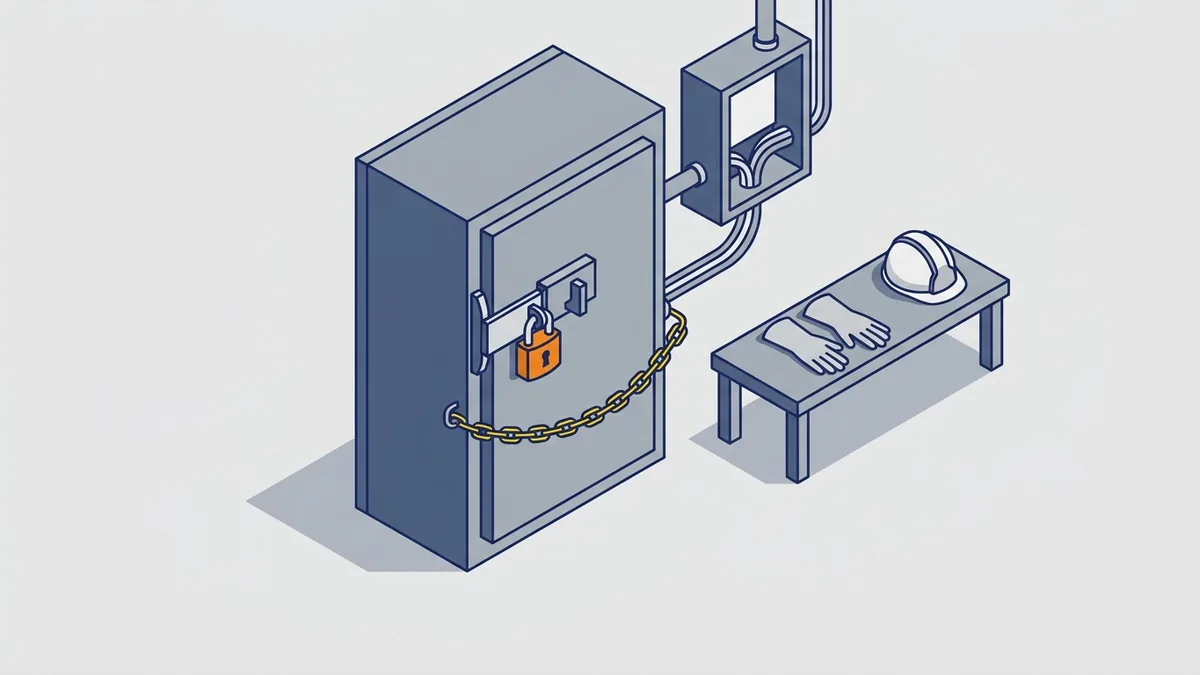
Classic Ampgard starters can use a Classic Remote Operator, so operators can work from a distance. Also, Eaton’s retrofit eBook notes that preventive maintenance plans are required per NFPA 70B. However, medium-voltage work needs qualified people.
What is the safe way to isolate, rack and service a starter?
Eaton’s instruction booklets give the exact steps for your model, so follow them. In general, the order looks like this:
- Open the contactor and then the isolation switch, using the interlocked handle.
- Lock out and tag the source, and check that the circuit is dead with a rated tester.
- Wear the PPE that your arc-flash label calls for.
- Rack or replace the contactor or fuses only with the power off.
- Replace fuses with the same type and rating, and close the doors before you re-energize.
Never defeat an interlock. Also, use only qualified people for this work.
Classic Ampgard: support after December 15, 2025
Is Classic Eaton Ampgard still supported after December 15, 2025?
Partly. Effective December 15, 2025, Eaton limits exact retrofits and replacements for Classic Ampgard because of vendor obsolescence. In addition, it no longer builds new Classic Ampgard assemblies.
Eaton still offers these:
- Retrofits of the latest designs into Classic Ampgard cells
- Select direct replacements
- Replacement SL contactors and fuses
- A Classic Remote Operator for Classic starters
However, renewal parts for the Classic MV801 and MV811 RVSS sections are not available from the factory. For those, ask Eaton about a retrofit path.
How do you choose between a cell retrofit and a replacement?
A cell retrofit puts the latest design into your existing Classic cell, so the lineup and the cabling stay in place. A replacement swaps the whole unit. Eaton makes this call from your system type and GO number, so send both to your Eaton representative or distributor first.
How to identify your Eaton Ampgard and order parts
How do I identify my Eaton Ampgard system and find the GO number?
Follow Eaton’s identification steps. First, compare the low-voltage compartment and isolation switch. Next, note the manufacturing date. Then find the GO (general order) number and the renewal parts label. Finally, send the system type and GO number to your Eaton representative or distributor.
Also collect this nameplate data:
- Voltage
- Contactor rating (400 A or 800 A)
- Starter type
- Relay type
- Control voltage
How do you tell Classic Ampgard from current Ampgard?
Eaton dates Classic Ampgard to 1962 and current Ampgard to 2005. So the manufacturing date is your first clue. Then compare your low-voltage compartment and isolation switch with the pictures on Eaton’s motor control system identification page. If you still cannot tell, send photos and the GO number to Eaton.
Where do I find Eaton Ampgard manuals, design guides and renewal parts catalogs?
Go to Eaton’s website. There, the 7.2 kV, AR and 15 kV design guides are DG020001EN, DG020002EN and DG020003EN. Likewise, the Classic renewal parts catalog is TD020004EN. Eaton also has product pages for each class, an aftermarket page for direct replacements, and a motor control system identification page.
Common mistakes and when to call for help
What are common mistakes when ordering or maintaining Ampgard equipment?
- Mixing up Classic and current Ampgard parts
- Ordering from the 7.2 kV page when the gear is 15 kV
- Treating low-voltage drives as substitutes for medium-voltage starters
- Using old catalog figures as current ratings
Who do I call for Ampgard support?
The Ampgard manual lists the Ampgard Customer Solution Center at 1-877-ETN-CARE (386-2273), Option 2, Option 8, Option 1, or directly at 1-800-523-3775. In addition, Eaton Electrical Services and Systems (EESS) is 1-800-498-2678. Also, Eaton recommends Factory Authorized start-up service.
Precision Electric can help with low-voltage motors, drives, controls and parts. However, medium-voltage switchgear is a different job, so ask us before you assume we cover it.
Cost and lead time
How much does an Ampgard lineup cost and how long does it take?
Eaton’s pages list no pricing or lead times. Because Ampgard lineups are engineered to order from a general order, quotes come from Eaton or an authorized channel. For example, these factors drive the quote:
- Voltage class
- Horsepower or FLA
- Starter type
- Arc-resistant or not
- Main breaker
- Relays
- Lineup length
Frequently asked questions
What is Eaton Ampgard?
Ampgard is Eaton’s line of metal-enclosed medium-voltage motor control. It starts and protects motors rated 2300-13,800 V nominal. In addition, it is certified to UL 347 and has been on the market for more than 50 years.
What voltage and horsepower does Ampgard cover?
The 2.5/5.0/7.2 kV class covers 50-8000 hp. Meanwhile, the 15 kV class covers 100-7500 hp at 7200-13,800 V. Because the ratings differ by class, check the design guide for exact voltage and current.
Is Eaton Ampgard a VFD or a soft starter?
Ampgard is a starter line: full voltage, reactor, autotransformer and RVSS solid-state soft starters. However, the variable-speed medium-voltage drive is the SC9000. It can share a lineup with Ampgard on a common bus.
Is Classic Ampgard still supported?
Partly. Since December 15, 2025, Eaton limits exact retrofits and replacements and no longer builds new Classic assemblies. However, it still offers retrofits to modern components, select direct replacements, and replacement SL contactors and fuses.
How do I identify my Ampgard for a parts order?
First, compare the low-voltage compartment and isolation switch. Then note the manufacturing date, and find the GO number and renewal parts label. Finally, send the system type and GO number to your Eaton representative or distributor.
Can the Eaton DG1, H-MAX or SPX9000 replace an Ampgard starter?
Not for a medium-voltage motor. Those drives are low voltage, and the ones we list are 208-600 V class. Because Ampgard is rated 2400 V and above, use them only when the motor and supply are low voltage.
Ampgard covers fixed-speed starting for medium-voltage motors, and the SC9000 covers variable speed. So match the voltage class, starter type and arc-resistance need to your motor and supply. If you need low-voltage drives, controls or parts, contact Precision Electric for help or a quote, or browse our products.