Eaton DILM32-10 Guide: Ratings, Coil Codes and XTCE032C10
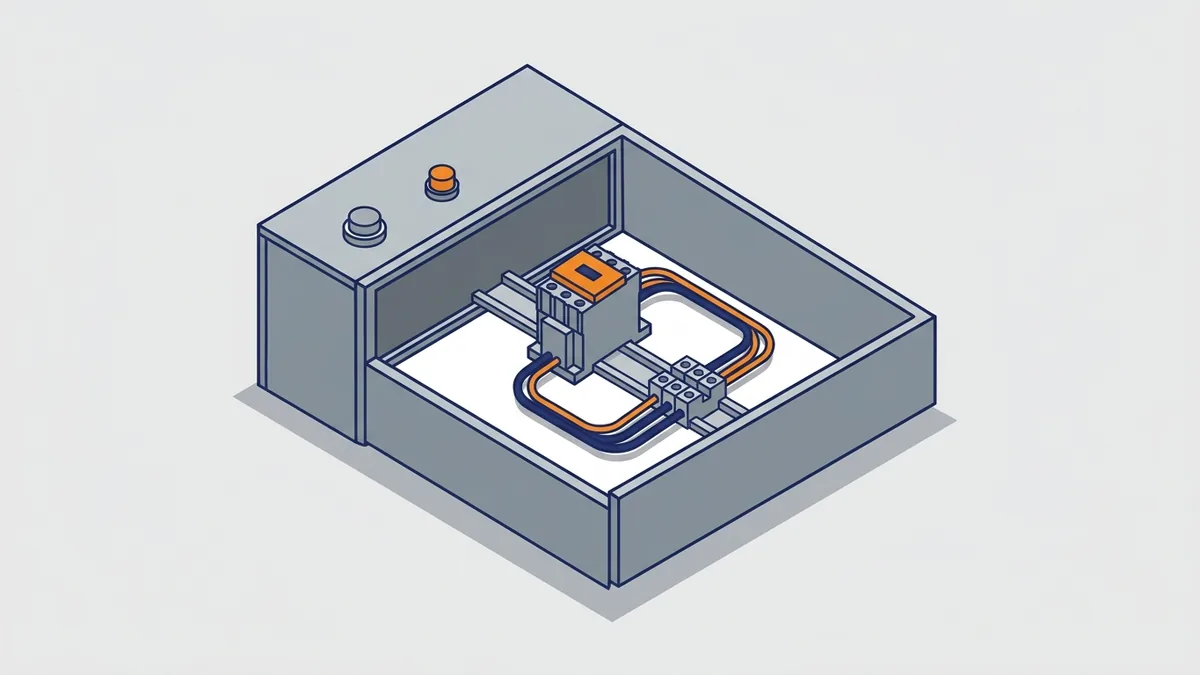
If you hold a part number that reads eaton dilm32-10 or XTCE032C10, you need to know what it is, what it can switch, and which coil to order. This guide covers the ratings, the coil options, the cross-reference between the two naming systems, and what to check before you buy. Also, all figures come from Eaton’s own pages.
On this page
- What the Eaton DILM32-10 is
- DILM32-10 vs XTCE032C10: same contactor, two naming systems
- DILM32-10 ratings and specifications
- Horsepower ratings: what the contactor can switch in North America
- How it compares with the alternatives
- Coil voltage options and part number cross-reference
- Where the DILM32-10 fits
- Installing and wiring the DILM32-10
- What to check before ordering
- Common mistakes and when to repair or replace
- Frequently asked questions
What the Eaton DILM32-10 is
What is the Eaton DILM32-10?
The Eaton DILM32-10 is a 3-pole, 32 A, full-voltage non-reversing IEC contactor. In short, a contactor is a switch that a small control signal closes to power a load, usually a motor. Also, this one has one built-in normally open (N/O) auxiliary contact.
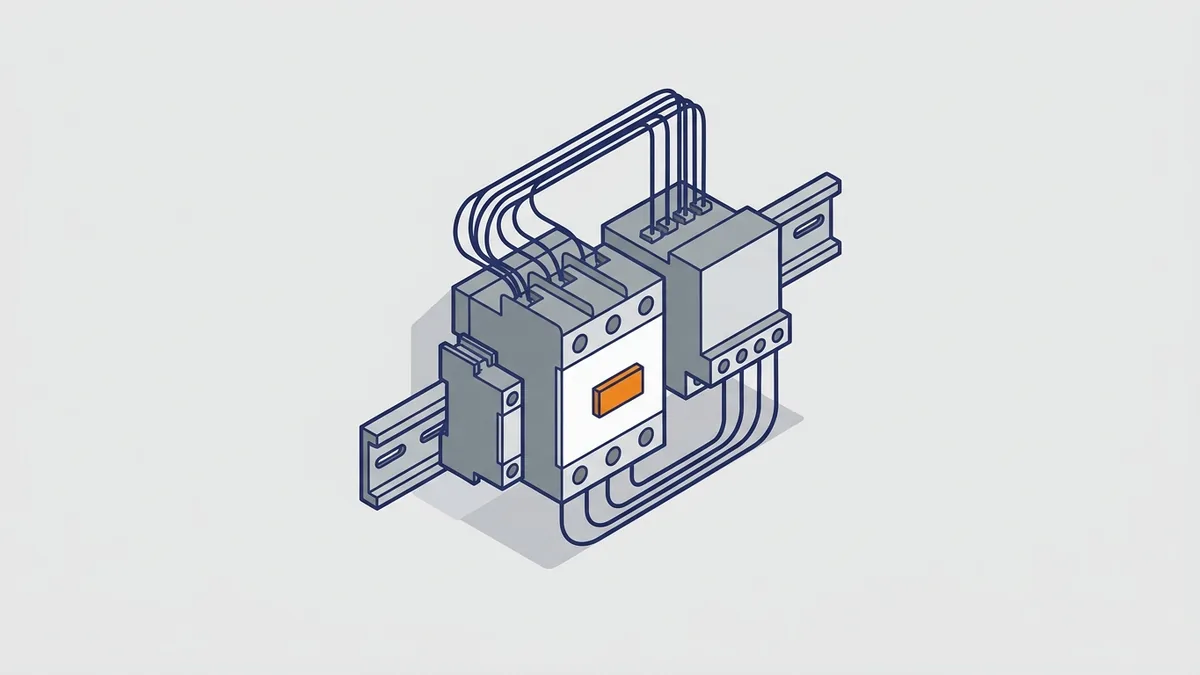
It belongs to the Eaton Moeller series DILM. In North America, Eaton sells the same device as the XT IEC contactor XTCE032C10_. In addition, the housing is Frame C, 45 mm wide, with screw terminals.
However, only the coil voltage changes between variants. So the power poles stay the same.
Does the DILM32-10 have a built-in auxiliary contact?
Yes. In fact, it has one built-in N/O contact. For example, the “10” at the end of the part number means 1 N/O and 0 N/C (normally closed).
Eaton’s catalog says the 7-32 A XTCE contactors have positively driven contacts. That applies between the built-in auxiliary contact and the add-on auxiliary modules, and within the modules. In plain words, the contacts are linked so they cannot signal an unsafe state.
DILM32-10 vs XTCE032C10: same contactor, two naming systems
Is the Eaton DILM32-10 the same as the XTCE032C10?
Yes. In short, they are two names for one contactor. First, DILM32-10 is the global model code. Next, XTCE032C10_ is the North American catalog number.
As proof, Eaton’s pages show matching EAN codes (the barcode number). For example, the 24 V DC version is 277274 and XTCE032C10TD, and the 230 V version is 277260 and XTCE032C10F. So do not treat them as different products.
What does Eaton DILM32-10 XTCE032C10 mean in the part number?
First, read the XTCE number in pieces:
- XTCE means XT IEC contactor.
- 032 means 32 A.
- C means the 45 mm frame.
- 10 means 1 N/O and 0 N/C auxiliary contacts.
- The last letter is the coil code.
However, the DILM version puts the coil in brackets, such as DILM32-10(230V50HZ,240V60HZ). In addition, Eaton gives each DILM variant a 6-digit catalog number, such as 277260.
Which pairs are confirmed?
| DILM32-10 model | Catalog no. | XTCE number | Basis |
|---|---|---|---|
| DILM32-10(230V50HZ,240V60HZ) | 277260 | XTCE032C10F | Same EAN |
| DILM32-10(RDC24) | 277274 | XTCE032C10TD | Same EAN |
| DILM32-10(380V50HZ,440V60HZ) | 277261 | XTCE032C10L | Matching coil description |
However, be careful with suffix letters. For example, some retailer cross-reference tables disagree with Eaton’s pages. So always confirm the exact suffix on the Eaton page.
DILM32-10 ratings and specifications
What are the electrical ratings of the DILM32-10?
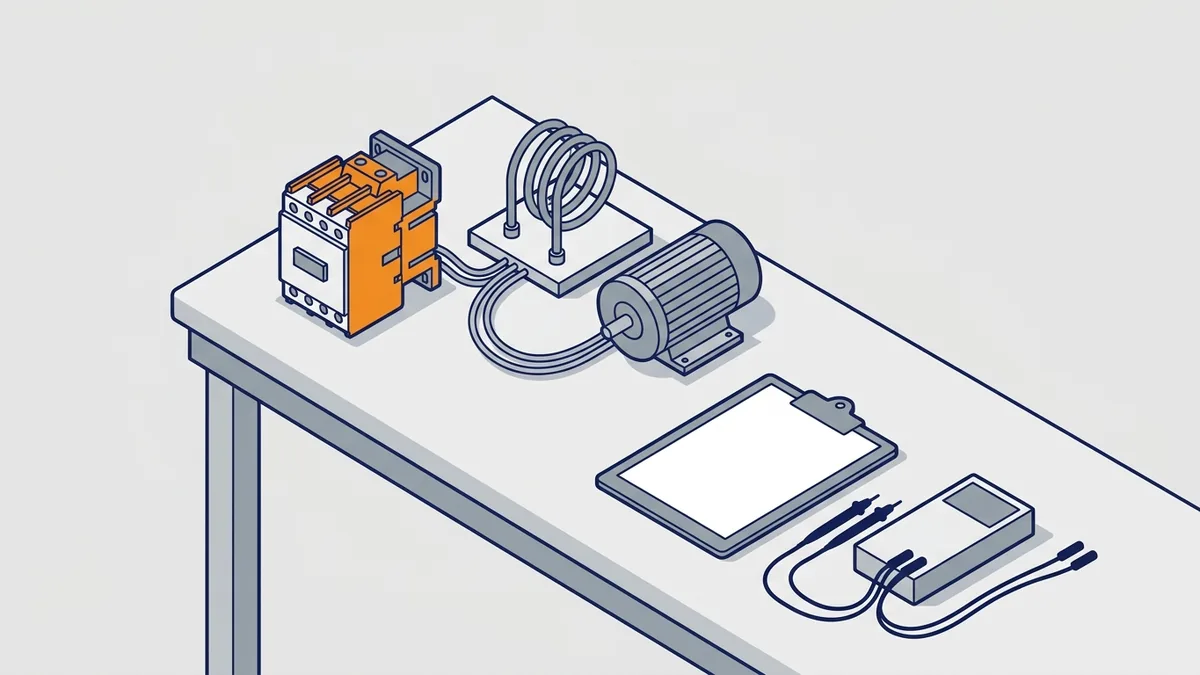
First, AC-3 is the rating for starting and running motors. Next, AC-1 is for resistive loads such as heaters. Then the table below pulls the figures from Eaton’s product pages.
| Item | Rating |
|---|---|
| AC-3 current | 32 A from 220 V to 500 V; 18 A at 660/690 V |
| AC-3 power | 11 kW at 240 V, 15 kW at 380/400 V, 19 kW at 415 V, 20 kW at 440 V, 23 kW at 500 V, 17 kW at 690 V |
| AC-1 current | 45 A at 380-415 V |
| Thermal current (Ith, open) | 45 A at 40°C, 43 A at 50°C, 40 A at 60°C |
| AC-4 | 15 A at 400 V and 440 V |
| DC-1 | 40 A at 60, 110 and 220 V |
| Rated insulation voltage | 690 V |
| Rated impulse withstand | 8000 V AC |
| Breaking capacity | 320 A at 220-500 V; 180 A at 660/690 V |
| Making capacity | 384 A up to 690 V |
| Maximum altitude | 2000 m |
In addition, Eaton lists UL Listed, CSA Certified, EN 60947 and IEC 60947. Also, the contactor is CE marked and RoHS compliant.
What are the dimensions and weight?
The DILM32-10 measures 85 mm high, 45 mm wide and 97 mm deep. In addition, the AC-coil versions weigh 0.428 kg. However, the 24-27 V DC version weighs 0.534 kg.
In US units, Eaton’s page for XTCE032C10C gives 3.425 in deep, 3.898 in high and 1.85 in wide. Also, it lists a weight of 0.9 lb.
How much heat does it dissipate in a panel?
Eaton lists 6.6 W per contactor at rated current, which is 2.2 W per pole. In addition, static heat dissipation, with only the coil energized, is 2.1 W. So add these figures to your enclosure heat budget.
How should I derate it at high temperature or in an enclosure?
First, use the thermal current figures in the table above. The open-contactor rating drops from 45 A at 40°C to 43 A at 50°C and 40 A at 60°C. So the hotter the air around the contactor, the less current it should carry.
Next, measure the air temperature inside the enclosure, not in the room. A closed panel runs hotter, and the contactor adds its own 6.6 W of heat. For the electrical and mechanical life ratings, read the life curves in Eaton’s datasheet for your exact part.
Horsepower ratings: what the contactor can switch in North America
What horsepower can the DILM32-10 switch at 230, 460 and 575 V?
First, Eaton’s XTCE032C10_ sheets list these three-phase ratings:
- 10 hp at 200/230 V
- 20 hp at 460 V
- 25 hp at 575 V
Next, single-phase ratings are 3 hp at 115 V and 5 hp at 200/230 V. However, the DILM-labelled sheet for the 24 V 60 Hz version lists the same ratings as 10 hp at 240 V, 20 hp at 480 V and 25 hp at 600 V.
Why do kW and hp ratings both appear?
First, the two ratings come from different standards. For example, the IEC AC-3 rating gives kW at a set voltage. In contrast, the UL rating gives hp for North American voltages.
So do not size from hp alone. Instead, check the motor full-load current on the nameplate and compare it to the contactor rating at your line voltage.
How it compares with the alternatives
How does it compare with the 18 A and 25 A XTCE contactors?
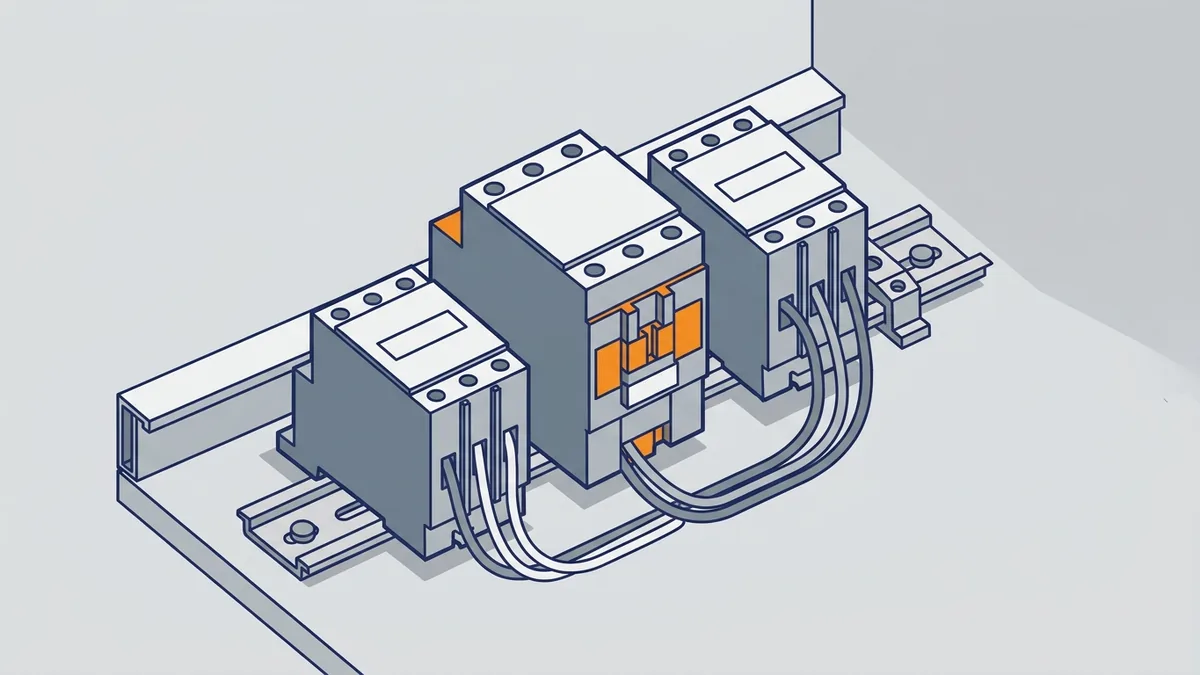
First, all three share the 45 mm Frame C housing. Also, the 32 A part is the top of the three. Next, the table shows the horsepower ratings from Eaton’s pages.
| Model | Current | Hp (1/3PH at 115, 200, 230/200, 230, 460, 575 V) |
|---|---|---|
| XTCE018C10 | 18 A | 2, 2, 3/5, 5, 10, 15 |
| XTCE025C10 | 25 A | 2, 3, 5/7.5, 10, 15, 20 |
| XTCE032C10 | 32 A | 3, 5, 5/10, 10, 20, 25 |
For example, step up a size when the motor current leaves no margin. Also step up when the ambient temperature is high or the duty is heavy. Above 32 A, however, look at the larger XTCE contactors.
What is the difference between AC-3 and AC-1?
First, the 32 A AC-3 rating is for motor starting. Next, the 45 A AC-1 rating is for resistive loads. So never use the 45 A figure to size a motor circuit.
Coil voltage options and part number cross-reference
What coil voltages does the DILM32-10 come in?
Eaton lists AC coils for 24 V, 110-120 V, 208 V, 220-240 V, 230 V, 380/440 V and 412-480 V. It also lists one 24-27 V DC coil. So yes, there is a DC option.
Which XTCE032C10 suffix matches which coil voltage?
| Suffix | Coil |
|---|---|
| T | 24 V AC, 50-60 Hz |
| U | 24 V AC, 50 Hz only |
| TD | 24-27 V DC (DILM: RDC24) |
| A | 110 V 50 Hz / 120 V 60 Hz |
| E | 208 V 60 Hz |
| B | 220 V 50 Hz / 240 V 60 Hz |
| F | 230 V 50 Hz |
| L | 380 V 50 Hz / 440 V 60 Hz |
| C | 412 V 50 Hz / 480 V 60 Hz |
First, the coil must match your control voltage and frequency. For example, a 50 Hz-only coil is not a 60 Hz coil. Also confirm each suffix on the Eaton page for that part before you order.
What is the difference between a 24 V AC coil and a 24 V DC (RDC24) coil?
First, the AC coil runs on 24 V alternating current. Next, the RDC24 coil runs on 24-27 V direct current and is a reduced-power coil. In addition, a distributor listing says it has an integrated suppressor circuit and works with the SmartWire-DT communication system.
So match the coil to your control supply. Otherwise, a 24 V AC coil will not work on a DC supply.
Can a PLC output drive the 24 V DC coil directly?
Maybe, but check first. The RDC24 coil is a reduced-power coil, so it draws less than a standard coil. However, you still need the coil current from Eaton’s datasheet for your exact part.
Then compare that figure with the current rating of the PLC output. If the output is rated lower, or the datasheet does not clearly allow it, use an interposing relay between the PLC and the contactor.
Where the DILM32-10 fits
What jobs is the XTCE032C10 contactor suited for?
Typical uses include direct-on-line motor starting up to 15 kW at 400 V or 20 hp at 460 V. For example, that covers pump starters, fan starters and conveyors. It also works in contactor and overload relay combinations.
What is the DILM32-01 / XTCE032C01 version, and when would I choose it?
The “01” in the part number means 0 N/O and 1 N/C built-in auxiliary contact. The power poles are the same as the 1 N/O version. So choose it when your control circuit needs a normally closed contact, such as an interlock that blocks a second contactor from closing.
For example, Eaton’s star-delta tables use XTCE032C01_ for the star and delta contactors. Choose the 1 N/O version when you need a contact that closes with the coil, such as a seal-in or a run signal.
Which overload relay or motor protector goes with it?
Eaton’s catalog pairs XTCE contactors with XTOB…CC1 overload relays in assembled starters. It also lists manual motor protectors (XTPR) and motor starter combinations (XTSC). For example, the catalog examples show XTCE018C10_ with XTOB016CC1 and XTCE025C10_ with XTOB024CC1. Following that pattern, the 32 A contactor pairs with the XTOB032CC1, which you set to the motor’s full-load current.
However, confirm the exact match in the tables in the Volume 5 IEC Contactors and Starters catalog. Those tables also list the short-circuit protective device for each starter, including type 2 coordination. In addition, Eaton’s datasheet site shows the overload relay, suppressor and auxiliary contact modules as the accessories.
Can it be used for star-delta starting?
Yes. Eaton’s catalog star-delta tables list XTCE032C10_ as the K1M main contactor, with XTCE032C01_ as the star and delta contactors. They also list the XTCEXMLC mechanical interlock and the XTCEXSDLC link kit for XTCE018C-XTCE032C. So the 32 A part is covered.
How do I wire a star-delta starter around it?
First, know the three contactors and their jobs. Then follow this general sequence:
- The main contactor (K1M) connects the line to the motor terminals U1, V1 and W1.
- The star contactor ties the motor terminals U2, V2 and W2 together to form the star point.
- The delta contactor connects the end of each winding to the start of the next, so the motor runs in delta.
- A timer closes the main and star contactors to start, then drops the star and closes the delta after its set time.
- The mechanical interlock and an electrical interlock, using the N/C contacts, keep the star and delta contactors from closing together.
The link kit connects the contactors. Because a star-delta fault can short the supply, follow the wiring diagram and timer settings in Eaton’s catalog for your starter.
What about drives?
However, a contactor like this does not replace a drive or soft starter. For variable speed or soft starting, see our existing Eaton VFD and soft starter posts.
Installing and wiring the DILM32-10
How do I install and wire it?
Follow these steps:

- Confirm the coil voltage and frequency match your control supply.
- Mount the contactor within its ambient temperature and altitude limits.
- Wire the coil to A1 and A2, and the power poles from 1/3/5 to 2/4/6. Verify the markings on the product’s contact diagram.
- Wire the auxiliary contact, usually 13/14, after you check the diagram.
- Tighten the screw terminals. A distributor lists a size 2 Pozidriv screwdriver as the tool.
Instead of guessing, take torque values and wire ranges from Eaton’s instruction leaflet. Do not guess them.
Also check that the coil supply stays within the pick-up and drop-out range. Next, keep the load at or below the AC-3 current. Finally, allow for the 6.6 W of heat in the enclosure.
What to check before ordering
What is on the order checklist?
- Control voltage and frequency
- AC or DC coil
- Motor full-load current at your line voltage
- Auxiliary contacts: one N/O is built in
- Mounting and accessory needs, such as an overload relay
- Whether the nameplate says DILM or XTCE, which needs a cross-reference
First, find the full part number on the nameplate. Then match it to the Eaton page for that exact model.
Where do I download the datasheet, CAD and catalog?
Each XTCE032C10_ page on eaton.com has a specification sheet download. Also, the DILM variants have full datasheets on Eaton’s datasheet site. In addition, the detailed starter-combination tables are in the Volume 5 IEC Contactors and Starters catalog. Finally, an XTCE_C AutoCAD 2D footprint is also listed with the supporting documents.
How do I check that a unit is genuine?
Eaton’s product pages show a serial-number check. In addition, the page flags serial numbers that Eaton knows to be suspect. So buy from an authorized source and check the serial number.
How much does it cost and how long does delivery take?
Eaton’s pages do not list price or lead time. Request a quote instead.
Common mistakes and when to repair or replace
What mistakes do people make when ordering or replacing it?
- Ordering the wrong coil voltage, or a 50 Hz-only coil for a 60 Hz panel.
- Confusing the 45 A AC-1 rating with the 32 A AC-3 rating.
- Mixing up kW and hp ratings.
- Trusting every retailer cross-reference. Eaton’s pages win when they differ.
When should I replace the contactor instead of repairing it?
Replace a contactor with pitted or welded contacts, or a burnt coil. However, contactors of this size are built to be swapped, not rebuilt. If the overload relay, the whole starter or the drive upstream also fails, find the cause before you fit the new part.
Frequently asked questions
Is the Eaton DILM32-10 the same as the XTCE032C10?
Yes. In short, they are two names for one 32 A, 3-pole, 45 mm contactor with a built-in 1 N/O auxiliary contact. DILM32-10 is the global model code and XTCE032C10_ is the North American catalog number. Eaton’s pages show the same EAN for matching pairs, such as 277274 with XTCE032C10TD and 277260 with XTCE032C10F.
What are the ratings of the DILM32-10?
AC-3 is 32 A up to 500 V and 18 A at 660/690 V, and 15 kW at 380/400 V. Also, AC-1 is 45 A at 380-415 V. The North American sheets list 10 hp at 200/230 V, 20 hp at 460 V and 25 hp at 575 V three-phase. In addition, it has screw terminals and is 85 x 45 x 97 mm.
What coil voltages does the XTCE032C10 come in?
Eaton lists AC coils for 24 V, 110-120 V, 208 V, 220-240 V, 230 V, 380/440 V and 412-480 V, plus a 24-27 V DC coil. The suffix letter selects the coil: A, B, C, E, F, L, T, U or TD. So use the coil table above and confirm on Eaton’s page.
How many auxiliary contacts does the DILM32-10 have?
It has one built-in normally open contact. The “10” in the part number means 1 N/O and 0 N/C. Also, Eaton’s catalog says XTCE contactors up to 32 A have positively driven contacts between the built-in contact and the add-on modules.
Where do I find the datasheet?
Each XTCE032C10_ page on eaton.com has a specification sheet download. Also, the DILM variants have full datasheets on Eaton’s datasheet site. Finally, the starter-combination tables are in the Volume 5 IEC Contactors and Starters catalog.
The eaton dilm32-10 and the XTCE032C10 are one 32 A contactor under two names, and the coil suffix is the main choice you make. Check your control voltage, frequency and motor current, then confirm the match on Eaton’s page. If you need a quote, a replacement or a repair, contact Precision Electric and we will help you get the right part.