DC Electric Motor Guide: Types, Nameplates and SCR Drives
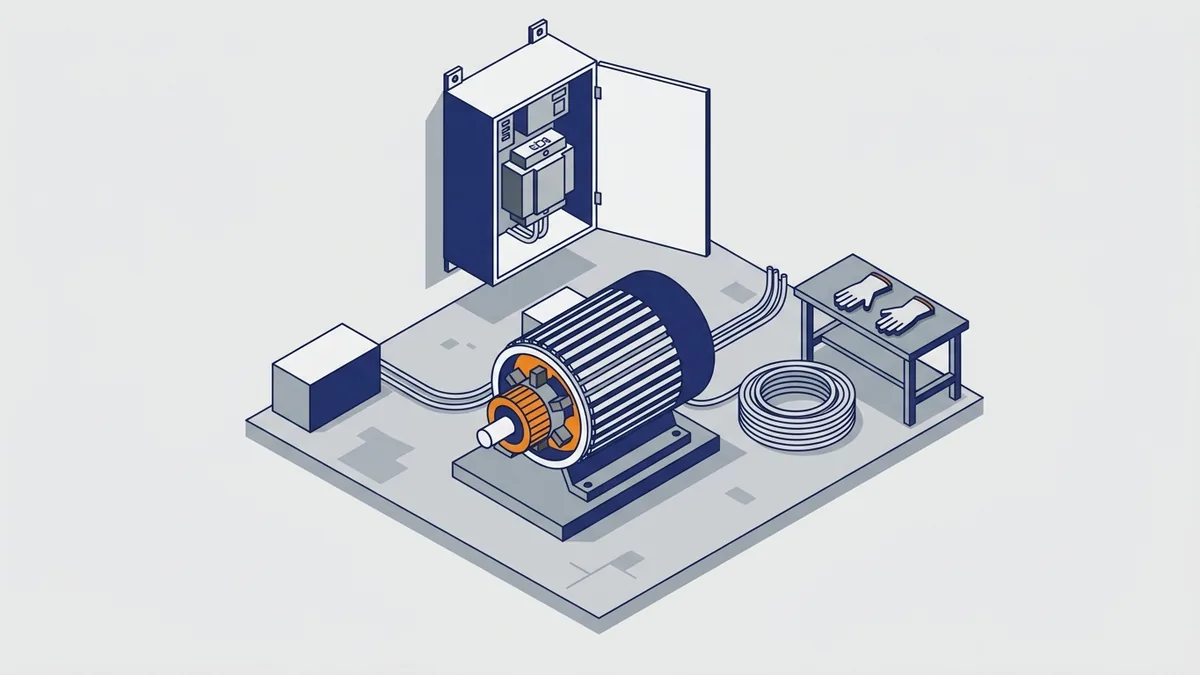
A dc electric motor runs on direct current, and finding the right one to replace an older unit can be hard. First, this guide explains how these motors work, how to read a nameplate and how an SCR drive fits in. You will also see our surplus stock and learn how to check brushes and the commutator.
On this page
- What is a DC electric motor?
- How a DC motor works and the four types
- DC motors and controls: how the SCR drive fits
- How to read a DC motor nameplate before you buy
- Surplus DC electric motors in stock
- What is electric motor surplus, and is it a good value?
- What DC motors do you have in surplus inventory?
- Fractional to 1 HP
- 2 to 7.5 HP
- 10 to 100 HP
- What do the enclosure and cooling abbreviations mean?
- What should I check before buying a surplus or used DC motor?
- How do you electrically test a used DC motor?
- General electric motors: GE and other brands in the list
- DC motor brush and commutator maintenance
- Common mistakes and when to call for repair
- How to request a quote
- Frequently asked questions
What is a DC electric motor?
A DC electric motor is a motor that runs on direct current. For example, common industrial designs use brushes and a commutator (a ring of copper bars) to feed current to the armature, so you may also hear the term brushed DC motor.
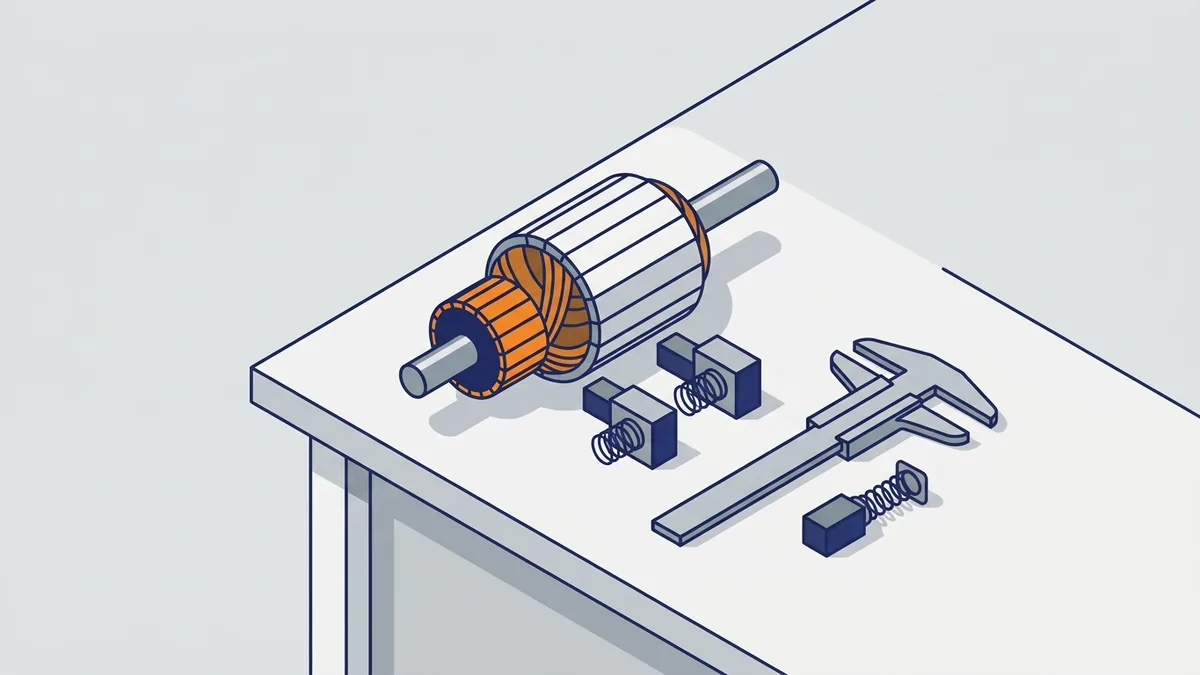
However, these parts need more care than anything in an AC motor. According to the Industrial Solutions Lab at UNC Charlotte, brush and commutator maintenance on DC motors is significant compared with AC designs.
In addition, the surplus list below covers industrial DC motors, mostly from 1/4 to 100 HP. For a full comparison with AC, see our posts on AC vs DC differences and DC motor basics.
How a DC motor works and the four types
How does a DC motor work?
Current flows through the armature windings inside a magnetic field, and that creates torque. Next, the brushes ride on the commutator and switch the current as the armature turns, so the torque keeps pushing in one direction. The field comes from magnets or from field windings.
What are the types of DC motors?
Engineers sort DC motors by field type. First, here are the four types:
- Permanent magnet (PM): magnets supply the field.
- Shunt: the field winding sits in parallel with the armature.
- Series: the field winding is in series with the armature.
- Compound: the motor has both a series and a shunt field.
What is a permanent magnet DC motor and where is it used?
A permanent magnet DC motor uses magnets for the field, so the armature is the only part you power. However, these motors have limited load-handling ability. As a result, you mostly find them in low-horsepower jobs.
For example, most of the fractional-horsepower 56C motors on our surplus list are PM motors, including the Baldor CDP series.
Why can’t a series DC motor run without a load?
A series motor gives high starting torque. However, its no-load speed can climb high enough to damage it. For this reason, never run a series motor uncoupled from its load.
In contrast, a shunt motor behaves differently. Its main advantage is near-constant speed, and it will not race to high speed with no load. Meanwhile, a compound motor combines both. The series field gives better starting torque, and the shunt field gives better speed regulation.
DC motors and controls: how the SCR drive fits
What are electric motors and controls, and what drive does a DC motor need?
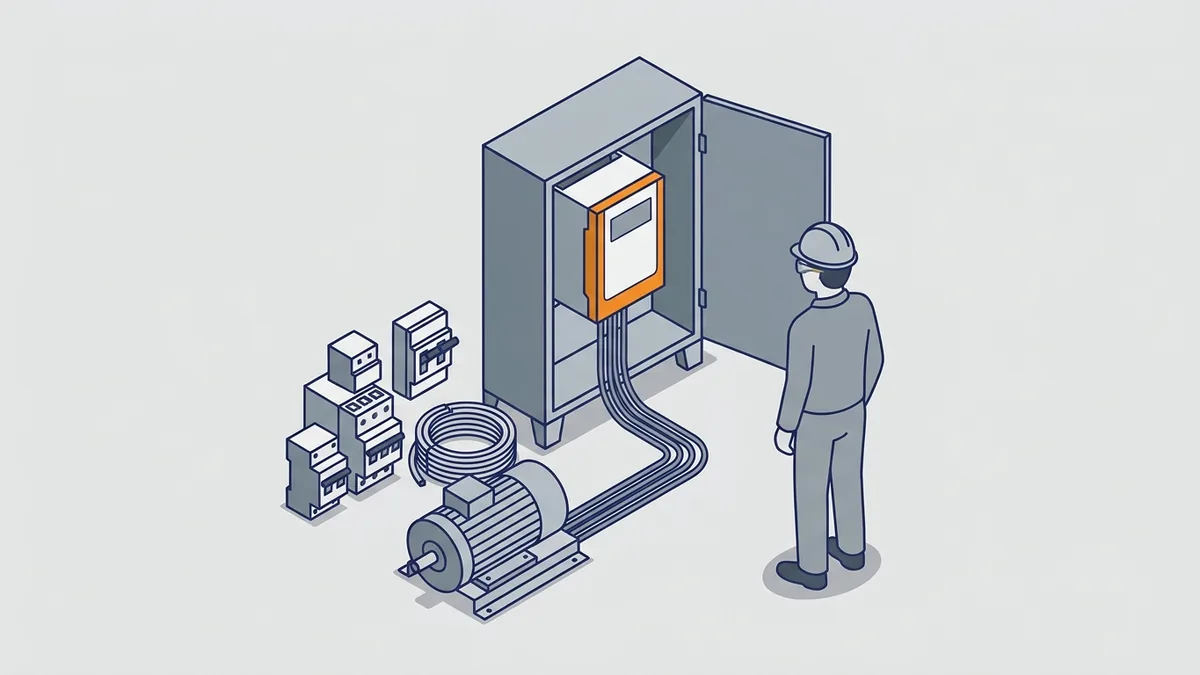
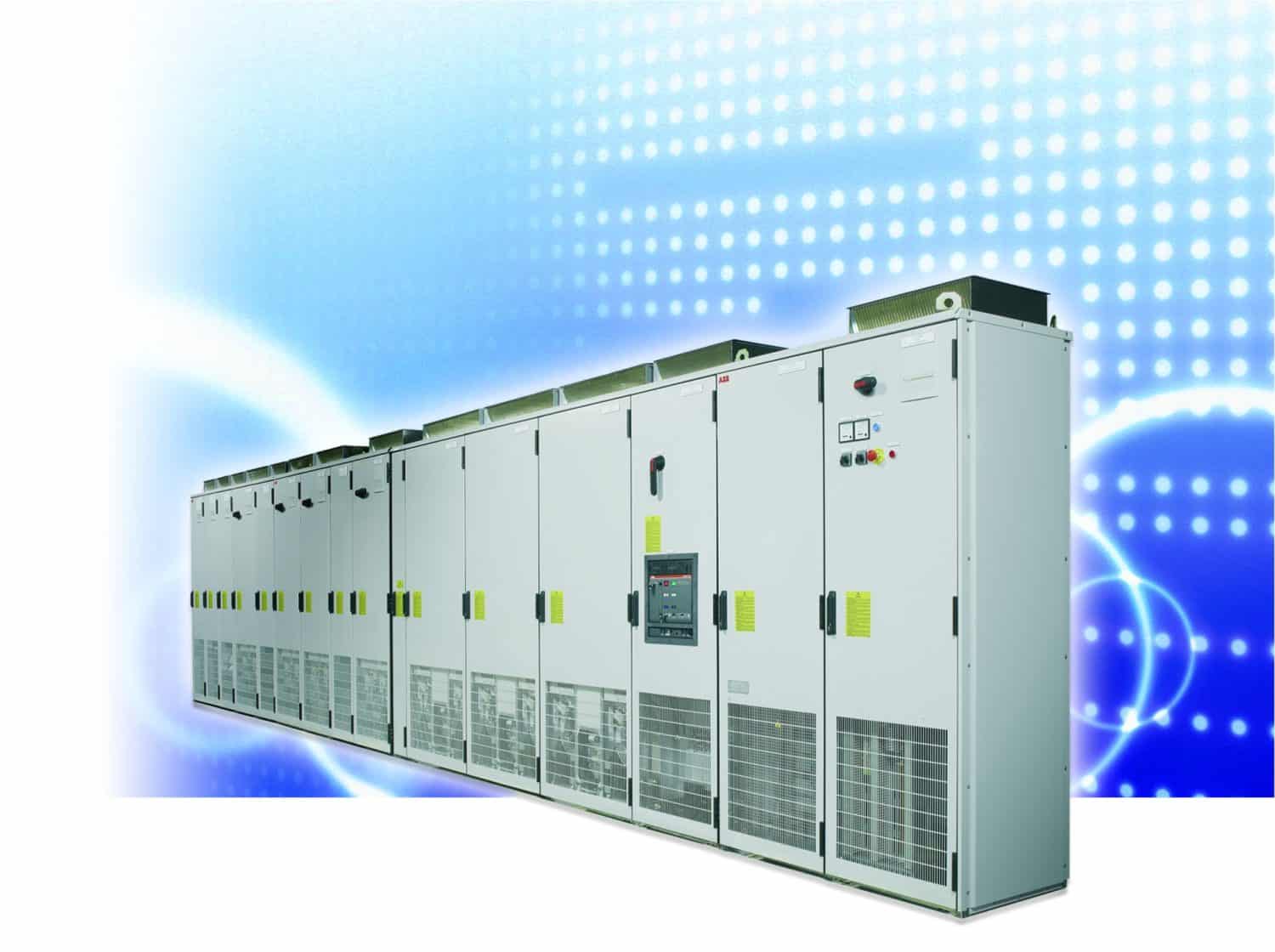
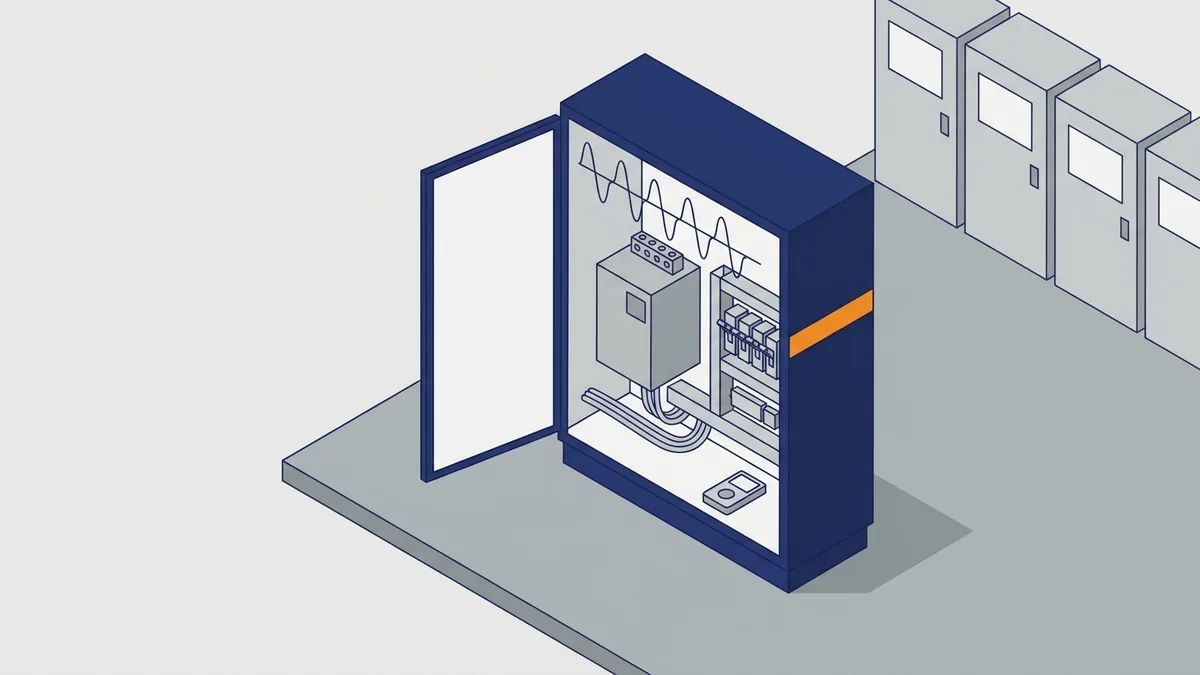
Electric motors and controls work as a pair: the motor makes the torque and the control sets the speed. For example, an industrial SCR drive motor normally runs from an SCR (rectifier) DC drive. The drive turns AC line power into adjustable DC armature voltage.
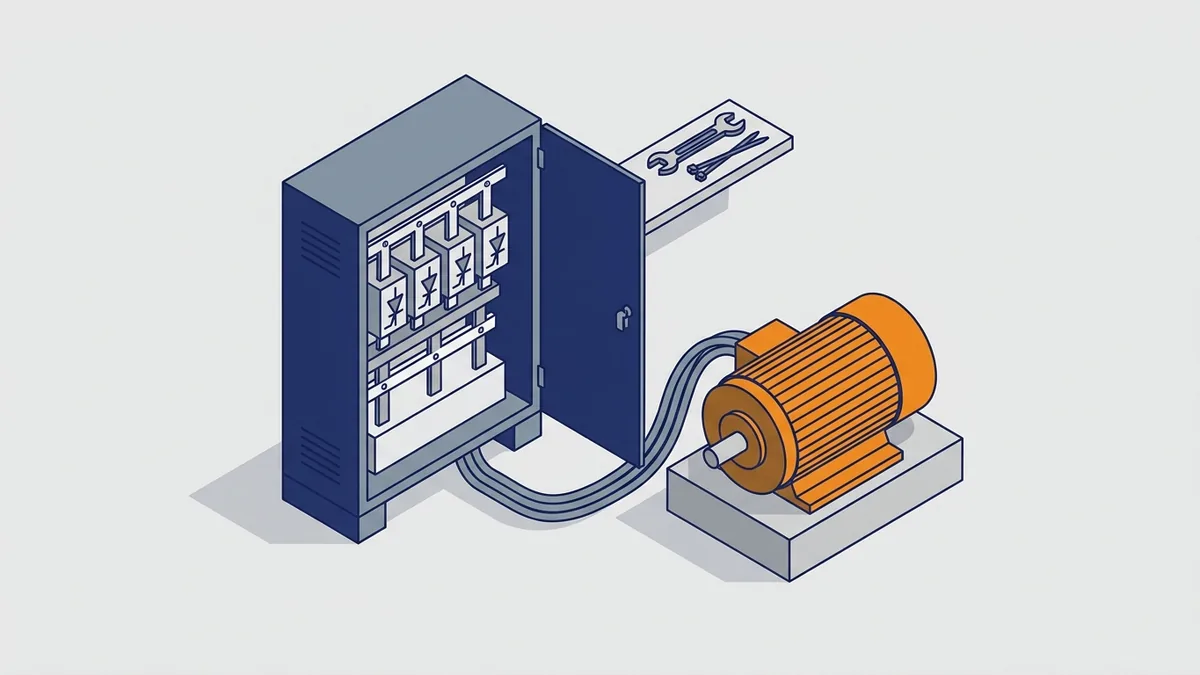
Some drives are non-regenerative. In contrast, others are regenerative, also called four-quadrant, and they suit jobs that must brake or reverse. For example, Baldor lists both kinds, such as the DC3N and DC3R.
What do 90 V and 180 V mean on a DC motor?
These numbers are armature voltage ratings. For example, Baldor lists a 115 VAC drive as 90 VDC armature and a 230 VAC drive as 180 VDC armature. As a result, a 180 V motor suits a 230 VAC single-phase full-wave supply.
In addition, wound-field motors need a separate field supply. For example, Baldor-Reliance catalog listings show a 180 V armature with a 100/200 V field. Finally, always check the nameplate and your drive before you order.
How do you match a DC drive to a motor?
Start with the armature. First, the drive’s DC output voltage must match the motor’s armature voltage. Then the drive’s continuous current rating must be at least the armature current on the nameplate.
Larger motors often have 240 V or 500 V armature ratings. In general, a 240 V armature suits a drive fed from a 230 V AC line, and a 500 V armature suits a drive fed from a 460 V three-phase line. Confirm this against the drive’s data sheet.
Next, check the field. A wound-field motor needs its own DC field supply at the voltage on the nameplate. Some drives include one, while others need a separate field supply. Also, a drive for a PM motor has no field to supply.
How do you control the speed of a DC motor?
On a shunt or compound motor, you change the armature voltage or the shunt field current. For example, lowering armature voltage lowers speed.
Above base speed, drives use field weakening. However, start it only after the motor reaches base speed. Also, never go past the motor’s maximum speed rating, which is its mechanical limit.
Finally, when you replace a motor, compare the drive’s voltage and current output with the motor nameplate.
How do you wire the terminals and reverse rotation?
Under the common NEMA marking, A1 and A2 are the armature leads. F1 and F2 are the shunt field leads, and S1 and S2 are the series field leads. However, older or special motors may use other marks, so check the terminal diagram on the motor or inside the conduit box.
Tach (tachometer) leads vary by maker. Read the label on the tach or the drive manual before you connect them, because reversed tach polarity can make a drive run away.
To reverse rotation, swap the two armature leads or the two field leads, but never both. Most people swap the armature leads. With a regenerative drive, you can reverse the motor electronically instead.
How to read a DC motor nameplate before you buy
First, record every field before you remove the old motor. Copy the model and type code exactly as stamped. Then note these items:
- Manufacturer and serial number
- Horsepower
- Base and top speed in RPM
- Armature voltage and current
- Field voltage
- Frame and enclosure
Next, photograph the installation, the nameplate and the terminal diagram. Matching one number is not enough. For example, two motors with the same horsepower can differ in speed, torque behavior, frame, shaft, mounting and cooling.
Our list uses its own shorthand, such as two RPM values for a speed range. Because of that, ask us what a listing means before you rely on armature and field entries. In addition, the Baldor-Reliance catalog is a good place to check general terms.
What do two RPM values like 1750/2300 mean?
The first number is the base speed. That is the speed at full armature voltage with full field. The second number is the top speed, which the motor reaches only with a weakened field.
So a motor listed at 1750/2300 RPM runs at 1750 RPM at base and can reach 2300 RPM with field weakening. Your drive must support field weakening to use that range. Also, never run the motor above the top number.
NEMA frame sizes and mounting: what does 56C mean?
Frame size describes physical size, not electrical performance. Because NEMA standardized frames, you can swap one maker’s motor for a similar one from another, if both use standard frames. However, a wrong frame will not fit even when the electrical specs match.
For example, a 56C motor has a 3.5 in shaft height and a C-face with threaded mounting holes. The face has a 5.875 in bolt circle, a 4.5 in register and four 3/8-16 tapped holes. The shaft is 5/8 in. Finally, the Kollmorgen NEMA frame size reference and the Nidec US Motors NEMA dimension guide list these sizes.
What do the Y and Z frame suffixes mean?
A C suffix means a C-flange mount. In contrast, a Y means a special mounting set by the manufacturer. Likewise, a Z means a special shaft set by the manufacturer.
Older DC frames, such as 189AT, 219AT, 259AT and 2810TZ, are maker-specific. Therefore, do not apply the 56C chart to them. Instead, match them by nameplate or manufacturer drawing.
Surplus DC electric motors in stock
What is electric motor surplus, and is it a good value?
Electric motor surplus can mean unused stock from cancelled projects or extra buying. However, it can also mean used units with a service history, or refurbished units. For refurbished motors, ask what work was done and what tests exist.
Value depends on the match and the condition. For example, for a DC motor, buyers review armature and field ratings, speed range and commutator condition. We do not state prices here, so call for a quote.
What DC motors do you have in surplus inventory?
The tables below are a snapshot of our surplus list, grouped by horsepower. Because stock moves, call 877-625-2402 to confirm availability before you plan around a unit. Also, some units appear more than once. For example, GE 5CD144VC001B008 is listed three times (stock 155, 153 and 133), and Cutler Hammer 250-100-0116A twice (stock 432 and 150).
The last column shows our condition code. Ask us what each code means for a given unit. In particular, confirm the units marked NS or RG before you count on them.
Fractional to 1 HP
| Stock number | Manufacturer | Model number | Description | Condition |
|---|---|---|---|---|
| 116 | Pacific Scientific | SR3624-8291-7-56BC | 1/4 HP, 1750 RPM, 56C frame, 90VDC, TEFC, has base | NS |
| 173 | Baldor | CDP3316 | 1/3 HP, 1750 RPM, 56C FR, 180VDC, PM TENV | E OK |
| 174 | Baldor | CDP3330 | 1/2 HP, 1750 RPM, 56C FR, 90 VDC, PM, TENV | E OK |
| 176 | Pacific Scientific | SR3640-8293-84-7-56HC | 1/2 HP, 1750 RPM, 56 FR, 90 VDC, PM, TENV, D flange | E OK |
| 423 | General Electric | 6VFM1050B561A1 | 1/2 HP, 1725 RPM, 56 FR, 100F, 90A, TENV | E OK |
| 425 | Baldor | CDP3326 | 1/2 HP, 1750 RPM, 56C FR, 180 VDC, PM, TENV | E OK |
| 108 | Baldor | CDP3436 | 3/4 HP, 1750 RPM, 56C frame, 180 VDC, PM, TEFC, no base | E OK |
| 118 | Baldor | CDP3518 | 1 HP, 1750 RPM, 56C frame, 180 VDC, PM, TEFC, no base | NS |
| 428 | Leeson | C4D28FK6G | 1 HP, 2500 RPM, XS56C FR, 180VDC, PM, TEFC | E OK |
| 412 | General Electric | 5BPA56RAG9A | 1 HP, 1725 RPM, 56 FR, 180 VDC, PM, TEFC | E OK |
| 177 | Baldor | CDP3455 | 1 HP, 1750 RPM, 56C FR, 180 VDC, PM, TEFC | E OK |
2 to 7.5 HP
| Stock number | Manufacturer | Model number | Description | Condition |
|---|---|---|---|---|
| 131 | Reliance | DC0189ATCZ | 2 HP, 1750/1950 RPM, 189ATZ frame, 240 A, 150 F, BV | E OK |
| 155 | General Electric | 5CD144VC001B008 | 3 HP, 2500/2750 RPM, 180 A, 200/100 F, 186ATC, TENV | E OK |
| 153 | General Electric | 5CD144VC001B008 | 3 HP, 2500/2750 RPM, 180 A, 200/100 F, 186ATC, TENV | E OK |
| 133 | General Electric | 5CD144VC001B008 | 3 HP, 2500/2750 RPM, 180 A, 200/100 F, 186ATC, TENV | E OK |
| 156 | Baldor | CD6203 | 3 HP, 1750 RPM, 184TC FR, 180A / 100/200 F, TEFC | E OK |
| 157 | General Electric | 5CD145VC005B001 | 3 HP, 1750/2050 RPM, CD189ATC FR, 180 A/100/200 F, TENV | E OK |
| 162 | Reliance | T18P1118E-7S | 3 HP, 1750 RPM, DC0189ATY FR, 200F, 180A, DP | E OK |
| 624 | Reliance | T18R1323H-PT | 5 HP, 1750/2300 RPM, CT811ATZ FR, 500A, 300F, DP | NS |
| 432 | Cutler Hammer | 250-100-0116A | 5 HP, 1150/2000 RPM, 256AT FR, 500/300 VDC, DP | E OK |
| 150 | Cutler Hammer | 250-100-0116A | 5 HP, 1150/2000 RPM, 256AT FR, 500/300 VDC, DP | E OK |
| 141 | General Electric | 5CD1531A806A800 | 7.5 HP, 2500/2875 RPM, 500 A, 150/300 F, CD219T FR, BV | E OK |
| 142 | Magnetek | 2190B411L02 | 7.5 HP, 1750 RPM, 180 A, 200 F, 219AT frame, BV | E OK |
10 to 100 HP
| Stock number | Manufacturer | Model number | Description | Condition |
|---|---|---|---|---|
| 434 | Baldor | D5010 | 10 HP, 1750 RPM, AD219AT FR, 500A, 150/300F, DPFG | E OK |
| 130 | Reliance | 11839122T21 | 15 HP, 1250/3750 RPM, 259AT frame, 120 A, 240 F, BV | E OK |
| 137 | General Electric | 5CD063KA038A127 | 15 HP, 1750/2300 RPM, CD258AT FR, 500 A, 150/300 F, BV | E OK |
| 433 | Baldor | D2018R | 15 HP, 1750/2300 RPM, SC2113ATZ FR, 240A, 180F, DP | NS |
| 129 | Reliance | 4LA843818TL | 20 HP, 1750 RPM, 284T frame, 120 A, 240 F, BV | E OK |
| 146 | Reliance | 06KA867603-ZU | 20 HP, 1750/1950 RPM, LC2512ATZ FR, 500/300 VDC | E OK |
| 147 | Reliance | F28P1701A | 25 HP, 2500/3000 RPM, 284AT FR, 240/240 VDC, BV | E OK |
| 436 | Reliance | R-66575-T1-HS | 30 HP, 500/2000 RPM, 505-AS FR, 240A, 240F, has blower | E OK |
| 441 | CMC | 2890B452C01 | 40 HP, 1750 RPM, 289ATZ FR, 500A, 300F, DP | RG |
| 454 | Reliance | T28S1330E-AC | 60 HP, 1750/2100, MC2812ATZ, 300/500 VDC, DPBV | RG |
| 152 | Powertec | A28DLF1000900011 | 75 HP, 2500 RPM, 2810TZ FR, 640 BUS VDC, brushless | E OK |
| 440 | Reliance | 1U827783T5-LP | 100 HP, 1750 RPM, 503A FR, 480A, 240F, force cooled | E OK |
Note that stock 152 is listed as brushless, so it does not have the brush and commutator care described later.
What do the enclosure and cooling abbreviations mean?
These letters describe how the motor is enclosed and cooled:
- TENV: totally enclosed, non-ventilated. It has no fan and cools through the frame.
- TEFC: totally enclosed, fan cooled. A shaft-mounted fan blows air over the frame.
- DP: drip proof. Vents let air through, and the design keeps falling liquid out.
- DPFG: drip proof, fully guarded. It is like DP, with guards over the openings.
- BV: blower ventilated. A separate blower motor pushes cooling air through the motor.
Our condition codes (E OK, NS and RG) are shop shorthand. Ask us what each one means for a given unit before you buy.
What should I check before buying a surplus or used DC motor?
First, match the nameplate data to your equipment. Compare voltage, HP, RPM and frame. Then confirm the fit, including shaft diameter and mounting style. Also check that the armature and field voltage match your drive.
Next, inspect the motor for damage. For example, look for these signs:
- Dents, cracks or rust
- Water stains
- Burn marks or discolored insulation
- Melted insulation or a burnt smell
Finally, check the commutator, brushes and bearings. In addition, for used or refurbished units, ask for test results and terms.
How do you electrically test a used DC motor?
First, lock out the power and disconnect the motor leads. Then test each winding with a megohmmeter (an insulation tester) between the winding and the frame. Test the armature and the field separately. Low or falling readings point to moisture or damaged insulation.
Next, measure winding resistance with a low-resistance ohmmeter. For the field, compare the reading with the nameplate or the maker’s data. For the armature, measure between neighboring commutator bars. Readings that differ a lot from bar to bar suggest a shorted or open coil.
Also turn the shaft by hand. It should spin freely, with no rough bearings or rubbing. Follow the maker’s manual for test voltages and pass values.
General electric motors: GE and other brands in the list
The phrase general electric motors can mean two things. Some people want GE-brand motors, and others want general-purpose electric motors. For this reason, we cover both here.
Our list includes GE-labelled units: 6VFM1050B561A1, 5BPA56RAG9A, 5CD144VC001B008, 5CD145VC005B001, 5CD1531A806A800 and 5CD063KA038A127. In addition, it lists Baldor, Reliance, Leeson, Cutler Hammer, Magnetek, CMC, Powertec and Pacific Scientific.
Can I swap a Reliance, GE or Baldor DC motor for another brand?
Often yes, if the frame is a standard NEMA frame and the HP, RPM, armature voltage, field voltage and enclosure match. However, frame suffixes such as Y and Z can block a straight swap. As a result, send us nameplate photos and we will help you confirm the match.
DC motor brush and commutator maintenance
How do I inspect DC motor brushes and the commutator?
No source gives one interval that fits every motor, because it depends on use. So set a schedule for your plant and replace any brush that will not last until the next inspection.
First, run the motor and watch the brushes. They should ride smoothly with little or no sparking and no chatter. Then stop the motor and lock it out. Next, look at the commutator. It should be clean and smooth, with a polished brown surface and no grooving.
Also check these items:
- Equal spring pressure on all brushes
- Brush length
- Free movement in the holders
- Pigtail connections
- Dust buildup, which you should clean out
Always put each brush back in its original holder. After that, seat new brushes by fitting the brush face to the commutator contour with sandpaper only, no emery, as the ABB/Baldor RPMIII manual says. Poor seating causes poor performance or early failure. In addition, worn brushes can overheat the motor.
Keep silicone products away from the motor. For example, the ABB DC Machines manual warns that silicone oil sticks to the commutator and wears brushes fast. Also, do not change brush grade without an application review.
When should a commutator be machined or refaced?
If you see grooving, remove the motor from service right away. Likewise, excessive runout (wobble you can measure with a dial indicator) or badly burned bars mean the commutator needs machining. For example, one DC motor manual says to reface it on a lathe with a diamond bit when brush-track depth reaches 1.00 mm (0.040 in).
However, limits differ by maker, so check your manual. In addition, sparking can come from a brush holder set off neutral.
How do you troubleshoot common DC motor faults?
Start with the symptom, then check the likely causes in this table. Always lock out the power before you look inside.
| Symptom | What it can indicate |
|---|---|
| Heavy sparking | Worn or sticking brushes, a dirty or rough commutator, brushes off neutral, or an overload |
| Overheating | Overload, blocked cooling air, a failed blower or fan, or worn brushes |
| Fails to start | No armature voltage, no field supply, brushes not touching, an open winding, or a drive fault |
| Overspeed | Lost or weak field, or a lost tach signal on a drive |
Overspeed deserves extra care. If a shunt field opens, the motor can race to a dangerous speed. Stop it right away and check the field wiring and supply.
Common mistakes and when to call for repair
What are the most common mistakes when replacing a DC motor?
- Ordering by horsepower and RPM only, and ignoring armature voltage, field voltage, frame suffix and enclosure.
- Running a series motor with no load.
- Changing brush grade without a review.
- Ignoring a grooved commutator or heavy sparking.
When should I repair a DC motor instead of replacing it?
Call a repair shop for a rebuild, commutator turning, or an armature or field fault. Also call when no matching stock exists. For example, our existing DC repair posts, including the 800 HP repair story, show what that work looks like.
When does it make sense to retrofit an AC motor and VFD?
A retrofit can make sense when brush upkeep is a burden, when the old DC drive is worn out or hard to support, or when you cannot find a matching DC motor. An AC induction motor has no brushes or commutator, so it needs less routine care.
However, it is not a straight swap. You need a variable frequency drive (VFD), new wiring and a check that the AC motor gives the torque and speed range your machine needs, especially at low speed. Also confirm the frame and shaft fit. If the DC motor and drive work well and you can get parts, keeping them may cost less.
How to request a quote
How do I get a quote for a DC motor?
Call 877-625-2402 or send us the details. Because the more you include, the faster we can match your motor, please send:
- Photos of the nameplate and the installation
- The full model number
- Your drive make and model
- The application
- Shaft and mounting details
Frequently asked questions
What is a DC electric motor?
A DC electric motor runs on direct current. For example, industrial DC motors are sorted by field type into permanent magnet, series, shunt or compound. However, they need more brush and commutator maintenance than AC motors.
What are the main types of DC motors?
The four types are permanent magnet, series, shunt and compound. For example, PM motors suit low horsepower, and shunt motors hold near-constant speed. However, series motors give high starting torque but must never run unloaded, and compound motors combine the two.
What voltage does an industrial SCR-drive DC motor use?
Baldor-Reliance lists 90 V and 180 V DC armature ratings. A 115 VAC drive gives 90 V, and a 230 VAC drive gives 180 V. In addition, wound-field motors need a separate field supply, for example 100/200 V DC, so check the nameplate and your drive.
Can I replace a DC motor with one from a different brand?
Often yes, if the frame is standard NEMA and the HP, RPM, voltages and enclosure match. However, maker-specific suffixes such as Y and Z may block a straight swap. To be sure, send nameplate photos to confirm.
How often should DC motor brushes be checked?
The sources give no universal interval, because it depends on use. Instead, inspect the brushes and commutator on a set schedule. Then replace brushes that will not last until the next check, and seat new ones with sandpaper only, no emery.
A dc electric motor is easier to match when you know the nameplate, the drive and the frame. First, check each of those, then confirm the brushes and commutator. If you want help with a match, a quote or a repair, contact Precision Electric today.